
Quick Answer:
Artificial grass smells after rain when moisture reactivates uric acid crystals trapped in the infill and backing layer. Rain does not wash odor away, it makes it worse by activating residue that was dormant when dry. The fix requires treating the infill directly with an enzyme or oxygenated cleaner, not just rinsing the surface. If the smell returns every time it rains, the buildup is already in the infill and needs targeted treatment or professional cleaning. TurFresh, which has completed over 150,000 turf cleaning services since 1999, reaches that layer with commercial extraction when home treatment can no longer keep up.
The buildup is already in the infill. Rinsing won't fix it.
TurFresh reaches the infill and backing layer where uric acid residue lives. Most yards are back to fresh the same day. Pet safe immediately after service.
✔ Pet Safe ✔ Eco Friendly ✔ 20+ Years of Experience ✔ 30-Day Guarantee
Why TurFresh
TurFresh has been cleaning artificial turf since 1999 and has completed over 150,000 services across California, Nevada, Arizona, Texas, and Florida. Diagnosing why a yard smells is most of the job: the same odor can come from uric acid, from blocked drainage, or from a weed barrier holding urine below the surface, and each one needs a different fix.
When the cause is buildup in the infill, the TurFresh TurfClean process removes it with commercial extraction rather than diluting it further down. Every service is pet safe with same-day re-entry and backed by a 30-day odor removal guarantee.
Key Takeaways
🔑 Rain doesn't clean artificial turf, it makes it smell worse. Water reactivates dormant uric acid crystals in the infill, releasing ammonia. The stronger the post-rain smell, the more buildup is already in the system.
🔑 There are four causes of post-rain turf odor. Uric acid from pet urine, poor drainage, weed barrier absorbing urine below the surface, and wrong infill type. Each requires a different fix. Surface cleaning addresses only the first.
🔑 Weed barrier under pet turf is a hidden cause of persistent rain odor. It absorbs and holds urine indefinitely. Each rainfall rehydrates that saturated layer and releases odor from below. For pet areas, no weed barrier should be installed.
🔑 Surface rinsing does not fix rain-activated odor. Enzyme or oxygenated cleaner that penetrates below the blade surface is required, because water only reactivates what is already bonded to infill granules.
🔑 If the smell returns within 1 to 2 days of cleaning every time it rains, the infill is saturated. No surface product will resolve this. Professional extraction, which is what TurFresh does, is the correct next step.
Why does artificial grass smell worse after rain?
Rain does not wash artificial turf clean. It reactivates it.
When dogs urinate on synthetic grass, uric acid crystals settle into the infill and backing. When the turf dries, those crystals become dormant and the smell fades. When moisture returns, whether from rain, irrigation overspray, or rinsing, those crystals rehydrate and release ammonia again. The more buildup has accumulated, the stronger the smell when the turf gets wet.
This is why turf can seem fine on dry days and smell strongly after rain or on humid mornings. The problem was always there. The moisture is just activating it.
Key point: If your artificial grass smells stronger after rain than before, the issue is uric acid and bacteria already established in the infill, not something the rain brought in. Surface rinsing will not solve it.
Why does humidity make turf smell?
Humidity produces the same effect as rain, more slowly and more consistently. Ammonia compounds in the infill need moisture to volatilize, and humid air supplies it continuously without any rainfall at all. That is why a yard in a humid climate can smell every morning while a yard in a dry climate only smells after it rains.
Humid conditions also slow evaporation, so the turf system stays damp for longer after each rinse or rainfall. That extends the window in which bacteria stay active in the infill rather than going dormant as the surface dries.
What this means in practice by climate:
➧ Humid climates such as Florida, coastal Texas, and the Gulf states: odor tends to be steady rather than event-driven. Treat on a fixed schedule rather than reacting to rain.
➧ Hot dry climates such as Arizona and Nevada: odor spikes with heat and with any water applied to the surface. Rinsing can briefly make the smell worse before it improves.
➧ Mild coastal climates such as most of California: odor is usually seasonal, appearing in the first warm stretch after winter.
Practical tip: If your turf smells on humid mornings with no rain, that is the same underlying problem as post-rain odor. The moisture source is different, the residue in the infill is identical.
What causes artificial grass to smell?
There are four main causes, and each requires a different fix:
1. Uric acid buildup from pet urine
The most common cause by far. Pet urine is 95% water, but the remaining 5% includes uric acid, ammonia, proteins, and salts that do not drain away with the liquid. They settle into infill granules and turf backing where they accumulate over time. Each new rainfall reactivates what is already there.
2. Poor drainage
When water cannot move through the turf backing and base quickly, it sits in the turf system and creates conditions for bacteria and mold to grow. Musty or sour odor after rain is often a drainage problem. A properly installed turf system should drain at a rate that prevents pooling on or below the surface.
3. Weed barrier or membrane in pet areas
This is a widely underestimated cause. Weed barrier absorbs and holds pet urine instead of letting it pass through. If you have pets and a weed barrier was installed under the turf, that layer may be saturating with urine over time and releasing it with each rainfall. For pet areas, no weed barrier should be installed.
4. Wrong infill type
Standard rubber or raw sand infill traps urine and bacteria rather than neutralizing it. Sand in particular holds moisture, which creates ideal conditions for bacteria growth. Antimicrobial infill designed for pet turf absorbs and neutralizes urine compounds at the source, significantly reducing baseline odor.
Why does new artificial turf smell?
A new turf installation can carry a faint chemical or plastic smell for the first few weeks. This is off-gassing from the fibers, backing adhesives, and infill, and it is a completely different phenomenon from pet odor. It fades on its own with sunlight, airflow, and a few rinses, typically within two to four weeks.
The distinction matters because the two problems have opposite trajectories. Off-gassing smell gets weaker every week without any intervention. Pet odor gets stronger every week without intervention.
How to tell which one you have:
➧ Smells like plastic, rubber, or something faintly chemical, and is strongest in direct sun: off-gassing. Rinse the surface, let it air out, and expect it to fade.
➧ Smells like ammonia and is strongest after rain or on humid days: pet urine residue, even on turf that is only a few months old.
➧ Smells musty or damp: moisture trapped in the base layer, which is an installation or drainage issue rather than a curing one.
When to worry: If a chemical smell persists past about six weeks, or intensifies rather than fading, contact your installer. That is not normal off-gassing and may indicate an issue with the materials or the installation.
Does artificial grass always smell after rain?
No. Well-maintained turf with good drainage, no weed barrier in pet areas, and regular enzyme treatment should not develop strong odor after rain. The smell is a symptom of accumulated residue, not an inevitable feature of synthetic grass.
If your turf smells after rain, something in the system is holding organic material that rain is reactivating. The fix is finding and treating that source.
How to fix artificial grass that smells after rain
Step 1: Identify the source
Smells musty or damp after rain: likely a drainage problem or mold. Check whether water pools on or under the turf surface after rain.
Smells like ammonia or urine after rain: uric acid buildup in the infill. This is the most common scenario for pet households.
Smells worse in one specific area: likely a concentrated pet potty zone where residue has accumulated heavily.
Step 2: Treat the infill, not just the surface
Rinsing the surface flushes fresh residue but does not reach what has already bonded to infill granules. You need a cleaner that penetrates below the blade surface.
For routine maintenance and mild to moderate pet use:
TurFresh BioS+ is an enzymatic cleaner that uses beneficial bacteria to break down uric acid, ammonia, and organic waste at a molecular level. Apply, allow full dwell time, then rinse.
For persistent or recurring rain-activated odor:
TurFresh BioX is an oxygenated cleaner that acts faster than enzyme biology, which makes it more reliable in damp or humid conditions where the surface stays wet and dilution is a factor.
Step 3: Address the drainage or installation issue
If the smell is musty rather than ammonia, and water visibly pools after rain, the drainage layer needs attention. This usually requires professional assessment and cannot be resolved with surface cleaning alone.
Step 4: Check and replace infill if needed
If the infill has been saturated with pet urine for months or years, replacing it with antimicrobial infill designed for pet turf is the most effective long-term reset. TurFill, the TurFresh infill product, is designed to exchange ions with odor-causing compounds, trapping smell at the source before it reaches the surface.
What about weed barrier, can it cause rain smell?
Yes, and this is one of the most common causes of persistent post-rain odor that homeowners do not suspect. Weed barrier absorbs pet urine and holds it indefinitely. Each rainfall rehydrates that saturated layer and releases odor from below the turf.
If you have dogs and recurring rain-activated odor that cleaning products cannot fully resolve, the weed barrier may be the root cause. In some cases, the only fix is removing and replacing the turf with proper installation.
Prevention tip: If you are installing new turf in a pet area, do not install any weed barrier. The tradeoff of slightly more weed risk is worth avoiding a persistent, unfixable odor problem.
How to prevent artificial grass from smelling after rain
✔ Rinse pet zones before rain when possible, because flushing fresh urine residue before rain activates it reduces post-rain smell significantly
✔ Use enzyme or oxygenated cleaner monthly, since regular treatment prevents uric acid from accumulating to the level where rain-activation becomes noticeable
✔ Avoid weed barrier in pet areas, which alone eliminates one of the most common sources of persistent post-rain odor
✔ Use antimicrobial infill, which neutralizes urine compounds before they bond to the infill granules
✔ Check drainage after heavy rain, and if water pools, address it before it becomes a mold problem
✔ Schedule professional cleaning annually, which reaches the infill and backing layer where home maintenance cannot fully penetrate
The residue is deeper than any surface product can reach.
The TurFresh 10-point process cleans down to the infill and backing layer, removing the uric acid buildup that reactivates with every rainfall. One service resets the system.
✔ Pet Safe ✔ Eco Friendly ✔ 20+ Years of Experience ✔ 30-Day Guarantee
What does turf smell like when something is wrong?
Different smells point to different causes:
Strong ammonia smell after rain: uric acid buildup from pet urine reactivating with moisture. Most common in pet households.
Musty or damp smell after rain: drainage problem or mold growing in the turf system. Often accompanied by slow drainage or visible pooling.
General stale odor that does not go away: accumulated organic debris, bacteria, or compacted infill that needs professional treatment.
Chemical or plasticky smell: more common in new installations and usually fades within the first few weeks with sunlight and airing out.
When should you call a professional for rain-activated turf odor?
Home treatment resolves mild to moderate odor well. Professional cleaning is the right call when:
• The smell returns within 1 to 2 days of cleaning every time
• Rain consistently triggers strong ammonia odor despite regular enzyme treatment
• The turf has been in place for 2 or more years without professional deep cleaning
• Drainage is slow or water pools after rain
• You suspect the weed barrier is holding urine beneath the surface
The TurFresh TurfClean service uses a 10-point process that reaches the infill and backing layer, removes accumulated uric acid residue, restores drainage function, and resets the base so your maintenance routine works again.
Complete Guide
📖 How to Maintain Artificial Grass When You Have Dogs, the full system for pet households: daily routine, enzyme treatment, multi-dog homes, and when to call a professional.
Frequently Asked Questions
Why is my artificial grass starting to smell?
Turf starts to smell when organic residue, pet urine, or debris builds up in the infill and backing faster than cleaning removes it. The most common triggers are insufficient cleaning frequency for the level of pet use, wrong infill type, weed barrier in pet areas, and drainage problems that keep moisture in the turf system. Identifying which of the four is the cause matters, because each one needs a different fix.
Does artificial grass smell after rain?
It can, especially when uric acid crystals from pet urine are already in the infill. Rain rehydrates those crystals and releases ammonia, making the smell stronger after rain than on dry days. Well-maintained turf with regular enzyme treatment and good drainage should not develop strong post-rain odor.
Why does my artificial grass smell worse after it rains?
Rain reactivates uric acid crystals already trapped in the infill and backing. When the turf is dry, the crystals are dormant and the smell fades. When moisture returns, they release ammonia again. The more buildup has accumulated, the stronger the smell when the turf gets wet, which is why TurFresh treats the post-rain spike as a measure of how much residue is in the system.
Why does new artificial turf smell?
A new installation can carry a faint chemical or plastic smell for the first few weeks from off-gassing of the fibers, backing adhesives, and infill. It fades with sunlight, airflow, and a few rinses, typically within two to four weeks. This is the opposite trajectory from pet odor, which gets stronger over time rather than weaker. If a chemical smell persists past six weeks or intensifies, contact your installer.
Why does humidity make turf smell?
Ammonia compounds in the infill need moisture to volatilize, and humid air supplies it continuously without any rainfall. That is why a yard in a humid climate can smell every morning while a dry-climate yard only smells after rain. Humidity also slows evaporation, so the turf stays damp longer and bacteria stay active in the infill instead of going dormant.
Does rain clean artificial turf?
No. Rain flushes surface debris but reactivates uric acid and bacteria already established in the infill. For turf with pet use, rain often makes odor worse, not better.
What does turf smell like after rain?
Pet turf that smells after rain usually has an ammonia or urine-like odor from uric acid reactivation. Turf with drainage problems may have a musty or damp smell from moisture trapped in the base layer.
Can a weed membrane make artificial grass smell worse after rain?
Yes. Weed barrier absorbs and holds pet urine instead of letting it drain through. Each rainfall rehydrates that saturated layer and releases odor from below. For pet areas, no weed barrier should be installed. TurFresh technicians identify this as a root cause in yards where cleaning products never fully resolve the smell.
How do I stop my artificial grass from smelling after rain?
Treat the infill regularly with an enzyme or oxygenated cleaner before residue accumulates, avoid weed barrier in pet areas, use antimicrobial infill, and rinse pet zones before rain when possible. For persistent rain-activated odor, a TurFresh professional cleaning that reaches the infill and backing layer is the most effective reset.
Share
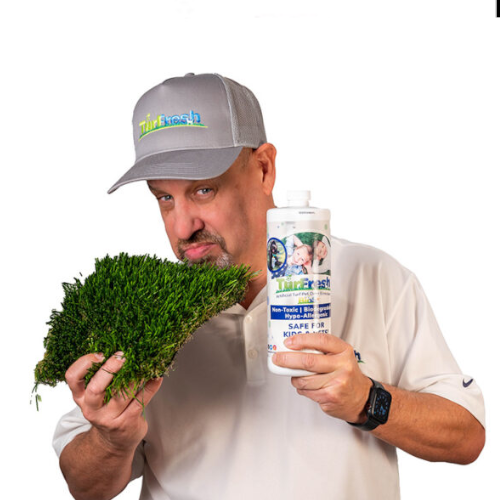

John Pla is the owner of TurFresh and an expert with over 20 years of experience in artificial turf cleaning and maintenance. John’s passion for sustainability, community impact, and innovative solutions has made him a trusted figure in the artificial grass industry and beyond.