Deep Turf Cleaning & Infill Flush
TurFlush Deep Artificial Turf CleaningWhen surface cleaning isn’t enough, go deeper. TurFlush combines TurFresh’s professional cleaning process with specialized infill decompaction, a controlled deep flush of your existing infill, an additional BioX+ application, and a BioS+ foaming treatment designed to reach through the infill toward the turf backing.

Sometimes Cleaning the Surface Isn’t Enough
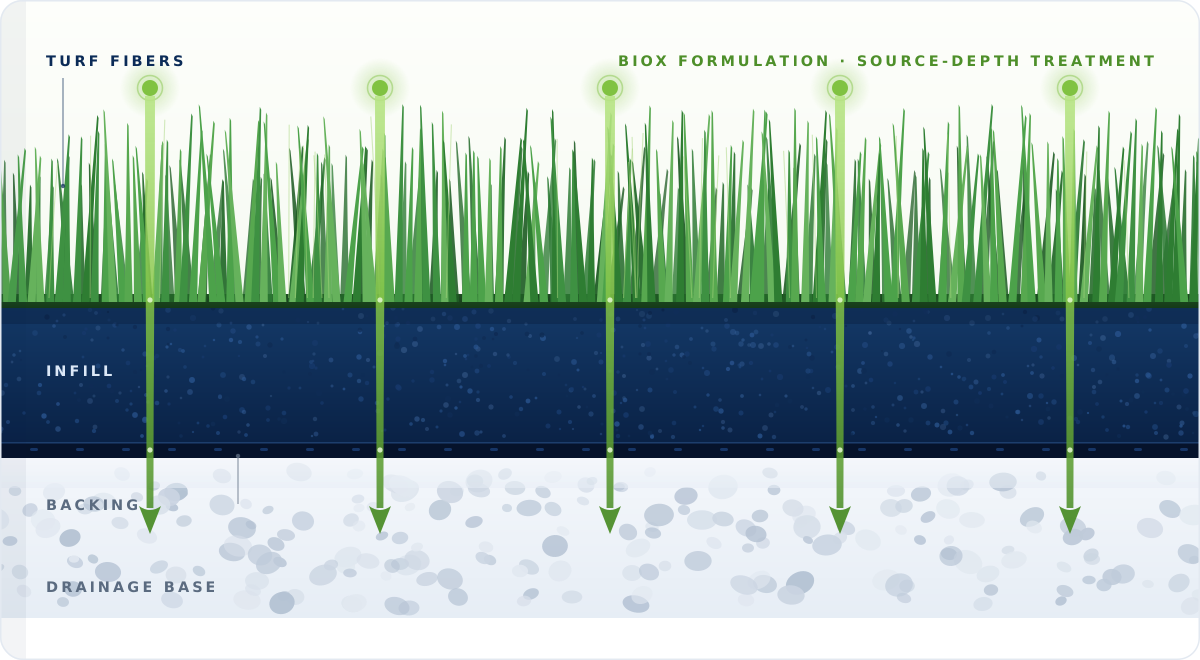
Artificial turf is a SYSTEM. Pet urine, organic matter, hair, and dust don’t stay on top of it, they move down through it. A lawn can look perfectly clean at the surface while odor-causing contamination remains trapped deeper within the system.
TurFlush is TurFresh’s advanced deep-cleaning service for turf experiencing persistent pet odor, heavily contaminated infill, slower drainage, or conditions that need cleaning deeper than a traditional maintenance service. You can’t solve a below-the-surface problem with surface-only cleaning.
Every Surface TurFlush Rescues
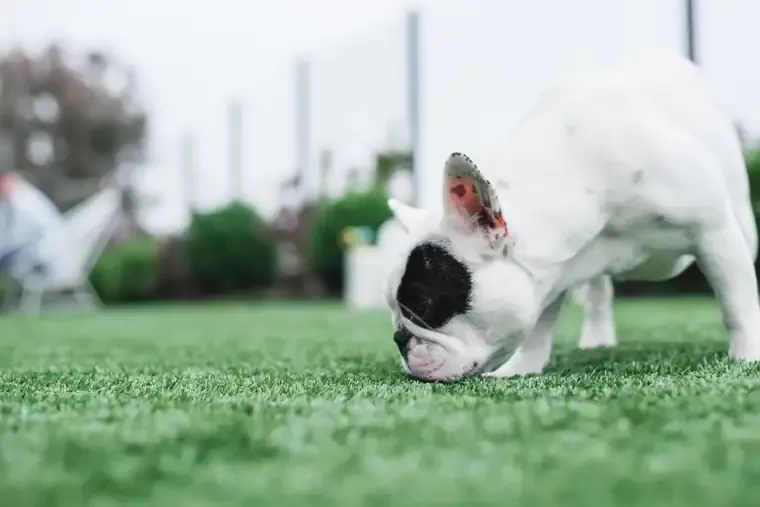
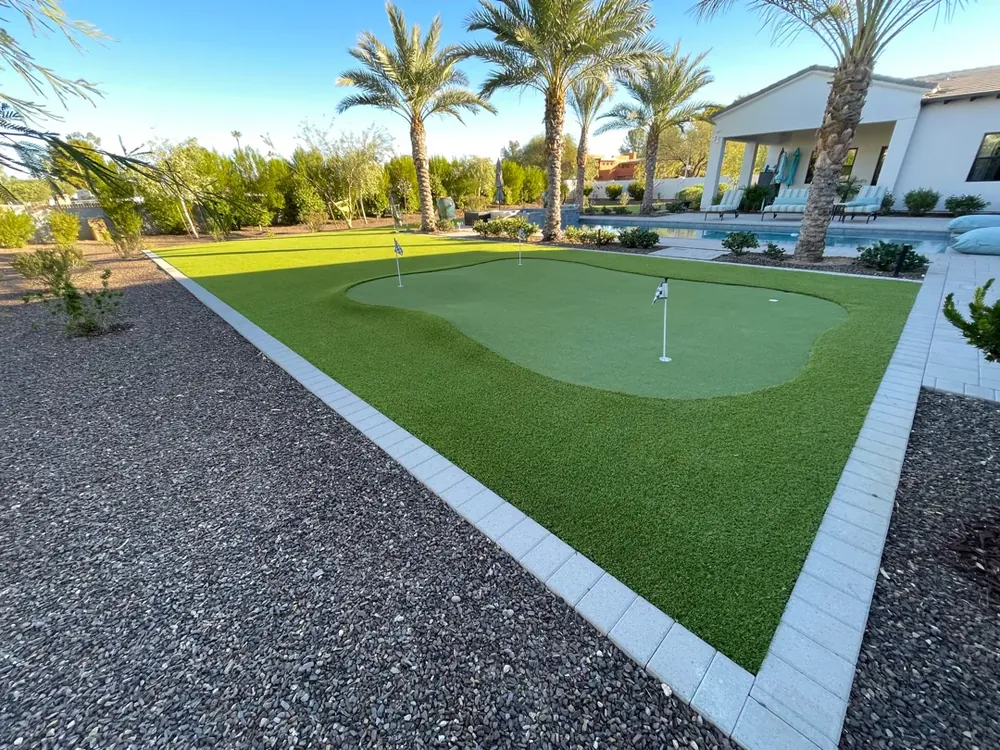
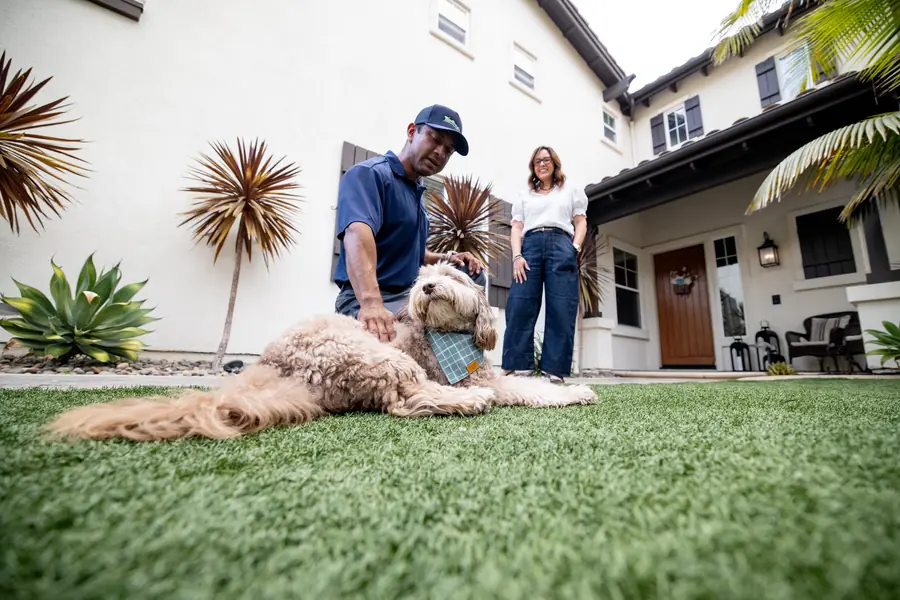
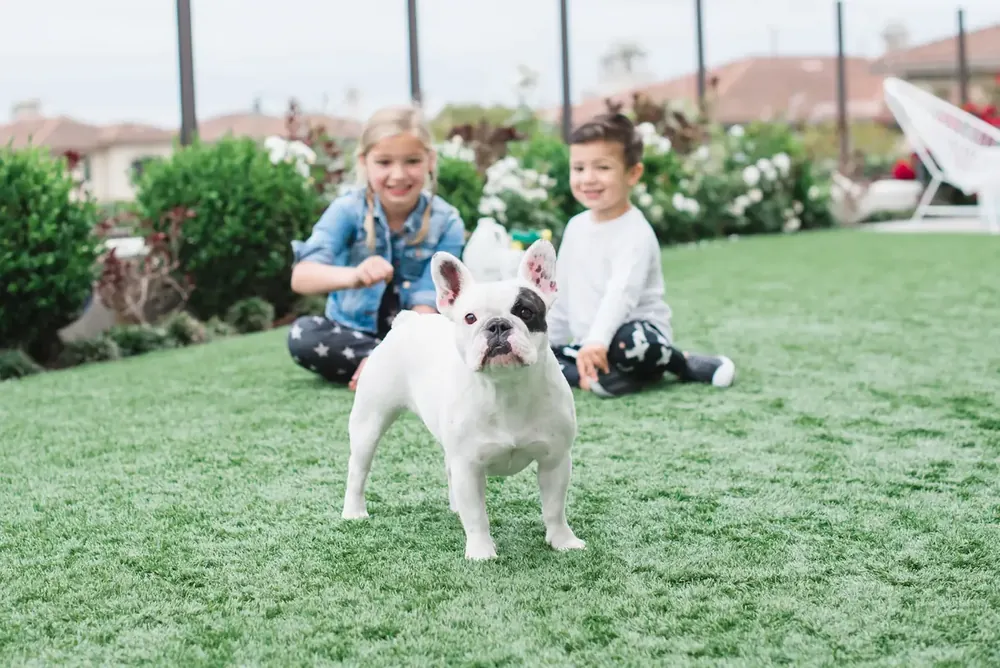
TurFlush rescues any surface where odor has moved below the fibers: dog runs, backyards, balconies, courtyards, even putting greens. Tap a surface to see how we care for yours.


TurfClean Maintains. TurFlush Corrects.
TurfClean is TurFresh’s professional detailed artificial turf cleaning and maintenance service, and for most well-maintained yards, it’s exactly what the turf needs.
TurFlush goes further. It includes the foundation of that detailed cleaning process PLUS a specialized full flushing process designed to work through the existing infill and penetrate deeper into the artificial turf system.
TurFlush is not for every lawn. It’s designed for turf systems that need deeper corrective cleaning, and if a TurfClean will genuinely solve your problem, that’s what we’ll recommend.
The Warning Signs Odor Has Moved Below the Surface
Pet urine doesn’t necessarily remain on top of artificial grass. Liquid travels through the fibers and infill toward the backing and drainage system, and repeated pet use contributes contamination throughout different levels of the system over time. Spraying fragrance or cleaner onto the surface may never reach it. Common warning signs:
- Dog urine odor keeps returning
- You have multiple dogs
- Dogs use the same bathroom area repeatedly
- Turf smells worse during hot weather
- Your infill has become compacted
- Turf drainage appears slower
- The turf has years of pet use
- Pet hair is embedded in the turf
- Regular rinsing isn’t solving the problem
- Surface treatments only provide temporary improvement
- You’re considering replacing turf primarily because of odor
Before replacing your turf, find out whether the turf system can be professionally restored.
When the Nose Knows, It’s Clean
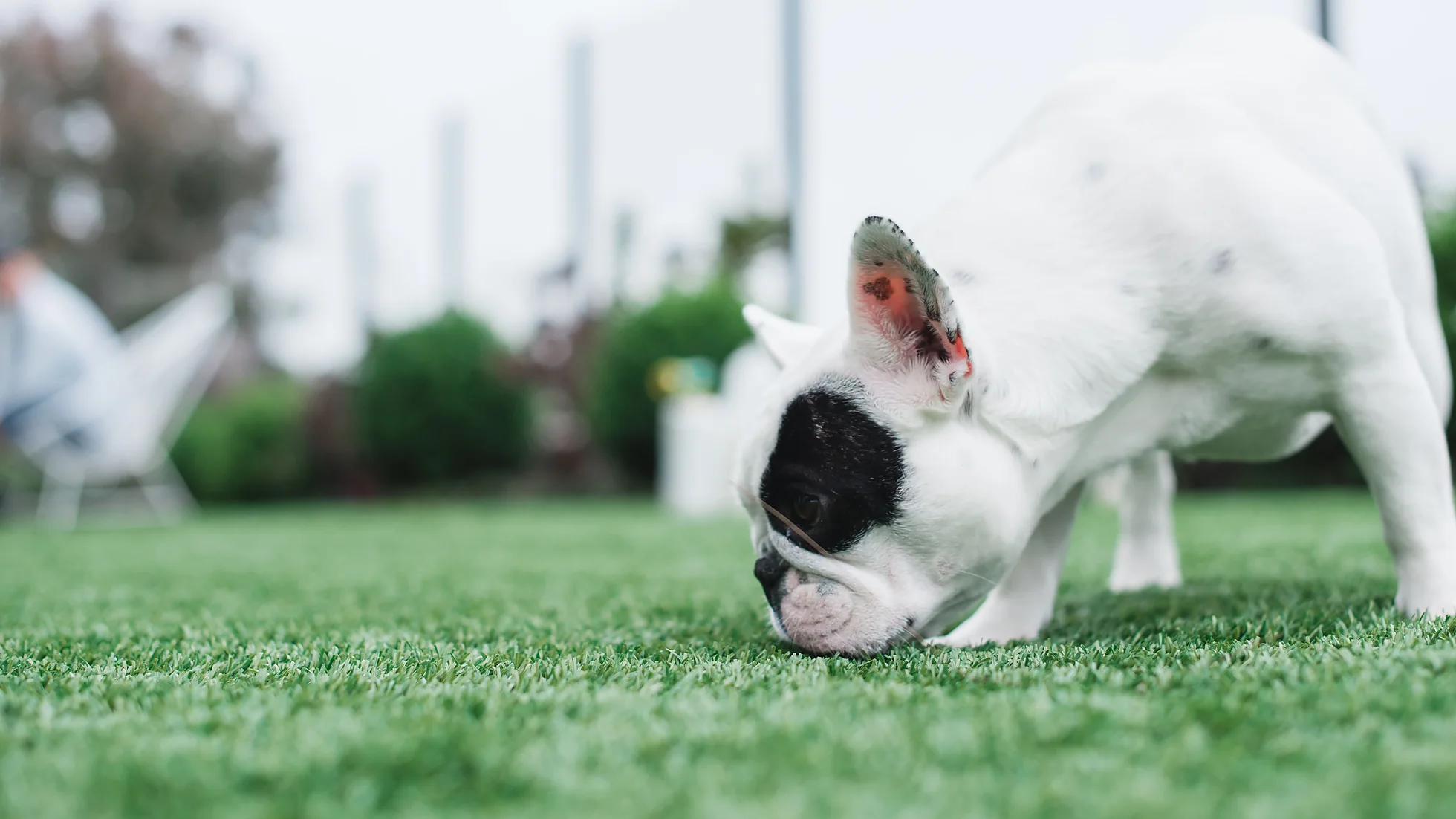
Dogs smell what rinsing leaves behind: the contamination living deep in the infill and base. TurFlush drives it out through the infill system instead of masking it, which is why the smell doesn’t come back the first warm afternoon.
The TurFlush Deep Cleaning Process
TurFlush builds on TurFresh’s professional multi-step cleaning process and adds specialized procedures designed specifically for deeper cleaning. Here is exactly what happens, and why each stage matters.
Inspection
Every zone, seam and drainage path evaluated before cleaning begins.
Debris Removal
Leaves, twigs and loose organics come off the surface first.
Turf Reblooming
Power grooming grooms matted fibers and opens the turf system.
Infill Decompaction
Compacted infill is loosened so the flush can reach through it.
Pet Hair & Embedded Debris
Embedded pet hair and ground-in debris are pulled from the pile.
The TurFlush Deep Flush
A controlled deep flush drives contamination out through the system.
BioX+ Application
BioX+ treats odor at its source, below the blades.
BioS+ Foaming Process
BioS+ foam clings and dwells deep in the turf system.
Turf System Detailing
Edges tucked, seams checked, minor adjustments handled.
TurFill Application
Double TurFill is added to keep filtering odor after we leave.
Final Bloom & Groom
A finishing bloom leaves blades upright and uniform.
Final Inspection
A last walkthrough against the original inspection notes.
Every Stage, Explained
Stage 1 · Inspection
Your TurfTech evaluates the whole turf system before any cleaning begins: high pet-use areas, concentrated odor zones, drainage conditions, compacted infill, pet hair, debris, raised edges, loose seams, low areas, and heavy-traffic wear. Understanding how the turf is actually used determines how the cleaning should be performed.
Stage 2 · Debris Removal
Leaves, twigs, pet hair, and loose organic material come off first. Removing surface material before the deep work begins lets every later stage act on the turf system itself instead of fighting through what is sitting on top of it.
Stage 3 · Turf Reblooming
Mechanical grooming grooms and separates the turf fibers. Reblooming exposes trapped debris, releases pet hair, redistributes infill, and opens access into the turf system while restoring the upright look of the grass. Permanently damaged or severely matted fibers cannot always be fully restored, and we will tell you if we see them.
Stage 4 · Infill Decompaction
Foot traffic, pets, weather, and normal wet-dry cycles compact infill over time. TurFlush mechanically works and loosens your EXISTING infill rather than burying compacted, contaminated material under a fresh layer. Before we flush the turf, we open the turf. Loosening compacted infill creates the pathways that let the flush and the treatments penetrate deeper into the system.
Stage 5 · Pet Hair & Embedded Debris
Pet hair works its way below the visible surface, where it interferes with drainage and traps organic contamination. Mechanical grooming lifts this embedded material out so the deep flush is not working against a hidden mat of hair.
Stage 6 · The TurFlush Deep Flush
This is what makes TurFlush TurFlush. TurFresh uses specialized sweeping surface-cleaning equipment, not a pressure washer, to perform a controlled flush across the turf. The equipment contains and manages your existing infill while the process works through it, rather than blasting it out of the lawn.
The objective is full penetration: working through the existing infill, further decompacting the system, flushing contaminants downward and through, reaching the deeper pet-use zones, cleaning toward the turf backing, and supporting the drainage pathways, all without unnecessarily removing the infill your turf needs.
A garden hose primarily rinses the visible surface. TurFlush is designed to mechanically work through the infill and flush deeper into the artificial turf system.
Stage 7 · BioX+ Application
After the mechanical flush, your TurfTech performs an additional application of TurFresh BioX+, our plant-based odor-control formulation, applied where the flush has just opened the system. This second treatment stage prepares the turf for the foaming stage that follows.
Stage 8 · BioS+ Foaming Process
Traditional liquid treatments can move quickly through a highly permeable turf system, in and gone. The TurFresh BioS+ foaming application is different: foam creates greater contact time throughout the system. Penetration + dwell time.
The foam works down through the system and stays in contact with surfaces far longer than a rinse-and-drain application, giving the enzyme-based treatment time to work on the areas associated with persistent pet odor. Go deep. Stay longer. Treat more of the turf system.
Stage 9 · Turf System Detailing
Depending on the turf’s condition, detailing may include tucking lifted edges, attention to minor seam conditions, weed removal, inspecting low spots, redistributing existing infill, final grooming, and magnet sweeping where appropriate. Major turf repairs are a separate service, TurFix.
Stage 10 · TurFill Application
Where appropriate, TurFill is applied as part of the restoration: a specialized granular infill treatment that helps manage future pet-related odor within the turf system while replenishing infill to proper levels.
Stage 11 · Final Bloom & Groom
After the intensive cleaning, the fibers are groomed and rebloomed and the infill is evenly distributed, leaving the artificial grass looking refreshed and properly maintained, not just clean underneath.
Stage 12 · Final Inspection
A final walkthrough covers turf appearance, infill distribution, edges, drainage observations, and the high-use pet areas identified in stage 1, with homeowner maintenance recommendations where they will genuinely help.
The Blooming Process, Up Close
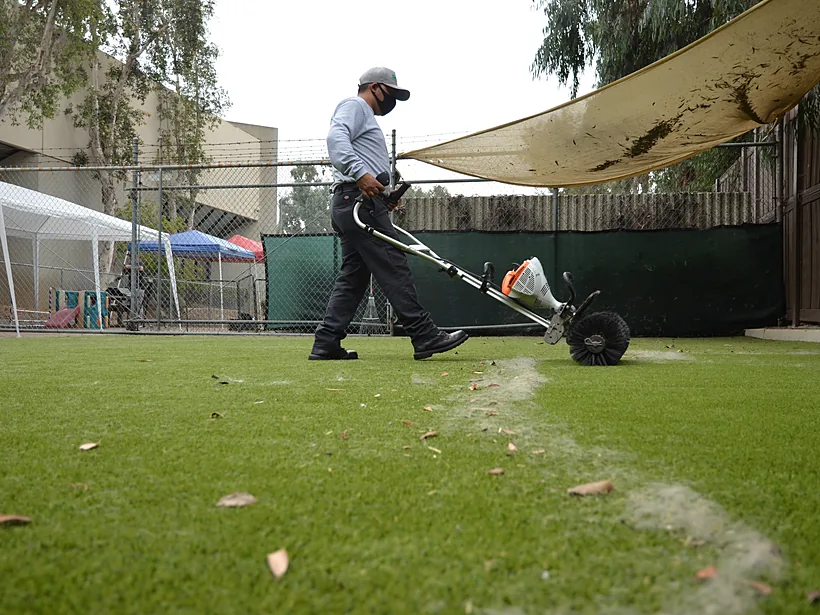
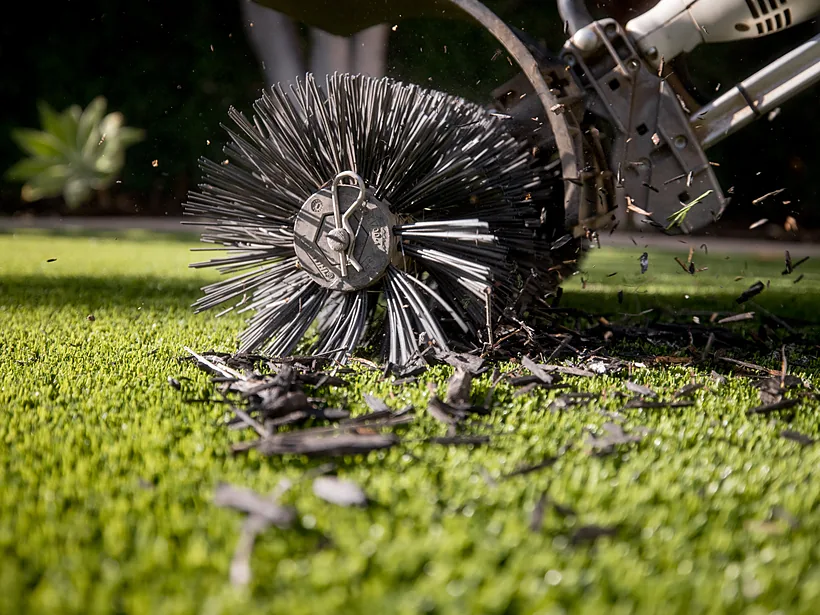
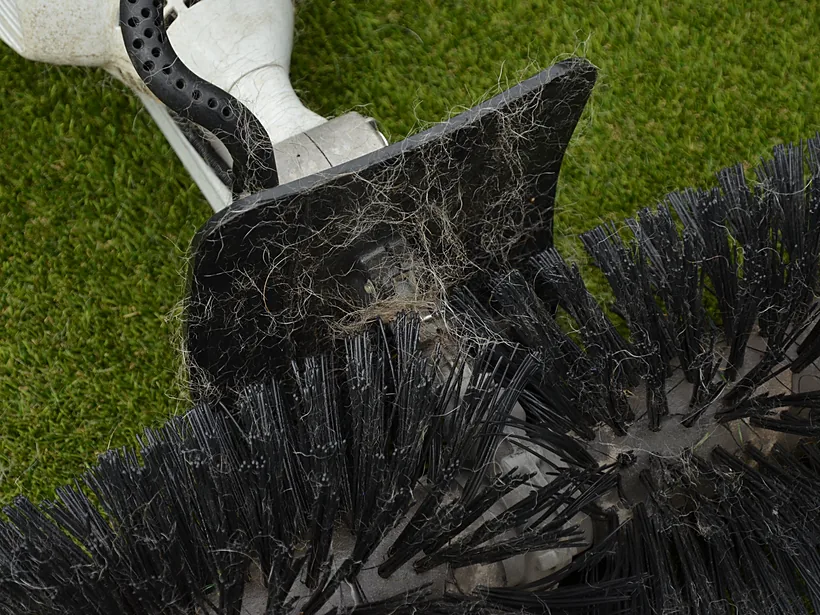
The commercial-grade power brush at work: grooming flattened fibers, pulling out embedded debris, and removing the pet hair a rinse never touches.
The Infill Flushing Process
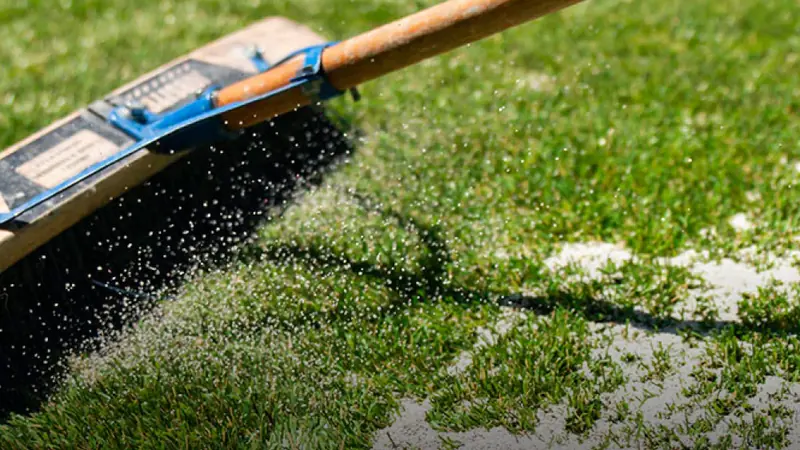
Water Jets Flood the Area
Pressurized water jets flood the turf area to reach all the way down to the infill and backing.
Contaminants Flushed Out
Strong water vortexes flush out any contaminants stuck to the turf fibers and infill.
Infill Settles Back Clean
The cleaned infill settles back into place, leaving your turf free of lingering odors.
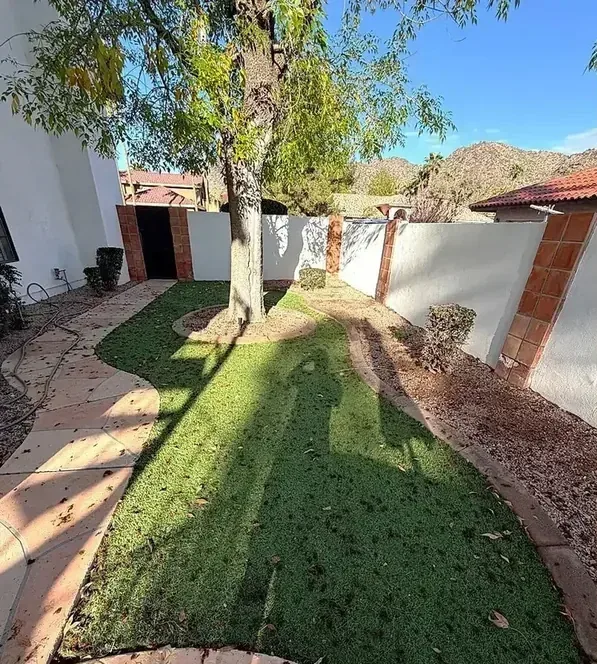
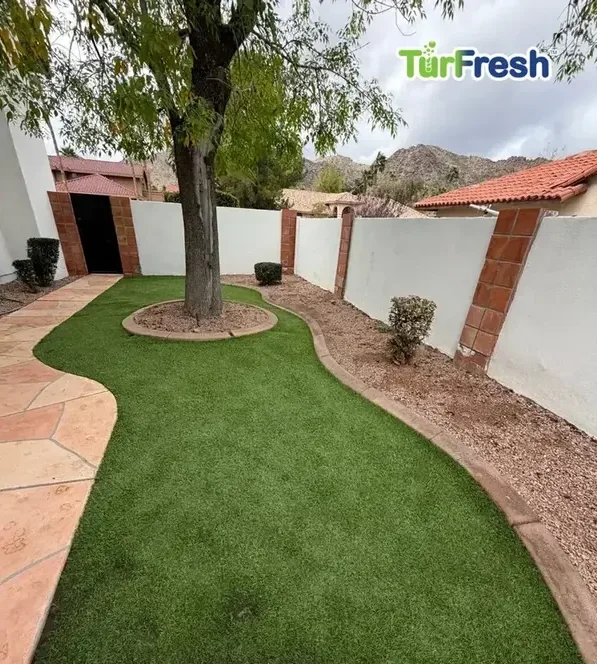
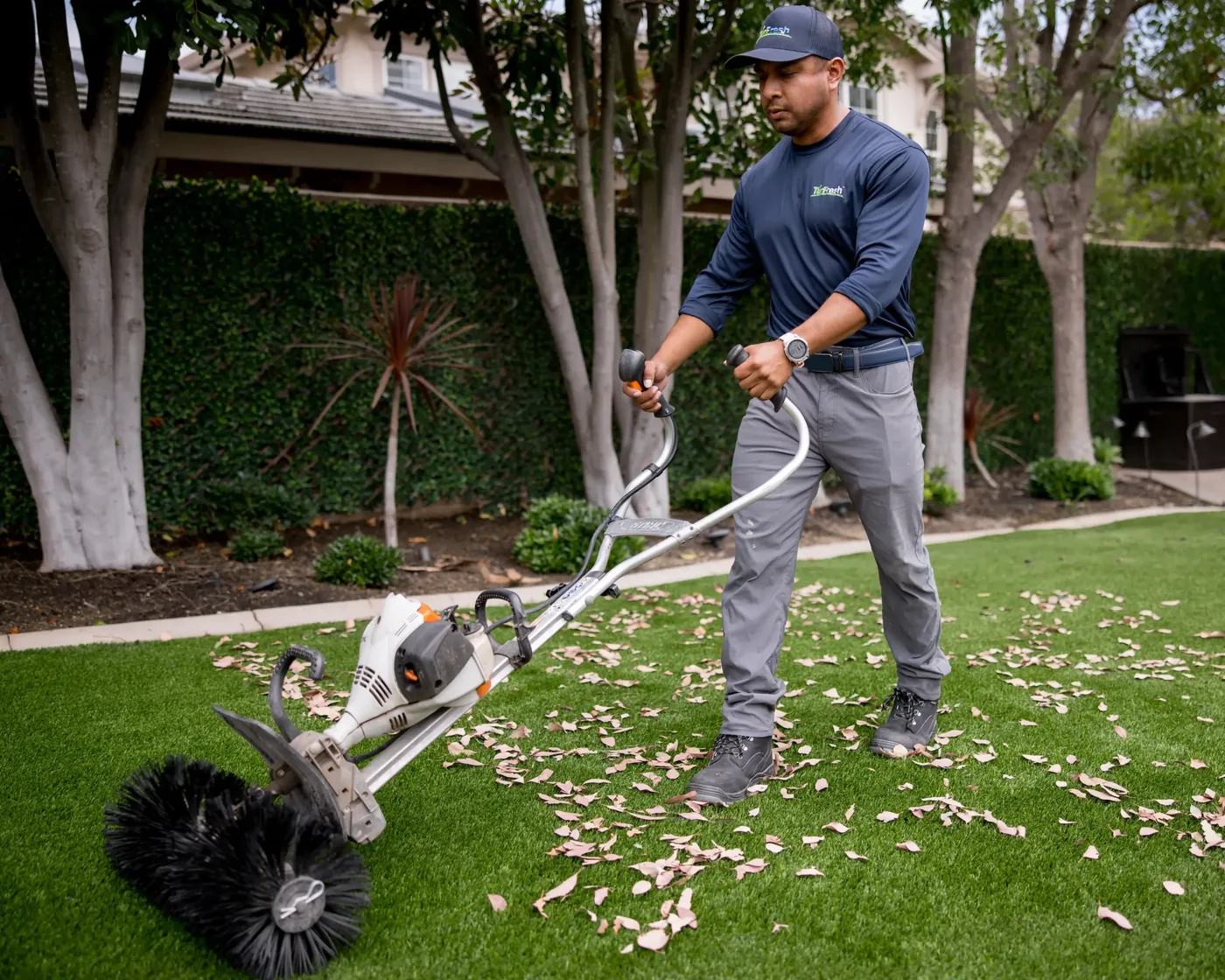
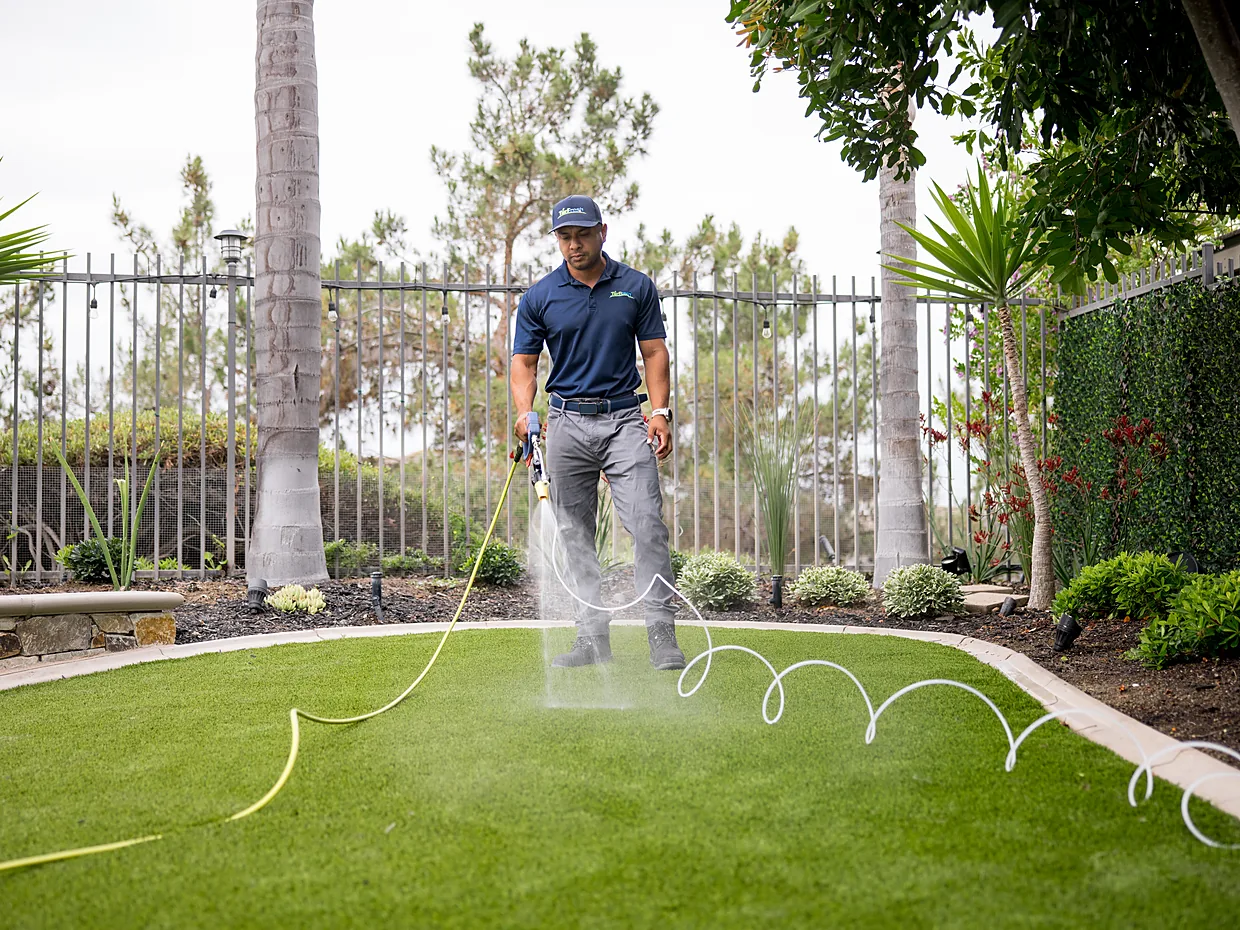
TurFlush, Done by TurFresh Crews
Why Does Artificial Grass Still Smell After I Clean It?
The cycle is familiar: hose the turf, spray deodorizer, smell improvement, and then the odor returns. Repeat.
Here’s why. The visible blades are only one part of the artificial turf system. Urine and other liquids move downward, and if contamination exists within compacted infill or near the turf backing, treating only the blades provides temporary improvement without addressing the deeper source. TurFlush exists precisely for that situation: it’s the professional option that cleans at the depth where the problem actually lives.
Why Pet Turf Odor Can Become Worse in Hot Weather
Many homeowners notice their turf smells fine in the morning and unmistakable on a hot afternoon. Heat makes existing odors more noticeable: warmth increases how readily odor compounds enter the air, and concentrated pet use, retained moisture, urine residue, compacted infill, and limited airflow all compound the effect.
The heat didn’t create the problem, it revealed one that was already in the system. That’s an argument for deeper cleaning, not stronger fragrance.
TurfClean vs. TurFlush
| Feature | TurfClean | TurFlush |
|---|---|---|
| Professional turf inspection | ✓ | ✓ |
| Debris removal | ✓ | ✓ |
| Pet hair removal | ✓ | ✓ |
| Turf reblooming | ✓ | ✓ |
| Infill decompaction | ✓ | ✓ |
| Edge inspection | ✓ | ✓ |
| Minor seam attention | ✓ | ✓ |
| Weed removal | ✓ | ✓ |
| TurFill application | — | ✓ |
| BioS+ treatment | — | ✓ |
| Specialized deep flushing | — | ✓ |
| Full-depth infill penetration | — | ✓ |
| Cleaning toward the turf backing | — | ✓ |
| Additional TurFresh Treatment | — | ✓ |
| BioS+ foaming process | — | ✓ |
| Extended treatment dwell time | — | ✓ |
| Recommended for persistent odor | — | ✓ |
| Recommended for heavily used pet turf | — | ✓ |
TurfClean = professional cleaning and maintenance. TurFlush = deep system cleaning for more difficult conditions.
Is TurFlush the Same as Pressure Washing Artificial Turf?
No. Indiscriminately pressure washing artificial turf can disturb the infill and potentially affect the installation itself.
TurFlush uses specialized sweeping surface-cleaning equipment and a controlled professional process designed specifically around how artificial turf systems are constructed: controlled flushing + infill management + decompaction + deep treatment + professional grooming.
Do I Need to Replace Smelly Artificial Turf?
Persistent odor does not automatically mean replacement. What matters is the actual condition of the fibers, backing, seams, infill, drainage, and base. For structurally sound turf, professional deep cleaning is worth evaluating before you spend on a new installation.
And honestly: TurFlush cannot correct every problem. Severely failed drainage, improper base construction, major turf damage, failed seams, or severely deteriorated turf may require repair or replacement, and we’ll tell you which.
TurFlush is an intensive cleaning and restoration service, not reconstruction. It cannot guarantee correction of improper original installation, failed drainage design, damaged base material, severely deteriorated turf, major seam failures, or permanently damaged fibers. TurFresh inspects for these conditions and recommends repair or replacement when that’s the right answer.
Cleaning Artificial Turf From the Top Down
Three principles drive the whole service. Decompaction: open pathways through the infill. Penetration: move the cleaning process through the turf system toward the backing. Dwell time: give the BioS+ foaming treatment greater contact time throughout the system.
Curious about the chemistry itself? See the science behind every TurFresh technology.
The TurFlush 45-Day Odor Guarantee
TurFlush carries our 45-Day Odor Guarantee: if the odor we treated returns within 45 days of your service, we come back and make it right at no charge. Full guarantee and service terms are available for review.
Review the full guarantee and service termsThe People Behind the Process
TurFresh has specialized in artificial turf care for more than 25 years, with 150,000+ turf services completed and thousands of customer reviews. Our TurfTechs are trained specifically on artificial turf, working with professional turf-specific equipment and TurFresh-developed cleaning products, across residential yards, pet turf systems, and commercial installations. Turf isn’t a side service for us. It’s the whole company.
TurFlush FAQs
Stop Masking the Odor. Deep Clean the System.
Artificial turf odor isn’t always a surface problem. When contamination has moved deeper into the infill and turf system, TurFlush is the professional answer between ordinary cleaning and unnecessary replacement. Exact price online in about 2 minutes.
Book Your Service Online
Choose your service, see your exact price, reserve your time. Under 5 minutes.
No payment required to book · Cancel anytime before service