Increase Your Artificial Turf’s Lifespan with TurFresh
Sep 30, 2020 · 5 min read · By John Pla, Founder of TurFresh
TL;DR Artificial turf is built to last, but its lifespan depends on how it is installed, used, and maintained. With the right materials, professional installation, and ongoing care, artificial grass can stay clean, functional, and visually appealing for well over a decade.
📌 This guide explains how long artificial turf lasts, what affects its lifespan, and how proper cleaning and maintenance help extend its performance year after year.
Quick Answer: How Long Does Artificial Turf Last? With regular care and professional servicing, many turf systems remain usable and attractive beyond the 15-year mark. High-quality artificial turf typically lasts 12 to 15 years, and sometimes longer, when properly installed and maintained.
Its lifespan depends on:
➧ The quality of the turf material ➧ Installation methods ➧ Amount of foot traffic ➧ Exposure to pets, debris, and weather ➧ Routine cleaning and maintenance
What Affects the Lifespan of Artificial Turf?
Several factors directly impact how long synthetic grass holds up over time. Understanding these helps prevent premature wear and unnecessary replacement.👉 1. Turf Quality
Higher-quality turf lasts longer and performs better under pressure.Premium turf is designed with:
➡️ Stronger fiber backing➡️ UV-resistant materials
➡️ Dense blade construction
➡️ Better drainage systems
📌 Lower-quality turf tends to flatten, fade, and retain odors more quickly, especially in high-traffic areas.
👉 2. Installation Quality
Professional installation plays a major role in turf longevity.Improper installation can lead to:
➡️ Uneven surfaces➡️ Poor drainage
➡️ Wrinkling or shifting
➡️ Excess debris buildup
➡️ Accelerated matting
📌 A properly installed base allows water to drain correctly, keeps infill evenly distributed, and prevents early breakdown of turf fibers.
👉 3. Foot Traffic and Usage
The more traffic your turf receives, the more maintenance it requires.Areas that see heavy use, such as:
➡️ Backyards➡️ Play areas
➡️ Pet runs
➡️ Commercial spaces
📌 High-traffic turf can still last many years, but only with consistent care.
👉 4. Routine Cleaning and Maintenance
Regular maintenance is the single most important factor in extending turf life.Without cleaning, artificial grass can trap:
➡️ Dirt and dust➡️ Pet waste and bacteria
➡️ Odors
➡️ Pollen and debris
➡️ Compacted infill
📌 Over time, this buildup causes turf to look worn, smell unpleasant, and degrade faster.
How Does Professional Turf Cleaning Extend Lifespan?
Professional turf cleaning restores performance, appearance, and hygiene.A thorough cleaning service typically includes:
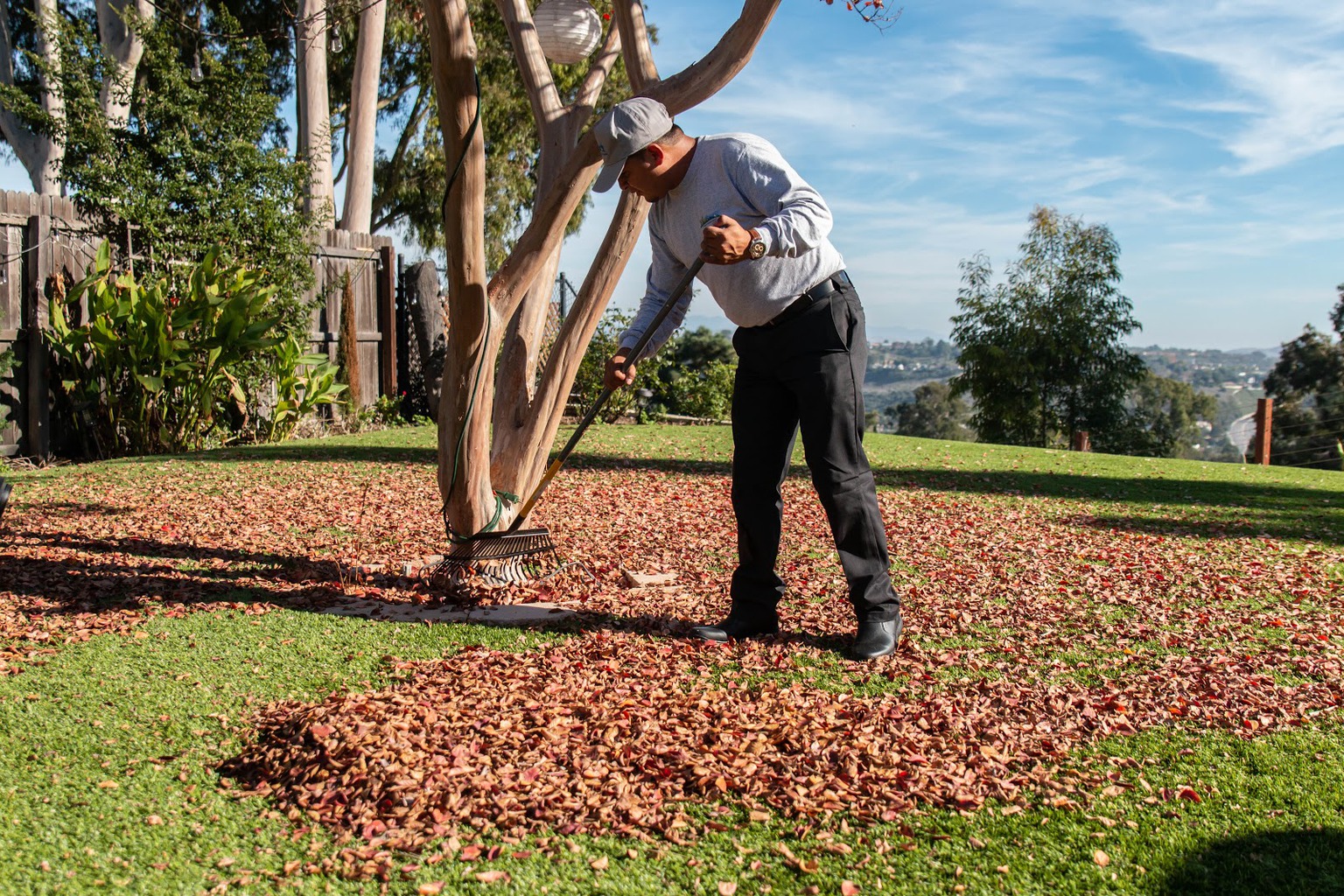
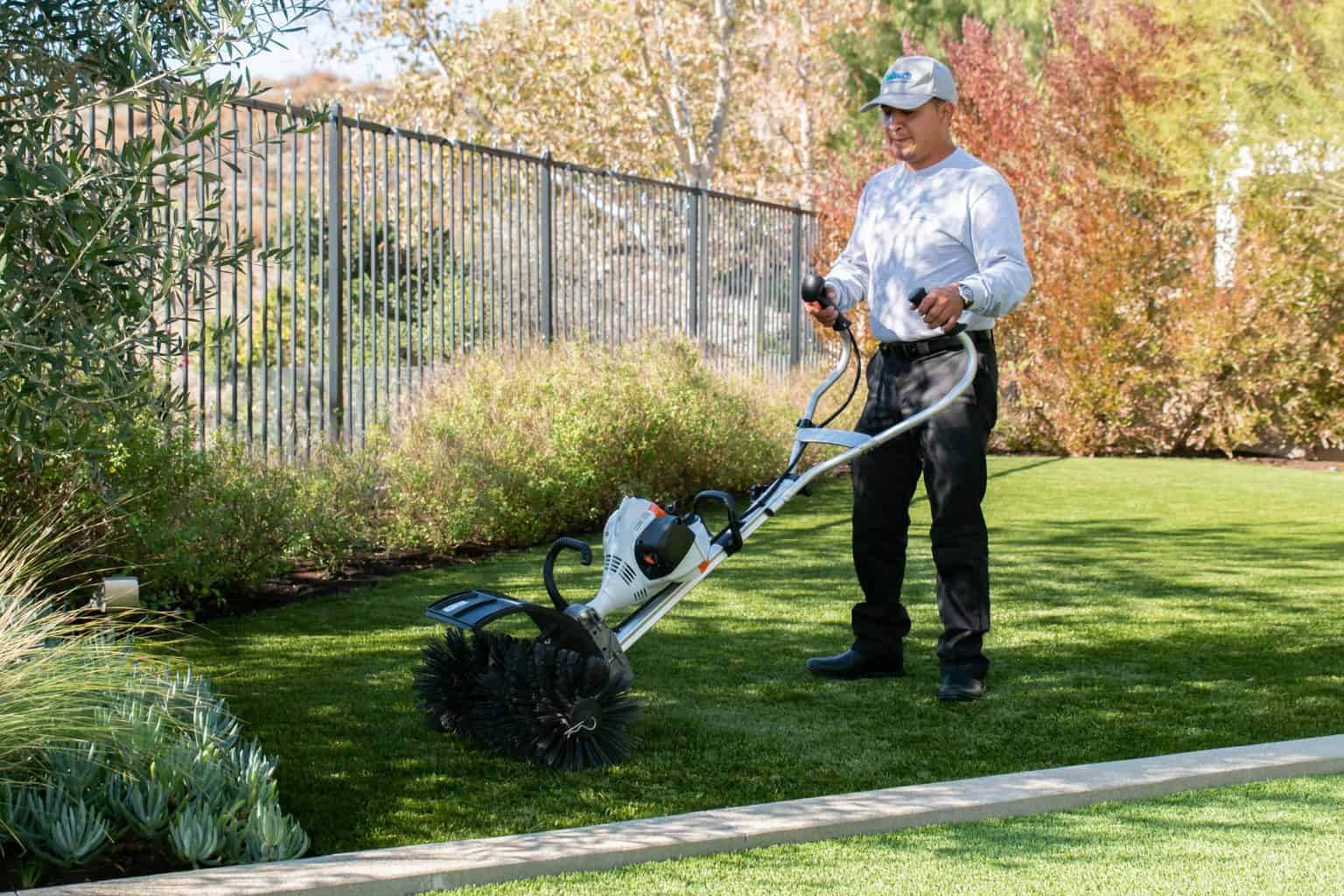
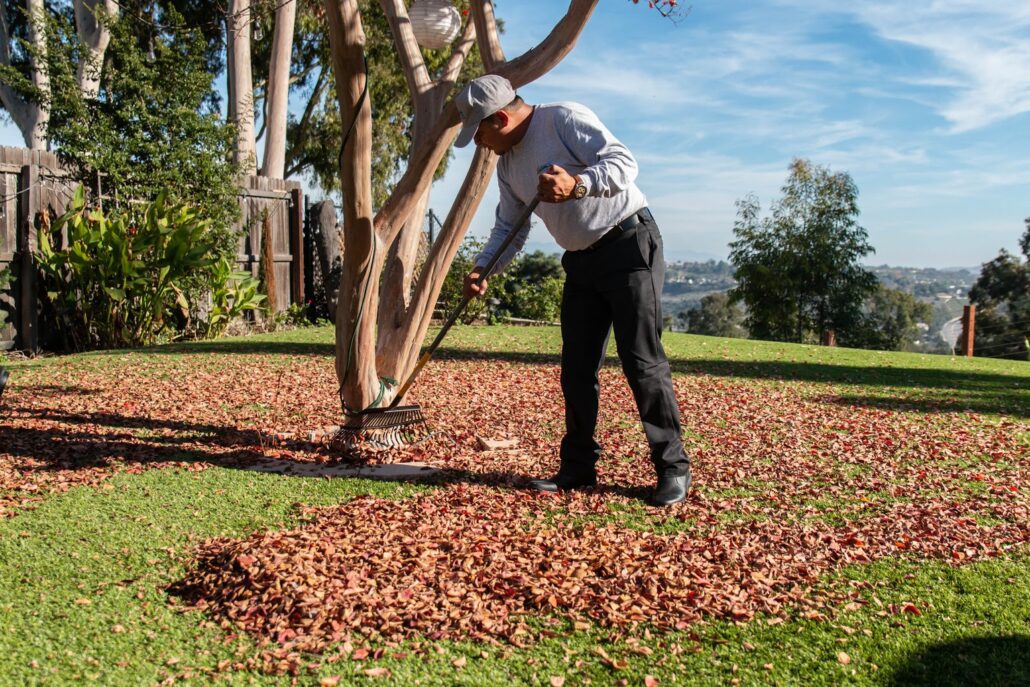
➡️ Deep brushing to lift flattened fibers➡️ Debris removalInfill redistribution
➡️ Odor and bacteria treatment
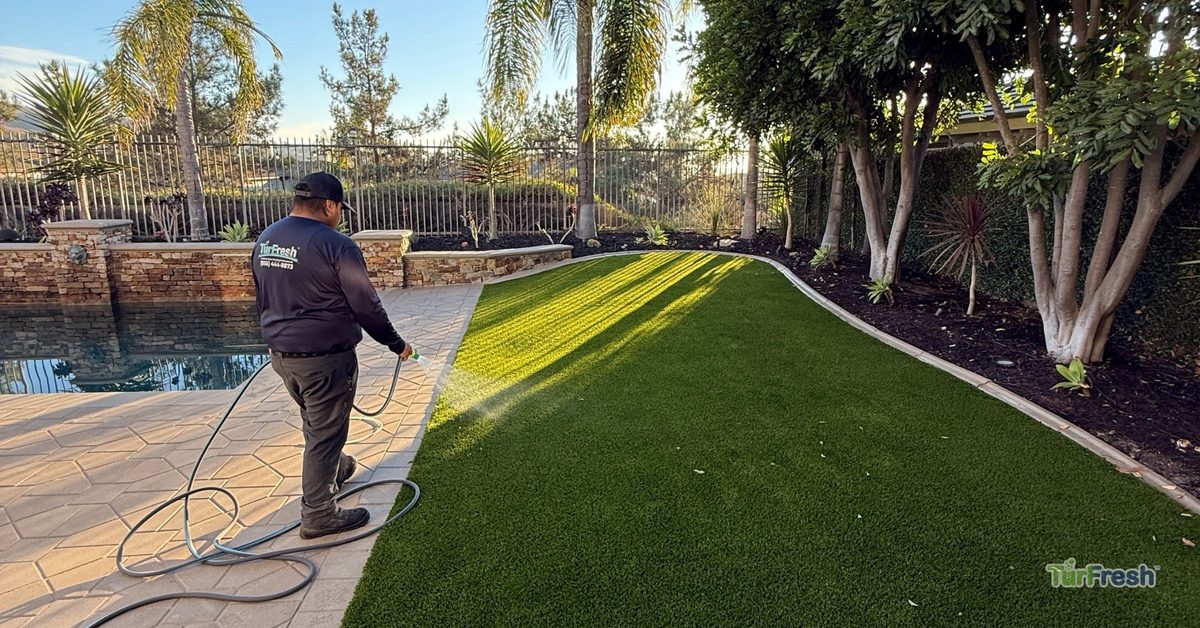
➡️ Rinsing and deodorizing
➡️ Edge and seam inspection
TurFresh uses a science-based cleaning process designed to:
➡️ Eliminate pet odors➡️ Remove bacteria and allergens
➡️ Reduce static buildup
➡️ Extend turf usability
➡️ Improve overall appearance
📌 This process helps prevent permanent damage and keeps turf performing as intended.
Can You Maintain Artificial Turf Yourself?
Yes, but professional service still plays a key role.At-home maintenance includes:
➡️ Removing debris regularly➡️ Rinsing high-use areas
➡️ Light brushing to lift fibers
➡️ Spot cleaning pet areas
Professional maintenance is recommended when:
➡️ Odors persist➡️ Turf feels compacted
➡️ Infill levels drop
➡️ Drainage slows
➡️ Turf looks worn or matted
📌 Combining basic homeowner care with scheduled professional cleanings delivers the best long-term results.
How Often Should Artificial Turf Be Cleaned?
Cleaning frequency depends on usage:
➡️ Residential lawns: Every 6 to 12 months➡️ Pet areas: Every 3 to 6 months
➡️ High-traffic or commercial spaces: Quarterly or as needed
📌 Routine cleaning prevents buildup that shortens turf lifespan and helps maintain a fresh, natural appearance.
💡 Tips to Extend the Life of Artificial Turf
✅ Brush turf regularly to keep fibers upright✅ Rinse pet areas to prevent odor buildup
✅ Avoid harsh chemicals or pressure washing
✅ Schedule professional cleanings at least once per year
✅ Address drainage or matting issues early
✅ Use turf-safe cleaning products only
✅ Consistent care protects your investment and prevents costly replacements.
Why TurFresh Is Trusted for Artificial Turf Care
TurFresh has over 20 years of experience maintaining artificial turf for residential and commercial properties.Their turf care process focuses on:
👍 Eco-friendly, pet-safe cleaning solutions👍 Deep odor removal
👍 Professional-grade equipment
👍 Long-term turf preservation
👍 Proven results across thousands of properties
📌 Whether you need a one-time service or ongoing maintenance, TurFresh helps keep synthetic grass clean, safe, and long-lasting.
Frequently Asked Questions
How long does artificial turf really last?
• Most artificial turf lasts 12 to 15 years with proper installation and maintenance. High-quality turf with routine cleaning can last even longer.What shortens the lifespan of artificial turf?
• Poor installation, heavy foot traffic, lack of cleaning, pet waste buildup, and low-quality materials all reduce turf lifespan.Does artificial turf need professional cleaning?
• Yes. Professional cleaning removes deep contaminants and restores infill, which helps prevent odor, matting, and premature wear.Can artificial grass be damaged by pets?
• Pet waste can cause odor buildup and bacteria growth if not cleaned properly. Regular cleaning prevents long-term damage.Is artificial turf low maintenance or no maintenance?
• Artificial turf is low maintenance, not maintenance-free. Routine care is necessary to keep it clean, safe, and long-lasting.
Ready to Extend the Life of Your Turf?
If your artificial grass looks worn, smells unpleasant, or needs professional care, TurFresh can help.📞 Call (855) 444-8873 to schedule a cleaning or learn more about turf maintenance solutions designed to extend the life of your artificial grass.