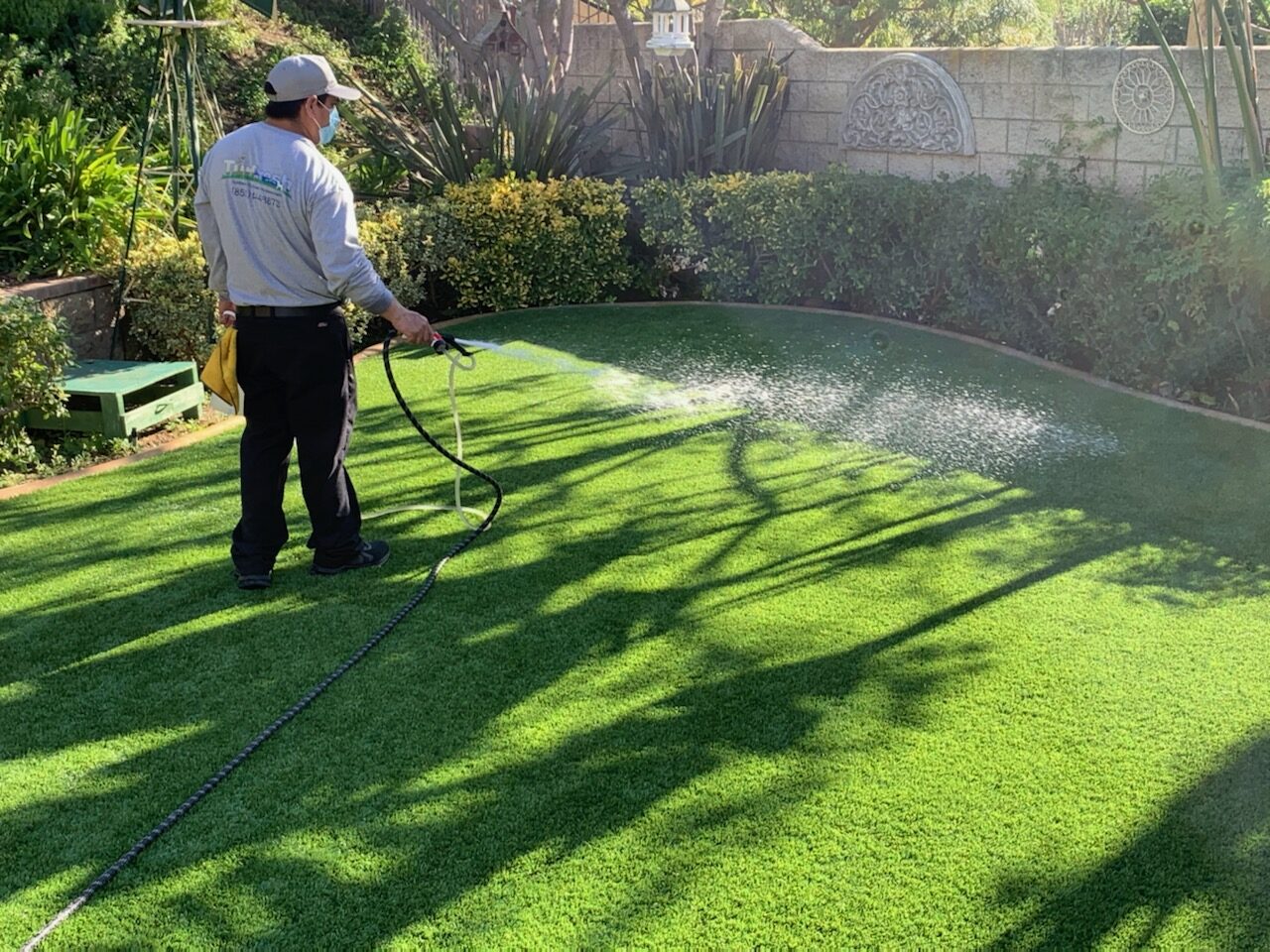
Weed Killer for Artificial Grass: 3 Safe Methods That Won't Damage Your Turf
Jun 24, 2026 · 11 min read · By John Pla, Founder of TurFresh
Quick Answer: Weed killer for artificial grass does not need to be chemical. Boiling water and vinegar spray are the safest and most effective options for spot treatment. For weeds growing through seams, edges, or drainage holes, professional turf maintenance gives the best long-term results. Artificial grass reduces weed growth by up to 90 percent compared to natural lawns, but consistent maintenance is what keeps it that way.
The problem is in the edges and seams.
TurFresh removes weeds, repairs lifted edges, and restores your turf in one visit.
Schedule Your Turf Service✔ Pet Safe✔ Eco Friendly✔ 20+ Years of Experience✔ 30-Day Guarantee
Key Takeaways
🔑 Artificial grass reduces weed growth by up to 90 percent but does not eliminate it completely. Weeds cannot grow through the turf backing itself — but they can and do grow through gaps in edges, seams, and drainage holes where organic debris accumulates.🔑 Boiling water and vinegar spray are the safest natural weed killers for artificial turf. Boiling water kills weeds at the root on contact with no chemical residue. Vinegar solution (4:1 ratio) dehydrates weeds within 1 to 3 days and is safe for kids and pets.
🔑 Repairing edges and seams as soon as they lift is the most effective prevention. A lifted edge or loose seam is an open invitation for seeds and soil to settle beneath the turf. Closing that gap is always more effective than treating the weed that grows through it.
🔑 Regular debris removal is weed prevention, not just tidying. Leaves, pollen, soil, and mulch trap moisture and create pockets where seeds germinate. Clearing debris weekly removes the conditions weeds need before they ever establish.
🔑 For recurring or widespread weed growth, professional turf service is the most reliable long-term solution. DIY methods treat the symptom. Professional service addresses the cause — inspecting drainage, securing seams, and preventing the conditions that allow weeds to return.
Why Do Weeds Grow in Artificial Grass?
Artificial turf does not give weeds soil to grow through, but it does have edges, seams, and drainage holes. Those are the entry points. When organic debris, soil, or pollen accumulates along the perimeter or in gaps between the turf and hardscape, seeds find exactly what they need to germinate.The most common entry points for weeds in artificial turf:
⚠️ Turf edges that are not cut tightly against concrete, pavers, or decking⚠️ Seams where two pieces of turf meet and soil collects underneath
⚠️ Drainage holes where organic matter accumulates over time
⚠️ Areas where the weed barrier has shifted, torn, or degraded
⚠️ Spots where moisture sits longer than it should due to poor drainage
Weeds do not grow through the turf backing itself. They grow through the gaps. Sealing those gaps through proper installation and consistent maintenance is what stops them.
The 3 Most Effective Ways to Kill Weeds in Artificial Grass
✅ 1. Boiling Water
Boiling water is the safest and most immediate way to kill weeds on artificial grass without chemicals. It destroys the weed at the root without leaving residue, and it is completely safe for turf fibers, pets, and children.How to do it:
1. Boil water in a kettle or pot.2. Pour directly onto the weed, targeting the base.
3. Wait for the weed to turn brown and dry out completely.
4. Pull it out by hand and dispose of it.
5. Repeat for deep or stubborn roots.
Works best for:
👉 Weeds growing through turf seams👉 Weeds coming through edges and perimeter gaps
👉 Small isolated clusters of weeds in the turf surface
Boiling water does not damage turf blades and leaves no chemical residue. It is the first method to try for any weed that has not yet established deep roots.
✅ 2. Vinegar Spray
A vinegar solution is a reliable natural weed killer for artificial grass. It is effective, inexpensive, and safe for families. It works by dehydrating the weed, typically within 1 to 3 days.How to mix it:
➡️ 4 parts white vinegar➡️ 1 part water
➡️ Optional: a small amount of dish soap to help the solution adhere to leaves
How to use it:
1. Spray directly onto the weed, covering the leaves and base.2. Wait 1 to 3 days for the weed to dry out completely.
3. Remove the dead weed by hand.
4. Repeat for stubborn or established weeds.
⚠️ Avoid spraying vinegar on nearby plants or garden beds. It will damage living vegetation. Apply carefully and target individual weeds.
✅ 3. Professional Turf Maintenance
For weeds growing in seams, recurring edge growth, or widespread weed intrusion, professional maintenance is the most effective long-term solution. DIY methods treat the symptom. Professional service addresses the cause.A TurFresh technician can:
👍 Remove weeds manually from seams, edges, and drainage areas👍 Repair lifted edges and re-secure seams where weeds enter
👍 Restore flattened turf blades and redistribute infill
👍 Improve drainage to reduce the damp conditions weeds prefer
👍 Deep clean with non-toxic, pet-safe products
TurFresh provides a full 10-point artificial turf cleaning process that safely removes weeds, repairs problem areas, and prevents regrowth. One visit typically resolves what months of spot treatment cannot.
Quick Facts About Weeds in Artificial Grass
✅ Synthetic grass reduces overall weed growth by about 90 percent compared to natural lawns.✅ Weeds grow through gaps in edges and seams, not through the turf backing itself.
✅ Boiling water and vinegar spray are the safest weed killers for artificial turf.
✅ Regular professional maintenance is the most reliable long-term prevention.
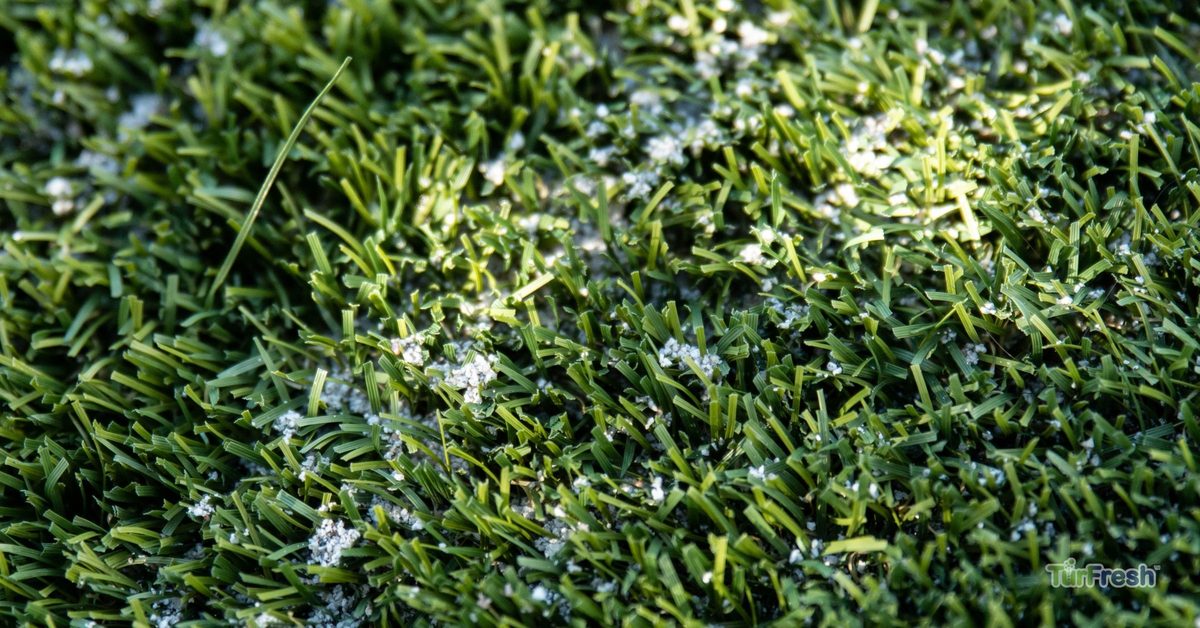
What to Do If Weeds Keep Growing Through Turf Edges
➡️ Manual removal for small edge weeds
If weeds appear only along the perimeter, remove them by hand before they establish deeper roots. A narrow hand weeder works well for lifting weeds from tight gaps without disturbing the turf backing. This is the safest first step for any edge weed.➡️ Repair loose or lifted edges immediately
Persistent weeds at the edges almost always mean the turf has separated from the hardscape or the weed barrier underneath has shifted. Resealing seams, tightening nails or staples, and filling thin infill spots closes the gaps where seeds and soil accumulate. Once edges sit flat against the base, weeds have no path to the surface.➡️ Use chemical sprays only as a last resort
If spot treatment is necessary, choose a turf-safe, non-staining product and apply it sparingly to individual weeds, not across the perimeter. Avoid heavy chemical sprays near glued seams or joint lines, as they may weaken adhesives or leave residue that stains fibers.➡️ Call a turf professional for recurring edge growth
If weeds return even after repairs, a technician can inspect drainage, lift and reset misaligned edges, replace damaged seam tape, or reinforce the weed barrier. Professional repair prevents long-term weed intrusion and keeps the perimeter tight and clean.
How to Stop Weeds from Growing Through Artificial Grass
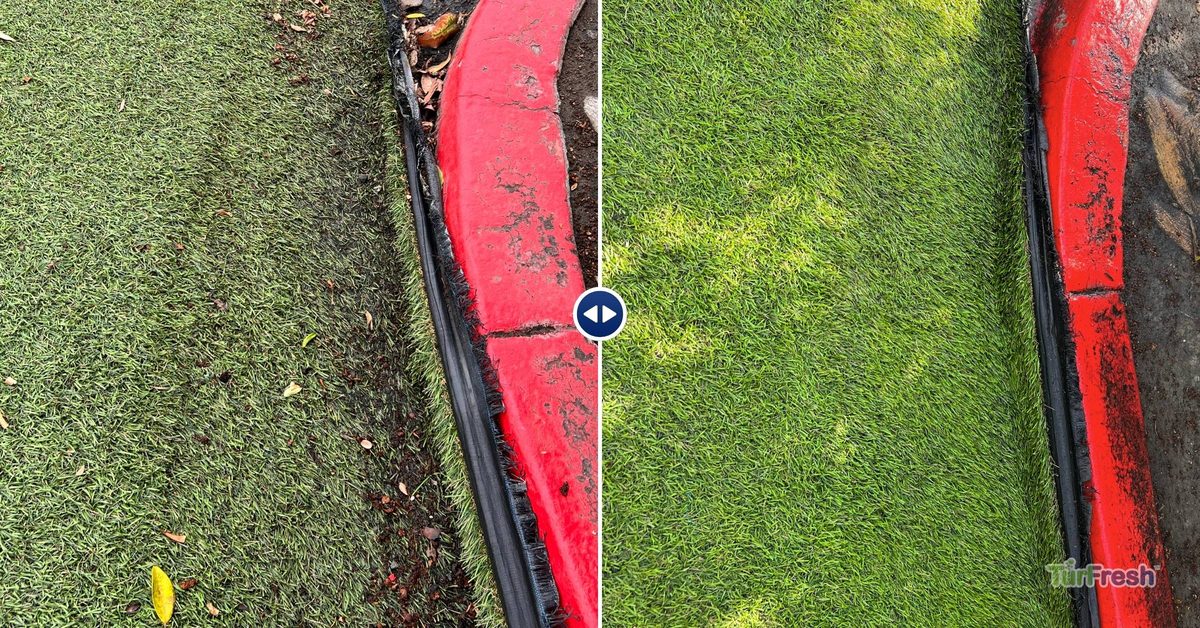
1. Keep turf edges sealed and secure. Weeds most often start where turf meets concrete, pavers, or garden beds. Edges that stay tight give seeds nowhere to land and no soil to germinate in.
2. Brush the turf regularly. A stiff-bristle broom or power brush keeps fibers upright and breaks up loose material before seeds can take hold. Brushing also maintains infill levels, which adds another layer of protection against weed establishment.
3. Remove organic debris quickly. Leaves, pollen, soil, and mulch trap moisture and create pockets where seeds germinate. Clearing debris regularly prevents weeds from settling on top of the turf and reaching seams or edges below.
4. Rinse after windy days. Wind carries seeds from nearby plants and garden beds. A quick rinse washes away loose seeds before they lodge between turf blades or along the perimeter.
5. Repair lifted seams or edges as soon as they appear. Even a small raised corner allows soil to slip underneath the backing. Re-securing seams and edges early stops weeds from finding a path to the surface before they establish.
6. Maintain consistent turf cleaning. Regular cleaning removes buildup, restores infill, and improves drainage. Consistent maintenance prevents the conditions that allow weeds to establish in the first place.
7. Ensure proper drainage. Poor drainage creates damp spots where weeds are significantly more likely to grow. A well-draining base with refreshed infill keeps the turf dry and far less hospitable to seed germination.
Strong installation paired with consistent maintenance gives artificial grass the best long-term protection against weed growth. One without the other is not enough.
The problem is in the edges and seams — not the weeds themselves.
TurFresh removes weeds, repairs lifted edges, and restores your turf in one visit. Over 150,000 services completed. Pet safe the same day.
Schedule Your Turf Service✔ Pet Safe✔ Eco Friendly✔ 20+ Years of Experience✔ 30-Day Guarantee
Complete Guide
📖 Artificial Turf Problems: 9 Most Common Issues — causes, fixes, and when to call a professional for weeds, mold, pests, drainage, infill, and more.
Frequently Asked Questions About Weeds in Artificial Grass
Do weeds grow through artificial grass?
Yes. Weeds can grow through seams, edges, drainage holes, and areas where soil or organic debris accumulates. They do not grow through the turf backing itself. They grow through the gaps around it.What is the best weed killer for artificial grass?
Boiling water and vinegar spray are the safest and most effective options for spot treatment. For recurring or heavy weed growth along edges and seams, professional turf maintenance is the most reliable solution.Can you put weed killer on artificial grass?
Yes, but only as a targeted spot treatment. Many chemical weed killers are not turf-safe and can stain fibers or weaken the backing adhesive. Always test a small hidden area first and avoid spraying near glued seams.Is there a weed killer safe for artificial turf and pets?
Boiling water and white vinegar are completely safe for pets and children. Some commercial lawn-safe sprays also work, but always verify the product is safe for synthetic turf before applying.How do I remove weeds from artificial grass?
Apply boiling water or vinegar spray directly to the weed, wait for it to die, then pull it out by hand. For large areas or persistent edge weeds, schedule a professional turf service to address the underlying gap or drainage issue.How do I remove weeds from turf with vinegar?
Mix four parts white vinegar with one part water and spray directly onto the weeds. Wait 1 to 3 days for them to dry out completely, then remove the dead plants by hand. Repeat as needed for established roots.How do I stop weeds from growing through artificial grass?
Keep edges tight against hardscape, repair seams as soon as they lift, brush regularly to disturb seedlings, clear organic debris quickly, and maintain consistent cleaning. A quality weed barrier installed beneath the turf also helps significantly.Will weeds damage artificial grass?
If left untreated, weeds can lift turf edges, disrupt seams, and affect drainage over time. Removing weeds early and repairing any gaps they exploit protects the appearance and lifespan of your investment.Will artificial grass stop weeds completely?
It reduces weed growth by up to 90 percent compared to natural lawns, but it cannot stop all weeds. Good installation, consistent maintenance, and prompt edge repair provide the best long-term protection.