Best Brush for Artificial Grass: Pick Right, Use Right, Get Results
Jan 21, 2025 · 14 min read · By John Pla, Founder of TurFresh
Quick Answer: The best brush for artificial grass depends on your yard size and use level: a stiff synthetic-bristle hand brush for small yards and spot treatment, a power broom for larger areas or moderate compaction, and the TurFresh TurfComb as a purpose-built option that also removes pet hair in the same pass. But the tool is only one piece of the system. Most homeowners who brush their turf and still see flat fibers are using the right tool in the wrong direction, at the wrong frequency, or on the wrong surface conditions. When brushing with correct technique and schedule still does not produce lasting results, the problem is compacted infill below the surface level, which no brush can reach.
There is a reason. And a fix that goes deeper than any brush can reach.
TurFresh TurfBloom uses professional-grade grooming equipment to restore fiber height and redistribute compacted infill at a depth no home tool can access. Over 150,000 services completed. Pet-safe. Backed by our 30-day guarantee.
See What TurfBloom Does✔ Pet-Safe✔ Kid-Safe✔ 150,000+ Services✔ 30-Day Guarantee
Key Takeaways
✅ The brush alone does not determine the result. Tool choice, brushing direction, surface conditions, and frequency all affect how well the turf responds. Getting one of these wrong negates the others.✅ Always brush against the grain. Brushing in the direction fibers already lean pushes them further down. The single most common mistake among homeowners who brush regularly but still have flat turf is brushing with the grain instead of against it.
✅ Never brush wet turf. Brushing damp or wet artificial grass causes infill to clump at the base and distributes unevenly. Always wait for the surface to dry completely after rain or rinsing before brushing.
✅ Match the tool to the yard size. A hand brush works well for areas under 300 square feet and spot treatment. A power broom is more effective for larger surfaces and moderate compaction. Professional grooming equipment reaches the infill layer that neither tool can access.
✅ When brushing stops producing lasting results, the brush is not the problem. If fibers flatten again within a week of a correct brushing session, the compaction source is in the infill below the fiber bed. No brush resolves this. Professional extraction equipment is the appropriate next step.
The Three Elements That Make Brushing Actually Work
Most homeowners who are frustrated with brushing results made the right decision to brush. The problem is that brushing is a system with three interdependent elements, and getting only one or two right still produces disappointing results.The first element is the tool. Using a metal rake or a soft household broom does not lift synthetic fibers. The bristles need to be stiff enough to penetrate the fiber bed and reach the infill layer below. The material must be synthetic to avoid damaging fiber tips and backing.
The second element is the technique. Direction matters more than effort. Brushing with the grain of the fibers presses them further into the compressed position. Brushing against the grain lifts them toward vertical. Most homeowners who brush regularly but see no lasting improvement are brushing in the wrong direction.
The third element is frequency and timing. Brushing at the right interval prevents compaction from accumulating to the point where brushing becomes ineffective. Brushing too infrequently means each session is fighting against weeks of accumulated compression. Brushing wet turf causes infill to clump and displace rather than redistribute evenly.
All three elements working together produce lasting results. Any one of them missing produces the frustration of effort without improvement.
Choosing the Best Brush for Artificial Grass
There is no single best brush for all situations. The right choice depends on yard size, use intensity, and what the turf needs.Stiff synthetic-bristle hand brush
The right choice for yards under 300 square feet, spot treatment of specific matted zones, and maintenance between professional sessions. Look for nylon or polypropylene bristles approximately 4 to 5 inches in length. Shorter bristles do not penetrate the fiber bed deeply enough to redistribute infill. Longer bristles may be too flexible to lift compressed fibers effectively.Time per session: approximately 20 to 30 minutes for 500 square feet with a quality hand brush, working in two directions.
Avoid: metal bristles, wire brushes, rigid plastic garden rakes with metal tines, and standard household brooms with soft bristles. These tools either damage fibers over time or fail to lift them at all.
Power broom
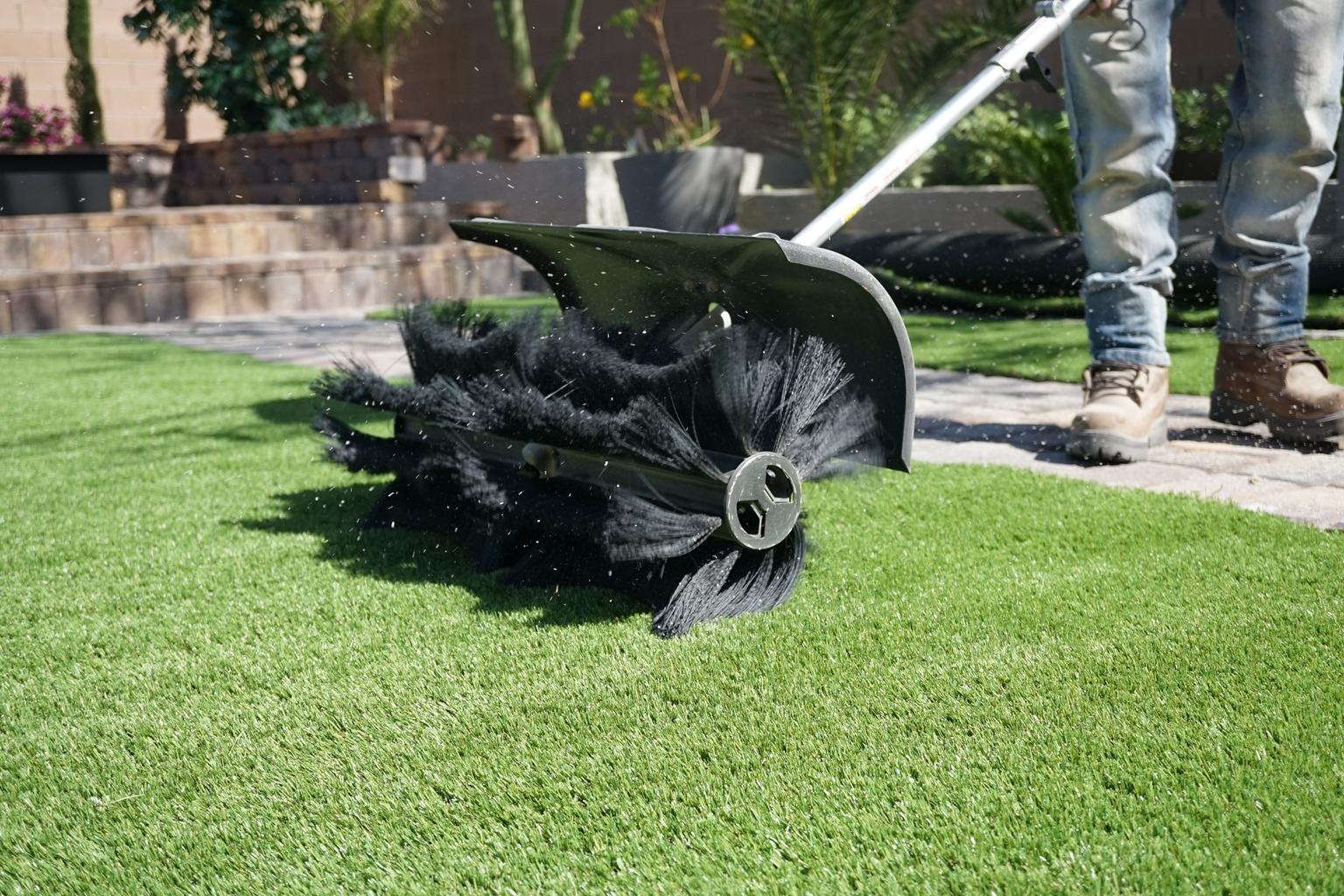
A power broom uses a rotating synthetic-bristle head to lift fibers and redistribute infill more thoroughly and quickly than hand brushing. It is the right choice for yards over 500 square feet, for areas with moderate compaction that respond only partially to hand brushing, and for any situation where time per session is a limiting factor.Time per session: approximately 10 to 15 minutes for 500 square feet, roughly half the time of a hand brush with more consistent results across the fiber bed.
Any power broom with synthetic bristle heads works on artificial turf. It does not need to be marketed specifically for synthetic grass as long as the bristle material is nylon or polypropylene, not metal or hard plastic. The TurFresh TurfGroomer Plus is a purpose-built cordless option designed specifically for residential synthetic turf, with polypropylene bristles calibrated for standard residential fiber heights.
Do not brush with a power broom when the surface is wet. The rotating bristles drive moisture and clumped infill deeper into the backing rather than redistributing it evenly. Wait until the surface is fully dry.
TurfComb
The TurFresh TurfComb is a manual tool engineered specifically for artificial grass. Its polypropylene teeth are rigid enough to penetrate the fiber bed and redistribute infill while being gentle enough to avoid fiber damage. A significant advantage over standard brushes is that it picks up pet hair embedded between fibers during the same pass, combining two maintenance tasks in one.Useful as a detail tool for high-traffic zones between power broom sessions, and as a standalone maintenance tool for small yards with light to moderate use.
Which tool for which situation
Small yard, light use, no pets: hand brush every 4 to 6 weeks.Medium yard, one dog: TurfComb or hand brush every 2 to 3 weeks on pet zones, power broom monthly across the full surface.
Large yard or multiple dogs: power broom every 2 to 3 weeks on high-use zones, full surface monthly. Professional TurfBloom annually.
Commercial, kennel, or high-traffic installation: power broom weekly. Professional service every 3 to 6 months.
How to Brush Artificial Grass Correctly
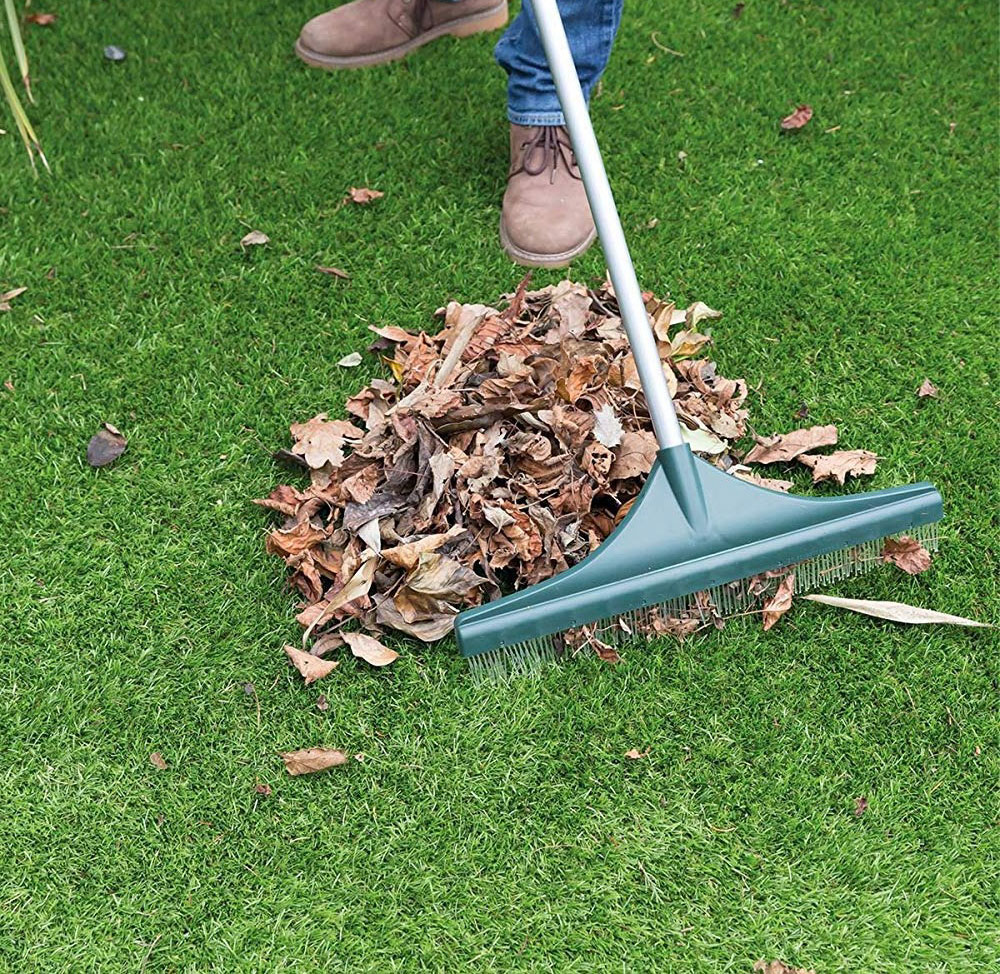
The technique is where most DIY brushing falls short. These are the steps that produce lasting results.Start with debris removal. Use a leaf blower on a low setting or a soft plastic rake to clear leaves, pine needles, and loose material before brushing. Brushing debris into the fiber bed rather than clearing it first embeds it deeper and reduces the effectiveness of the brushing pass.
Make sure the surface is dry. Never brush wet or damp turf. Wet infill clumps under the bristle pressure rather than redistributing, creating uneven distribution that worsens surface consistency. After rain or rinsing, wait for the surface to dry completely before brushing.
Identify the grain direction. Look across the surface at an angle. The direction the fibers lean is the grain. You will brush in the opposite direction.
Work against the grain in multiple passes. Using your brush or power broom, work across the surface in the direction opposite to the fiber lean. Follow with a second pass at a 90-degree angle to the first. This cross-brushing pattern lifts fibers more uniformly than a single directional pass and redistributes infill more evenly across the fiber bed.
Focus extra attention on high-use zones. Entry points from the house, pet routes, and areas under or near play equipment compress faster than the rest of the surface. Spend more time on these zones rather than distributing effort equally across the yard.
Check results after each session. Drag your hand across the surface in a previously flat area. Fibers that spring back are responding well. Fibers that remain flat after two passes indicate a zone where infill compaction may require professional attention.
📌 Cross-brushing against the grain in two perpendicular directions consistently outperforms single-direction brushing regardless of tool choice. If you change only one thing about your current brushing routine, make it this.
How Often Should You Brush Artificial Grass?
Frequency should match use intensity, not a fixed calendar. A yard that sees heavy daily traffic from multiple dogs needs different care than a lightly used decorative installation.Low traffic, no pets: every 4 to 6 weeks across the full surface.
Moderate traffic, one dog: every 2 to 3 weeks on pet zones and high-traffic paths. Full surface monthly.
High traffic, multiple dogs: weekly on the highest-use zones. Full surface every 2 weeks.
Commercial or kennel use: weekly across the full installation.
A useful signal that brushing frequency needs to increase: if fibers in a high-use zone are visibly flat before your next scheduled session, shorten the interval for that zone. Waiting for the full cycle means fighting against accumulated compression each time rather than maintaining fiber position between uses.
The upper limit on brushing frequency is determined by fiber wear, not by maintenance need. Over-brushing, meaning brushing a surface daily that only needs weekly attention, wears fiber tips faster than the use itself. Match the schedule to what the surface shows, not to anxiety about maintenance.
Complete Guide
📖 Artificial Turf Problems: 9 Most Common Issues, causes, fixes, and when to call a professional for weeds, mold, pests, drainage, infill, and more.
When the Brush Is Not the Problem
This is the section that matters most for homeowners who have been brushing correctly and still cannot get lasting results.When fibers lift during a brushing session and return to a flat position within a few days of normal use, the source of the problem is below the surface. Uric acid, compacted infill, and fine debris that has worked its way down through the fiber bed over months or years create a layer of resistance at the backing level that no brush can penetrate from above.
This is not a failure of the brushing routine. It is a signal that the turf system needs a different kind of intervention. Professional grooming equipment reaches the infill and backing layers that home tools cannot access. TurfBloom uses powered extraction and redistribution that clears the compaction source rather than working against it from above.
The practical test: brush a flat zone correctly and check it 72 hours after normal use. If fibers return to flat within that window, the compaction is below the surface. If fibers hold their position for a week or more, the routine is working.
For pet households, this situation is especially common after one to two years of heavy use. Urine compounds that accumulate in the infill layer create a binding effect that holds compacted material in place regardless of surface brushing. A professional deep clean that addresses the infill layer resolves both the matting and the odor source simultaneously.
📌 The right brush, used with the correct technique at the right frequency, handles surface maintenance. When the problem is below the surface, the solution is professional equipment, not a better brush.
The problem is below the surface. TurfBloom is built to reach it.
TurFresh TurfBloom combines powered fiber restoration, infill redistribution, and deep cleaning in one professional service. Over 150,000 services completed across California, Arizona, Texas, Nevada, and Florida. No commitment required.
Book a TurfBloom Service✔ Pet-Safe✔ Kid-Safe✔ 150,000+ Services✔ 30-Day Guarantee
Frequently Asked Questions
What is the best brush for artificial grass?
The best brush for artificial grass depends on yard size and use level. A stiff nylon or polypropylene hand brush with 4 to 5 inch bristles works well for small yards and routine maintenance. A power broom with synthetic bristle heads is more effective for larger areas and moderate compaction. The TurFresh TurfComb is a purpose-built option that lifts fibers and removes pet hair in the same pass. Never use metal bristles or wire brushes on synthetic turf.How often should you brush artificial grass?
Brush every 4 to 6 weeks for low-traffic yards without pets. Every 2 to 3 weeks for yards with one dog. Weekly in the highest-use zones for multi-dog households. Commercial installations benefit from weekly brushing across the full surface. Match frequency to use intensity rather than a fixed calendar.How do you brush artificial grass correctly?
Clear debris first, then make sure the surface is completely dry. Identify the natural grain direction of the fibers and brush against it in two perpendicular passes. This cross-brushing technique lifts fibers more uniformly and redistributes infill more evenly than brushing in a single direction. Focus extra time on high-use zones rather than distributing effort equally across the yard.Can you brush artificial grass when it is wet?
No. Brushing wet artificial grass causes infill to clump under bristle pressure rather than redistributing evenly. This creates uneven surface distribution that worsens with each wet brushing session. Always wait for the surface to dry completely after rain or rinsing before brushing.Why is my artificial grass still flat after brushing?
If fibers lift during brushing but return flat within a few days, the compaction source is in the infill layer below the surface, not at the fiber level. No brush resolves this from above. The cause is typically years of accumulated fine debris, uric acid from pet use, or compressed infill that has settled to the backing layer. Professional grooming equipment reaches this layer and redistributes it. Surface brushing alone cannot.Is a power broom better than a hand brush for artificial grass?
For yards over 500 square feet and for moderate compaction, yes. A power broom covers more ground faster and penetrates the fiber bed more consistently than a hand brush. For small yards or spot treatment, a quality hand brush produces comparable results at a fraction of the cost. Many homeowners use a hand brush for routine sessions and a power broom for seasonal deeper grooming.When should I stop brushing and call a professional?
When correct brushing with the right tool produces improvement that reverses within a week of normal use. When a specific zone does not respond to brushing at all. When the turf has not had professional maintenance in over a year and is showing widespread matting across multiple zones. Professional TurfBloom service addresses the infill compaction that home tools cannot reach and typically restores appearance the same day.