
Quick Answer:
How to clean fake grass from dog urine: rinse the spot immediately, apply a turf-safe enzyme cleaner, allow 10 to 30 minutes dwell time, rinse again, then brush to restore the fibers. TurFresh, a professional artificial turf cleaning company serving more than 130 cities, uses this same enzyme approach at commercial strength, because enzymes break down uric acid instead of masking it. The 3 biggest mistakes to avoid are vinegar, sand, and bleach, which worsen odor, block drainage, or create safety hazards. If odor returns within days of cleaning, the source is in the infill, not on the surface.
The problem is deeper than the surface.
TurFresh reaches the infill and backing layer where the odor actually lives.
✔ Pet Safe ✔ Eco Friendly ✔ 20+ Years of Experience ✔ 30-Day Guarantee
Why TurFresh
TurFresh is a professional artificial turf cleaning company with over 20 years in synthetic grass care, serving more than 130 cities across the United States. Home cleaning treats the surface. The TurFresh BioS+ process uses commercial extraction equipment to pull urine deposits out of the infill and backing layer, which is where recurring odor actually comes from.
Every TurFresh treatment is pet safe, allows same-day re-entry, and is backed by a 30-day odor removal guarantee.
Key Takeaways
🔑 Rinse immediately after every accident, do not wait. The longer urine sits, the deeper it penetrates into the infill and backing. Every hour matters in warm weather.
🔑 Use a turf-safe enzyme cleaner with full dwell time. Enzyme cleaners break down uric acid and ammonia at a molecular level rather than masking them. Skipping or shortening the dwell time is the most common reason odor returns after cleaning.
🔑 Avoid vinegar, sand, and bleach. Vinegar only masks surface odor. Sand traps urine in the infill and blocks drainage. Bleach reacts with ammonia in urine to produce toxic chloramine gases. All three make the problem worse.
🔑 Brush after every cleaning. Lifted fibers dry faster, drain better, and retain odor less. It takes two minutes and makes a real difference in long-term odor control.
🔑 If odor returns quickly, the source is in the infill. No surface cleaning method reaches crystallized uric acid in the infill layer. Professional extraction, which is what TurFresh does, is the only reliable fix at that stage.
Artificial Turf and Dog Urine: What Actually Happens
When a dog urinates on artificial turf, the liquid drains through the fibers and settles into the infill, where it dries and leaves uric acid crystals behind. Those crystals are what produce the smell, and they stay in place until something breaks them down chemically. Nothing in a synthetic turf system does that on its own.
This is the whole difference between synthetic and natural ground. Soil has microbes that digest organic waste over weeks. Turf infill has none, so every accident adds to a deposit that only accumulates.
Three things follow from that:
➧ The smell is never on the surface. You can rinse a spot until it looks spotless and still smell it an hour later, because the deposit is below the fibers.
➧ Time makes it exponentially harder. Fresh urine flushes out with water. Crystallized uric acid does not dissolve in water at all.
➧ Heat reveals what is already there. A yard that seemed fine in winter can become a problem in June without any change in routine. The deposits were always there.
💡 Pro Tip: If your turf smells worst on hot afternoons and after rain, that is not a coincidence and it is not damage to the turf. Both heat and moisture reactivate deposits already sitting in the infill.
Why Does Dog Urine Smell Worse on Artificial Grass Than on Natural Grass?
Dog urine smells worse on artificial grass because there are no soil microbes to break it down, so the waste accumulates instead of decomposing. Artificial grass is a great investment for pet owners with no dead patches, no mud, and no constant watering, but the tradeoff is that odor control becomes an active task rather than something nature handles.
When urine is not cleaned consistently, it leads to:
➧ Persistent odor as ammonia and uric acid compounds build up in the infill
➧ Bacterial growth that feeds on the organic residue trapped below the surface
➧ Drainage slowdown that concentrates odor-causing residue in one area
➧ Long-term fiber wear if harsh or incompatible products are used
If the smell gets stronger during hot afternoons, that is almost always a sign of buildup in the infill and base layer, not a sign that the turf itself is damaged.
How Do You Clean Fake Grass from Dog Urine the Right Way?
The most effective method is to rinse quickly, apply a turf-safe enzyme cleaner, allow full dwell time, then rinse and brush. This sequence removes urine residue before it settles deep and gives the enzymes time to break down the odor-causing compounds at the source rather than masking them.
What Is the Best Artificial Turf Cleaner for Dog Urine?
The best artificial turf cleaner for dog urine is an enzyme-based product formulated for synthetic grass. Enzymes digest uric acid, which is the only mechanism that removes the odor rather than covering it. Everything else on this list has a narrower job. Here is how the common options compare:
| Cleaner type | What it actually does | Best for |
|---|---|---|
| TurFresh professional treatment | Extracts deposits from the infill and backing with commercial equipment | Odor that returns within days of home cleaning |
| Enzyme cleaner (TurFresh BioS+) | Digests uric acid and ammonia at a molecular level | Routine cleaning and active odor at home |
| Antimicrobial infill (TurFill) | Neutralizes odor compounds continuously between cleanings | High-traffic potty zones and multi-dog yards |
| Baking soda | Absorbs mild surface odor only | A stopgap between deeper cleans |
| Vinegar | Neutralizes surface odor briefly, cannot reach infill | Light, occasional accidents |
| Bleach and household disinfectants | Reacts with ammonia in urine and releases toxic gas | Never use on pet urine |
What to look for on the label:
✅ Explicitly rated as safe for synthetic or artificial turf
✅ Enzyme or biologically based, not fragrance based
✅ Names dog urine or pet odor directly, not just “outdoor surfaces”
✅ Pet safe, with a stated re-entry time
💡 Pro Tip: A cleaner that lists its main benefit as “fresh scent” is a masking product. The label of an enzyme cleaner talks about breaking down or digesting compounds, not about how it smells.
What Do You Need to Clean Dog Urine from Artificial Turf?
✅ Garden hose
For immediate rinsing to dilute urine and flush it through the turf and infill layer.
✅ Pet-safe enzyme cleaner designed for artificial turf (such as TurFresh BioS+)
Enzyme cleaners target uric acid and ammonia compounds directly, eliminating odor at the source rather than covering it up.
✅ Turf deodorizer or antimicrobial infill (such as TurFresh BioX or TurFill)
These help neutralize recurring odors and reduce bacteria in high-traffic pet areas between professional cleanings.
✅ Stiff-bristle brush or turf rake
Lifts blades, redistributes infill, and improves airflow and drainage after cleaning.
✅ Baking soda (optional)
Useful for absorbing mild surface odor between deeper cleanings. Not a substitute for enzyme treatment.
Keep a spray bottle of enzyme cleaner near the back door. Treating accidents immediately is the single most effective habit for preventing odor from building up.
Step-by-Step: How to Remove Dog Urine Smell from Artificial Turf
👉 Step 1: Rinse Immediately
As soon as you notice an accident, rinse the spot with a steady hose stream for 30 to 60 seconds. The goal is to dilute the urine and flush it through the drainage layer before it concentrates in the infill.
👉 Step 2: Apply Enzyme Cleaner
After rinsing, spray a turf-safe enzyme cleaner evenly across the affected area. Cover the full spot and slightly beyond the visible edge, because urine spreads further than it appears on the surface.
👉 Step 3: Allow Full Dwell Time
Let the enzyme cleaner sit for 10 to 30 minutes, or as directed on the label. This step is where the actual odor elimination happens. Skipping or shortening the dwell time is the most common reason odor returns.
👉 Step 4: Rinse Thoroughly
After dwell time, rinse the area again to flush all residue through the turf system. A thorough rinse also prevents surface film from trapping additional odor.
👉 Step 5: Brush to Restore the Turf
Once mostly dry, brush the turf blades upright and redistribute infill. This restores airflow and drainage, both of which help prevent odor from returning.
👉 Step 6: Apply Deodorizer if Needed
For high-use spots or yards with multiple dogs, add a turf deodorizer or antimicrobial infill after cleaning. Products like TurFresh BioX and TurFill help neutralize residual odor compounds and support long-term bacterial control.
If odor returns within a day or two, the buildup is deeper than the surface. Treat a wider area than the visible spot and focus on the infill zone. That is where the bacteria live.
How Often Should You Clean Fake Grass from Dog Urine?
Rinse after every accident, do a full enzyme clean of the potty zone monthly, and schedule a professional deep clean once or twice a year. Adjust upward for multi-dog households.
➧ After each accident (best practice): Quick hose rinse in the potty zone immediately after use.
➧ Weekly: Rinse high-traffic pet areas on a set schedule, even without a visible accident.
➧ Monthly: Full enzyme clean of the main potty zone. Increase to every two to four weeks for multi-dog households.
➧ Once or twice per year: Professional deep clean, especially for yards with heavy daily use or recurring odor.
If you have multiple dogs or a small yard, treat the entire turf surface as a high-traffic zone and adjust your cleaning frequency accordingly.
Why Does Artificial Grass Still Stink of Dog Urine After Cleaning?
If the smell returns quickly after cleaning, the problem is almost always in the infill, not on the surface. Repeated use in the same area allows uric acid and bacteria to accumulate below what surface rinsing can reach.
The most common causes of recurring odor:
⚠️ Urine residue trapped in infill, the most frequent cause by far
⚠️ Partial drainage blockage allowing pooling below the surface
⚠️ Hot weather amplifying ammonia smell from existing residue
⚠️ Relying on masking sprays instead of enzyme cleaners that eliminate the source
⚠️ Incomplete dwell time on enzyme treatments, because the cleaner needs time to work
Fast fix for a persistently smelly spot:
👍 Rinse longer than usual and cover a wider area
👍 Apply enzyme cleaner and allow full dwell time
👍 Rinse thoroughly from the outside of the spot inward
👍 Brush to restore airflow and redistribute infill
👍 Add deodorizer or antimicrobial infill for ongoing protection
If the smell is strongest in one corner or zone, inspect drainage and check for compacted infill. Odor and drainage problems almost always appear together.
The 3 Biggest Mistakes to Avoid When Cleaning Dog Urine from Artificial Turf
The three most damaging mistakes are vinegar, sand, and bleach. Each one either fails to reach the source of the odor or actively makes the turf system worse.
⚠️ Mistake 1: Using Vinegar
Vinegar can temporarily reduce surface odor, but it does not reach the uric acid compounds built up in the infill. If the smell returns within a day or two after using vinegar, that is a clear signal the source is still in the turf system. Vinegar can also leave its own sour odor that compounds the problem.
If a home remedy works for an occasional accident but consistently fails in your dog's regular potty zone, the infill needs enzyme treatment, not more vinegar.
⚠️ Mistake 2: Sprinkling Sand
Sand traps urine in the infill layer instead of allowing it to drain through. Over time it reduces drainage performance, concentrates bacteria in one area, and makes odor significantly worse. If you need additional infill support, use a turf-approved product designed for pet yards, not loose sand.
⚠️ Mistake 3: Using Bleach
Bleach reacts with the ammonia present in dog urine and produces toxic chloramine gases. The Merck Veterinary Manual reports that mixing household bleach and ammonia produces a highly toxic gas that can cause severe breathing distress within 12 to 24 hours of exposure. Beyond the safety risk, bleach can also degrade synthetic turf fibers and void installation warranties. There is no scenario where bleach is the right choice for pet urine on artificial turf.
The infill is saturated. Professional extraction is the only fix.
TurFresh uses commercial-grade equipment and the BioS+ process to reach the infill and backing layer where the odor actually lives. Pet safe. Same-day re-entry. 30-day odor removal guarantee.
✔ Pet Safe ✔ Eco Friendly ✔ 20+ Years of Experience ✔ 30-Day Guarantee
Other Cleaning Mistakes That Damage Turf or Make Odors Worse
⚠️ Power washing at high pressure
High pressure damages turf blades, displaces infill, and can affect warranty coverage. Use a standard garden hose with a shower or fan setting instead.
⚠️ Using household cleaners not rated for synthetic turf
Many contain compounds that degrade turf fibers or leave residue that traps additional odor over time.
⚠️ Letting urine sit without rinsing
The longer urine stays, the deeper it penetrates into the infill and backing. Every hour matters in warm weather.
Deep Cleaning Methods for Artificial Turf
When routine enzyme treatment stops keeping up, there are two deeper methods worth knowing before calling anyone: pressure washing done correctly, and steam cleaning. Both have real limits, and both can damage turf if done wrong.
Pressure Washing, Done Correctly
Pressure washing artificial turf is possible but risky. High pressure displaces infill, frays the fibers, and can void an installation warranty. If you do it, the settings matter more than the equipment:
➧ Use a wide-angle nozzle, 40 degrees or wider. A narrow jet cuts into the backing.
➧ Keep the pressure low, under 1500 PSI. Higher settings are for concrete, not turf.
➧ Hold the wand at least 12 inches from the surface and keep it moving. Never hover over one spot.
➧ Work at an angle, not straight down, to avoid driving water and debris into the backing.
➧ Plan to re-level the infill afterward, because some displacement is unavoidable.
⚠️ Pressure washing removes surface debris. It does not remove uric acid from the infill, and it can push contaminants deeper. If odor is the reason you are considering it, pressure washing is the wrong tool.
Steam Cleaning
Steam cleaning uses heat rather than chemicals to sanitize the surface, which makes it attractive for households avoiding cleaning products. It kills surface bacteria effectively and leaves no residue.
The limits are worth knowing. Steam does not penetrate to the infill layer where uric acid accumulates, so it addresses the surface only. Excessive heat can also damage some turf backings, so check the manufacturer specification before applying steam to a full lawn. Test a small hidden area first.
For most pet odor problems, an enzyme cleaner outperforms steam, because the issue is chemical rather than microbial and it sits below where steam reaches.
Seasonal Turf Care for Pet Owners
Odor behaves differently across the year, and the routine that works in January is not the one that works in July. Adjusting by season prevents the buildup that shows up as a sudden summer odor problem.
Spring
Deep clean after winter to remove accumulated organic debris. Check drainage before the rainy season, because blocked drainage compounds every other problem. Refresh infill in high-use zones. Spring is the best window for a professional clean, since it resets the surface before summer heat activates whatever is left in the infill.
Summer
Increase rinsing frequency, because heat accelerates bacterial growth and makes existing deposits volatile. Clean in the early morning or evening rather than midday, so cleaner does not evaporate before it works. Watch for surface temperature and rinse before pets go out.
Fall
Remove leaves promptly, because decomposing organic matter holds moisture against the turf and creates bacteria hotspots. Deep clean before winter and inspect seams and edges while the weather still allows repair.
Winter
Continue removing solid waste, since cold does not stop bacteria, it only slows them. Rinse less often but do not stop entirely. Avoid metal tools on frozen turf, which is more brittle than it looks. If you use ice melt near the turf, choose a pet-safe product.
💡 Pro Tip: A yard that smells fine all winter and suddenly turns in June has not developed a new problem. The deposits were accumulating the whole time, and heat made them detectable. A spring deep clean is what prevents that.
Extra Steps for Odor and Bacteria Control on Pet Turf
➡️ Pick up solid waste immediately
Prevents bacteria buildup and protects both the fibers and the infill from contamination.
➡️ Rinse pet zones on a weekly schedule
Even without a visible accident, urine particles accumulate. A scheduled rinse prevents invisible buildup.
➡️ Use antimicrobial infill in high-traffic areas
TurFill and similar products help neutralize odor-causing compounds between professional cleanings.
➡️ Brush after every cleaning
Lifted blades dry faster, drain better, and hold odor less. It takes two minutes and makes a real difference.
Does Breed, Diet, or Hydration Affect How Much Turf Smells?
Yes. Larger breeds produce more urine volume, and concentrated urine produces stronger odor. Breeds including Boxers, Bulldogs, Great Danes, and Saint Bernards typically require more frequent rinsing due to volume alone.
Hydration directly affects urine concentration. Better hydrated dogs produce more diluted urine, which reduces odor intensity and discoloration risk. A consistent diet also helps maintain predictable waste patterns.
If your dog's urine suddenly smells significantly stronger than usual, consider a veterinary check, especially if it comes with other behavioral changes. Sudden odor shifts can signal health issues unrelated to turf maintenance.
When Should You Call a Professional Turf Cleaning Service?
Call a professional when odor returns within days of a correct enzyme cleaning, because that means the infill is saturated. DIY cleaning handles routine maintenance well, but once odor has penetrated the infill and backing layer, home methods cannot reach it.
Signs it is time for professional cleaning:
➧ Odor returns within days of cleaning regardless of what product you use
➧ Multiple dogs using the same area daily with heavy accumulated use
➧ Turf has not been deep cleaned in 12 months or more
➧ Drainage feels slow or infill looks compacted in high-use zones
TurFresh TurfClean uses specialized equipment and professional-grade enzyme treatments to clean down to the infill layer, where home cleaning cannot reach.
Complete Guide
📖 How to Maintain Artificial Grass When You Have Dogs, the full system for pet households: daily routine, enzyme treatment, multi-dog homes, and when to call a professional.
Frequently Asked Questions
What is the best cleaner for dog urine on artificial grass?
An enzyme-based cleaner formulated for synthetic turf is the best option, because enzymes digest the uric acid that causes the odor instead of masking it. Look for a label that names dog urine directly and states a pet re-entry time. TurFresh BioS+ is formulated for this use, and for odor that has been building for months TurFresh applies the same enzyme process with commercial extraction equipment.
What should I spray on fake grass for dog urine?
A turf-safe enzyme cleaner is the most effective option. It targets uric acid and ammonia compounds at the source rather than masking the smell. Apply after rinsing, allow full dwell time as directed, then rinse again.
How do I get rid of dog urine smell on fake grass that keeps coming back?
Recurring odor almost always means the urine has built up in the infill layer. Treat a wider area than the visible spot with enzyme cleaner, allow full dwell time, rinse thoroughly, brush to restore airflow, and consider adding antimicrobial infill. If the smell returns within days regardless of what you use, a professional deep clean is the next step.
Can baking soda be used on fake grass for dog urine?
Baking soda can absorb mild surface odor between cleanings but it does not break down uric acid compounds in the infill. Sprinkle on a dry area, allow a few hours of contact, then sweep or rinse away. Use it as a supplement to enzyme cleaning, not a replacement.
Why does my fake grass smell like dog urine when it is hot?
Heat activates ammonia compounds in residue already trapped in the infill. Regular rinsing and periodic enzyme treatment prevent the buildup that heat makes noticeable.
Is it safe to use bleach on fake grass if I rinse it right away?
No. Bleach reacts with ammonia in urine and produces toxic chloramine gases. Rinsing quickly does not prevent the reaction. Use a pet-safe enzyme cleaner instead.
How often should I clean fake grass from dog urine?
Rinse after every accident as a best practice. Do a full enzyme clean of high-use areas at least once a month, or every two to four weeks for households with multiple dogs. Schedule a professional deep clean once or twice a year.
What causes fake grass to smell like dog urine even with deodorizer?
Deodorizer treats surface odor but cannot reach deep infill buildup. If the smell returns quickly after deodorizing, use an enzyme cleaner with proper dwell time, check drainage, brush to redistribute infill, and consider a professional deep clean.
Can I use a pressure washer on artificial turf?
Only with the right settings. Use a wide-angle nozzle of 40 degrees or more, keep pressure under 1500 PSI, hold the wand at least 12 inches away, and work at an angle rather than straight down. Expect to re-level the infill afterward. Pressure washing removes surface debris but does not remove uric acid from the infill, so it is the wrong tool if odor is the problem.
Does steam cleaning work on artificial turf?
Steam sanitizes the surface without chemicals and leaves no residue, but it does not reach the infill layer where uric acid accumulates. Excessive heat can also damage some turf backings, so check the manufacturer specification and test a hidden area first. For pet odor specifically, an enzyme cleaner outperforms steam.
Will professional cleaning damage my turf?
No. Professional turf cleaning uses equipment and pressure calibrated for synthetic surfaces, and the process is designed to protect fibers and backing. TurFresh technicians work within manufacturer specifications, and the treatment is pet safe with same-day re-entry.
How long does professional turf cleaning take?
Most residential yards take two to four hours depending on size and how much buildup has accumulated. Larger properties or turf that has not been deep cleaned in years take longer. The turf is usable the same day.
When should I schedule a professional turf cleaning?
Schedule a professional cleaning when odor persists after enzyme treatment, when you have multiple dogs with heavy daily use, when drainage seems slow, or when the turf has not had a deep clean in over a year. TurFresh provides this service in more than 130 cities across the United States, backed by a 30-day odor removal guarantee.
Share
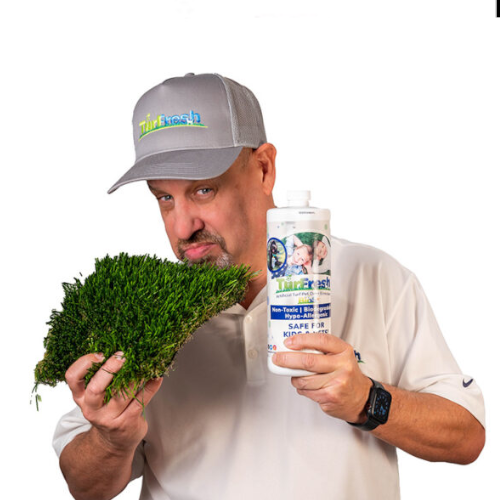

John Pla is the owner of TurFresh and an expert with over 20 years of experience in artificial turf cleaning and maintenance. John’s passion for sustainability, community impact, and innovative solutions has made him a trusted figure in the artificial grass industry and beyond.