
Quick Answer:
How to clean artificial turf correctly: remove surface debris first, rinse the full surface with a garden hose to flush urine and dust through the drainage layer, then apply a turf-safe enzyme cleaner to high-use and pet zones while the surface is cool and out of direct sunlight. Allow the enzyme cleaner to dwell for a minimum of 10 minutes before rinsing. Enzyme-based products break down the organic compounds that cause odor at a molecular level rather than masking them. Vinegar and baking soda neutralize surface pH temporarily but do not eliminate the uric acid and bacterial colonies in the infill layer where persistent odor originates. For pet households, weekly rinsing of pet zones plus enzyme treatment two to three times per week is the routine that keeps odor manageable between professional cleanings.
When surface cleaning stops working, the problem is in the infill. That is what TurFresh reaches.
TurFresh professional cleaning uses hot-water extraction to flush the infill layer where uric acid and bacteria accumulate beyond the reach of any surface routine. Non-toxic BioS+ formula. Pets safe same day. Over 150,000 services completed. Backed by our 30-day odor removal guarantee.
✔ Pet-Safe✔ Kid-Safe✔ 150,000+ Services✔ 30-Day Guarantee
Key Takeaways
✅ Always apply enzyme cleaner when the turf is cool and out of direct sunlight. Heat reduces the effectiveness of enzyme-based products by accelerating evaporation before the enzymes have time to react with organic compounds. If the surface feels hot to the touch, rinse first until it cools. Early morning, evening, or shaded conditions produce the best results.
✅ Enzyme cleaners work because they break down uric acid at the molecular level. Vinegar does not. Vinegar neutralizes surface pH temporarily, which reduces odor briefly, but it has no effect on the uric acid crystals and bacterial colonies in the infill layer where persistent odor lives. The odor returns within days because the source was never addressed. Enzyme cleaners contain beneficial bacteria that consume uric acid and organic waste compounds rather than just neutralizing surface acidity.
✅ The correct BioS+ concentrate mixing ratio is 3.2 oz per 28.2 oz of water for a 32 oz ready-to-use bottle. This ratio ensures the correct enzyme concentration for effective odor treatment. Too diluted reduces effectiveness. Too concentrated wastes product without improving results. One 32 oz ready-to-use bottle covers approximately 500 square feet.
✅ Pet households need a different cleaning schedule than non-pet yards. A backyard without pets needs rinsing and occasional debris removal. A yard with one or two dogs needs weekly rinsing of pet zones plus enzyme treatment two to three times per week. A yard with three or more dogs or large breeds needs daily rinsing of pet zones plus enzyme treatment after every rinse session. The schedule that works for your neighbor's decorative front yard will not work for your dog run.
✅ When odor returns within 48 hours of a complete DIY cleaning session, the infill has reached the saturation threshold. Surface enzyme treatment will not resolve it regardless of frequency or concentration. At that stage, professional extraction cleaning is the only tool that reaches the infill layer where the source is.
Why Does Artificial Turf Need Regular Cleaning?
Artificial turf needs regular cleaning because dirt, debris, bacteria, and organic waste build up over time, especially in pet areas or warm climates. Synthetic grass does not decompose or process waste the way soil does. Urine passes through the fiber layer and accumulates in the infill granules below, where bacteria reproduce continuously in the warm, moist environment.
Without regular cleaning, pet turf develops persistent odor, compacted infill that blocks drainage, and bacterial load high enough to create hygiene concerns for children and pets in direct contact with the surface.
Regular cleaning addresses what is visible on the surface. Professional deep cleaning addresses what accumulates in the infill layer below.
How to Clean Artificial Turf: Step-by-Step
Artificial turf is cleaned by removing debris, rinsing to flush the surface, applying a turf-safe enzyme cleaner with proper dwell time, and allowing it to work before a final rinse.
Step 1: Remove surface debris
Use a leaf blower, plastic rake, or stiff-bristle broom to clear leaves, twigs, pet hair, and any solid waste from the surface before applying any liquid. This step matters because organic debris traps moisture and accelerates bacterial growth in the infill beneath it. Removing it before rinsing prevents debris from being pushed deeper into the fiber bed by water pressure.
Remove solid pet waste first. Do not rinse before solid waste is cleared, as rinsing pushes fecal bacteria into the fiber layer and infill.
Step 2: Rinse the full surface
Attach a garden hose and spray down the entire turf area using a fan or shower setting. Start at one end and work across so debris flushes in one direction toward the exit point. Focus extra attention on confirmed pet zones, corners, and shaded areas where moisture collects.
The goal of rinsing is to flush fresh urine and loose contamination through the fiber layer and into the drainage system below. Rinsing does not remove uric acid that has already bonded to infill granules.
Avoid high-pressure washing for routine cleaning. High pressure can displace infill, damage fiber backing, and reduce cushioning.
Step 3: Allow the surface to cool before applying cleaner
This step is overlooked by most turf owners but makes a meaningful difference in results. Enzyme-based cleaners work through a biological process that requires contact time with the organic compounds they target. On a hot surface in direct sunlight, the cleaner evaporates before the enzymes have time to react fully.
If the surface feels warm to the touch after rinsing, wait or rinse again until it cools. Cleaning in early morning, evening, or shade produces better results than midday cleaning in direct sun.
Complete Guide
📖 5 Maintenance Tips to Extend the Life of Your Artificial Turf — the complete care schedule: debris, brushing, pet waste, infill, and professional cleaning frequency.
Step 4: Apply BioS+ enzyme cleaner to high-use zones
Apply TurFresh BioS+ enzyme cleaner to pet zones and high-use areas after the surface is cool. For the concentrate format, mix 3.2 oz of concentrate with 28.2 oz of water in a 32 oz spray bottle. Shake thoroughly before use. One 32 oz bottle covers approximately 500 square feet.
Apply using a hose-end sprayer for larger areas or a spray bottle for targeted spot treatment. Saturate the soiled areas thoroughly, focusing on confirmed pet potty zones and high-traffic lanes.
📌 Do not apply enzyme cleaner in direct sunlight. Heat accelerates evaporation before the enzymes have time to work. Early morning or evening application produces the best results.
Step 5: Allow full dwell time before rinsing
Enzyme cleaners require contact time to break down organic compounds. Allow a minimum of 10 minutes of dwell time after application before rinsing. For heavily contaminated pet zones or areas with persistent odor, 15 to 20 minutes improves results.
Do not rinse immediately after application. The enzymes need time to react with the uric acid and organic waste compounds they are targeting. Rinsing too quickly removes the product before it has had time to work.
After full dwell time, rinse thoroughly to flush the broken-down compounds through the drainage system.
How Often Should You Clean Artificial Turf?
Cleaning frequency depends on use intensity, not a fixed calendar. The table below gives the correct schedule for each use profile.
These intervals assume consistent daily maintenance is in place. Skip routine rinsing and enzyme treatment and shorten each professional interval by two to four weeks.
Why Enzyme Cleaners Work Better Than Vinegar or Baking Soda
This is the most common DIY cleaning mistake. Vinegar and baking soda are popular because they are inexpensive and visibly reduce odor temporarily. But they do not address the source of persistent turf odor.
Persistent pet turf odor comes from two sources: uric acid crystals that have bonded to infill granules, and bacterial colonies that reproduce continuously in the warm, moist infill environment. Both sources are in the infill layer, not on the fiber surface.
Vinegar is an acid. It neutralizes the surface pH temporarily, which reduces the immediate ammonia smell. But it does not break down uric acid crystals or kill the bacteria producing them. The odor returns within one to three days because nothing has changed about the actual contamination.
Baking soda is an alkaline. It absorbs surface moisture and temporarily neutralizes surface odors. It has no penetrating effect on the infill layer and no mechanism for breaking down uric acid.
Enzyme cleaners work differently. They contain beneficial bacterial strains that produce enzymes specifically targeting uric acid, ammonia, and protein-based waste compounds. These enzymes break the molecular bonds of the target compounds rather than simply neutralizing surface acidity. The result is actual elimination of the odor source, not temporary pH neutralization.
The practical test: apply vinegar correctly and the odor returns in one to three days. Apply BioS+ correctly with full dwell time and the odor stays reduced for significantly longer because the compounds producing it have been broken down rather than masked.
How to Mix BioS+ Concentrate Correctly
The correct BioS+ concentrate mixing ratio produces the enzyme concentration needed for effective odor treatment.
Mixing instructions for a 32 oz ready-to-use bottle:
1. Add 3.2 oz of BioS+ concentrate to a clean 32 oz spray bottle
2. Add 28.2 oz of water
3. Cap and shake thoroughly before use
4. Apply to pet zones with the surface cool and out of direct sunlight
One 32 oz bottle covers approximately 500 square feet at standard application rate. For heavily contaminated pet zones, saturate the area thoroughly rather than applying a light mist.
The concentrate format reduces shipping costs and plastic waste compared to purchasing ready-to-use bottles. The dilution ratio is calibrated for effective enzyme delivery at the correct concentration for residential pet turf applications.
How to Disinfect Artificial Grass Safely
Cleaning and disinfecting are different steps that address different problems. Cleaning removes visible dirt and debris. Disinfecting reduces bacteria and odor-causing microbes. For most residential pet households, a consistent enzyme cleaning routine covers both functions adequately. For situations requiring more aggressive disinfection (illness events, high pathogen exposure), TurFresh BioX provides targeted bacterial disinfection.
What to use for disinfecting artificial turf:
Enzyme-based turf cleaners (BioS+) for routine odor and bacteria control
BioX for targeted disinfection after illness events or high contamination
Clean water for rinsing and surface cooling
What to avoid:
Bleach: degrades turf fiber pigments and backing adhesives over time. Creates toxic chloramine gases when combined with the ammonia in pet urine
Household disinfectants not designed for synthetic turf: may damage fiber backing and leave residues harmful to pets
Applying any cleaner in direct sunlight: reduces effectiveness and accelerates evaporation before dwell time is reached
How to Clean Artificial Turf for Pets
Pet turf requires extra attention because urine, feces, and vomit can penetrate through the fiber layer and into the infill and backing below.
For solid waste: remove immediately before rinsing. Do not let feces sit on the surface through multiple rinse cycles. Feces left in place blocks drainage in the zone directly below, accelerating bacterial accumulation.
For urine zones: rinse the confirmed pet area immediately after use when possible, or as a minimum three times per week. Apply BioS+ enzyme treatment to pet zones after rinsing, allow full 10-minute dwell time, then rinse again.
For persistent odor in a specific zone: this signals the infill below that zone has become saturated. Repeated surface treatment will not resolve it. A professional cleaning that reaches the infill layer is the appropriate next step.
Designating a consistent potty area for your dog reduces the total surface area that needs enzyme treatment and concentrates contamination in one zone that is easier to manage with a targeted routine.
What Tools Are Safe to Use on Artificial Turf
Safe tools:
Garden hose with fan or shower spray setting for rinsing
Hose-end sprayer for applying enzyme cleaner over large areas
32 oz spray bottle for targeted spot treatment
Stiff-bristle synthetic broom for brushing fibers upright after cleaning
Plastic leaf rake or turf rake for debris removal
Leaf blower on low setting for debris removal before rinsing
Tools and methods to avoid:
Metal rakes: can snag and damage turf fibers
High-pressure washers for routine cleaning: displaces infill and can damage fiber backing
Carpet cleaning equipment: not designed for synthetic turf systems
Bleach or ammonia-based cleaners: damages fibers and creates chemical reactions with pet urine compounds
Common Mistakes When Cleaning Artificial Turf
Applying cleaner in direct sunlight: heat evaporates the product before enzymes have time to work. Apply in shade or during cooler parts of the day.
Rinsing immediately after applying enzyme cleaner: enzymes need dwell time to break down organic compounds. Rinsing within the first few minutes removes the product before it has worked.
Using vinegar or baking soda as a primary odor solution: both provide temporary surface odor reduction without addressing the uric acid and bacteria in the infill layer where persistent odor originates.
Skipping solid waste removal before rinsing: rinsing over feces pushes bacteria deeper into the fiber layer and infill rather than removing it.
Using the same cleaning schedule for a pet yard and a non-pet yard: a light-use yard with no pets needs occasional rinsing. A yard with two large dogs needs daily rinsing and enzyme treatment. Using the wrong schedule for your use profile is the most common reason DIY cleaning stops working.
When to Call a Professional Turf Cleaning Service
DIY cleaning handles surface-level contamination. Professional cleaning handles what accumulates in the infill layer where surface products cannot reach. The signal that you have crossed from one to the other: odor that returns within 48 hours of a correctly executed enzyme treatment session with full dwell time.
Other signals that professional cleaning is needed:
Odor is present before any cleaning has been done that day
The surface feels hard and rocky underfoot in pet zones rather than having slight give
Fibers in high-use zones stay flat after brushing
Drainage has slowed noticeably in pet zones compared to the rest of the surface
More than 6 months since the last professional service with regular pet use
TurFresh TurfClean uses hot-water extraction equipment to flush the infill layer where uric acid crystals, bacterial colonies, and compacted organic debris accumulate beyond the reach of any surface routine.
One professional cleaning reaches where surface treatment stops.
TurFresh TurfClean uses hot-water extraction to flush the infill layer where uric acid and bacteria accumulate. Non-toxic BioS+ formula. Pets safe the same day. Over 150,000 services across California, Arizona, Texas, Nevada, and Florida. 30-day odor removal guarantee.
✔ Pet-Safe✔ Kid-Safe✔ 150,000+ Services✔ 30-Day Guarantee
Frequently Asked Questions
How do you clean artificial turf step by step?
Remove surface debris first. Rinse the full surface with a garden hose to flush urine and dust through the drainage layer. Allow the surface to cool if it is warm from sun exposure. Apply BioS+ enzyme cleaner to pet zones and high-use areas. Allow a minimum 10-minute dwell time. Rinse thoroughly. For pet households, repeat enzyme treatment two to three times per week on confirmed pet zones.
How often should artificial turf be cleaned?
Frequency depends on use intensity. Non-pet yards need monthly rinsing and once-per-year professional cleaning. One small to medium dog: rinse two to three times per week, enzyme treatment two to three times per week, professional cleaning every three to six months. One to two large dogs: daily rinsing and enzyme treatment, professional cleaning every six to eight weeks. Three or more dogs: daily treatment of all pet zones, professional cleaning every three to four weeks.
Why does my artificial turf still smell after cleaning?
Persistent odor after cleaning indicates the contamination source is in the infill layer, not on the fiber surface. Surface enzyme treatment reaches the upper fiber layer but does not penetrate three to four centimeters into the infill where uric acid crystals and bacterial colonies accumulate over time. If odor returns within 48 hours of a correct enzyme treatment session with full dwell time, professional infill extraction is the appropriate next step.
Can you use Simple Green on artificial turf?
Simple Green is not formulated for synthetic turf systems and is not recommended as a primary turf cleaner. It may reduce surface odor temporarily but does not address the organic compounds in the infill layer that cause persistent odor. For artificial turf, enzyme-based products specifically formulated for synthetic grass systems, such as BioS+, produce better and longer-lasting results.
Why does enzyme cleaner work better than vinegar on artificial turf?
Vinegar neutralizes surface pH temporarily, which reduces ammonia odor briefly. It does not break down uric acid crystals or kill the bacteria that produce them. The odor returns in one to three days because the source remains intact. Enzyme cleaners contain beneficial bacterial strains that produce enzymes targeting uric acid and protein-based waste compounds specifically, breaking their molecular bonds rather than masking surface acidity.
How do you mix BioS+ concentrate for artificial turf?
Add 3.2 oz of BioS+ concentrate to a clean 32 oz spray bottle. Add 28.2 oz of water. Cap and shake thoroughly before use. One 32 oz bottle covers approximately 500 square feet at standard application rate. Apply when the surface is cool and out of direct sunlight. Allow a minimum 10-minute dwell time before rinsing.
Share
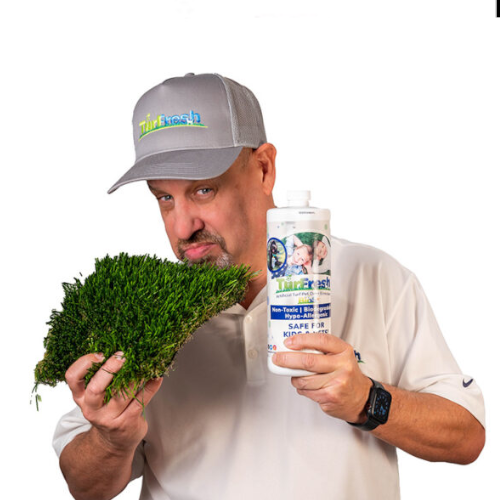

John Pla is the owner of TurFresh and an expert with over 20 years of experience in artificial turf cleaning and maintenance. John’s passion for sustainability, community impact, and innovative solutions has made him a trusted figure in the artificial grass industry and beyond.