
Quick Answer: How to keep artificial grass green: remove debris weekly with a leaf blower on low, rinse with a hose to clear dust and pollen, brush firmly against the grain with a synthetic-bristle tool to lift flat fibers, and spot-clean stains and pet areas before they set. According to Artificial Turf Supply, regular brushing with the correct tool restores the appearance of matted fibers in over 90 percent of cases without professional intervention.
When brushing and rinsing stop working, the problem is in the infill.
TurFresh professional cleaning reaches where home tools stop. One visit restores color, fiber stand, and drainage without replacement.
✔ Pet Safe✔ Eco Friendly✔ 20+ Years Experience✔ 30-Day Guarantee
Key Takeaways
🔑 Brushing against the grain is the single most effective home fix for dull, flat-looking artificial grass. It works in under an hour for most cases of light to moderate matting
🔑 Artificial grass lasts 15 to 20 years with proper maintenance. Most premature aging comes from skipped brushing and untreated pet waste, not from the product itself
🔑 A dull or less green appearance almost always has one of three causes: flattened fibers, surface debris buildup, or organic staining. All are reversible with the right approach
🔑 Never use metal bristles on artificial grass. They damage polyethylene fibers and accelerate aging faster than foot traffic does
🔑 If your turf still looks dull after brushing and rinsing, the problem is in the infill layer, not on the surface. Professional cleaning is the correct next step
Why Does Artificial Grass Stop Looking Green Over Time?
Artificial grass stops looking green when dust, pollen, and fine debris coat the fiber surface and dull the reflective properties of the blades, when foot traffic presses fibers flat so they reflect light at the wrong angle, or when organic material from leaves, pet waste, or food creates staining and dark patches.
The good news is that these are maintenance issues, not product failures. Quality artificial grass maintains its color for 15 to 20 years under normal conditions. What changes is the surface presentation, and that is almost always restorable with the right tools and sequence.
High-use zones (entry points, pet runs, play areas) flatten faster than the rest of the lawn. Shaded or damp edges collect organic buildup that changes how the turf reflects light, making those areas look darker than surrounding sections.
If the turf looks dull from a distance but feels structurally fine underfoot, a rinse plus brushing session typically restores the green appearance in under an hour. If the dullness returns within a few days, the source is in the infill and requires deeper treatment.
How Long Does Artificial Grass Last?
Quality artificial grass lasts 15 to 20 years with proper maintenance, according to turf manufacturers and industry benchmarks. The upper end of that range requires consistent brushing, regular cleaning, and periodic professional service. The lower end is what happens when maintenance is skipped for multiple seasons.
The most common causes of premature aging are compacted infill that stops supporting fiber stand, accumulated pet waste residue that degrades fiber flexibility, and UV exposure without proper maintenance to redistribute infill and protect fiber backing.
Artificial grass from reputable manufacturers includes UV inhibitors that prevent fading for the life of the product. The color does not fade. What changes is fiber stand and surface cleanliness, both of which are maintainable.
Lifespan by use level:
➧ Light residential use (decorative, no pets): 18 to 20 years with basic annual maintenance
➧ Moderate residential use (family, occasional pets): 15 to 18 years with consistent home maintenance
➧ Heavy use (multiple dogs, daily foot traffic): 12 to 15 years with regular professional cleaning included
What Tools Help Artificial Turf Look Green and Stay Clean?
The right tools keep turf fibers intact and prevent damage to seams and infill. The wrong tools create the wear they are trying to prevent.
Use:
➧ A leaf blower on low setting for debris removal without scattering infill
➧ A garden hose with a fan or shower spray nozzle for rinsing (40 to 70 PSI at the nozzle, safe for infill)
➧ A soft synthetic-bristle broom, rake, or TurFresh TurfComb for grooming and fiber restoration
➧ Mild dish soap and water for surface stain removal
➧ TurFresh BioS+ enzyme cleaner for pet areas and odor treatment
Avoid:
⚠️ Metal-tined rakes and wire bristle brushes: they damage polyethylene fibers and puncture backing with repeated use
⚠️ High-pressure washing: it displaces infill and stresses seams
⚠️ Bleach or strong chemical cleaners: they fade color and degrade fiber backing
If you only invest in one maintenance tool, make it a synthetic-bristle brush or TurfComb. Brushing against the grain is the fastest and most reliable way to restore appearance between professional cleanings.
How Can You Use Proper Equipment Without Damaging Artificial Grass?
Use a leaf blower on a low setting and a synthetic-bristle brush because those tools lift debris and revive turf fibers without tearing or stressing the blades.
Start by removing leaves, twigs, and loose debris before any water contacts the surface. Wet debris matted against fibers is harder to remove than dry debris. When brushing, work against the direction the blades lean to lift fibers and reduce matting.
Best practices for safe equipment use:
➧ Leaf blower: low setting only, pointing debris toward a clear edge for easy collection
➧ Hose: fan or shower spray, never a concentrated jet stream at close range
➧ Brush: firm strokes against the grain, focus time on high-traffic zones first
➧ TurfComb: penetrates to the infill level to remove embedded debris and pet hair that a standard broom misses
Focus brushing on high-traffic zones first. Those are the areas where matted fibers most commonly make turf look less green, and restoring them makes the whole yard look better faster.
What Should You Do Right After a Spill on Artificial Grass?
Clean spills immediately because the longer a spill sits, the deeper it penetrates into the fiber and infill layer where it becomes significantly harder to remove. Unlike natural grass which has soil microbes that break down organic material, artificial turf holds spills at the surface and fiber level until they are physically removed.
Spill cleanup sequence:
👉 1. Remove solids first: pick up, do not rub into the fibers
👉 2. Blot liquids rather than spreading them across a wider area
👉 3. Rinse with clean water to flush the area
👉 4. Apply mild soap and water for sticky or greasy spills
👉 5. Rinse thoroughly. Soap residue left on fibers attracts more debris and causes faster dulling
👉 6. Brush the area once dry to restore fiber stand
Spills to treat immediately:
⚠️ Drinks, sauces, and food spills: sugar residue attracts insects and accelerates fiber dulling
⚠️ Grease from outdoor cooking: bonds to fiber surface and traps debris permanently if not removed quickly
⚠️ Mud is easier to remove when dry. Do not rinse wet mud. Let it dry then brush and rinse
⚠️ Sunscreen and pool chemicals: chemical residue accumulates in infill and affects drainage performance
How Do You Remove Stains From Artificial Grass Safely?
Use mild soap and water for most stains because harsh chemicals damage turf fibers, affect backing integrity, and can void installation warranties. The soap method works on the majority of household stains including food, drinks, mud, and general grime.
Stain removal sequence:
👉 1. Rinse the area first to remove any loose residue
👉 2. Apply a mild dish soap and water solution using a soft brush or cloth
👉 3. Work gently in circular motions. Do not scrub aggressively
👉 4. Rinse thoroughly, repeat if needed
👉 5. Brush the area once dry to restore fiber stand
For oil, grease, or paint stains that do not respond to soap and water, a turf-safe degreaser or the TurFresh TurfClean service addresses staining at the fiber level without risking damage from aggressive DIY chemicals.
What to avoid:
⚠️ Bleach: fades color permanently and degrades fiber backing
⚠️ Strong solvents or degreasers not rated for synthetic turf
⚠️ Leaving soap residue: always rinse thoroughly after cleaning
How Can You Stop Weeds From Ruining the Look of Artificial Turf?
Prevent weeds by removing them as soon as they appear and keeping edges and seams clear of debris, because weeds in artificial turf almost always start at the perimeter where windblown seeds collect in border gaps, not in the middle of the installation.
Where weeds typically appear:
➧ Along seams where two turf panels meet
➧ At border and edging gaps where turf meets concrete, soil, or planting beds
➧ In shaded, damp areas where seed germination is easier
What to do when weeds appear:
👉 Pull them immediately. Roots are shallow in the infill layer and come out cleanly when caught early
👉 Use a turf-safe weed control product for persistent areas
👉 Rinse and brush the area afterward to restore appearance
👉 Inspect perimeter edging and reseal any gaps where seeds can settle
If weeds keep returning in the same spots, the issue is a gap in the edging or border, not the turf itself. Inspect and seal the perimeter rather than treating the same weed repeatedly.
What Is the Best Way to Clean Artificial Grass After Pet Use?
Remove solid waste promptly and rinse urine areas immediately because pet waste is the fastest way for artificial grass to lose its clean, green appearance and develop persistent odors that regular rinsing cannot fix.
Pet cleanup sequence:
➧ Remove solid waste immediately. Do not let it sit in heat
➧ Rinse the area with a hose to flush liquid through the backing
➧ Apply TurFresh BioS+ enzyme cleaner for odor treatment. Enzymes break down ammonia at the molecular level rather than masking it
➧ Allow full dwell time per product directions before rinsing
➧ Brush the fibers after the area dries to keep blades upright
Pet areas need more frequent rinsing and enzyme treatment than the rest of the yard, especially in warm months when heat activates odor compounds. If certain pet zones consistently look darker or flatter than surrounding areas, brush weekly and treat monthly with enzyme cleaner regardless of visible waste.
How Do You Refresh Artificial Turf So It Looks Green Again?
Refresh turf by completing a full reset sequence in order: debris removal, rinse, brush, spot clean. This combination addresses all three causes of dull appearance: surface coating, fiber compression, and organic staining, all in a single session.
A practical monthly refresh routine:
👍 1. Blow off debris on low setting
👍 2. Rinse to remove dust, pollen, and surface residue
👍 3. Brush firmly against the grain to lift fibers and redistribute infill
👍 4. Spot-clean stains and pet areas with mild soap or enzyme cleaner
👍 5. Check edges and seams for buildup, weeds, or lifting
👍 6. Brush again after the surface dries for best fiber stand result
Brushing after the turf dries rather than when wet produces significantly better results. Wet fibers are heavier and more resistant to brushing than dry fibers.
When Should You Consider a Professional Artificial Turf Cleaning Service?
Consider professional cleaning when turf stays dull, matted, or smelly even after a full rinse and brush session, because that almost always means the problem is in the infill layer where home tools cannot reach.
Signs the problem is beyond home maintenance:
⚠️ Odors return within days of rinsing regardless of what product is used
⚠️ Visible matting that brushing does not improve after two or three sessions
⚠️ Persistent discoloration in pet zones despite regular enzyme treatment
⚠️ Drainage slowing in high-use areas where organic residue has accumulated in the infill
⚠️ The turf has not been professionally cleaned in over 12 months with regular pet use
TurFresh TurfClean and TurfBloom address infill compaction, deep organic residue, and fiber restoration that home cleaning leaves behind. One professional service typically restores appearance faster than months of repeated DIY treatments.
The source is in the infill. TurFresh reaches it.
TurFresh TurfClean and TurfBloom restore fiber stand, color, and drainage at the infill level. Safe for pets and kids the same day.
✔ Pet Safe✔ Eco Friendly✔ 20+ Years Experience✔ 30-Day Guarantee
Frequently Asked Questions
How do you keep artificial grass green?
Keep artificial grass looking green by removing debris weekly with a leaf blower on low, rinsing regularly to clear dust and pollen, brushing against the grain with a synthetic-bristle tool to lift flat fibers, and spot-cleaning spills and pet areas before they set. According to Artificial Turf Supply, regular brushing restores matted fiber appearance in over 90 percent of cases without professional intervention.
How long does artificial grass last?
Quality artificial grass lasts 15 to 20 years with proper maintenance. Light residential use without pets can reach 18 to 20 years with basic annual maintenance. Heavy daily pet use typically delivers 12 to 15 years when professional cleaning is included in the maintenance schedule. The most common causes of premature aging are skipped brushing and untreated pet waste accumulation in the infill.
How do you make artificial grass look new again?
Complete a full refresh sequence: blow off debris on low, rinse with a hose, brush firmly against the grain to lift fibers and redistribute infill, then spot-clean stains and pet areas. Brush again after the surface dries. This sequence addresses all three causes of a worn appearance: surface debris, fiber compression, and organic staining.
How do you refresh artificial turf so it looks green again?
Refresh artificial turf by removing debris, rinsing to clear pollen and dust, and brushing against the grain with a synthetic-bristle brush or TurfComb. Focus extra brushing time on high-traffic zones where fibers flatten fastest. If the turf still looks dull after this sequence, the issue is in the infill layer and requires professional treatment.
How long does it take to clean artificial turf?
Most routine cleaning sessions take 15 to 45 minutes depending on turf size and soil load. A full monthly refresh sequence including debris removal, rinsing, brushing, and spot-cleaning typically takes 30 to 60 minutes for a standard residential yard.
Can you use a leaf blower on artificial grass?
Yes. A leaf blower on a low setting is one of the most effective debris removal tools for artificial grass. Use a low setting to avoid scattering infill. Direct debris toward a clear edge for easy collection rather than pushing it toward seams or borders.
Why is my artificial grass turning brown in spots?
Spot browning on artificial grass is almost always caused by flattened fibers reflecting light differently than the surrounding area, organic debris buildup creating dark patches, pet waste residue that has not been treated, or staining from spills. Brush the affected area against the grain and rinse thoroughly. If the brown spot does not improve, apply enzyme cleaner and assess whether the issue is staining or damage.
How do you get rid of moss on artificial grass?
Remove moss by clearing debris from the affected area to improve airflow and reduce moisture retention, then apply a turf-safe treatment product. Rinse and brush the area after treatment. Moss on artificial grass almost always indicates a shaded area with poor drainage or excessive moisture retention. Address the underlying condition rather than just treating the moss repeatedly.
Can you power wash artificial grass?
Power washing is not recommended for routine maintenance because high pressure displaces infill, stresses seams, and can damage fiber backing. A garden hose with a fan spray setting delivers sufficient pressure for surface cleaning without these risks. If a deeper flush is needed, TurFresh TurFlush uses controlled pressure that penetrates the infill layer without displacing it.
Share
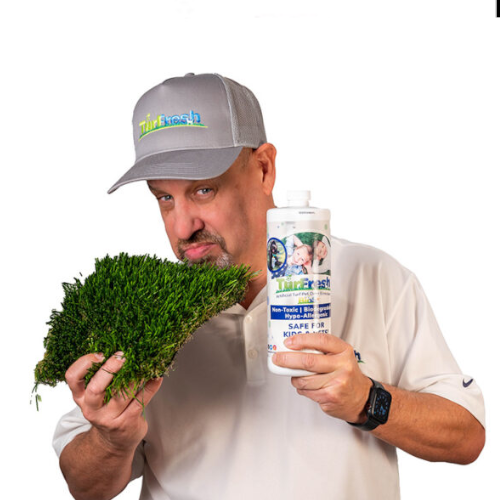

John Pla is the owner of TurFresh and an expert with over 20 years of experience in artificial turf cleaning and maintenance. John’s passion for sustainability, community impact, and innovative solutions has made him a trusted figure in the artificial grass industry and beyond.