
TL;DR
Fall upkeep is mostly about leaves, matting, and quick cleanup. Clear debris at least weekly, brush the blades every few weeks, and spot clean stains right away. If turf still looks flat, smells, or stays dirty, a professional deep clean can restore the look and feel fast.
Quick Answer: To keep artificial grass clean in fall, remove leaves and debris at least once a week, cross-brush with a synthetic-bristle broom every few weeks to lift matted blades, rinse dust and residue as needed, and spot clean spills immediately. If dirt or odor won’t come out, book a professional cleaning.
Autumn in California can be a tough season for your lawn. It likely saw heavy use during summer, and now falling leaves and harsher weather add another challenge. Fall is the season to pay closer attention to artificial grass cleaning and maintenance. If your backyard is looking worse for wear, follow the tips below, or call TurFresh for a professional cleaning.
How do you maintain artificial grass during autumn?
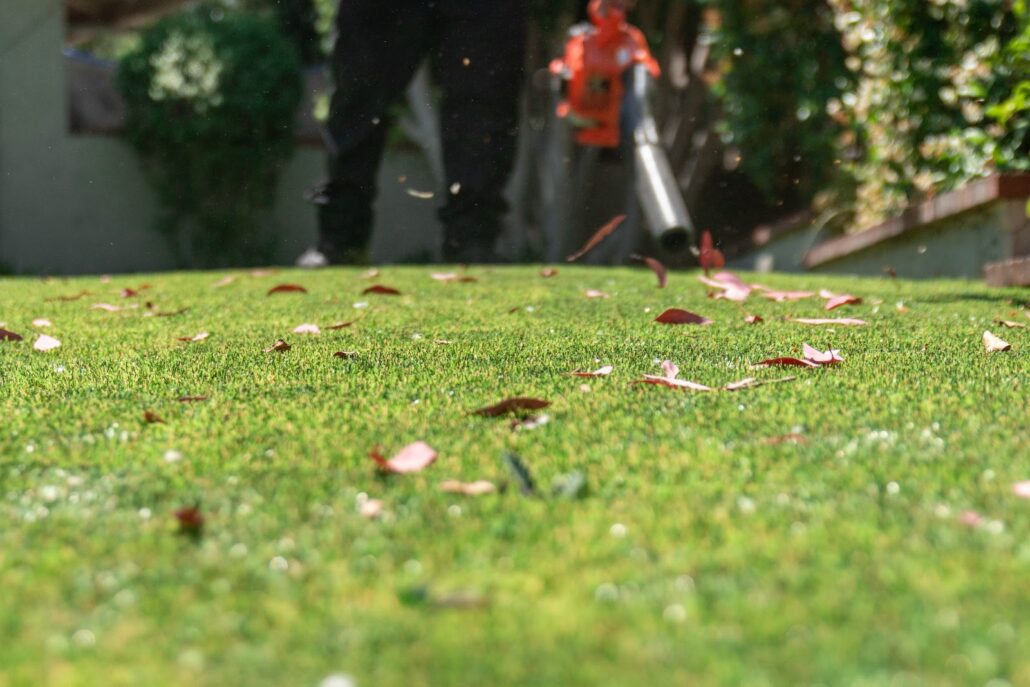
The best fall routine is weekly leaf removal, brushing every few weeks, and fast spot cleaning when messes happen. This keeps blades standing up, helps the turf look more natural, and reduces buildup that can lead to matting and lingering odors.
What to do and how often
👉 Once a week (or more during heavy leaf drop): clear leaves and debris.
👉 Every few weeks: cross-brush to lift flattened blades.
👉 As soon as a mess happens: spot clean spills and stains.
👉 Anytime turf looks dusty: light rinse to clear surface residue.
💡 Tip: If your yard has high foot traffic or pets, do these steps more often. High-use areas flatten faster and collect more debris.
How do you bring artificial turf blades back to life in fall?
You can revive matted blades by cross-brushing with a synthetic-bristle rake or broom every few weeks. Brushing lifts flattened fibers and helps your lawn keep a fluffy, lush appearance.
Over time, artificial grass blades become matted. This can take weeks or months depending on foot traffic and turf type, but all turf blades eventually flatten and need brushing.
How to cross-brush the right way
👍 Use a rake or broom with synthetic bristles.
👍 Brush in multiple directions to lift the blades.
👍 Focus on high-traffic zones like walkways, play areas, and seating spots.
What to avoid
⚠️ Avoid metal bristles because they can damage the turf.
TurFresh also offers turf grooming tools through its online store so you can choose tools designed for turf care.
💡 Tip: A consistent brushing routine is one of the simplest ways to keep turf looking natural year-round.
How do you spot clean spills and stains on artificial grass?
You should clean spills right away by removing solids first, rinsing thoroughly, and using a mild cleaning mix if needed. Fast cleanup helps prevent permanent staining and keeps your turf looking clean long-term.
Summertime use often leads to spills from backyard barbecues, pet playtime, and outdoor hangouts. Treating stains quickly makes cleanup easier.
Step-by-step spot cleaning
➡️ 1. Pick up any solids and remove debris.
➡️ 2. Rinse the area thoroughly.
➡️ 3. Gently rinse the spot with warm water and household detergent.
➡️ 4. If that doesn’t work, use a mixture of water and a 3% ammonia solution.
➡️ 5. After applying the solution, rinse again with cold water as the final step.
💡 Tip: Always rinse well after any cleaning solution to avoid residue that can attract dirt.
How often should you remove leaves and debris from artificial turf in fall?
You should clear leaves and debris at least once a week to reduce matting and keep the surface clean. Leaving debris in place too long can flatten blades, especially when leaves are repeatedly stepped on.
Autumn leaves are a common issue for homeowners, whether they come from your trees or nearby yards. Debris buildup can affect the look of your turf and contribute to flattening.
Best tools for clearing debris
✅ A comb, rake, or broom with synthetic bristles
✅ A very gentle leaf blower
✅ Leaf blower caution
High power can disturb your infill, so use a low setting and keep the airflow gentle.
💡 Tip: During peak leaf drop, clearing debris twice a week can prevent compaction and reduce time spent scrubbing later.
Can you hoover artificial grass?
A household vacuum is usually not the best tool because strong suction can disturb infill and pull up debris that should be removed more gently. A turf-safe rake, synthetic broom, or gentle leaf blower is typically a safer option.
If you’re considering hoovering because of leaves, dust, or crumbs, start with these instead:
👍Light leaf blowing on a gentle setting
👍Synthetic-bristle raking or sweeping
👍Spot cleaning for spills
💡 Tip: If you try any vacuum-style tool, keep suction low and avoid digging into the fibers. Stop if you notice infill movement.
When should you call an artificial grass cleaning professional?
You should call a pro when dirt won’t come out, you don’t have time to keep up with seasonal maintenance, or your turf needs a deeper reset than brushing and rinsing can provide.
Stubborn dirt and buildup can settle in ways that basic surface cleaning can’t fully fix. A professional service is also helpful when your turf needs multiple improvements handled in one visit.
TurFresh uses a 10-point cleaning process that covers everything from blade re-blooming to adding infill, and from tucking edges to applying deodorizer. The goal is to deep clean the yard and get it looking clean, fresh, and ready to enjoy right away.
If your artificial grass lawn needs a pick-me-up, call TurFresh, an artificial grass cleaning service provider. TurFresh provides a comprehensive 10-point cleaning service using proprietary products to make your lawn look and smell as fresh as the day it was installed.
To schedule your first appointment or ask about pricing, call 📞 (855) 444-8873.
💡 Practical tips that are easy to highlight
⚡Quick tip: Keep a synthetic-bristle broom stored near the back door so brushing is easy to do in short bursts.
⚡ Quick tip: Clear leaves before they get stepped on. Once compacted, they are harder to remove and can flatten fibers.
⚡ Quick tip: Treat stains the same day. The longer they sit, the more likely discoloration becomes.
Frequently asked Questions
How long does it take to clean artificial turf in fall?
• Most routine fall cleanups take 15 to 30 minutes depending on yard size and how many leaves have dropped. A deeper reset that includes brushing and spot cleaning can take longer, especially in high-traffic or pet areas.
What is the safest rake for artificial grass?
• A rake or broom with synthetic bristles is safest because it lifts debris and blades without damaging the turf.
Will a leaf blower damage artificial grass?
• A leaf blower is generally fine if you use a gentle setting. High power can disturb infill, so keep airflow light and avoid holding the nozzle too close to the turf.
What cleaning solution is safe for artificial grass stains?
Start with warm water and household detergent. If needed, a mix of water and a 3% ammonia solution can be used, followed by a thorough rinse with cold water.
What are signs you need professional artificial grass cleaning?
• Common signs include turf that stays matted, looks dirty even after rinsing, or has stubborn dirt you can’t remove. Another sign is when you don’t have time to keep up with seasonal maintenance and want a full reset.
Ready for an Odor-Free Yard?
📞 Call TurFresh today: (855) 444-8873
Professional Artificial Grass Cleaning
Turf Cleaning Products | Deep Clean Your Turf and Infill
👉 Give your family and pets the clean, fresh outdoor space they deserve.
Share

John Pla is the owner of TurFresh and an expert with over 20 years of experience in artificial turf cleaning and maintenance. John’s passion for sustainability, community impact, and innovative solutions has made him a trusted figure in the artificial grass industry and beyond.