
Quick Answer
Artificial turf bubbling or wrinkling is caused by one of four root problems: heat expansion from thermal stress, improper tensioning during installation, sub-base shifting or settling, or drainage failure beneath the backing. Identifying which root cause applies determines whether the fix is a DIY re-stretch, a professional repair, or sub-base excavation. Most early cases are fixable without full replacement if addressed before the damage spreads. If bubbles or wrinkles appeared within the first 12 months of installation, the installer is typically responsible under warranty.
TurFix™ diagnoses the root cause and repairs it in a single visit.
DIY fixes that address only the visible ripple without correcting the root cause fail within one to two seasons. TurFresh technicians find and fix what's actually causing the problem.
✔ Pet Safe✔ Kid Safe✔ 150,000+ Services✔ 30-Day Guarantee
Key Takeaways
🌡️ If your turf wrinkles during hot weather and flattens overnight, heat expansion is almost certainly the cause. A professional re-stretch and edge re-securing typically resolves this permanently without disturbing the rest of the lawn.
⚠️ Soft bubbles that compress when pressed are cosmetic. Hard, rigid bubbles that do not compress are structural. That single physical test determines whether you need a surface repair or a professional sub-base assessment before anything else.
🔧 DIY fixes work only for light surface wrinkling from a loose edge or mild heat. Do not attempt to re-seam two turf sections or re-stretch large areas without professional tools. Incorrectly executed DIY repairs accelerate backing wear and often lead to more expensive repairs later.
❌ Do not use a heat gun or blow dryer to flatten wrinkles. Concentrated heat softens the backing further and can cause permanent deformation in the very area you are trying to fix.
📅 Wrinkling within 12 months of installation is an installer responsibility issue. Document the problem with dated photos immediately and contact your installer before attempting any DIY fix. Unauthorized repairs can void installer warranty coverage.
Artificial turf bubbling or wrinkling is one of the most common complaints homeowners report after installation. One day your lawn looks perfectly flat; the next, there are ripples, bumps, or raised seams running across the surface. It can look unsightly, create trip hazards, and if left untreated, it will get worse.
The good news: in most cases, bubbling and wrinkling are repairable. Understanding the root cause is the first step toward a fix.
What Causes Artificial Turf to Bubble or Wrinkle?
Artificial turf bubbles and wrinkles for four main reasons: thermal expansion, installation errors, sub-base movement, and drainage failure. Understanding which cause is behind your problem determines the right fix.
➧ Heat Expansion and Thermal Stress
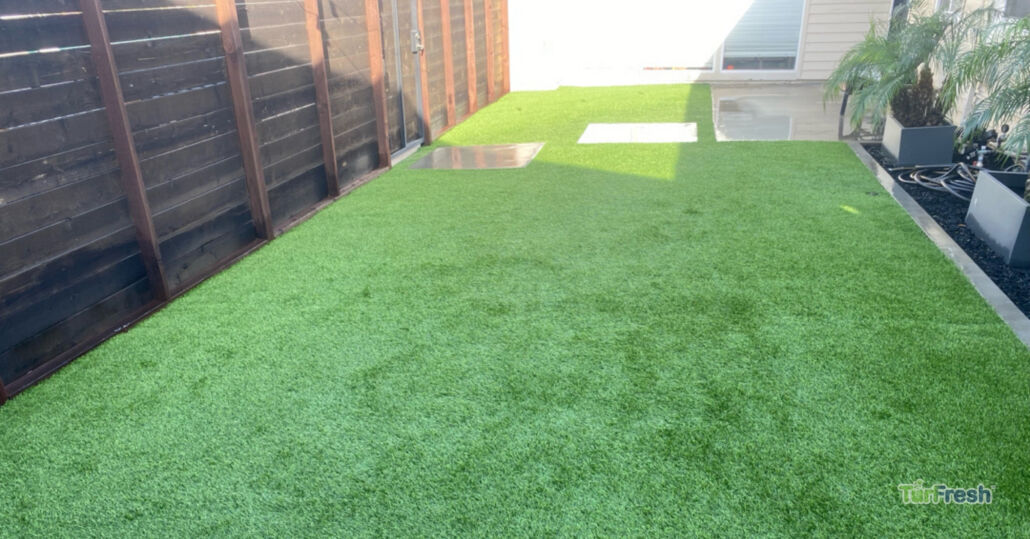
Heat is the most common cause of artificial turf wrinkling, especially in warm climates or during summer months. Synthetic fibers expand when temperatures rise and contract when they cool. If the turf was not tensioned correctly at installation to allow for this movement, it has nowhere to go except up.
This is particularly common near reflective surfaces like glass windows, patio doors, light-colored fencing, and metal garden furniture. Concentrated heat from these surfaces can push local turf temperatures well above ambient air temperature, accelerating expansion in isolated patches.
💡 Pro Tip
If your turf only wrinkles during hot weather and flattens again overnight, heat expansion is almost certainly the cause. A professional re-stretch and edge re-securing typically resolves this permanently.
➧ Poor Installation or Improper Seaming
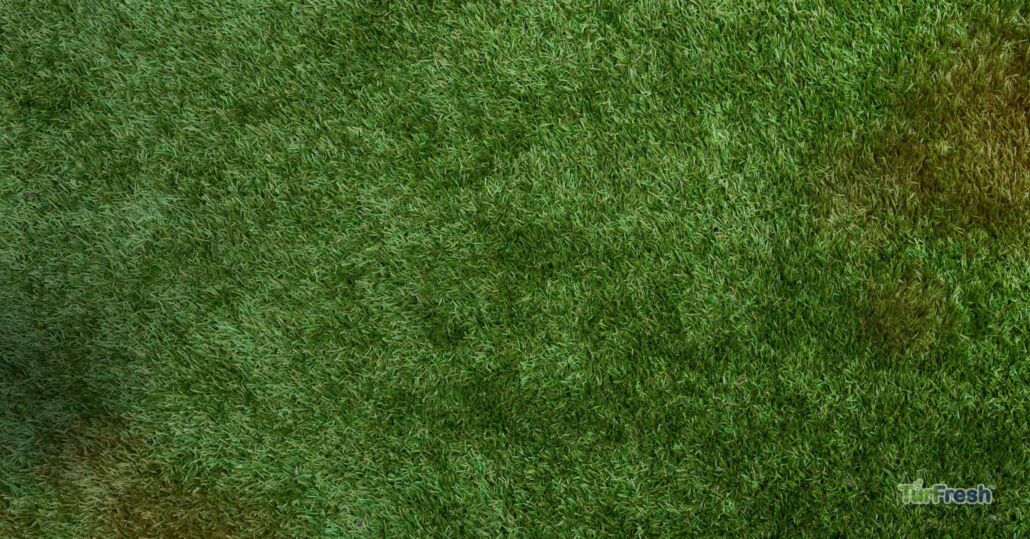
Improper installation is the second most common cause of bubbling and wrinkling. If the turf was not stretched and tensioned evenly before being secured, it will shift once foot traffic and temperature changes begin to stress the material.
Seam problems are a related issue. When two pieces of turf meet, they must be joined with the correct seam tape and adhesive, with pile direction perfectly aligned. If either is mishandled, the seam becomes a weak point where the material separates and rises. Loose perimeter stapling or nailing also allows edges to lift, which progressively works inward.
➧ Sub-Base Shifting or Settling
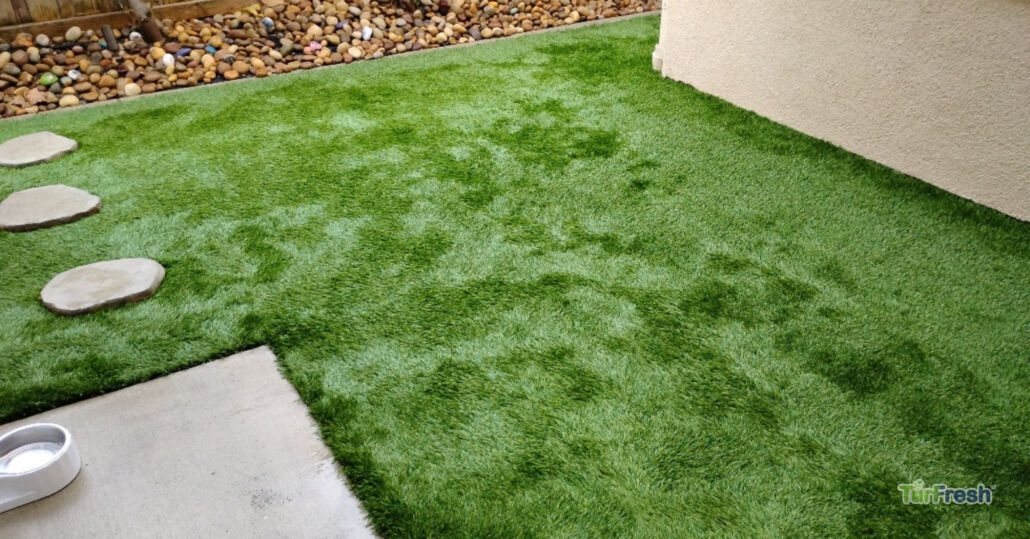
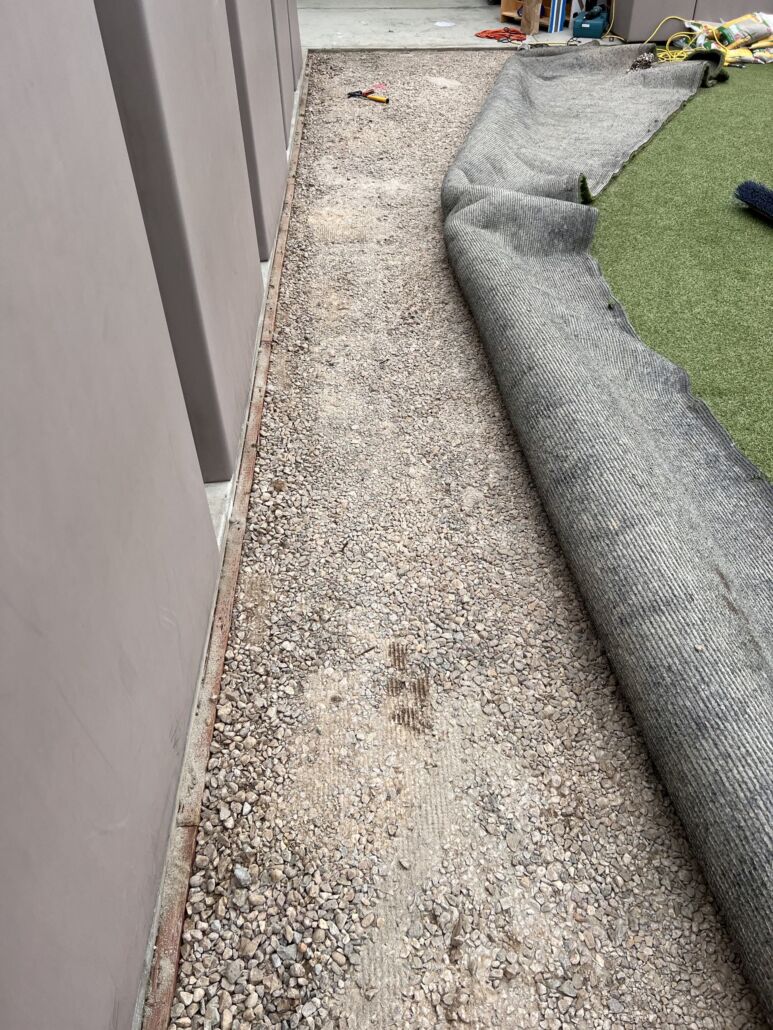
The sub-base is the foundation your turf relies on to stay flat. If the crushed aggregate or compacted base material shifts due to poor initial compaction, tree root growth, soil erosion, or heavy rainfall, the turf above it will mirror those deformations as lumps, ripples, and uneven surfaces.
Sub-base problems are often gradual. A lawn that looks perfect at installation may develop low spots or lifted areas 12 to 24 months later as the base continues to settle. This type of wrinkling typically requires excavation and base re-compaction rather than a surface-only fix.
➧ Water Pooling and Drainage Failure
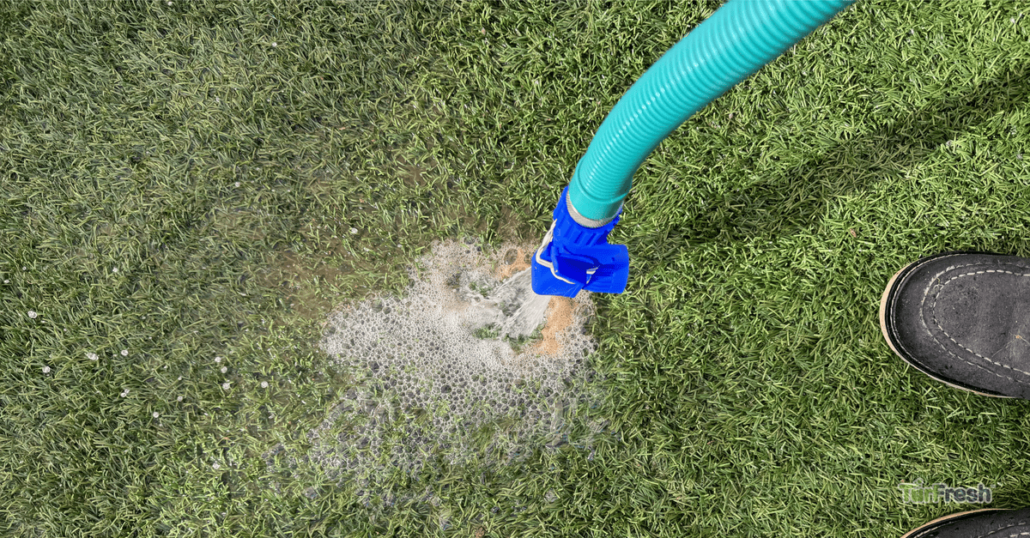
Standing water is a silent destroyer of artificial turf installations. When water cannot drain through the backing as designed, because the backing is clogged with fine debris, the drainage layer is compacted, or the slope is insufficient, it pools beneath the surface.
Over time, this water pressure separates the backing from the sub-base, causing the turf to float and bubble upward. Drainage failure also leads to backing deterioration, which can escalate from cosmetic wrinkling into structural damage requiring full section replacement.
Is Turf Bubbling a Sign of Serious Damage?
Not every wrinkle is a structural emergency, but not every wrinkle is cosmetic either. The difference matters because it determines whether you need a simple re-stretch or a full repair.
Cosmetic Issues (Usually Repairable Without Full Replacement)
⚠️ Surface rippling that appears only during peak heat and disappears overnight
⚠️ Single lifted edge or corner that can be re-secured
⚠️ Minor seam lifting without visible backing damage
⚠️ Shallow, soft bubbles that move when pressed
Structural Issues (Require Professional Assessment)
⚠️ Hard, rigid bubbles that do not compress when pressed
⚠️ Visible cracking or tearing of the backing material
⚠️ Widespread wrinkling that has progressively expanded over weeks
⚠️ Standing water visible under lifted sections of turf
⚠️ Seam gaps wider than half an inch that are spreading
📌 If you are unsure which category applies, a TurfClean™ deep cleaning inspection can often reveal backing condition and drainage status before you commit to a repair approach.
Can You Fix Artificial Turf Bubbles and Wrinkles Yourself?
Minor surface wrinkling caused by heat or a loose edge can sometimes be addressed with DIY methods. However, most cases benefit significantly from professional handling because the underlying cause, not just the visible symptom, needs to be corrected.
How to Get Wrinkles Out of Artificial Turf: DIY Steps
For minor wrinkling caused by heat or a single loose edge, try these steps before calling a professional.
➧ Step 1: Move any furniture or objects off the affected area and let the turf sit in direct sunlight for 1 to 2 hours. Warmth relaxes the backing and allows the fibers to return toward their original position.
➧ Step 2: While the turf is warm, gently pull the wrinkled section toward the nearest fixed edge and re-pin it using galvanized landscape staples spaced 4 to 6 inches apart.
➧ Step 3: If the wrinkle is along a perimeter edge, lift the edge, remove old fasteners, re-stretch the turf toward the border, and re-secure with new staples or nails.
➧ Step 4: Water the surface with cold water to cool the turf and set it in its new flat position. Check after 24 hours for any re-emergence of the wrinkle.
📌 Do not use a heat gun, blow dryer, or other heat source to try to flatten wrinkles. Concentrated heat applied directly to the backing can soften and warp it permanently, making the problem worse rather than better.
What You Should Not Attempt Yourself
👉 Re-seaming two sections of turf — requires adhesive, seam tape, and precision pile alignment.
👉 Sub-base correction — requires excavation and compaction equipment.
👉 Re-stretching large areas of turf — requires professional pulling and anchoring tools.
🔑 Key Insight
DIY fixes for surface wrinkling that address only the visible ripple without correcting the root cause will typically fail within one to two seasons. Fixing the symptom without the cause accelerates backing wear and often leads to more expensive repairs later.
When Should You Call a Professional for Turf Wrinkling?
Call a professional for turf repair as soon as you notice any of the following signs. Early intervention prevents surface deformations from becoming structural failures.
👉 Bubbles or wrinkles that have visibly grown or spread over two or more weeks
👉 Any point where the backing is cracked, torn, or separated at a seam
👉 Standing water visible beneath lifted turf sections after rainfall
👉 Turf that has lifted in a large contiguous area (more than 2 to 3 square feet)
👉 Any wrinkling near a high-traffic zone such as a pet run, play area, or walkway that poses a trip hazard
👉 Rippling that appeared within 12 months of installation — this is an installer responsibility issue
TurFresh's artificial turf repair service, TurFix™, is designed precisely for these situations. Technicians assess the damage, identify the root cause, and execute the correct repair, whether that is re-stretching and re-anchoring, seam tape replacement, or sub-base spot correction.
How Does TurFix™ Repair Bubbled or Wrinkled Turf?
TurFix™ is TurFresh's professional turf repair service, built to fix exactly the kind of problems that cause bubbling and wrinkling.
👉 Diagnostic inspection: The technician examines the bubbled or wrinkled area to identify the root cause, whether heat expansion, seam failure, sub-base movement, or drainage issues.
👉 Surface preparation: Any loose infill is cleared from the affected area and the turf is carefully peeled back where needed.
👉 Root-cause correction: Depending on findings, this may involve sub-base spot compaction, drainage clearing, or seam tape replacement.
👉 Re-stretch and re-anchor: The turf is pulled flat, tensioned correctly, and re-secured to the perimeter using appropriate fasteners.
👉 Infill restoration and grooming: Infill is redistributed evenly and fibers are groomed back to their correct pile direction for a finished appearance.
📌 Every TurFix™ service is backed by TurFresh's 30-day satisfaction guarantee.
How Can You Prevent Turf from Bubbling in the Future?
Preventing turf bubbling starts at installation and continues with ongoing maintenance.
During installation:
👉 Hire a certified, experienced installer who follows manufacturer tensioning specifications
👉 Insist on a proper compacted sub-base (minimum 3 to 4 inches of crushed aggregate)
👉 Ensure perimeter nailing or stapling is spaced no more than 4 to 6 inches apart
👉 Verify that seam tape and adhesive meet the manufacturer's specifications for your climate
During regular maintenance:
👉 Clear debris from the turf surface regularly to prevent drainage backing clogging
👉 Inspect perimeter edges seasonally for any lifting or pulling away from borders
👉 Avoid parking heavy vehicles or placing heavy fixed objects directly on the turf
👉 After extreme heat events, cool the surface with water and check for new rippling
If your turf's fibers are also showing signs of compaction or matting alongside surface wrinkling, TurfBloom™ fiber restoration can address both fiber health and drainage performance in a single service visit.
💡 Pro Tip
Schedule a professional turf inspection every 2 to 3 years, or immediately following any significant heat event, heavy flooding, or new construction near your turf. Catching sub-base movement early costs a fraction of the repair bill if left until it becomes structural.
Turf wrinkling gets worse over time. Act before surface deformation becomes structural.
TurFresh's TurFix™ service is available nationwide. Technicians diagnose the root cause, perform the correct repair, and back every service with a 30-day satisfaction guarantee.
✔ Pet Safe✔ Kid Safe✔ 150,000+ Services✔ 30-Day Guarantee
Frequently Asked Questions
Why is my artificial grass suddenly bubbling up?
Sudden bubbling is most commonly caused by an acute heat event or heavy rainfall. High temperatures cause turf fibers to expand faster than the base can accommodate, and large amounts of water can force air or water pockets beneath the backing. Both scenarios are typically correctable without full replacement if addressed promptly.
Can extreme heat permanently damage artificial turf?
Moderate heat expansion rarely causes permanent damage on its own. The risk increases when repeated thermal cycling, expansion and contraction over many seasons, weakens seam adhesion and backing integrity cumulatively. Reflective surfaces like glass and polished metal can concentrate heat enough to melt or deform synthetic fibers directly, which is a separate issue from wrinkling.
Does standing water cause artificial turf to lift?
Yes. When water cannot drain through the backing and base as designed, hydrostatic pressure builds beneath the surface and physically separates the turf from the sub-base. Over time this creates soft, water-filled bubbles. Left unresolved, pooling water also accelerates backing breakdown and can make what started as a cosmetic fix into a full replacement situation.
How do I know if my turf wrinkling is covered under the installer's warranty?
Most installer warranties cover wrinkling that results from defective installation, including improper tensioning, inadequate seaming, or incorrect sub-base preparation, if reported within the warranty period (commonly 5 to 10 years). Wrinkling caused by external factors such as sub-surface tree root growth or damage from heavy objects placed on the turf is generally not covered. Document the issue with photos and contact your installer. A professional turf inspection report can support your warranty claim.
How long does it typically take for artificial turf to start wrinkling?
Turf installed correctly on a properly prepared sub-base can remain flat for 10 to 15 years or longer. Wrinkling within the first 12 to 24 months of installation is a strong indicator of an installation error or inadequate sub-base preparation. Progressive wrinkling that begins 5 or more years after installation is more commonly linked to sub-base settling, drainage issues, or backing wear from heavy use.
Is it safe to walk on bubbled or wrinkled artificial turf?
Shallow, soft surface rippling is generally safe for casual foot traffic. Raised ridges or hard bubbles, however, create a genuine trip hazard, particularly for children and elderly users. Any wrinkling that produces an edge height of more than a quarter inch above the surrounding surface should be repaired before normal use continues, especially in play areas and high-traffic zones.
Share

John Pla is the owner of TurFresh and an expert with over 20 years of experience in artificial turf cleaning and maintenance. John’s passion for sustainability, community impact, and innovative solutions has made him a trusted figure in the artificial grass industry and beyond.