Artificial Turf Drainage Problems: Signs You Have an Issue Under the Surface
May 1, 2026 · 14 min read · By John Pla, Founder of TurFresh
Quick Answer Artificial turf drainage problems occur when infill compaction, clogged backing perforations, or sub-base settling block the normal downward flow of water through the turf system. Healthy turf drains at 30 to 50 inches per hour, meaning water should not be visible on the surface more than 30 minutes after moderate rainfall. If water is pooling longer than that, the most likely causes are compacted infill granules reducing permeability, fine debris blocking backing holes, or low spots in the sub-base collecting water. Most surface-layer drainage failures are resolved by professional cleaning and infill restoration without replacing the turf.
TurfClean™ clears drainage blockages and eliminates odor in a single professional visit.
Most artificial turf drainage failures are caused by compacted infill and clogged backing perforations, not structural damage. TurFresh has restored drainage performance for 150,000+ turf installations nationwide.
Schedule TurfClean™ Today✔ Pet Safe✔ Kid Safe✔ 150,000+ Services✔ 30-Day Guarantee
Key Takeaways
🌧️ If your turf holds water for more than 30 minutes after rain, drainage is already compromised. Pour 3 gallons of water on a flat area of your lawn and time how long it takes to disappear. More than 2 minutes means the drainage path is blocked and needs attention.
🐾 Pet yards develop drainage problems faster than non-pet installations. Urine and organic waste bind to infill granules over time and progressively block the perforations in the turf backing. Annual professional cleaning is the single most effective prevention measure for pet yard drainage failure.
🔑 Most drainage failures are surface-layer problems, not structural failures. Compacted infill and clogged backing perforations are the most common causes and respond directly to professional deep cleaning and infill restoration. Sub-base excavation is rarely needed when problems are caught early.
💰 A drainage service call now costs a fraction of a sub-base repair later. A professional TurfClean visit addresses most surface-level drainage issues for a few hundred dollars. Delayed action that allows sub-base saturation to compound can cost $3,000 or more to remediate.
⚠️ Algae or mold on the surface confirms that drainage failure is already serious. Growth requires water sitting on or near the surface long enough to create a wet, shaded environment. If you see algae or mold, professional service should not wait another rain cycle.
Artificial turf drainage problems are one of the most common and most overlooked issues homeowners face. Turf is designed to drain quickly after rain or irrigation. When it does not, water has nowhere to go and the problems compound fast: saturated infill, bacterial odor, algae growth, and eventual sub-base damage.
Most people assume standing water or bad smells are just part of owning artificial turf. They are not. They are warning signs that something is wrong beneath the surface, and the sooner you identify the cause, the easier and cheaper it is to fix.
TurFresh has completed 150,000+ professional turf services across the United States. Drainage failure is one of the top reasons homeowners call. This guide covers every sign to look for, the most common root causes, and what you can realistically do about it.
What Are the Most Common Signs of Artificial Turf Drainage Problems?
The most common signs of artificial turf drainage failure are standing water, slow post-rain drainage, a spongy surface feel, persistent odor after rainfall, and visible algae or mold growth. Any one of these on its own is worth investigating. Two or more at the same time, and drainage failure is the likely cause.
Healthy artificial turf drains at 30 to 50 inches per hour, fast enough that water should not be visible on the surface more than 30 minutes after moderate rainfall. If puddles sit for an hour or more, something is blocking normal flow.
Why Is Water Pooling on My Artificial Turf?
Water pools on artificial turf when the drainage perforations in the backing are blocked, the infill is too compacted to allow water to pass through, or the sub-base underneath has shifted and created low spots. Each disrupts the downward flow path that turf is designed to use.
Clogged perforations are the most common culprit. Debris, fine soil particles, and organic matter build up in the holes over time, especially in yards with pets or heavy foot traffic. Once those holes are partially or fully blocked, water backs up onto the surface.
💡 Pro Tip Test drainage speed by pouring about 3 gallons of water on a flat area of your turf and timing how long it takes to disappear. If it takes longer than 2 minutes, your drainage is compromised and worth investigating further.
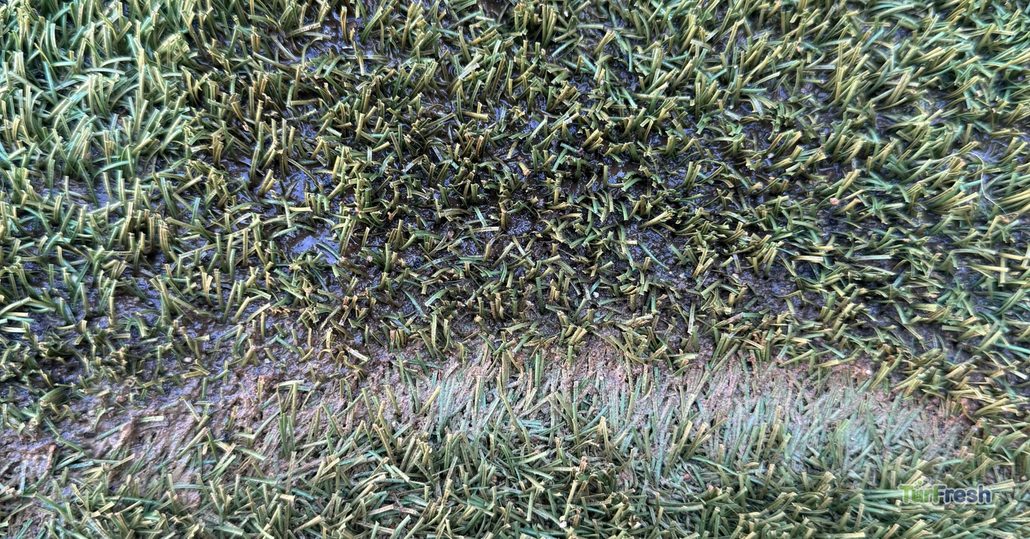
Why Is My Artificial Grass Not Draining Properly?
Artificial grass stops draining properly for three main reasons: infill compaction reduces the permeability of the layer water must pass through, backing perforations become clogged with accumulated debris, or the sub-base develops low spots that collect water rather than dispersing it. In pet yards, a fourth factor compounds all three: organic waste from urine and waste binds to infill granules and backing surfaces, accelerating blockage formation.
The distinction that matters most for choosing a fix is whether the problem is at the surface layer (infill and backing perforations) or at the sub-base level. Surface-layer problems respond to professional cleaning. Sub-base problems may require lifting the turf to access the aggregate underneath.
Why Does My Artificial Turf Smell Worse After Rain?
When turf drainage is blocked, rainwater saturates the infill layer and reactivates bacteria, ammonia compounds, and organic waste that have accumulated over time. The result is a noticeably stronger odor after rain, often described as a wet dog smell or strong ammonia.
This is especially common in pet yards. Urine and waste bind to infill granules. When those granules are waterlogged because drainage is blocked, bacterial activity spikes. A professional deep clean with an enzyme-based treatment like TurFresh's BioS+ breaks down the organic compounds at the source rather than masking the smell.
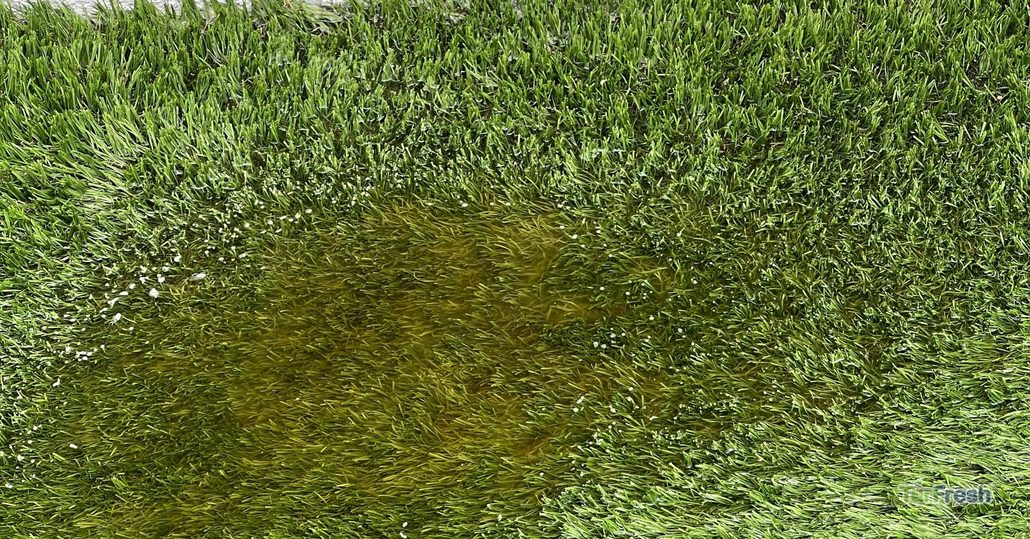
Why Does My Turf Feel Soft or Spongy?
A spongy or soft feel underfoot is a sign that the sub-base beneath your turf has become waterlogged or has shifted. When water cannot drain through the turf backing into the sub-base, it saturates the crushed aggregate or compacted gravel layer below, reducing its load-bearing density.
Mild sponginess may be infill compaction or infill migration, which is correctable. Persistent sponginess in the same spot after rain is a stronger indicator that sub-base integrity is compromised and warrants professional inspection.
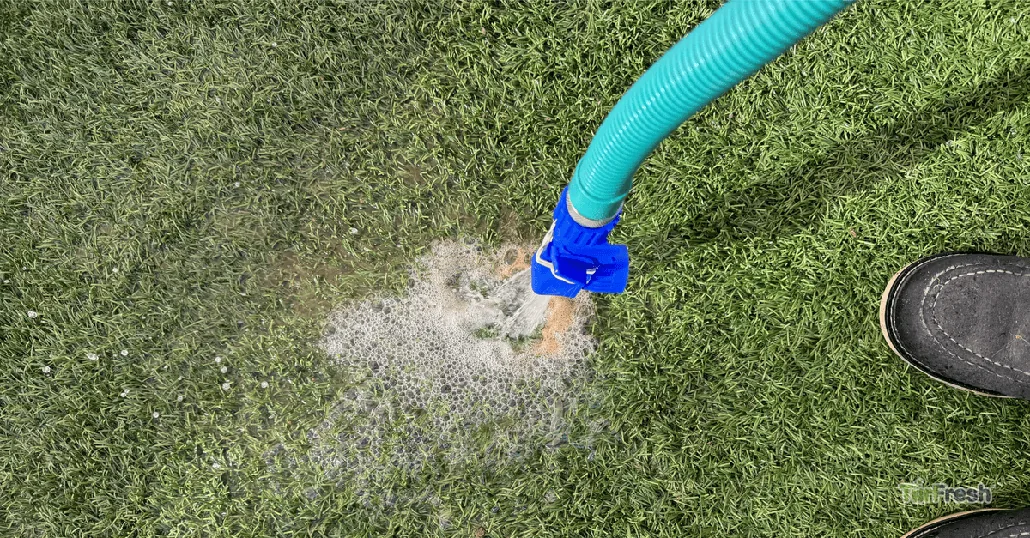
What Causes Algae or Mold on Artificial Turf?
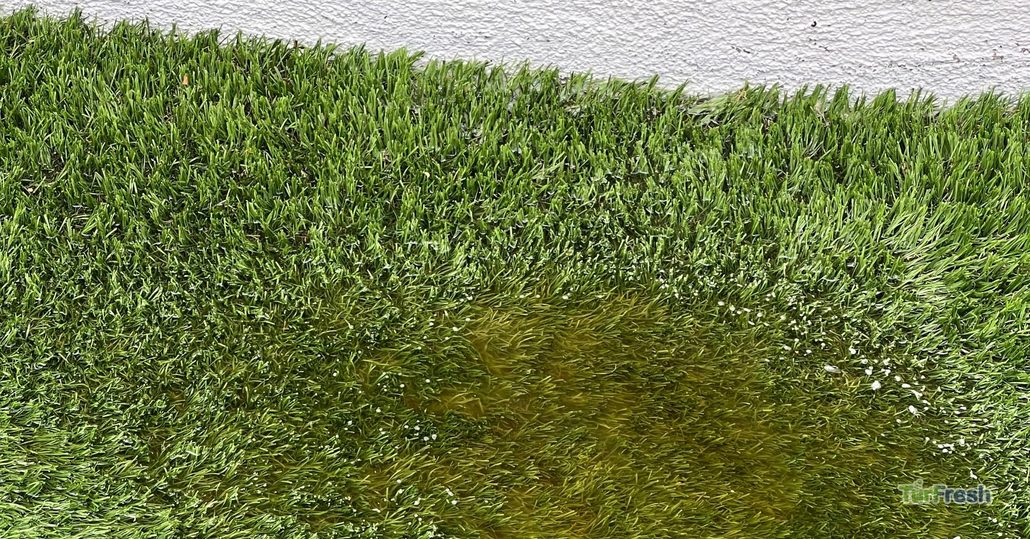
Algae and mold grow on artificial turf when drainage failure allows water to sit on or near the surface, creating the wet, shaded conditions these organisms need. It typically appears first in low spots, along edges, or under trees and overhangs where pooling is worst.
Algae creates a greenish tint and a slippery surface. Mold can appear as black or gray spots and may produce an earthy or musty odor. Both are signs that water is not clearing the turf surface quickly enough, and both become more aggressive if left untreated.
What Does Slow Drainage Actually Mean for My Turf?
Slow drainage is the earliest warning sign. It appears before visible pooling, softness, or odor become obvious. It means water is moving through the system, but more slowly than the turf was designed to handle. Left unaddressed, slow drainage progressively worsens as the blockage grows.
You may notice slow drainage after heavy rain but not light irrigation. This is because light water volumes can still pass through a partially blocked path, while heavier volumes overwhelm it. Pay attention to how quickly water clears after a significant rainfall.
What Causes Artificial Turf Drainage to Fail?
Artificial turf drainage fails when one or more components in the drainage pathway are blocked or structurally compromised. Understanding which layer is causing the problem determines the right fix.
Compacted Infill
Infill compaction is the leading cause of drainage failure in residential turf. The infill layer, typically crumb rubber, silica sand, or a combination, sits between the turf fibers and acts as both a ballast and a drainage medium. Over time, foot traffic, pet activity, and weather press the granules together, reducing the airspace water needs to pass through.
Compacted infill also flattens the turf fibers, which is why drainage problems are often accompanied by matted or flat-looking grass. A TurFill service restores the granule depth and permeability needed for proper drainage and fiber support simultaneously.
Clogged Backing Perforations
Most artificial turf products have small holes punched or laser-cut through the backing at regular intervals. These perforations allow water to move from the surface down through the infill and into the sub-base below. Over years of use, fine debris particles and sediment migrate into these holes and progressively block them.
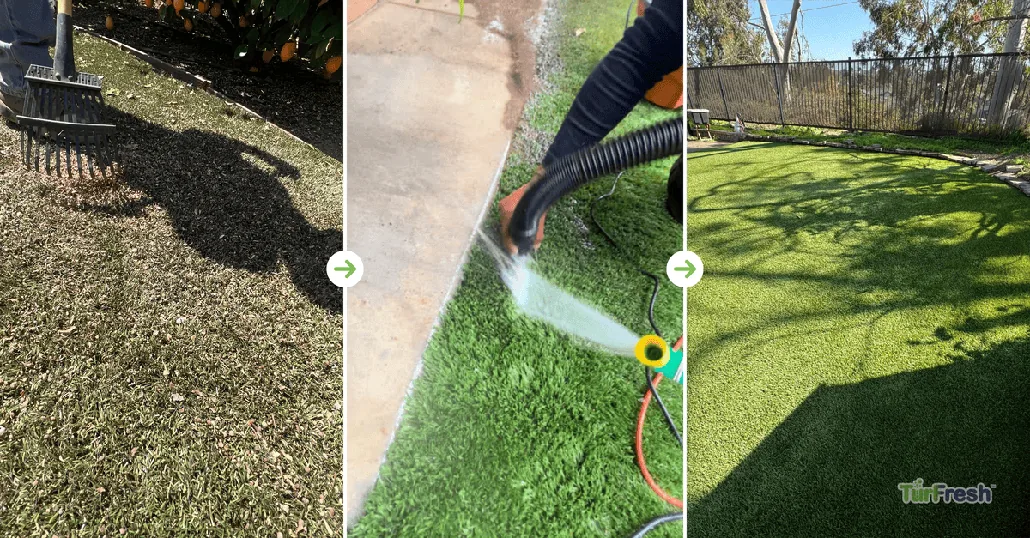
A professional deep clean, including high-pressure extraction and grooming, removes this buildup and restores perforation flow. Standard garden rinsing does not.
Sub-Base Erosion or Settlement
The sub-base is the compacted gravel or aggregate layer beneath the turf. It is responsible for structural support and final water dispersal. If the sub-base develops low spots from erosion, tree root intrusion, or soil settlement, water collects in those areas and has nowhere to go.
Sub-base issues are the hardest to fix without pulling back the turf. This is why early intervention on the surface signs, before water sits long enough to erode the sub-base, is strongly recommended.
Poor Original Installation
Some drainage failures originate at installation. Insufficient sub-base depth, wrong aggregate grade, inadequate slope for gravity drainage, or missing perimeter drainage channels all create conditions for future pooling. If your turf has drained poorly since installation, installation quality is worth reviewing.
💡 Pro Tip Proper artificial turf installation requires a minimum 1% slope away from structures and a 4-inch compacted aggregate base. If your turf was installed without these, drainage problems may be structural and require a professional assessment before any surface treatment.
Can You Fix Artificial Turf Drainage Problems Without Replacing the Turf?
Yes. In most cases, artificial turf drainage problems can be resolved without replacement. The determining factor is whether the problem is in the surface layers (infill, perforations, fiber matting) or in the sub-base structure itself.
Surface-layer drainage issues respond well to professional cleaning and infill restoration. Sub-base issues may require partial lifting of the turf to address the aggregate layer underneath.
What Professional Services Address Artificial Turf Drainage Problems?
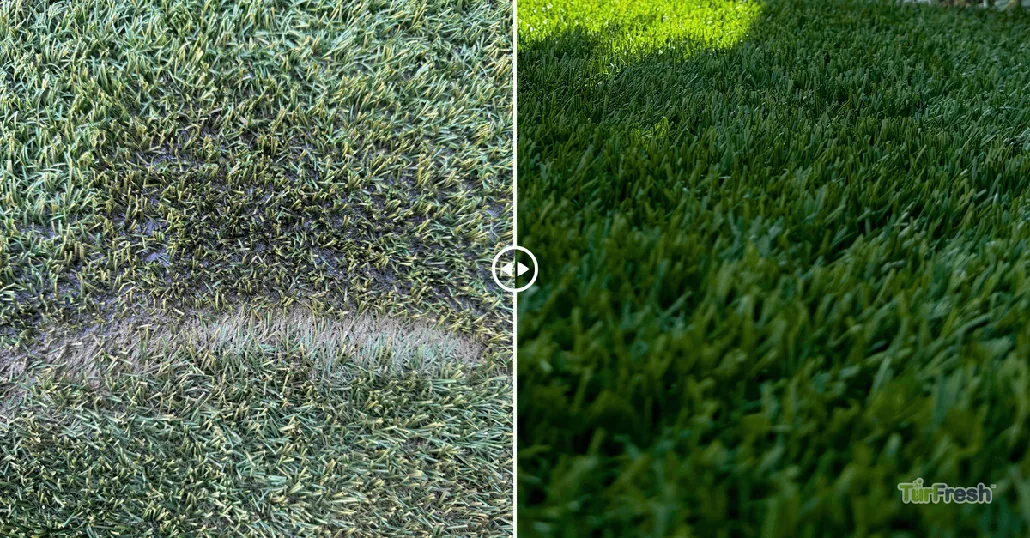
TurfClean™ is TurFresh's core deep-cleaning service. It combines high-pressure extraction, power grooming, and BioS+ enzyme treatment to remove the debris, compacted particles, and bacteria that cause drainage blockages and surface odor simultaneously. For most surface-level drainage issues, a single TurfClean™ service produces immediate improvement.
TurFill restores depleted or compacted infill, rebuilding the granule depth and permeability needed for proper drainage. Fiber matting, surface softness, and slow drainage are all addressed in one service.
TurfBloom™ fiber revival combines power grooming with infill conditioning to restore pile direction, fiber separation, and drainage performance in heavily trafficked zones.
When Should You Call a Professional for Turf Drainage Issues?
Call a professional when DIY efforts, including rinsing, light brushing, or adding infill, have not resolved the problem within one or two rain cycles. You should also seek professional help if odor is worsening despite surface cleaning, if the spongy areas are growing, or if you see algae or mold returning quickly after removal.
TurFresh provides professional assessments and can identify whether the issue is surface-level or structural. For surface-level problems, same-day service resolution is typically possible. For sub-base concerns, TurFresh provides a clear recommendation on whether repair or replacement makes more sense.
Related reading
- Interested in Artificial Grass - Here Are the Benefits and Problems You Need to Know
- 5 Warning Signs Your Artificial Turf Needs Professional Deep Cleaning
- 5 Signs You Should Schedule Turf Cleaning This Winter
💡 Pro Tip Do not delay professional service if you notice the spongy area expanding or odor intensifying after rainfall. What starts as a drainage maintenance issue can progress to sub-base damage within a single rainy season, turning a few-hundred-dollar service call into a $3,000+ repair.
Drainage Problem vs. Structural Failure: How to Tell the Difference
Not every turf problem requires replacement, but some do.
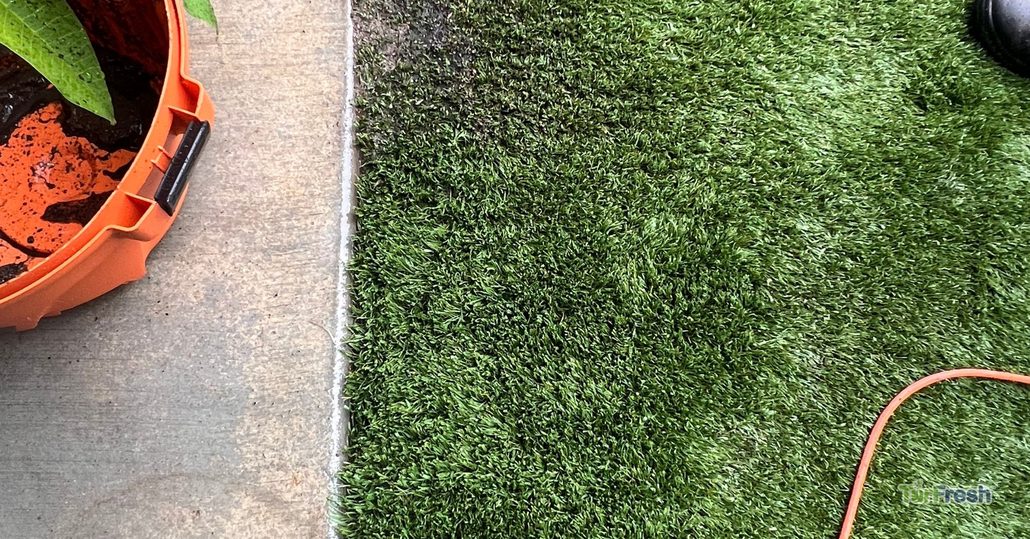
🔑 Key principle: If the turf backing is structurally intact and the sub-base is not deeply compromised, professional cleaning and infill restoration will almost always restore performance. Full replacement is reserved for cracked backing, seam failure, deep sub-base damage, or turf that has exceeded its service life (typically 15 to 25 years).
A service call now prevents a much more expensive repair later.
TurFresh provides professional drainage assessments and same-day TurfClean service for most surface-level drainage issues. Every service is backed by a 30-day satisfaction guarantee.
Book Your Drainage Assessment✔ Pet Safe✔ Kid Safe✔ 150,000+ Services✔ 30-Day Guarantee
Frequently Asked Questions About Artificial Turf Drainage Problems
How long should artificial turf take to drain after heavy rain?
Well-maintained artificial turf should drain completely within 30 minutes of moderate to heavy rainfall under normal conditions. Most turf products are rated to drain 30 to 50 inches per hour. If water is still visible on the surface after 30 to 60 minutes, drainage is compromised and the cause should be investigated.Can I use a pressure washer to unclog artificial turf drainage?
A standard pressure washer can dislodge some surface-level debris from turf perforations, but it is not effective for deep infill compaction and can damage fibers if used with too much pressure. Professional extraction equipment is specifically designed to clear drainage blockages without damaging the turf structure.Does artificial turf drainage get worse over time?
Yes. Drainage performance typically declines gradually over the first several years of use as infill compacts, backing perforations accumulate debris, and the sub-base settles. Regular professional cleaning every 12 to 18 months, or more frequently in pet yards or high-traffic areas, prevents the gradual buildup that leads to serious drainage failure.Will better drainage stop my artificial turf from smelling?
Restoring drainage removes the waterlogged conditions that accelerate bacterial growth, which significantly reduces odor. However, if odor-causing compounds have already built up in the infill, drainage improvement alone is not sufficient. A combined approach, deep cleaning, drainage restoration, and enzyme treatment with BioS+, is the most effective solution.Is it normal for artificial turf to have some water on the surface after a heavy storm?
Brief, light surface water immediately after a very heavy storm is normal. What is not normal is water that remains pooled for more than 30 to 60 minutes, water that collects in the same spots every time it rains, or surface water accompanied by odor or softness. Recurring pooling in consistent locations indicates a drainage problem, not just heavy rain volume.How much does it cost to fix artificial turf drainage problems?
Professional cleaning and infill restoration to address surface-level drainage issues typically ranges from a few hundred dollars for a standard residential yard. Sub-base repairs that require lifting the turf cost significantly more. Full replacement is the most expensive option. Early intervention, addressing drainage at the first signs of a problem, almost always costs less than delayed action.