
Quick Answer
Repair or replace artificial turf? The answer depends on one thing: whether the damage is surface-level or structural. Surface damage, including torn seams, matted fibers, small burns, and pet odor, is almost always repairable at a fraction of replacement cost. In California, TurfClean deep cleaning starts at $449 estimated for yards up to 400 sq ft (~$1.00/sf for larger areas); structural repairs such as seam rebonding run an estimated $150 to $500 depending on scope. Full replacement typically costs $8 to $20 per sq ft installed. Most lawns homeowners assume need replacement are actually professional repair or restoration candidates. Prices shown are estimated California 2026 rates; markets outside California may vary.
Most damaged turf costs far less to restore than to replace. Get a TurFresh assessment first.
TurFresh has completed 150,000+ turf services and assessed thousands of lawns homeowners thought were beyond saving. In most cases, professional repair or restoration is all it takes.
✔ Pet Safe✔ Kid Safe✔ 150,000+ Services✔ 30-Day Guarantee
Key Takeaways
💰 The financial case for repair is almost always stronger than replacement. In California, TurfClean deep cleaning starts at $449 estimated for yards up to 400 sq ft (~$1.00/sf for larger areas). Structural repairs such as seam rebonding run an estimated $150 to $500. Full replacement for a 500 sq ft lawn typically runs an estimated $4,000 to $10,000, including materials and installation. Prices shown are estimated California 2026 rates; markets outside California may vary.
🔍 One physical test tells you most of what you need to know. Press on a bubble, bump, or raised area. Soft and flexible means surface damage, almost always repairable. Hard and rigid means structural damage, which requires professional assessment before proceeding.
⏰ Turf under 15 years old with isolated damage is almost always a repair candidate. Backing and fiber integrity typically remain functional well below that threshold with proper maintenance. Age alone is rarely the deciding factor.
❌ Do not replace turf without an assessment first. Most lawns homeowners assume need replacement are actually restoration candidates. A professional assessment costs nothing compared to the $4,000+ replacement you might avoid.
🐾 Pet-related damage is almost never a replacement trigger. Urine odor, compacted fibers, and worn pet zones are all maintenance issues. TurfClean with BioS+ enzyme treatment and TurfBloom fiber restoration address all of these without replacing a single square foot.
When your artificial turf starts showing signs of wear, the first instinct is often to assume the whole thing needs to go. That assumption is expensive and usually wrong.
Repair or replace artificial turf is one of the most searched questions among homeowners with damaged or deteriorating lawns. The answer depends entirely on one thing: the type of damage. Surface-level issues are almost always fixable. Structural failures in the backing or drainage layer are the exception, and even then they only affect full replacement if the problem is widespread.
This guide gives you a clear, straightforward framework for making that call and tells you exactly what signs to look for in your own yard.
What Is the Difference Between Repairable and Irreparable Turf Damage?
The single most important distinction in any turf repair decision is whether the damage is surface-level or structural. Surface damage affects the visible components: fibers, seams, infill, and small sections of the turf system. Structural damage affects the backing layer, the sub-base, or the drainage infrastructure underneath.
Surface damage is almost always repairable. Structural damage that is widespread or advanced usually requires replacement.
Surface Damage: What Can Be Repaired
The following damage types fall into the surface category and are commonly repaired without replacing the entire installation:
👉 Seam separation or edge lifting along borders
👉 Small tears, cuts, or punctures in the turf face
👉 Localized burn marks from reflected sunlight, grills, or embers
👉 Matted, flattened fibers in high-traffic or pet zones
👉 Infill loss or compaction causing poor cushioning or drainage in isolated areas
👉 Pet odor embedded in fibers or infill
💡 Pro Tip: Even heavily matted or odor-saturated turf can often be fully restored with professional-grade fiber revival and enzyme treatment. Before calling it a loss, schedule a professional assessment.
Structural Damage: When Replacement Is the Only Answer
Structural damage goes beyond the fiber and seam layer. Replacement becomes necessary under these specific conditions:
👉 Cracked, rotting, or delaminated backing that can no longer hold fibers or anchor seam tape
👉 Widespread drainage failure across large sections (water pooling that does not clear within 30 minutes)
👉 Full seam separation running the length of the lawn with backing failure underneath
👉 Fiber degradation across the entire lawn due to UV breakdown after 15 or more years of heavy use
👉 Sub-base settling or contamination that has compromised the entire foundation layer
🔑 The key word is “widespread.” A single area of backing damage can often be patched. When the problem spans most of the lawn, the cost-benefit math shifts toward replacement.
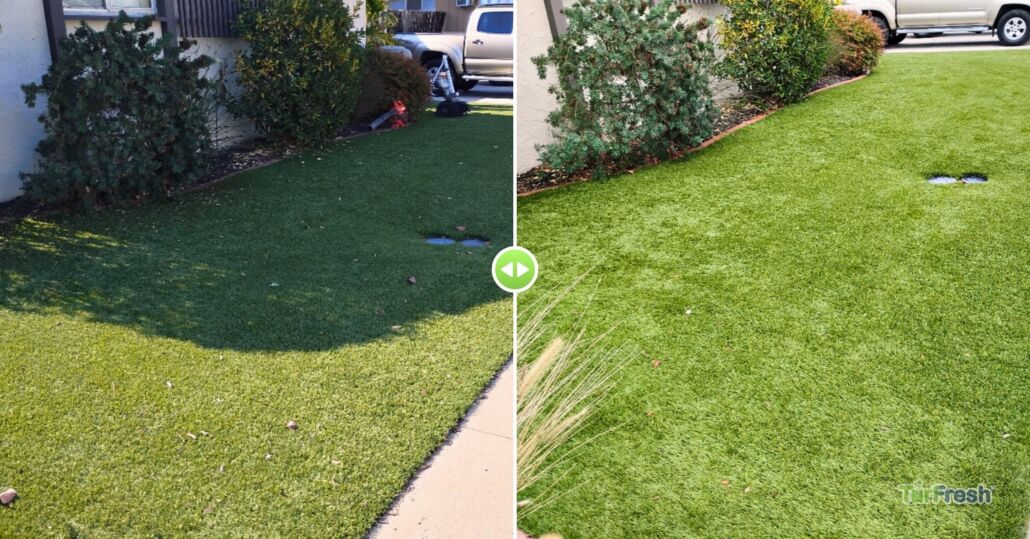
Signs Your Artificial Turf Needs Professional Repair (Not Replacement)
If you notice any of the following, your turf is almost certainly a repair candidate. Each of these is a surface or seam issue, not a structural failure.
✔ A visible seam line or gap where two turf sections meet: seam rebonding with professional adhesive and tape is a straightforward repair as long as the backing on both sides is intact.
✔ A lifted or curling edge along a border, fence, or hardscape: edge re-anchoring is one of the most common and most fixable turf repairs.
✔ A small melted or burned patch from a grill, cigarette, or window reflection: localized burns can be patched using matching turf material. The affected area is cut out and replaced.
✔ Flat, matted fibers in a pet zone or high-traffic area that no longer spring back: this is a maintenance issue, not structural damage. TurfBloom professional grooming and infill decompaction addresses this directly.
✔ Persistent odor that does not respond to rinsing: embedded bacteria in the infill layer requires enzyme treatment, not replacement. TurfClean with BioS+ breaks down odor compounds at the source.
✔ Thin or bare patches where infill has been depleted by pet activity or heavy use: restoring infill levels through a TurFill service corrects cushioning, drainage, and fiber support without touching the turf itself.
📌 If you recognize two or more of the above, contact TurFresh for a professional assessment. A technician can confirm which repair path applies and give you a cost estimate before any work begins.
How Do You Tell If Artificial Turf Backing Is Damaged?
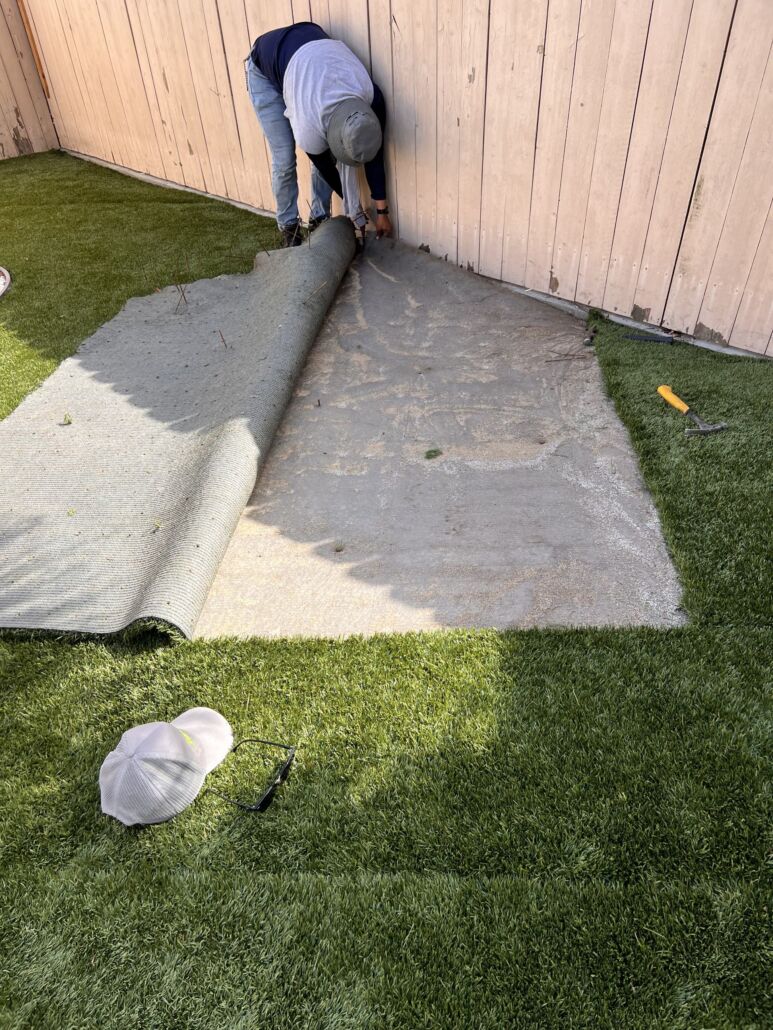
You can check your turf backing yourself with a simple five-step inspection. Backing damage is the clearest signal that repair may not be enough.
1. Lift a corner or edge of the turf where it meets a border, curb, or wall.
2. Look for visible cracking, flaking, or disintegration of the black or white mesh layer on the underside.
3. Try to bend the turf edge. Healthy backing is flexible. Damaged backing snaps, crumbles, or splits under gentle pressure.
4. Check for delamination: the fiber layer peeling away from the backing mesh. This is not repairable with patch tape.
5. Look for discoloration, staining, or a brittle texture across a large surface area. Localized spots may still be patchable; if it covers most of the turf face, replacement is likely warranted.
🔑 Key Insight: Backing degradation is often caused by aggressive cleaning chemicals. Bleach, peroxide-based products, and harsh solvents break down latex and polyurethane backing over time. This is one of the reasons TurFresh uses only non-toxic, biodegradable formulas: they clean without accelerating backing breakdown.
How Much Does It Cost to Repair Artificial Turf vs. Replace It?
Cost is usually what drives the repair vs. replace decision. Here is a straightforward comparison based on common damage scenarios. All prices shown are estimated California 2026 rates. TurfCare recurring plan members receive 10% off cleaning services. Markets outside California may vary.
Seam separation (linear): Repair est. $150 to $400 (CA) | Full replacement est. $8 to $20 per sq ft | Recommendation: Repair
Small tear or puncture: Repair est. $100 to $300 (CA) | Full replacement est. $8 to $20 per sq ft | Recommendation: Repair
Burn mark (localized): Repair est. $150 to $500 (CA) | Full replacement est. $8 to $20 per sq ft | Recommendation: Repair
Matted fibers and infill compaction: TurfBloom: est. from $449 (CA) / ~$1.00/sf | Full replacement est. $8 to $20 per sq ft | Recommendation: Restore
Pet odor in fibers and infill: TurfClean + BioS+: est. $449 minimum (CA, yards up to 400 sq ft); ~$1.00/sf for larger areas; $450/visit on TurfCare recurring plan | Full replacement est. $8 to $20 per sq ft | Recommendation: Restore
In California, TurfClean and TurfBloom restoration services start at an estimated $449 for yards up to 400 sq ft, compared to an estimated $4,000 to $10,000 for full replacement of a 500 sq ft lawn. Structural repairs such as seam rebonding are estimated separately based on scope. All prices are California 2026 estimates; markets outside California may vary.
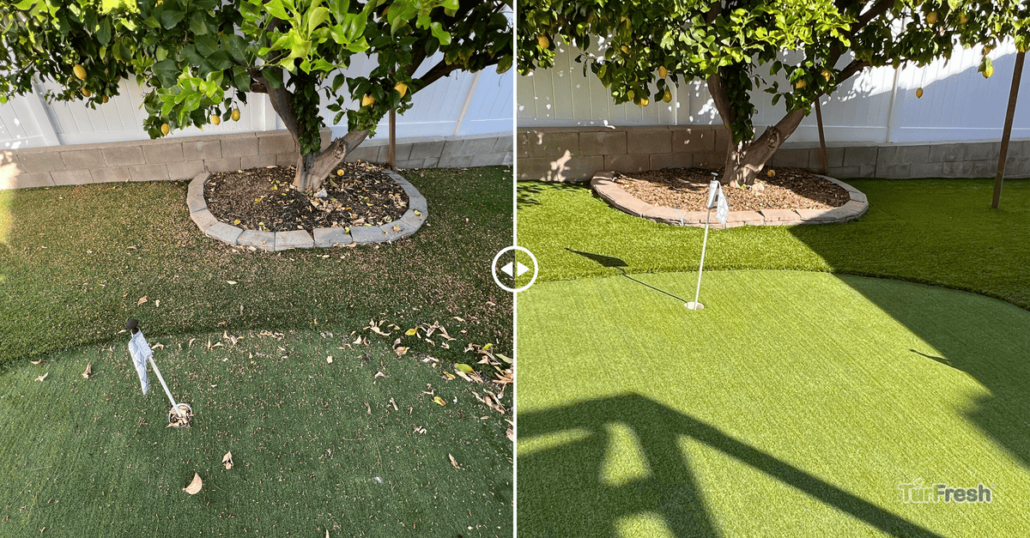
What Are the Most Common Types of Repairable Artificial Turf Damage?
Understanding the specific damage type in your yard makes it much easier to match it with the right repair solution.
Seam Separation and Edge Lifting
Seam separation is one of the most common and most repairable turf problems. It occurs when the seam tape or adhesive bonding two sections of turf breaks down over time, often due to moisture cycling, foot traffic along edges, or substandard original installation.
The visible symptoms are a gap or ridge running along a seam line, or a turf edge that curls up along a border. As long as the backing on both sides of the seam is intact, seam re-bonding is a straightforward repair. TurFresh's TurFix™ service addresses both seam separation and edge lifting with professional-grade seam tape and adhesive formulated for long-term outdoor use.
Burn Marks and Melted Fibers
Artificial turf fibers melt rather than burn. The most common causes are reflected sunlight from low-E double-pane windows (which can reach 200 degrees Fahrenheit and concentrate heat like a magnifying glass), charcoal or propane grill sparks, and cigarette embers.
A localized burn creates a discolored, hard patch where fibers have fused or melted. Melted sections are limited in area and can be patched by removing the damaged section and replacing it with matching turf material. Window reflection burns are recurring, so solving the source of heat concentration is part of any long-term fix.
Matted Fibers and Infill Compaction in Pet Zones
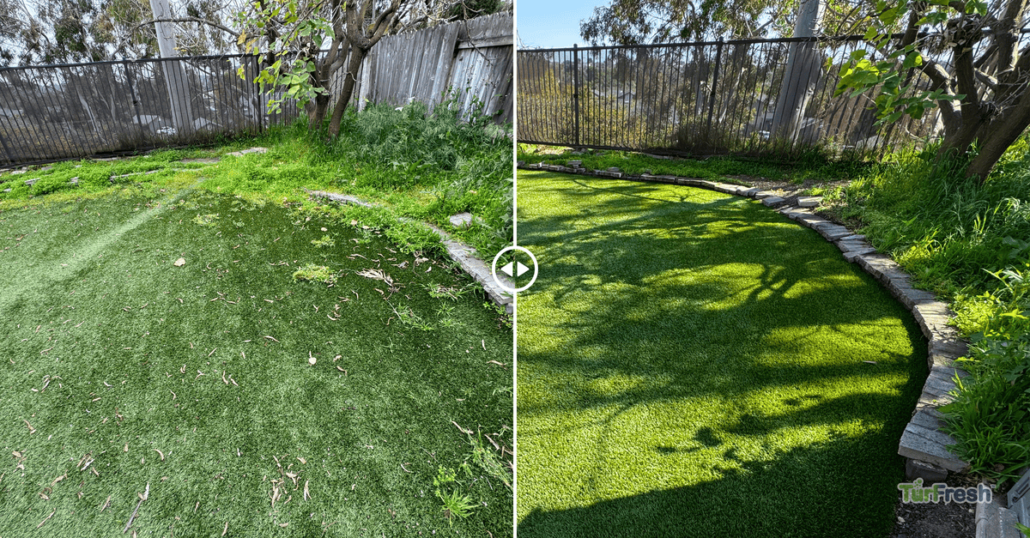
Heavy pet traffic, especially in areas dogs repeatedly run, play, or rest, compacts the infill and flattens fibers over time. The result looks like worn carpet: fibers lie flat, lose their pile height, and the turf feels hard underfoot.
This is not structural damage. It is a maintenance issue that professional equipment and the right treatment can reverse. TurFresh's TurfBloom™ service uses high-powered grooming equipment and infill decompaction techniques to restore pile height and cushioning. Combined with a TurfClean™ deep clean and BioS+ enzyme treatment for any odor, matted pet zones can be restored to near-original condition without replacing a single square foot.
If infill has been significantly depleted, not just compacted, a TurFill service restores it to the correct level, rebuilding drainage and cushioning in one visit.
How Long Does Artificial Turf Last Before It Needs to Be Replaced?
A well-maintained artificial turf installation typically lasts 15 to 20 years. Turf in high-traffic applications such as sports fields, commercial properties, or yards with multiple large dogs may show wear as early as 8 to 10 years without regular professional maintenance.
The biggest variable in turf lifespan is not the quality of the original installation. It is maintenance. Infill compaction, fiber matting, embedded debris, and microbial buildup all accelerate fiber breakdown when left unaddressed. Regular professional cleaning and grooming can add years to a turf system's functional life.
How TurFresh Helps You Avoid Premature Replacement
A large percentage of lawns that homeowners assume need replacement are actually good candidates for restoration. The difference between a lawn that gets replaced prematurely and one that lasts another five years usually comes down to one factor: whether the owner scheduled a professional assessment before making a decision.
Before spending $4,000 to $10,000 on full replacement, schedule a TurFresh professional assessment. Technicians can identify exactly what type of damage you have, confirm whether the backing is structurally sound, and recommend the right service, whether that is a TurFix™ repair, a TurfBloom™ restoration, or a full TurfClean™ treatment. Most homeowners walk away with a repair plan that costs a fraction of replacement.
TurFix™ handles structural repairs: seam rebonding, edge re-anchoring, patch replacements for burns or tears, and section repairs on isolated backing damage.
TurfBloom™ handles fiber restoration: power grooming, infill decompaction, pile revival, and infill restoration for matted or worn areas.
TurfClean™ with BioS+ handles deep cleaning and odor elimination: professional-grade enzyme treatment that breaks down odor molecules at the source, not with masking fragrance.
All TurFresh services are backed by a 30-day satisfaction guarantee. Non-toxic, biodegradable formulas mean the lawn is safe for kids and pets immediately after service.
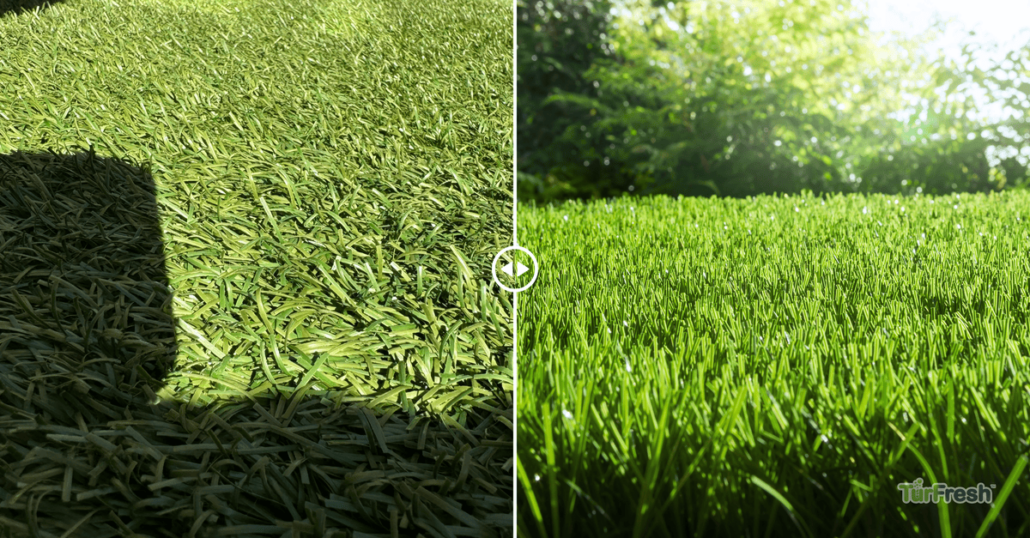
Let TurFresh tell you if your turf can be saved first.
Every TurFresh service (TurFix™ repair, TurfBloom™ restoration, TurfClean™ deep cleaning) costs a fraction of full replacement and is backed by a 30-day satisfaction guarantee.
✔ Pet Safe✔ Kid Safe✔ 150,000+ Services✔ 30-Day Guarantee
Frequently Asked Questions
Is it cheaper to repair artificial turf or replace it?
In almost every case, repair or restoration is significantly cheaper than replacement. In California, TurfClean deep cleaning starts at an estimated $449 for yards up to 400 sq ft (~$1.00/sf for larger areas), and structural repairs such as seam rebonding run an estimated $150 to $500. Full replacement runs $8 to $20 per square foot installed. For a 500 sq ft lawn, that is an estimated savings of $3,500 or more compared to full replacement. Prices are estimated California 2026 rates; markets outside California may vary. Replacement only makes financial sense when backing failure is widespread or drainage is compromised across the entire installation.
Can you patch a section of artificial turf without replacing the whole thing?
Yes. Localized damage, including burn marks, small tears, or isolated seam failures, can be patched using matching turf material and professional-grade adhesive. A well-executed patch is virtually invisible and holds for years. The key is using the correct seam tape and adhesive for outdoor, UV-exposed installations, and matching the fiber pile height and color of the original turf.
What causes artificial turf seams to come apart?
Seam failure is most commonly caused by adhesive breakdown over time, improper original installation, moisture infiltration under the seam tape, or repeated stress from foot traffic directly along the seam line. Edge seams are particularly vulnerable where turf meets hard borders. In most cases, the backing on both sides remains intact and the seam can be rebonded with professional adhesive and seam tape.
Can sun damage to artificial turf be repaired?
It depends on the type of sun damage. Heat damage from reflected sunlight, caused by low-E window panes concentrating light onto the turf surface, creates localized melted patches that can be patched or replaced section by section. General UV degradation that has bleached and brittlized fibers across the entire lawn over many years is a sign the turf has reached end of life and replacement is warranted.
Does professional turf cleaning help extend the life of artificial turf?
Significantly. Infill compaction, debris buildup, and embedded bacteria are major contributors to fiber and backing degradation when left unaddressed. Regular professional deep cleaning removes embedded organic material, revives infill, and applies enzyme treatments that prevent microbial buildup. Homeowners who schedule annual or biannual professional cleaning consistently get more years out of their turf system.
How do I know if my turf needs repair, restoration, or replacement?
Ask three questions: Is the damage limited to the fiber surface or does it extend to the backing? Is the problem isolated to one area or spread across the entire lawn? And is the turf less than 15 years old? If the answer is surface-level, localized, and under 15 years old, repair or restoration is almost certainly the right path. If backing failure or drainage failure is widespread, replacement may be necessary.
Share

John Pla is the owner of TurFresh and an expert with over 20 years of experience in artificial turf cleaning and maintenance. John’s passion for sustainability, community impact, and innovative solutions has made him a trusted figure in the artificial grass industry and beyond.