
Quick Answer
To prep artificial grass after winter: (1) remove debris with a leaf blower or stiff rake, (2) rinse the surface thoroughly, (3) brush fibers upright with a power broom or stiff bristle brush, (4) treat odors with a non-toxic enzyme cleaner, and (5) inspect and decompact infill. A full spring prep takes 4 to 6 steps and can be done DIY for light buildup, or handled by a professional service like TurFresh for a deeper, lasting result. For heavily soiled or odor-affected turf, professional cleaning delivers the best results.
Get a professional spring reset instead of guessing at a DIY fix.
TurFresh's spring service combines deep cleaning, fiber revival, and infill decompaction in one visit, reaching what a garden hose and a brush cannot.
✔ Pet Safe✔ Kid Safe✔ 150,000+ Services✔ 30-Day Guarantee
Key Takeaways
🍂 Winter damage is often invisible until spring. Compacted infill, matted fibers, and trapped pet odor build up gradually under cold, wet conditions and only become obvious once warmer weather arrives.
🧴 Enzyme treatment, not fragrance, is what actually removes odor. Spring is when ammonia trapped in the infill over winter becomes most noticeable. A masking spray covers it; an enzyme cleaner breaks it down at the source.
🚿 Skip the pressure washer. A gentle garden hose rinse is enough for routine cleaning. High pressure can displace infill and damage seams.
🔧 Five steps cover a complete spring reset: debris removal, rinsing, brushing, odor treatment, and an infill check. Skipping the infill check is the most common mistake, since compacted infill undermines the other four steps.
📅 Twice a year is the baseline for everyone, more for pets. Spring and fall deep cleans are the minimum for any lawn. Pet households need enzyme treatment monthly and professional service more often than that.
Artificial grass doesn't need mowing, watering, or fertilizing, but it does need cleaning, especially after winter. Over the colder months, leaves, organic matter, compacted infill, pet waste, and moisture all take a toll on your turf's appearance, hygiene, and performance.
Spring is the ideal time to reset your artificial lawn. A proper spring turf cleaning removes what winter left behind, restores fiber pile, and ensures your grass looks and smells fresh for the months ahead.
Whether you're maintaining a backyard pet area, a commercial property, or a sports field, this guide walks you through exactly what to do, and when it's worth calling the professionals.
Why Does Artificial Grass Need Spring Cleaning?
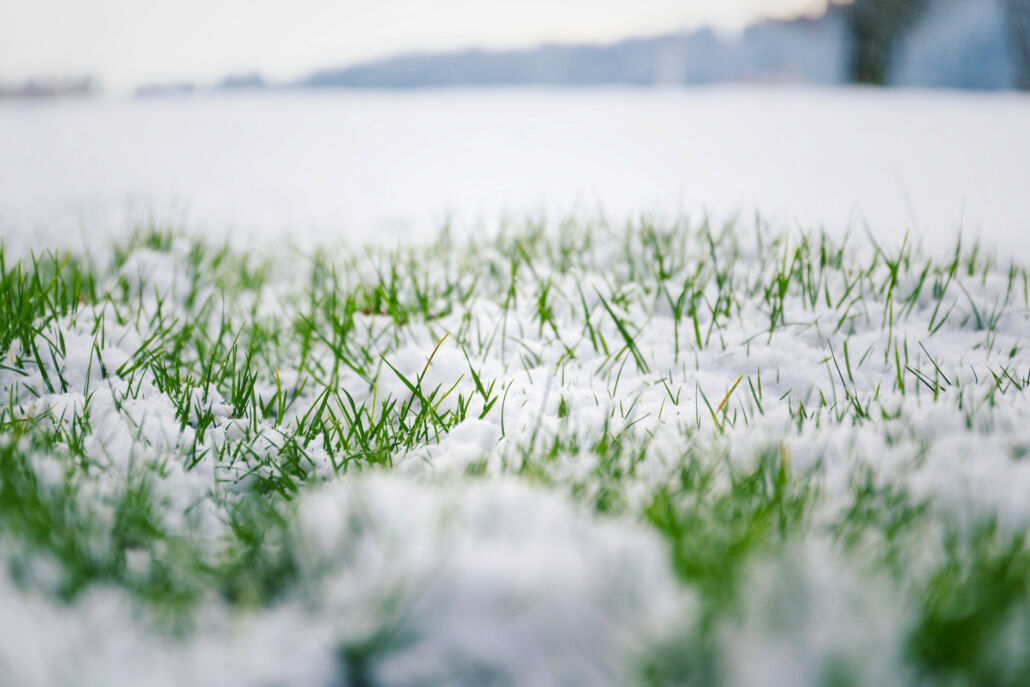
Artificial grass needs spring cleaning because winter conditions cause debris buildup, fiber matting, infill compaction, and bacterial growth that impact both appearance and hygiene.
Even though artificial turf doesn't grow, it's still exposed to the elements year-round. Winter brings fallen leaves, organic debris, standing water, frost, and heavy foot traffic, all of which affect the surface in ways that aren't always visible until warmer weather arrives.
What Happens to Artificial Turf Over Winter?
Over winter, artificial grass fibers flatten and mat under the weight of wet debris and foot traffic. Infill material, the sand or rubber granules that keep fibers upright, compacts and shifts. Organic matter like leaves and mulch breaks down on the surface, creating conditions where mold, algae, and bacteria can thrive. Pet urine, if not regularly flushed, concentrates in the infill and produces strong ammonia-based odors by spring.
⚠️ Fiber matting from moisture and weight
⚠️ Infill compaction reducing drainage and cushioning
⚠️ Debris accumulation accelerating bacterial growth
⚠️ Pet odors intensifying in cold, damp conditions
⚠️ Algae or mold growth in shaded or low-drainage areas
💡 Tip
Turf that drains poorly during winter is more likely to develop odor problems and algae buildup. Check your drainage before spring cleaning begins.
How Do You Clean Artificial Grass in Spring? (Step-by-Step)
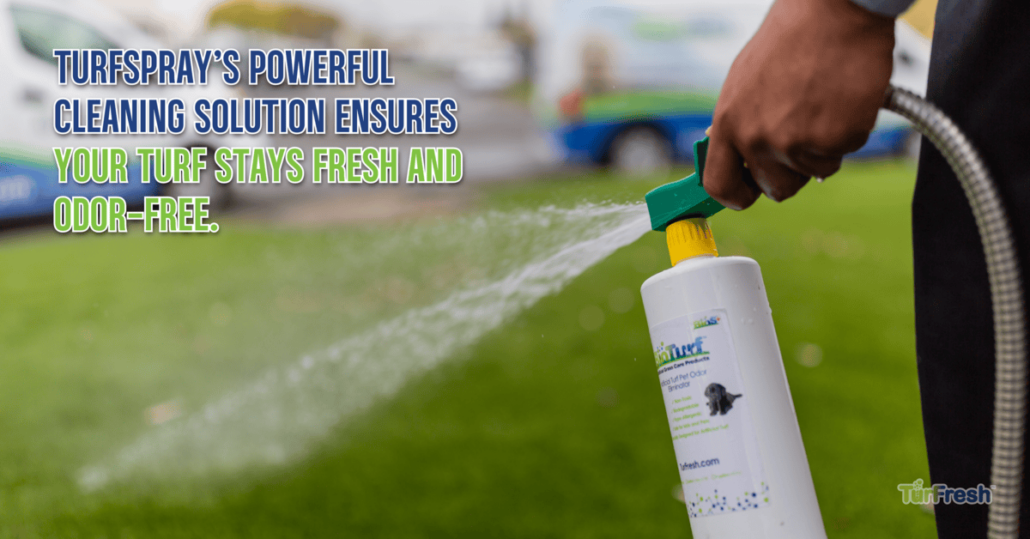
Cleaning artificial grass in spring takes five steps: remove debris, rinse the surface, brush fibers upright, treat odors, and inspect the infill. Complete all five for the best results.
Step 1: Remove All Winter Debris
Start by clearing the surface of leaves, twigs, dirt, and any organic matter that has accumulated over winter. Use a leaf blower on a low setting to push debris toward the edges, or a stiff-bristled rake designed for artificial turf. Avoid metal rakes; they can snag and damage fibers.
➡️ Leaf blower: Use a leaf blower or turf-safe rake to clear the entire surface.
➡️ Direction: Work in one direction to avoid redistributing debris.
➡️ Edges: Pay extra attention to edges, seams, and shaded corners where leaves pile up.
➡️ Dispose: Bag and dispose of all collected organic matter.
💡 Tip
Never use a metal rake on artificial turf. Choose a turf-specific rake or plastic tines to protect fiber integrity.
Step 2: Rinse the Turf Surface Thoroughly
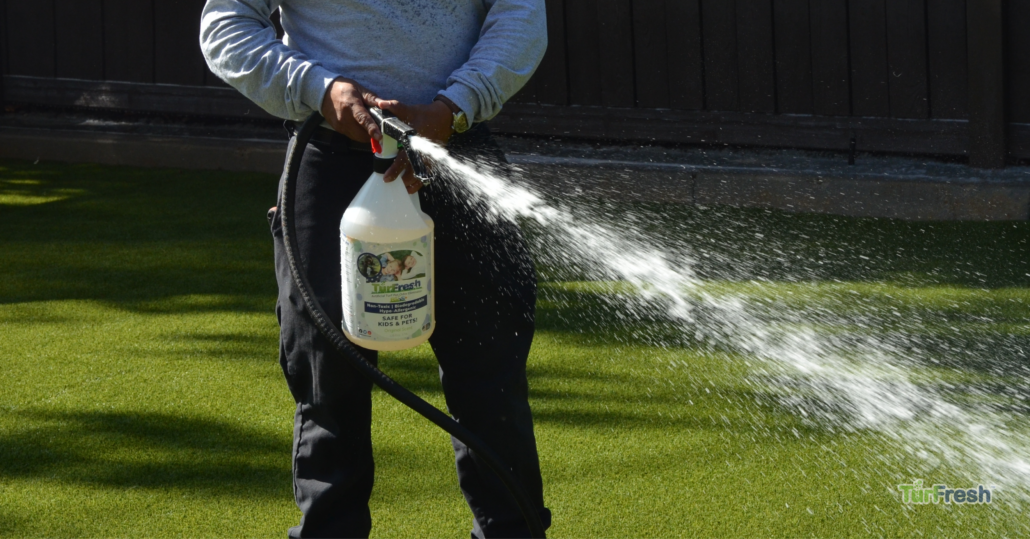
After removing dry debris, rinse the entire turf area with a garden hose or clean water supply. This flushes loose dirt, dust, pollen, and surface bacteria into the drainage layer below. Focus the rinse on high-use areas like pet zones, pathways, and play areas.
💡 Tip
A gentle rinse is usually sufficient. You do not need to pressure wash; high-pressure water can displace infill and damage seams.
Step 3: Brush Fibers Back to Life
Winter traffic flattens artificial turf fibers. Brushing them upright is essential to restore the natural look of the lawn and ensure infill is evenly distributed beneath the blades.
Use a power broom or a stiff, synthetic-bristle brush and work in sections, brushing against the grain of the fibers, counter to the direction they lay. This technique lifts flattened fibers and redistributes infill evenly.
💡 Tip
TurFresh's TurfBloom™ service combines professional fiber revival with infill decompaction, restoring pile height and lawn resilience in one visit.
Step 4: Treat Odors and Disinfect the Surface
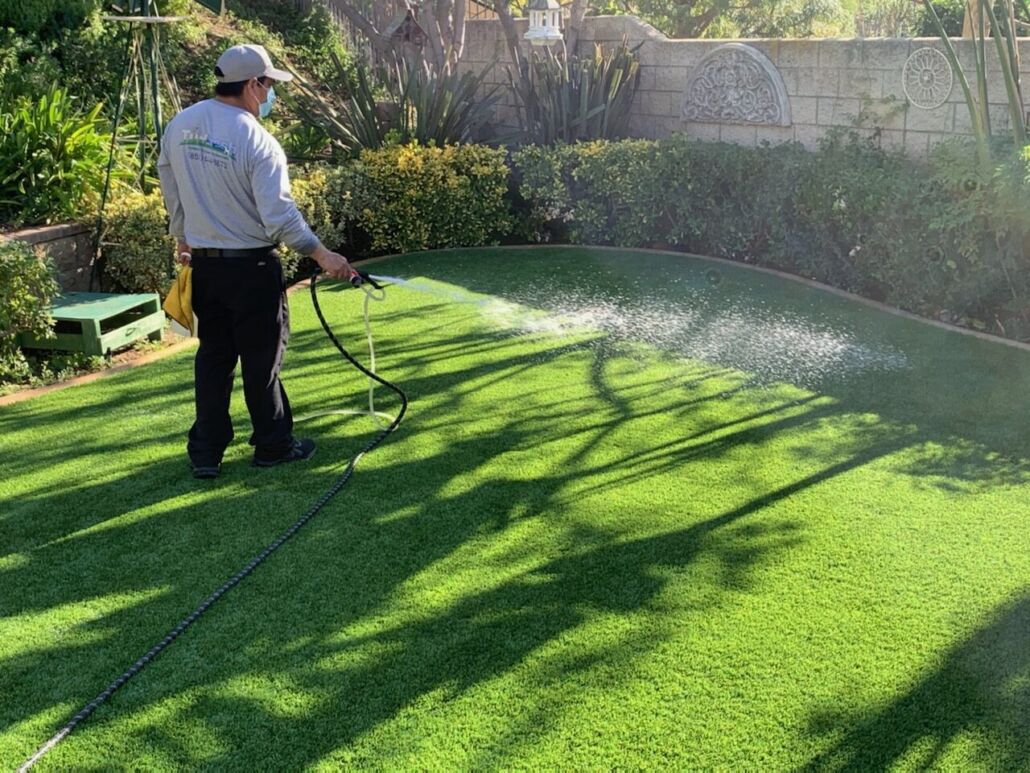
Spring is when pet odors trapped in turf infill become most noticeable. Treat them with a non-toxic, enzyme-based odor eliminator, not a masking fragrance.
TurFresh's BioS+ and BioX are organic, non-toxic disinfectants that eliminate odor at the source, breaking down ammonia compounds and bacteria rather than simply covering them up. They're safe for kids and pets immediately after application.
➧ Apply diluted enzyme cleaner evenly across the surface
➧ Allow dwell time as directed (typically 10 to 15 minutes)
➧ Rinse lightly and allow to air dry
➧ For pet areas, treat monthly during warmer months
💡 Tip
Avoid bleach or harsh chemical cleaners; they degrade turf fibers, kill beneficial bacteria in the infill, and can harm pets and children.
Step 5: Inspect and Decompact the Infill
After cleaning and brushing, check the infill depth across the lawn. Infill provides cushioning, drainage, and fiber support. If it's too shallow or heavily compacted, the turf won't perform correctly.
Signs of compacted infill include fibers that won't stand upright, a hard underfoot feel, or visible pooling of water after rain. If the infill is low, add TurFill Granular Odor Eliminator to replenish and deodorize simultaneously.
💡 Tip
Professional decompaction flushes the infill layer and rebalances it, something a garden hose can't achieve.
What Tools Do You Need for Spring Turf Cleaning?
For a complete spring artificial grass cleaning, you need these basic tools and supplies:
Leaf blower or turf rake: removes winter debris without damaging fibers.
Garden hose with spray head: flushes dirt, pollen, and surface bacteria.
Stiff synthetic-bristle brush or power broom: brushes fibers upright and redistributes infill.
Enzyme-based odor cleaner (such as BioS+): eliminates bacteria and neutralizes pet odors.
TurFill Granular Odor Eliminator: replenishes and deodorizes compacted infill.
Measuring tape or infill gauge: checks infill depth across the lawn.
How Often Should Artificial Grass Be Cleaned?
Artificial grass should be cleaned at a minimum twice per year, once in spring and once in fall. Pet owners or high-traffic properties benefit from monthly professional services and weekly DIY maintenance.
Weekly (pet areas): Rinse urine zones with water; remove solid waste.
Monthly: Apply enzyme deodorizer to pet zones; brush fibers.
Every 6 months (spring and fall): Full deep clean, fiber brushing, and infill inspection.
Annually: Professional deep clean, infill decompaction, and fiber revival.
💡 Tip
See our full guide on how often to schedule professional turf cleaning for a complete frequency breakdown by usage level.
When Should You Call a Professional Turf Cleaning Service?
Call a professional turf cleaning service when DIY methods no longer control odors, fibers won't stay upright after brushing, or the turf shows signs of mold, algae, or significant infill loss.
DIY spring cleaning covers surface-level maintenance. But some problems go deeper:
⚠️ Persistent pet odors that return within days of DIY cleaning
⚠️ Visible green or black patches (algae or mold growth)
⚠️ Fibers lying flat even after brushing, a sign of deep compaction
⚠️ Drainage issues, water pooling after rain
⚠️ Turf over 2 years old with no professional service history
⚠️ High-traffic commercial or sports turf needing hygiene certification
Professional services use industrial-grade equipment and specialized solutions that reach deep into the infill layer, where bacteria and odors actually live. No amount of garden hose rinsing can replicate that.
How TurFresh Restores Artificial Grass This Spring
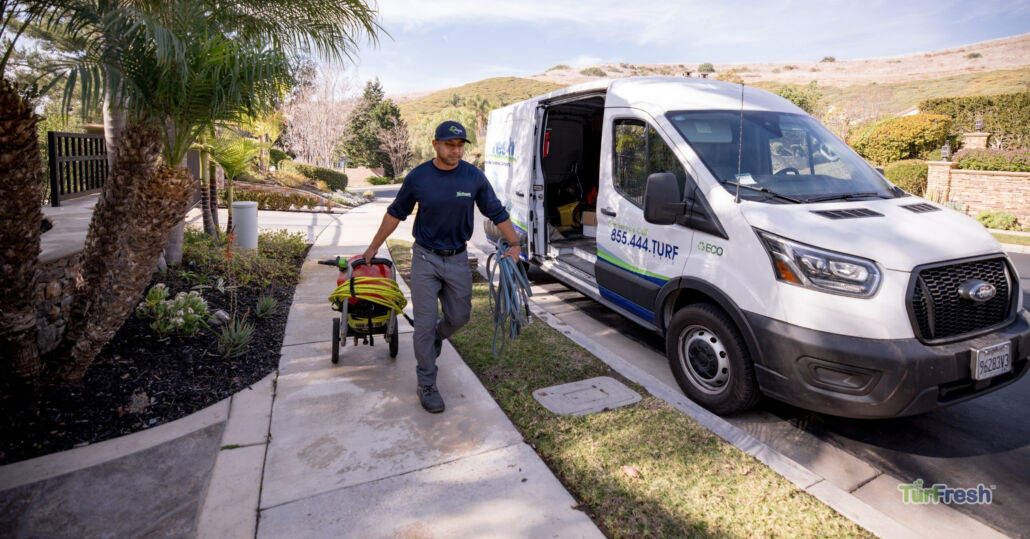
TurFresh is a leading artificial turf cleaning service in the United States, with 25+ years of experience, 150,000+ services completed, and 5,000+ five-star reviews. Every spring cleaning service is backed by a 30-day satisfaction guarantee.
What Does a TurFresh Spring Cleaning Include?
A TurFresh spring service is a complete turf restoration, not just a rinse. Here's what a typical visit covers:
👍 TurfClean™: Deep cleaning with hot water extraction and organic disinfectant (BioS+ or BioX), targeting bacteria, allergens, and embedded pet waste.
👍 TurfBloom™: Fiber revival and infill decompaction to restore pile height and surface resilience.
👍 TurFlush: High-pressure infill flush that rebalances and sanitizes below the surface.
👍 TurfSpray: Precision odor treatment for targeted pet zones.
👍 TurFill: Infill replenishment with granular odor eliminator for long-lasting freshness.
Why TurFresh?
✔ Non-toxic, organic formulas, safe for kids and pets immediately after service.
✔ No harsh peroxides or masking fragrances; odors are eliminated at the source.
✔ 30-day satisfaction guarantee on every service.
✔ Serving homeowners, commercial properties, sports facilities, and landscapers nationwide.
TurFresh makes spring turf cleaning effortless.
Our certified technicians use non-toxic, organic formulas to deep clean, deodorize, and revive your artificial grass, guaranteed.
Book Your Spring Service Today
✔ Pet Safe✔ Kid Safe✔ 150,000+ Services✔ 30-Day Guarantee
Frequently Asked Questions About Spring Turf Cleaning
How do I clean artificial grass after winter?
Remove debris with a leaf blower or turf rake, rinse the surface, brush fibers upright with a stiff brush or power broom, apply an enzyme-based odor cleaner, and check infill levels. For best results, follow all five steps in sequence at the start of spring.
Does artificial turf need spring maintenance?
Yes. Artificial turf needs spring maintenance to remove winter debris, restore flattened fibers, treat accumulated bacteria and odors, and check infill levels. Skipping spring cleaning allows problems to worsen through the warmer months when turf use peaks.
Can I pressure wash artificial grass?
Light rinsing with a standard garden hose is safe and recommended. High-pressure washing is generally not advised; it can displace infill, damage seams, and push debris deeper into the drainage layer rather than removing it.
How do I get rid of dog odor on artificial turf?
Use an enzyme-based odor eliminator that breaks down ammonia compounds and bacteria, not a fragrance that masks them. Apply after rinsing the area, allow dwell time, then rinse lightly. TurFresh's BioS+ is non-toxic, biodegradable, and safe for pets immediately after use.
How long does it take to clean artificial grass in spring?
A DIY spring cleaning takes 2 to 4 hours depending on lawn size and debris level. A professional TurFresh service typically takes 1 to 3 hours and covers a deeper clean, including infill decompaction and odor treatment that DIY methods cannot match.
What is the best product to refresh artificial grass fibers?
A stiff synthetic brush or power broom restores fiber pile mechanically. For infill and odor, TurFill Granular Odor Eliminator replenishes infill while eliminating odors. TurfBloom™ by TurFresh combines both for a professional-grade fiber and infill revival.
When should I hire a professional to clean my artificial turf?
Hire a professional when odors persist after DIY cleaning, fibers won't stand upright, algae or mold is visible, drainage is reduced, or your turf has not had a professional service in over 12 months. Annual professional cleaning is recommended for all artificial lawns.
Share

John Pla is the owner of TurFresh and an expert with over 20 years of experience in artificial turf cleaning and maintenance. John’s passion for sustainability, community impact, and innovative solutions has made him a trusted figure in the artificial grass industry and beyond.