
Quick Answer:
Can you be allergic to artificial turf? The short answer is no — the synthetic fibers themselves do not produce pollen and are not known allergens. However, unclean turf can accumulate pollen, mold spores, and bacteria that trigger real allergy symptoms. According to the Asthma and Allergy Foundation of America, more than 82 million Americans were diagnosed with seasonal allergic rhinitis in 2024 — and for many of them, dirty outdoor surfaces are a hidden exposure point. The material is not the problem. Maintenance is.
Clean turf is safe turf. Dirty turf is where symptoms start.
TurFresh removes pollen, mold, bacteria, and allergens from turf fibers and infill with professional-grade equipment. Backed by our 30-day guarantee and trusted by homeowners across California, Arizona, Texas, Nevada, and Florida.
✔ Pet-Safe✔ Kid-Safe✔ 150,000+ Services✔ 30-Day Guarantee
Key Takeaways
✅ The turf material itself is not an allergen. Artificial turf fibers are made from synthetic materials (polyethylene, polypropylene) that do not produce pollen or trigger immune responses in most people.
✅ Unclean turf can cause allergy-like symptoms. Airborne pollen, mold spores, dust, and bacteria settle on any outdoor surface including turf. Without regular cleaning, these accumulate and become exposure sources.
✅ Turf rash is not an allergic reaction. Friction burns from contact sports on turf fields are mechanical injuries, not immune responses. In residential settings, turf rash is extremely rare.
✅ Residential turf infill is not the same as sports field infill. Crumb rubber from recycled tires is used in sports fields. Most residential installations use silica sand or cork infill, which carry none of those concerns.
✅ Regular cleaning resolves most allergy concerns. Rinsing removes surface pollen. Professional deep cleaning removes allergens from the infill layer that rinsing cannot reach.
Does Artificial Turf Cause Allergies?
No. Artificial turf does not cause allergies in the way natural grass does, because the synthetic fibers do not produce pollen.
Natural grass releases pollen into the air during warm months, triggering hay fever and allergic rhinitis in sensitive individuals. Artificial turf cannot do this. The fibers are inert, manufactured materials that do not grow, flower, or release biological particles into the air.
What artificial turf can do, like any outdoor surface, is collect pollen that drifts in from surrounding trees, plants, and neighboring lawns. The key distinction is that turf accumulates pollen passively from the environment. It does not generate it.
📌 Replacing natural grass with artificial turf removes the primary allergen source from your yard. It does not create a new one.
Can You Be Allergic to the Turf Material Itself?
True allergic reactions to synthetic turf fibers are extremely rare and are not considered a public health concern for residential installations.
The fibers used in residential artificial grass are manufactured from polyethylene and polypropylene. These materials are widely used in food packaging, medical equipment, and children's products precisely because of their low reactivity with human tissue. They do not contain organic proteins, which is what the immune system responds to in a typical allergy.
Skin reactions that people occasionally report after contact with turf are almost always one of three things: friction irritation from abrasive contact (common in athletes, rare at home), heat discomfort from a turf surface in direct sun, or a reaction to bacteria or residue buildup on poorly maintained turf. None of these are allergic responses to the turf material itself.
📌 If you or your child experienced skin irritation after contact with a sports field, the cause is more likely friction, heat, or a hygiene issue than an allergy to the material.
What About Crumb Rubber and Infill Safety?
This is the question most people are actually worried about when they search “can you be allergic to artificial turf” — and it deserves a direct answer.
Crumb rubber is a type of infill made from recycled tire rubber. It has been the subject of ongoing safety research due to its chemical composition, and it is used primarily in high-traffic sports fields and athletic facilities. If your child plays soccer or football on a public turf field, that field likely has crumb rubber infill.
Residential artificial turf is different. Most residential installations use silica sand, coated silica sand, or cork as infill. These materials do not carry the same concerns as crumb rubber. If you are unsure what infill your turf has, your installer will have that information.
📌 The concerns about crumb rubber in the media apply to sports fields, not to the residential turf in your backyard. Always ask your installer which infill type was used.
Complete Guide
📖 Artificial Turf Seasonal Maintenance: The Complete Climate-by-Climate Guide — summer heat, winter rain, monsoon season, and spring prep covered for every TurFresh market.
What Actually Causes Symptoms on Artificial Turf?
If someone in your household is experiencing allergy symptoms while spending time on your artificial turf, here are the most likely causes in order of probability.
1. Pollen deposited on the turf surface
During peak pollen season, airborne particles from trees, weeds, and neighboring lawns settle on every outdoor surface. Turf is no exception. When children or pets roll, sit, or play on the surface, they disturb this layer and bring pollen into direct contact with skin and airways. A simple rinse with water removes surface pollen in minutes.
2. Mold or mildew from inadequate drainage or shade
Areas of turf that remain damp for extended periods — under tree canopies, in corners with poor drainage, or in regions with heavy seasonal rain — can develop mold growth. Mold spores are a recognized allergen and can cause respiratory symptoms indistinguishable from pollen allergies. Quality turf installation with proper drainage prevents most mold issues. Professional cleaning removes mold and mildew from the infill layer.
3. Bacteria and organic debris from pet use
Pet waste introduces bacteria, enzyme byproducts, and organic material into the turf system. Over time, without proper cleaning, this creates a hygiene issue that can cause skin irritation and odor. This is not a turf allergy — it is a maintenance issue with a straightforward solution.
4. Chemical lawn treatments tracked onto turf
If you or a neighbor treats natural lawn areas near your turf with herbicides, pesticides, or fertilizers, those chemicals can transfer to the turf surface on shoes or paws. People with chemical sensitivities may react to these residues. Regular rinsing reduces this risk significantly.
Is Artificial Turf Hypoallergenic?
Yes, with an important qualification.
Artificial turf is hypoallergenic in the sense that it does not produce allergens of its own. The materials do not contain the biological proteins that trigger immune responses. For households where grass pollen is the primary allergy trigger, replacing a natural lawn with artificial turf removes the source of that allergen from the immediate environment.
The qualification is this: no outdoor surface is allergen-free. Pollen, dust, pet dander, and mold spores exist in the air and will settle on any surface. The practical advantage of artificial turf is that it is far easier to clean than natural grass. A rinse with water removes surface allergens within minutes. Professional deep cleaning removes what rinsing leaves behind.
📌 Think of it this way: the turf itself is hypoallergenic. What you do with the maintenance determines whether it stays that way.
How Does Artificial Turf Compare to Natural Grass for Allergy Sufferers?
For households with seasonal allergy sufferers, artificial turf has several concrete advantages over natural grass.
Natural grass releases pollen during its growing and flowering cycles, which in warm climates can span most of the year. Grass clippings left on the surface after mowing increase mold spore production as they decompose. Lawn maintenance chemicals add another layer of potential irritants. Damp soil under natural grass creates ideal conditions for mold growth.
Artificial turf eliminates all four of these factors. It produces no pollen, generates no clippings, requires no chemical treatments to stay green, and its drainage system keeps moisture from pooling. For households in Los Angeles, Phoenix, San Diego, or other warm-climate markets where grass grows and pollinates year-round, this is a meaningful practical benefit.
The one area where artificial turf requires more active management than some homeowners expect is allergen accumulation from external sources. Because turf does not decompose organic matter the way soil does, anything that lands on the surface stays there until it is cleaned off. This makes regular maintenance not just cosmetic but essential for allergy-conscious households.
Does Artificial Turf Help Pets with Allergies?
Yes. Dogs and cats are affected by seasonal allergies more often than most owners realize, and artificial turf can reduce their allergen exposure significantly.
Pets with grass allergies typically show symptoms through skin contact rather than inhalation. Common signs include frequent paw licking (the paws are directly contacting the allergen), recurring ear infections, red or irritated skin around the belly and groin, excessive scratching, and watery eyes. If your dog shows these symptoms seasonally and they improve when kept off the lawn, grass pollen is a likely trigger.
Artificial turf removes the direct pollen source from your pet's environment. Combined with regular cleaning to remove deposited pollen and bacteria, it creates a substantially lower-allergen outdoor space for sensitive pets.
📌 If your dog is licking their paws after spending time on your turf, the cause is more likely accumulated pollen or bacteria on the surface than a reaction to the turf material. A thorough cleaning typically resolves this.
How to Keep Artificial Turf Allergy-Safe Year-Round
👉 Rinse the surface weekly during peak pollen season. A standard garden hose removes airborne pollen and surface dust in minutes. This is the single most effective routine maintenance action for allergy-conscious households.
👉 Schedule professional deep cleaning at least once per year. Surface rinsing does not reach the infill layer, where pollen, mold spores, and bacteria accumulate over time. Professional cleaning with specialized equipment clears the full turf system.
👉 Address drainage issues promptly. Standing water or persistently damp areas create conditions for mold growth. If areas of your turf remain wet for more than 24 hours after rain, the drainage layer may need attention.
👉 Clean after pets use the surface. Remove solid waste immediately. Rinse the affected area. Schedule professional cleaning more frequently if you have multiple dogs or heavy use.
👉 Install turf near entry points to reduce indoor allergen transfer. Turf at doorways and patios reduces the amount of pollen tracked indoors on shoes and paws compared to natural grass or soil.
Concerned about allergens on your turf?
Professional cleaning is the fastest way to know your turf is safe.
TurFresh cleans and deodorizes turf fibers, infill, and drainage layers with professional-grade equipment. We have completed more than 150,000 services across California, Arizona, Texas, Nevada, and Florida.
✅ Pet-safe ✅ Kid-safe ✅ 30-Day Guarantee ✅ Trusted across California and beyond
Frequently Asked Questions
Can you be allergic to artificial turf?
True allergies to synthetic turf fibers are extremely rare. The materials used in residential artificial grass do not contain biological proteins that trigger immune responses. Most reactions attributed to turf are friction irritation, heat discomfort, or symptoms caused by allergens accumulated on an unclean surface, not a reaction to the turf itself.
What are artificial turf allergy symptoms?
Symptoms people associate with artificial turf exposure are typically sneezing, itchy eyes, and nasal congestion from pollen that has settled on the surface, or skin irritation from bacteria buildup on poorly maintained turf. These are resolved through regular cleaning, not turf removal.
Is artificial turf safe for kids with allergies?
Yes. Artificial turf is manufactured from inert synthetic materials that do not produce allergens. It is widely used in schools, daycare facilities, and family environments. Keeping it clean through regular rinsing and periodic professional cleaning maintains a low-allergen surface for children.
Can you get a rash from artificial turf?
A rash from residential turf is uncommon. Friction burns (“turf rash”) occur in contact sports on athletic fields. In a home setting, skin irritation is most likely caused by bacteria or residue buildup on turf that has not been cleaned in an extended period. Professional cleaning eliminates this risk.
Is artificial turf hypoallergenic?
Yes. Artificial turf does not produce pollen and is made from synthetic materials that are not recognized allergens. However, like any outdoor surface, it can collect airborne pollen and dust. Regular maintenance keeps allergen levels low.
Does artificial turf help with hay fever?
For households where grass pollen is the primary hay fever trigger, replacing a natural lawn with artificial turf removes the source of that allergen. Combined with regular surface rinsing during pollen season, this is a practical long-term strategy for reducing hay fever exposure outdoors.
Is artificial turf better than natural grass for allergy sufferers?
For most allergy sufferers, yes. Natural grass produces pollen, harbors mold in damp conditions, and requires chemical treatments that can cause additional irritation. Artificial turf eliminates all three of these sources, and its surface is far easier to clean of deposited allergens than natural grass.
Share
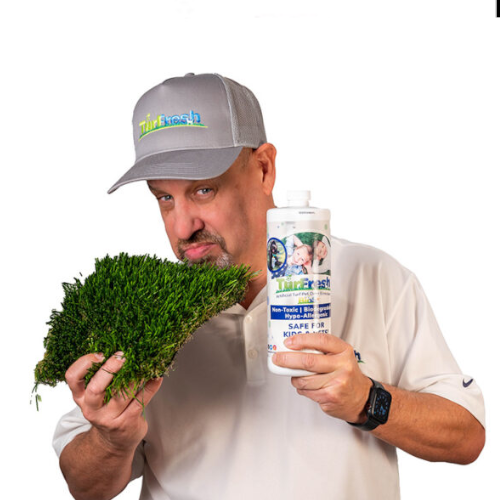

John Pla is the owner of TurFresh and an expert with over 20 years of experience in artificial turf cleaning and maintenance. John’s passion for sustainability, community impact, and innovative solutions has made him a trusted figure in the artificial grass industry and beyond.