Can You Vacuum Artificial Turf? Here Is When You Can and When You Should Not
Mar 30, 2021 · 11 min read · By John Pla, Founder of TurFresh
Quick Answer: Can you vacuum artificial turf? It depends on the turf type. Outdoor turf with infill should not be vacuumed with a standard household vacuum because suction pulls out the infill granules that keep blades upright and cushion footfall. Indoor turf, balcony mats, and no-infill surfaces can often be vacuumed safely on low power. For outdoor lawns, a turf comb or power broom removes all debris effectively without any of the risks that come with vacuuming. To confirm: run your fingers through the blades to the backing. If you feel granules or sand, it has infill and should not be vacuumed.
Let a TurFresh pro take a look and handle the cleanup the right way.
TurFresh handles debris removal, infill top-ups, drainage, odor control, and a full turf refresh in one visit.
Schedule Your Turf Service✔ Pet Safe✔ Eco Friendly✔ 20+ Years of Experience✔ 30-Day Guarantee
Key Takeaways
🔑 Vacuuming outdoor artificial turf removes infill — the granular layer that keeps blades upright and cushions footfall. Standard household vacuums have enough suction to pull infill out in a single pass. Without infill, turf blades flatten and the surface loses cushioning.
🔑 The simple test: run your fingers through the blades to the backing. If you feel granules or sand, it has infill and should not be vacuumed. No granules means it is likely safe on low power.
🔑 Vacuums with rotating beater bars are the worst option on any artificial turf. They are designed for deep carpet pile and will snag, pull, or fray synthetic fibers even on a single pass. Avoid any vacuum with a rotating brush head on artificial grass.
🔑 Dog hair on turf is not solved by vacuuming. Hair wraps around blade fibers and works toward the backing — suction pulls from above but cannot untangle what is embedded at the fiber base. A turf comb is the correct tool.
🔑 For outdoor lawns, a turf comb or power broom removes all debris without any risk to infill or fibers. These are the right tools for any outdoor artificial grass regardless of pile height or use level.
Can you vacuum artificial turf at all?
The short answer is: it depends on the type of turf you have.
Most outdoor artificial grass installations include infill — the layer of sand, crumb rubber, or zeolite granules packed between the turf blades. That infill is what keeps blades upright, cushions footfall, and helps the turf drain properly. A standard household vacuum creates enough suction to pull that infill right out, which is the core problem.
But not all turf is the same. Indoor turf, balcony mats, short-pile surfaces, and putting greens often have little or no infill. For those, vacuuming on a low setting can be perfectly fine.
Before reaching for a vacuum, it helps to know which type of turf you have.
When vacuuming artificial turf is okay
Indoor turf and decorative surfaces
Artificial turf used indoors, in showrooms, or as decorative ground cover typically has no infill and short, stiff blades. There is nothing to dislodge. A vacuum on low suction works well here, as long as the turf is dry and fixed in place.Balcony mats and pet zone panels
Balcony turf tiles and pet zone mats are usually lightweight, non-infill panels that can be lifted, shaken, or vacuumed without issue. A handheld vacuum or one with low suction is a practical option. Confirm the mat is dry before you start.Short-pile, well-secured turf
Turf with a pile height under 20mm that is glued or nailed down and contains minimal infill can generally handle gentle vacuuming. This type is common in show gardens, small patios, or light-use areas.If you are not sure whether your turf has infill, run your fingers through the blades down to the backing. If you feel a layer of granules or sand, it has infill and should not be vacuumed with a standard machine.
When vacuuming artificial turf is a problem
Does vacuuming remove infill?
Yes. On outdoor turf with infill, suction pulls those granules right out from between the blades. Without infill, blades lose support and start to flatten. The turf feels less cushioned underfoot and looks thinner over time. Replacing or topping up infill is an added cost and defeats the point of using a vacuum in the first place.Can vacuuming damage turf blades or backing?
Strong, repeated suction contributes to blades loosening, sagging, or flattening over time. The backing material, which anchors each blade in place, can experience stress from consistent pulling and tension. If the turf starts to loosen or sag at the seams, repairs become necessary and can get expensive if the damage spreads.What about vacuums with rotating brushes?
These are the worst option for any artificial turf. Rotating beater bars are designed to penetrate deep carpet pile and are far too aggressive for synthetic fibers. They can snag, pull, or fray turf blades even on a single pass. Avoid any vacuum with a rotating brush head on artificial grass.
Is there a vacuum made specifically for artificial turf?
Yes, specialized turf maintenance machines exist, but they are not household vacuums. Commercial turf sweepers use counter-rotating brushes designed to lift debris without dislodging infill. Some handle wet surfaces as well.
These machines are used on sports fields, large commercial properties, and high-traffic pet areas. For residential lawns, a turf comb or power broom gets the job done without the cost or complexity of a specialty machine.
What about robot vacuums on artificial turf?
Robot vacuums are not designed for outdoor turf. The combination of uneven surfaces, infill, and outdoor debris creates conditions that most robot vacuums handle poorly. Suction can still pull infill on outdoor installations, and the sensors on most consumer robots are not calibrated for synthetic grass pile.
If the turf is an indoor putting green or a flat indoor surface with no infill, a robot vacuum on the lowest setting may be usable. For any outdoor lawn, skip it.
The dog hair problem: why vacuuming does not fix it
Dog hair is one of the most common complaints from pet owners with artificial turf, and it is also one of the reasons people reach for a vacuum. The issue is that dog hair does not just sit on top of the turf. It wraps around the blades and works its way down toward the backing over time.
A household vacuum pulls from above but cannot untangle hair that is wrapped around individual fibers. The suction either misses embedded hair entirely or pulls it deeper when it catches.
The tool that actually works is a turf comb with soft turf-safe bristles. It lifts and pulls embedded hair out from the blade base without tearing fibers or disturbing infill. After combing, a light rinse washes away whatever is left on the surface.
TurFresh's TurfComb is built for exactly this — it handles cross-brushing and infill distribution at the same time, making it the right all-in-one tool for multi-dog households.
What to use instead of a vacuum on outdoor turf
Turf comb: best for pet hair and embedded debris
A turf comb uses soft synthetic bristles to pull hair and debris from between the blades without scratching fibers or removing infill. It is the right first tool for any lawn where dogs are the main maintenance challenge.Power broom: best for larger lawns and deeper cleaning
A power broom sweeps across the surface with rotating nylon bristles that clear pine needles, leaves, and debris while lifting and reblooming turf blades. For larger residential lawns, commercial properties, or any situation where hand brushing is not enough, a power broom is the most effective option.Light rinse: best for routine upkeep
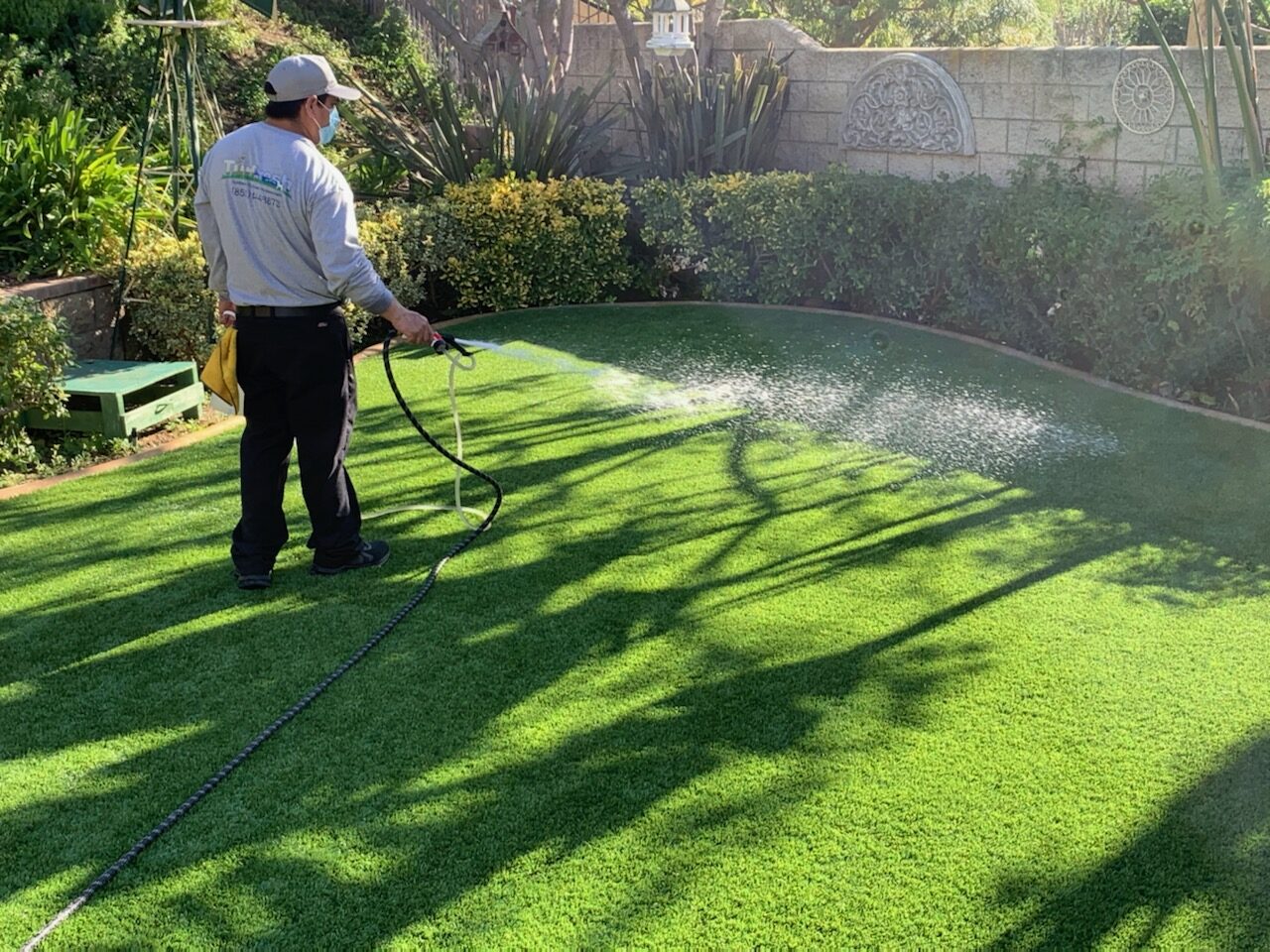
For quick weekly maintenance, remove debris by hand or with a leaf blower on low, then rinse with a garden hose. This keeps dust, pollen, and surface buildup from settling into the infill layer.
Quick tips for safer turf maintenance
✔ If turf looks flat, brushing or power brooming fixes it faster than any suction-based tool. ✔ If pet hair is the main issue, use a turf comb first, then follow with a light rinse. ✔ If debris is sitting on top, remove it before it breaks down and works its way into the blades. ✔ If the lawn holds odors or feels gunky underfoot, that is usually buildup below the surface that requires a professional cleaning.
When to call a professional instead of doing it yourself
DIY tools handle routine surface maintenance well. Professional cleaning is the right call when:
• Noticeable odor that does not clear after rinsing • Drainage feels sluggish or pooling occurs after rain • Infill looks uneven or compacted • Visible matting that brushing does not fix • Seam issues or fiber wear visible on the surface
TurFresh handles the cleanup the right way — down to the infill.
Debris removal, infill top-ups, drainage, odor control, and a full turf refresh in one visit. Pet safe the same day.
Schedule Your Turf Service✔ Pet Safe✔ Eco Friendly✔ 20+ Years of Experience✔ 30-Day Guarantee
Complete Guide
📖 5 Maintenance Tips to Extend the Life of Your Artificial Turf — the complete care schedule: debris, brushing, pet waste, infill, and professional cleaning frequency.
Frequently Asked Questions
Can you vacuum artificial grass with a household vacuum?
For outdoor artificial grass with infill, a household vacuum is not recommended. Suction can pull out infill and stress turf fibers over time. For indoor turf or no-infill surfaces, a vacuum on low power is generally safe.Can you vacuum Astroturf?
It depends on the installation. Most outdoor Astroturf-style lawns include infill, so vacuuming with a standard machine is not recommended. Indoor or short-pile Astroturf with no infill can handle gentle vacuuming.Can you hoover fake grass?
For outdoor fake grass with infill, hoovering is not the safest option. A turf comb or power broom removes debris while preserving the turf structure. Indoor or non-infill panels are generally fine to hoover on low suction.What is the best way to remove dog hair from artificial turf?
A turf comb is the most effective DIY option. Soft turf-safe bristles pull embedded hair from the blade base without tearing fibers or removing infill. A light rinse after combing clears whatever remains on the surface.What tool works best for pine needles and leaves on turf?
A power broom is the most effective option for pine needles and leaves. It clears debris and lifts turf blades to restore a refreshed look. A leaf blower on low also works for lighter surface debris.Is there a vacuum made for artificial turf?
Yes. Commercial turf sweepers use counter-rotating brushes designed to remove debris without dislodging infill. These are used on sports fields and commercial properties. For most homeowners, a turf comb or power broom is the simpler and more practical solution.Can a robot vacuum be used on artificial turf?
Not for outdoor turf. Robot vacuums are not built for uneven outdoor surfaces with infill. On flat indoor turf with no infill, a robot vacuum on the lowest setting may work, but outdoor use is not recommended.When should artificial turf be professionally cleaned?
Professional cleaning is a good idea when turf has heavy debris buildup, persistent odor after rinsing, drainage issues, compacted or uneven infill, visible matting, or seam concerns. It is also recommended for high-use lawns and commercial properties on a regular maintenance schedule.