
Quick Answer: A synthetic turf maintenance plan for sports fields should include daily debris removal and inspection, weekly brushing and infill redistribution, monthly deep cleaning and disinfection, and annual G-max safety testing. According to Sports Venue Calculator, annual maintenance costs range from $7,000 to $23,000 per field. Natural grass fields cost $20,000 to $205,500 per year to maintain, making synthetic turf significantly less expensive to operate when a consistent maintenance program is in place.
A maintenance plan only works if the deep cleaning gets done.
TurFresh provides professional cleaning and grooming for athletic turf fields. Safe for players, documented for compliance, built around your schedule.
✔ Player Safe✔ Eco Friendly✔ 20+ Years Experience✔ 30-Day Guarantee
What Is a Synthetic Turf Maintenance Plan for Sports Fields?
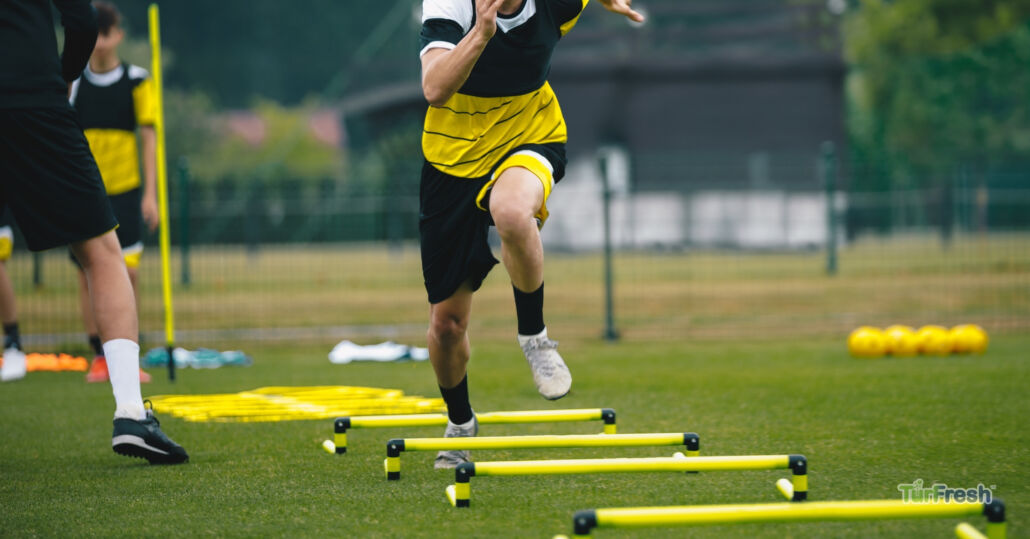
A synthetic turf maintenance plan is a structured, written schedule covering cleaning, grooming, disinfection, and inspection on a defined frequency based on field usage, climate, and sport type. Unlike reactive cleaning, a maintenance plan is preventative. It protects player health, preserves infill integrity, extends field lifespan, and ensures the surface remains compliant with safety standards throughout the season.
Athletic directors and facility managers who operate without a written plan typically spend more on emergency repairs, face more frequent warranty disputes, and deal with player health complaints that a consistent program would have prevented.
According to the EPA, routine synthetic turf field maintenance includes brushing for infill redistribution, raking or vacuuming for infill decompaction, and sweeping for debris removal. These are not optional tasks. They are the baseline for any field that sees regular athletic use.
Why Do Sports Fields With Synthetic Turf Require Routine Maintenance?
Synthetic sports fields require routine maintenance because foot traffic, sweat, body fluids, and debris accumulate in the infill layer and degrade surface safety faster than most facility managers anticipate. Without consistent care, turf fields face specific, compounding problems:
➧ Infill displacement from high-traffic zones leaves fibers unsupported, accelerating fiber breakage and creating uneven surface hardness that increases injury risk
➧ Bacterial growth from sweat, blood, and organic debris creates health hazards for athletes, particularly in contact sports
➧ Surface compaction reduces the field's ability to absorb impact, which affects G-max ratings and can trigger safety inspection failures
➧ Odor buildup from bacterial accumulation in the infill layer, which surface rinsing does not address
➧ Premature fiber wear in high-traffic positions like line of scrimmage, penalty areas, and base paths
Penn State's Center for Sports Surface Research has noted that approximately 15% of concussions in football and soccer result from head contact with the playing surface. Surface hardness directly tied to infill management and maintenance frequency is a measurable, preventable factor.
How Much Does Synthetic Turf Maintenance Cost Per Year?
Annual maintenance costs for a synthetic turf sports field typically range from $7,000 to $23,000 per field, according to Sports Venue Calculator. The range reflects differences in field size, usage intensity, climate, and whether maintenance is performed in-house or outsourced.
For context:
➧ High school football field (approximately 80,000 sq ft): $5,000 to $15,000 per year
➧ Multi-use athletic complex with several fields: $15,000 to $50,000+ per year depending on usage
➧ Professional or semi-professional facility: $13,720 to $39,220 per year (Michigan State University benchmark for comparable-use fields)
These figures cover grounds crew labor, infill top-ups, cleaning products, equipment maintenance, and periodic professional deep cleaning. They do not include major repairs or eventual field replacement, which the Sports Turf Managers Association estimates at $6.50 to $7.80 per square foot when the time comes.
Fields that skip consistent maintenance do not save money. They reach replacement thresholds faster and carry higher liability exposure during the years when surface hardness degrades without detection.
How Often Should Synthetic Turf Sports Fields Be Maintained?
According to Pioneer Athletics, synthetic turf sports fields should be groomed approximately every 80 hours of use, with daily inspection and debris removal, weekly brushing, monthly deep cleaning, and annual G-max safety testing. Maintenance frequency should be calibrated to hours of use, not just calendar dates.
Maintenance Checklist by Frequency
Daily
✔ Visual inspection of surface, seams, and edges before first use
✔ Remove all debris, trash, food waste, and organic matter
✔ Spot clean any visible contamination from body fluids or spills
✔ Check infill levels in high-traffic positions after practice or games
Weekly
✔ Full surface brushing and infill redistribution
✔ Rinse surface to flush dust, pollen, and light contamination
✔ Inspect seams, edges, and anchor points for separation or lifting
✔ Apply odor control treatment to high-use zones
✔ Log maintenance activity with date, task, and staff member
Monthly
✔ Deep cleaning of the full field surface
✔ Full disinfection using a turf-safe antimicrobial treatment
✔ Infill top-up in high-traffic zones where displacement is measurable
✔ Grooming pass with power equipment to restore fiber stand
✔ Inspect drainage system for blockage or standing water
Annually
✔ G-max safety testing by a certified third party
✔ Full professional deep cleaning and restorative grooming
✔ Infill analysis and replacement if needed
✔ Seam and edge repair inspection by a qualified installer
✔ Review and update the written maintenance plan for the coming season
The CPSC and Sports Turf Managers Association both recommend keeping written maintenance logs for athletic turf fields. A log protects your organization in the event of a player injury claim and provides documentation for warranty compliance.
What Is G-Max Testing and Why Does It Matter?
G-max testing measures the impact absorption of a synthetic turf surface. Per the ASTM F1936 standard, fields must score 200 or below to be considered safe for athletic use. Lower values indicate better shock absorption when a player falls or takes contact with the ground.
The ASTM F1936 standard specifies that synthetic turf fields should have a G-max value of 200 or below for safe play. Fields that exceed this threshold are at higher risk of causing head and joint injuries on impact.
G-max values degrade over time as infill compacts and fibers wear. A field that passed testing at installation may fail within two to four seasons without proper infill maintenance. Annual G-max testing by a certified third party is the only way to know whether your field remains within safe parameters.
Why this matters for facility managers:
➧ Many athletic associations and insurance carriers require documented G-max compliance
➧ A failed G-max test requires immediate remediation before the field can be used
➧ Regular infill management is the most cost-effective way to maintain G-max values between tests
How Are Synthetic Turf Sports Fields Cleaned and Disinfected?
Synthetic turf fields are cleaned in two distinct stages: surface cleaning removes debris and organic buildup, while disinfection targets bacteria, mold, and odor-causing microbes that accumulate below the fiber layer.
Both steps are necessary for athletic fields where player contact is constant and the risk of skin infections, respiratory illness, and gastrointestinal disease from bacterial exposure is real.
Effective cleaning and disinfection process
👉 Step 1: Remove all surface debris by sweeping or vacuuming
👉 Step 2: Rinse the surface with water to flush light contamination
👉 Step 3: Apply a turf-safe cleaning solution and allow dwell time
👉 Step 4: Rinse thoroughly to remove all residue
👉 Step 5: Apply a turf-safe antimicrobial treatment to the cleaned surface
👉 Step 6: Allow adequate dry time before athletes return to the field
Disinfectant applied to a dirty surface does not work. Cleaning must always precede disinfection. This sequence is consistent with CDC guidance for high-contact facility surfaces and applies directly to athletic turf fields.
How Do You Manage Heat on Synthetic Turf Sports Fields?
Synthetic turf surfaces reach temperatures 40 to 70 degrees Fahrenheit above ambient air temperature on sunny days. In markets like Arizona, Nevada, Southern California, and Texas, surface temperatures above 150°F have been recorded during afternoon practices, creating direct risk of burns, blisters, and heat-related illness for athletes.
Heat management protocols for athletic fields
➧ Pre-practice watering: Rinsing the field 30 to 60 minutes before use can reduce surface temperature by 30 to 50 degrees. This is the single most effective heat management step available without capital investment.
➧ Scheduling adjustment: Move practices and games to early morning or evening hours during peak summer months. Surface temperature drops significantly after 6 PM in most markets.
➧ Infill selection: Crumb rubber infill retains heat longer than sand, cork, or thermoplastic elastomer (TPE) alternatives. Facilities in hot climates should evaluate infill type at the next replacement cycle.
➧ UV-resistant turf products: Some turf systems include UV-stabilized fibers and cooling infill designed to reduce surface heat. These perform differently across climates, so request third-party temperature performance data before specifying.
➧ Shade structures: Permanent or temporary shade over bench areas and high-use zones reduces direct sun exposure and lowers ambient conditions near the surface.
Heat management is not optional for facilities operating in warm climates. It is a player safety obligation and should be documented in the maintenance plan with specific temperature thresholds and response protocols.
In-House Maintenance vs. Professional Turf Services: Which Is Right for Your Facility?
Most athletic facilities use a combination of in-house staff for daily and weekly tasks, and professional services for deep cleaning, grooming, and annual inspections that require specialized equipment. In-house maintenance is cost-effective for routine work. Professional cleaning is necessary for what routine work cannot reach.
In-house maintenance works well for:
➧ Daily debris removal and visual inspection
➧ Weekly brushing and infill redistribution with basic equipment
➧ Spot cleaning of spills and contamination events
➧ Maintaining the maintenance log
Professional services are necessary for:
➧ Deep cleaning that penetrates the infill layer where bacteria accumulate
➧ Power grooming and fiber restoration across large field areas
➧ Annual or semi-annual restorative treatments
➧ Post-season cleaning before storage or winter preparation
➧ Documentation for warranty compliance and safety inspections
The equipment required for proper professional-grade turf maintenance typically costs between $30,000 and $140,000. For most school districts, municipalities, and club facilities, outsourcing this work is significantly more cost-effective than owning and operating the equipment in-house.
Facilities without sufficient grounds staff often find that one annual professional cleaning costs less than the labor, equipment, and product costs of attempting the same result internally, and produces better documentation for liability protection.
How Do You Build a Maintenance Schedule Around Games and Practices?
A maintenance schedule that conflicts with field use creates safety hazards and gets skipped. Building the schedule around actual field usage is what separates plans that get followed from plans that sit in a binder.
👉 Map your full-year field use calendar before setting maintenance windows
👉 Assign maintenance tasks to specific time slots that fall outside practice and game hours
👉 Build buffer time between maintenance completion and next field use: minimum 30 minutes for rinsing, longer for disinfection treatments
👉 Identify two to three annual windows for professional deep cleaning that align with season breaks or low-use periods
👉 Share the maintenance calendar with coaching staff so they understand why certain windows are protected
Pioneer Athletics recommends attending a few practices before finalizing your maintenance schedule. Watching how and where players move helps identify high-wear zones that need more frequent attention than the rest of the field.
Professional cleaning is what the in-house routine cannot replace.
TurFresh deep cleans to the infill layer, documents the service, and works around your field schedule. Schools, clubs, municipalities, and HOAs across the US.
✔ Player Safe✔ Eco Friendly✔ 20+ Years Experience✔ 30-Day Guarantee
Key Takeaways for Athletic Directors and Facility Managers
🔑 A written maintenance plan is not optional. It protects players, protects the field investment, and protects your organization from liability
🔑 Annual maintenance costs range from $7,000 to $23,000 per field. Skipping maintenance does not save money. It accelerates replacement costs
🔑 G-max testing is the only way to verify that your field remains within safe impact absorption parameters year over year
🔑 Heat management in warm climates requires a documented protocol, not just occasional watering
🔑 In-house staff handle daily and weekly tasks. Professional deep cleaning handles what in-house maintenance cannot reach
🔑 Keep a written maintenance log. It satisfies warranty requirements and provides critical documentation if a player injury claim is ever filed
Frequently Asked Questions
What should a synthetic turf maintenance plan for sports fields include?
A complete plan includes daily debris removal and inspection, weekly brushing and infill redistribution, monthly deep cleaning and disinfection, annual G-max safety testing, and a documented maintenance log. The schedule should be calibrated to actual field usage hours, not just calendar dates.
How much does it cost to maintain a synthetic turf sports field per year?
Annual maintenance costs typically range from $7,000 to $23,000 per field according to Sports Venue Calculator, with high school football fields running $5,000 to $15,000. The range depends on field size, usage intensity, climate, and whether maintenance is performed in-house or by a professional service.
How often should a synthetic turf sports field be groomed?
Pioneer Athletics recommends grooming approximately every 80 hours of field use as a baseline. For high-use fields, this may mean weekly grooming during the season. Grooming redistributes infill, lifts fiber, and removes organic debris that compacts into the surface between cleanings.
What is G-max testing and why is it required for synthetic turf fields?
G-max testing measures the impact absorption of a turf surface. The ASTM F1936 standard requires values of 200 or below for safe athletic use. Infill compaction caused by heavy use degrades G-max values over time. Annual third-party testing is the only reliable way to verify that a field remains within safe parameters and is required by many athletic associations and insurance carriers.
How do you disinfect a synthetic turf sports field?
Clean the surface first to remove debris and organic buildup. Then apply a turf-safe antimicrobial treatment following label directions. Allow adequate dry time before athletes return to the field. Disinfectant applied to a dirty surface does not work effectively. This two-step process is consistent with CDC guidance for high-contact surfaces.
How do you reduce heat on synthetic turf sports fields in warm climates?
Rinse the field 30 to 60 minutes before practice to reduce surface temperature by 30 to 50 degrees. Schedule practices during early morning or evening hours during summer. Evaluate infill type at the next replacement cycle, as crumb rubber retains significantly more heat than cork or TPE alternatives. Document heat protocols in the written maintenance plan.
What is the difference between in-house turf maintenance and professional cleaning?
In-house maintenance covers daily and weekly tasks such as debris removal, brushing, and infill redistribution. Professional cleaning penetrates to the infill and backing layer where bacteria, compacted debris, and odor compounds accumulate beyond the reach of standard grounds equipment. Most facilities need both.
How do you create a turf maintenance schedule around games and practices?
Map your full-year field use calendar first, then assign maintenance windows to times that fall outside practice and game hours. Build in buffer time between maintenance and first use. Identify two to three annual windows for professional deep cleaning that align with season breaks, and share the maintenance calendar with coaching staff.
What equipment is needed for synthetic turf sports field maintenance?
Basic in-house equipment includes turf-safe brushes, grooming rakes, low-pressure cleaning systems, and infill spreaders. Professional-grade maintenance requires specialized power grooming equipment that typically costs $30,000 to $140,000. Most school districts and club facilities outsource professional cleaning rather than purchasing this equipment.
When should you hire a professional turf maintenance service for your sports field?
Hire professional services for deep cleaning that requires specialized equipment, for post-season restorative treatments, for documentation needed for warranty compliance or safety inspections, and when in-house staff capacity does not support the full maintenance schedule the field requires.
How long does a synthetic turf sports field last with proper maintenance?
Most manufacturers guarantee 8 to 10 years of field life. With consistent maintenance, including regular infill management, annual G-max testing, and periodic professional cleaning, fields regularly reach and exceed the upper end of that range. Fields without a maintenance plan typically require replacement or major rehabilitation before the 8-year mark.
Share

John Pla is the owner of TurFresh and an expert with over 20 years of experience in artificial turf cleaning and maintenance. John’s passion for sustainability, community impact, and innovative solutions has made him a trusted figure in the artificial grass industry and beyond.