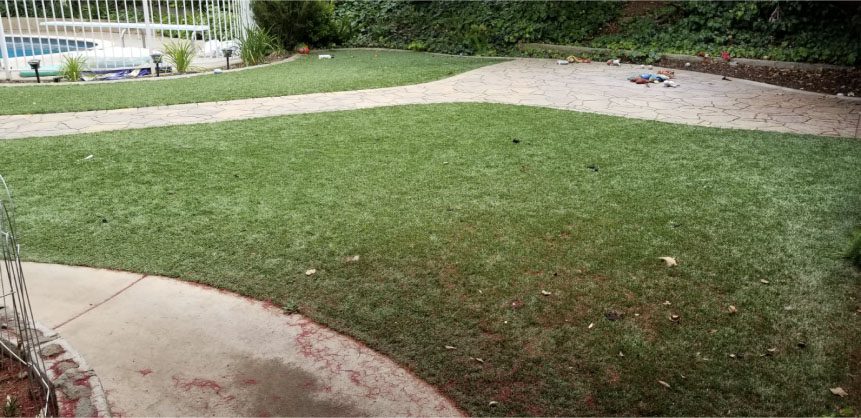
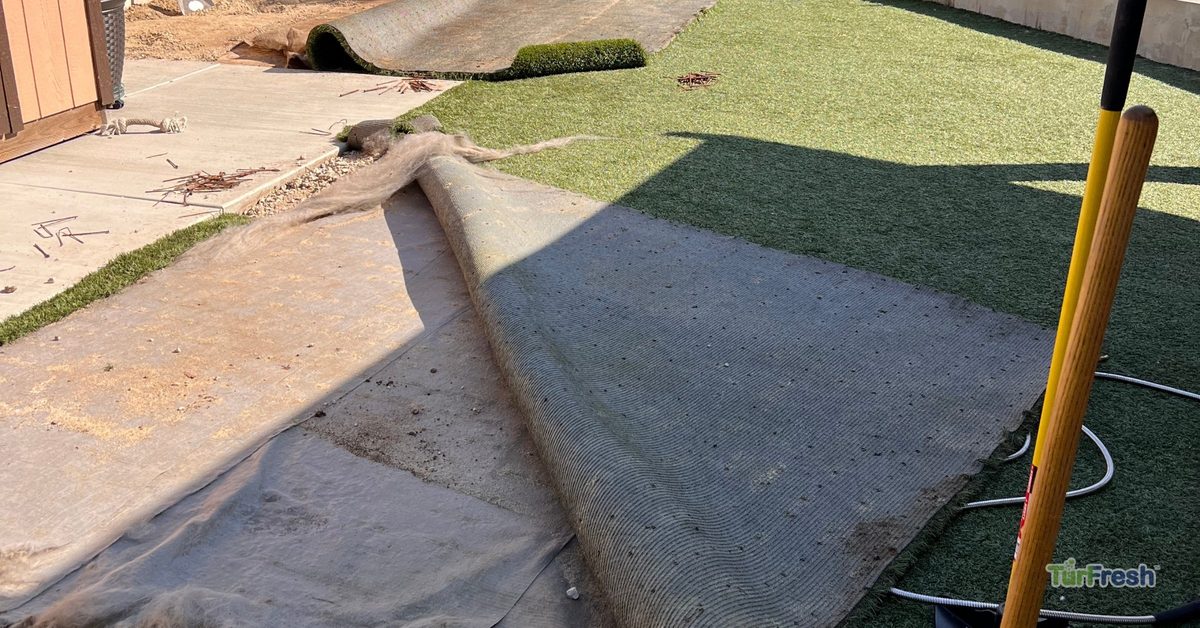
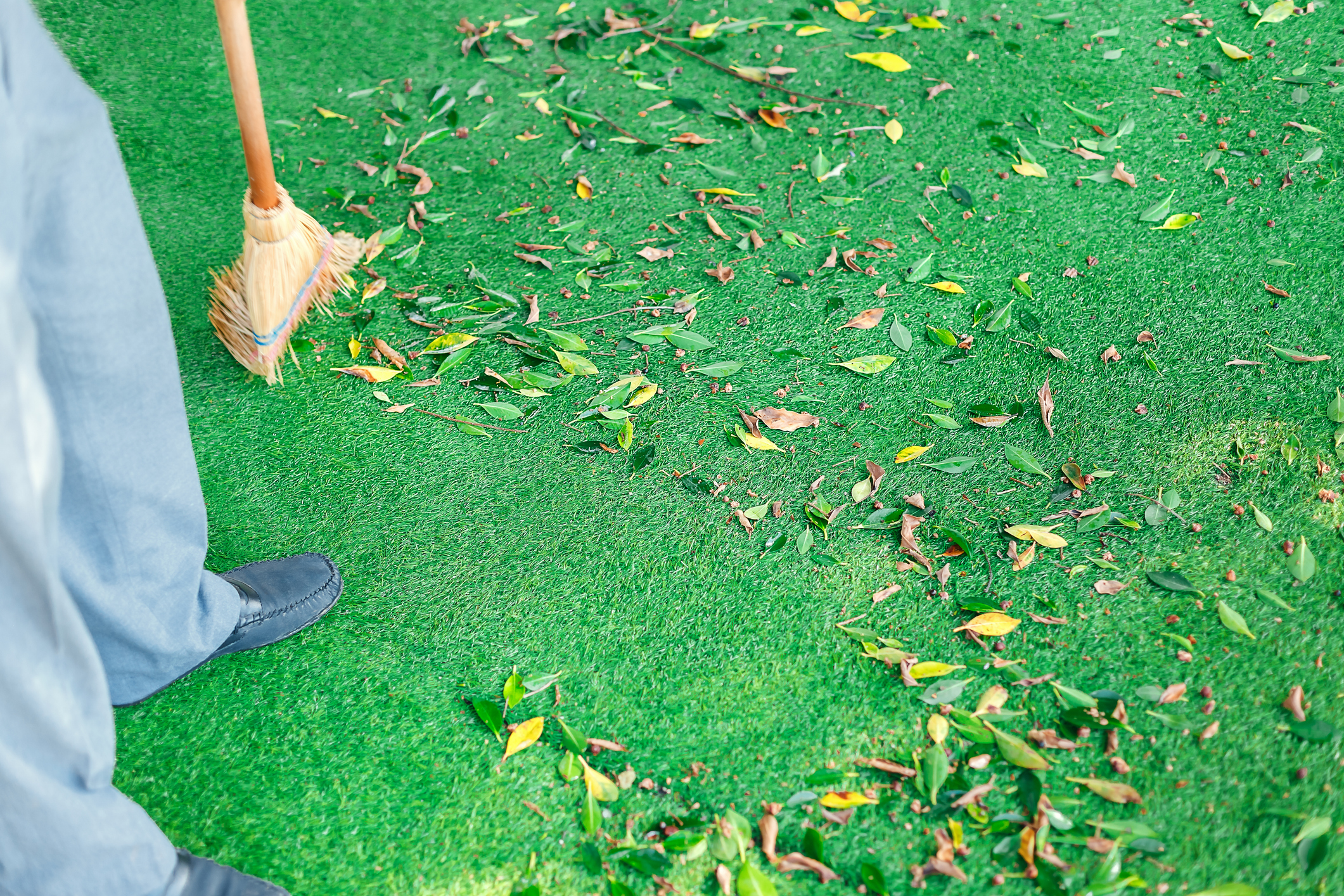
Dog Digging Up Artificial Turf: How to Repair the Damage
Apr 29, 2026 · 14 min read · By John Pla, Founder of TurFresh
Quick Answer Dog digging on artificial turf causes torn fibers, displaced infill, lifted seams, and perforated backing that compounds quickly if not addressed. Most dog dig damage can be repaired without replacing the full installation using a utility knife, seam tape, adhesive, and matching infill. For damage covering more than 2 square feet or involving seam failure, professional TurFix™ repair delivers more durable and invisible results. Address the digging behavior alongside the repair: a fixed patch alongside an uncorrected trigger will be re-damaged within days.
TurFix™ repairs dog dig damage before it spreads to surrounding seams.
Most dog damage is repairable without full replacement. TurFresh technicians restore backing integrity, infill depth, and fiber density, and can treat the sub-base for odor in the same visit.
Book a TurFix™ Assessment✔ Pet Safe✔ Kid Safe✔ 150,000+ Services✔ 30-Day Guarantee
Key Takeaways
🐾 Dog dig damage spreads faster than it looks. A 6-inch torn area at a fence line can expand into a buckled zone several feet wide within weeks as foot traffic and pet activity stress the compromised backing. Act within days, not weeks.
🔧 Most dog dig damage is repairable without replacing the full installation. Isolated spots under 2 sq ft with intact seams are DIY candidates. Seam failure longer than 12 inches or multiple merged dig zones warrant a professional TurFix™ call.
⚠️ Fence lines, gate corners, and perimeter edges are the highest-risk zones. These locations concentrate digging pressure repeatedly, weakening the same backing and seam over and over. Check these spots first after any digging episode.
🧼 Always treat the sub-base with enzyme cleaner before sealing a repaired patch. Dogs dig and urinate in the same spots. Sealing contaminated base material under adhesive locks the odor in permanently and no amount of surface cleaning will remove it afterward.
📐 Pile direction matching is the most common DIY repair mistake. A patch cut with the wrong fiber pile direction creates a permanently visible seam regardless of how clean the adhesive bond is. Match direction before cutting.
Your dog has found a weak spot in the yard, and now you have a growing patch of pulled fibers, exposed backing, and a turf edge that will not lie flat. It happens more often than most homeowners expect, and the damage compounds faster than it looks like it will.
This guide walks you through how to assess the damage, repair it correctly, and stop it from happening again.
Why Is My Dog Digging Holes in the Artificial Grass?
Dogs dig on artificial turf for the same reasons they dig on natural grass. The surface changes the appearance but does not change the instinct. Understanding the trigger is the first step toward stopping the behavior before it causes further damage.
👉 Scent from below. Rodents, insects, and the residual scent of natural grass and soil beneath the installation give dogs a reason to investigate underground. Artificial turf does not block scent the way concrete does, so a dog with a strong nose can smell activity beneath the surface and acts on it.
👉 Perimeter and fence-line instinct. Dogs, particularly working and guard breeds, feel a strong drive to investigate and dig at fence lines, gate corners, and enclosed edges. These are the points where they perceive the boundary between their territory and what lies beyond it. This is why perimeter edges are the most common starting point for dig damage.
👉 Breed predisposition. Terriers, dachshunds, beagles, huskies, and border collies are among the highest-risk breeds for dig behavior. These breeds were selectively developed for digging, tracking, or burrowing. Artificial turf does not override genetic tendency.
👉 Boredom and excess energy. A dog without adequate physical and mental stimulation redirects energy into repetitive behaviors. Digging is one of the most common. High-activity breeds in yards without enrichment are at highest risk.
👉 Heat seeking. Dogs sometimes dig on natural grass to access cooler soil. Artificial turf retains more surface heat than natural grass, particularly in hot climates, which can intensify this behavior in summer months.
📌 Pro Tip: If your dog digs repeatedly in the same spot, identify the trigger before repairing the damage. Repairing without addressing the cause means the same area gets targeted again within days. The fix only lasts if the behavior is also managed.
Why Does Dog Digging Damage Artificial Turf More Than You Think?
Dog digging does not just pull up a few fibers. It creates a chain reaction of structural damage. Each digging session stretches or perforates the backing material, displaces the infill that supports fiber upright position and drainage, separates seams at edges and corners, and bends or extracts fiber blades from their anchor points.
Left unaddressed, even a 6-inch dig spot can expand into a buckled zone several feet wide within weeks. Ground movement, foot traffic, and pet activity all apply additional stress to the compromised area, pulling seams further apart and collapsing adjacent infill.
📌 Pro Tip: Check fence lines and gate corners first. Dogs prefer to dig where they feel enclosed or can smell animals on the other side. These areas take the most repeated stress and are the first to fail structurally.
What Parts of the Turf Are Most Vulnerable to Dog Damage?
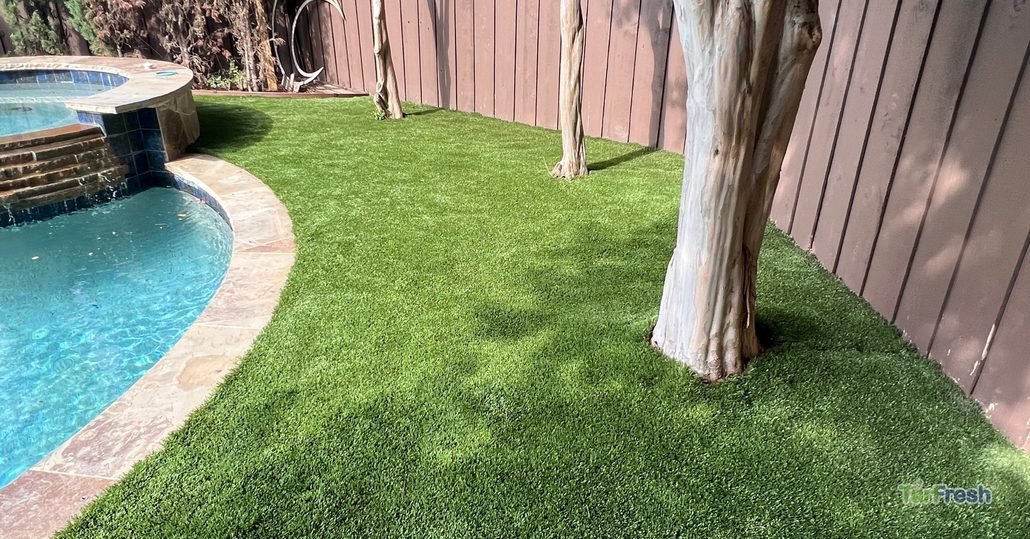
The most vulnerable components are the backing (the woven base layer where fibers are anchored), the seams (where two turf panels meet and are bonded with adhesive tape), perimeter anchoring (staples or nails securing the turf edge to the base), and the infill layer (granules of silica sand or crumb rubber that sit between the fibers). All four can be compromised by sustained digging in the same location.
What Are the Warning Signs That Dig Damage Is Getting Worse?
The damage is actively spreading if you observe any of the following: visible holes or gaps in the turf surface, seams or edges that have lifted away from the base, sunken or uneven spots where infill has shifted, fiber blades that are permanently bent and will not brush upright, or a persistent odor rising from beneath the surface.
Do not confuse surface-level fiber matting, which is cosmetic and fixable with brushing, with backing failure, which requires a physical patch or professional repair. Pressing firmly on the surface and feeling a soft, unsupported area beneath is a reliable indicator of infill loss or backing damage.
How Do You Repair Dog-Damaged Artificial Turf Step by Step?
Most dog damage can be repaired without replacing the entire turf installation. The approach depends on whether the damage is limited to the surface or has compromised the backing and seams.
What Tools and Materials Do You Need for Turf Repair?
Before starting, gather: a utility knife, replacement turf patch (same product line if possible), turf seam tape, outdoor-grade turf adhesive, galvanized nails or U-shaped turf staples, replacement infill material (silica sand or crumb rubber), and a stiff-bristle turf brush or power broom.
How Do You Patch a Torn or Perforated Section of Artificial Turf?
👉 Step 1: Assess the full extent of damage. Walk the entire turf area and flag every affected zone. Dogs rarely limit digging to one location. Look especially at corners, fence lines, and gate areas.
👉 Step 2: Clear debris and loose fiber. Remove all displaced infill, dirt, and pulled fiber blades from the damaged zone. A clean surface ensures proper adhesive bonding.
👉 Step 3: Re-anchor lifted edges and seams. Drive galvanized staples or nails every 4 to 6 inches along any lifted edge. For seam separations, slip seam tape underneath and apply adhesive before pressing the edges back down firmly.
👉 Step 4: Cut and apply a patch to torn backing. Cut the damaged area into a clean, regular shape. Cut a matching patch from a spare piece of turf, ensuring the fiber pile direction matches the surrounding turf exactly. Apply adhesive around the patch perimeter, press in place, and allow 24 hours to cure before allowing foot or paw traffic.
👉 Step 5: Restore lost infill. Spread replacement infill across the repaired zone and brush it down between the fibers. Infill supports upright fiber position and proper drainage. Skipping this step accelerates re-damage.
👉 Step 6: Brush fibers upright. Use a turf brush or power broom across the repaired area and adjacent sections to restore natural fiber orientation and blend the repair into the surrounding turf.
📌 Pro Tip: Always cut your patch so that fiber pile direction is identical to the surrounding turf. A direction mismatch creates a visible seam regardless of how clean the adhesive bond is.
When Is the Damage Too Severe for a DIY Repair?
DIY repair is effective for isolated spots under 2 square feet with intact seams and backing. Beyond that threshold, professional repair typically produces more durable and invisible results.
Call a professional turf repair service when: the torn backing runs along a seam longer than 12 inches, multiple dig zones have merged into a wide damaged area, the turf has separated from the perimeter border in multiple locations, or water pools in the repaired area after rain, indicating drainage disruption.
TurFresh's TurFix™ repair service addresses backing integrity, infill calibration, fiber density, and seam bonding. Repairs are performed by trained technicians using materials matched to your specific turf product.
How Do You Stop a Dog from Digging Up Artificial Turf?
Repair without behavioral deterrence is a temporary fix. If the digging behavior continues, the repaired area will be targeted again within days or weeks.
👉 Secure the perimeter. Install a dig-guard barrier: hardware cloth or concrete edging buried at least 6 inches below the turf edge along fence lines. This physically blocks the dig approach dogs take at enclosed edges.
👉 Apply a deterrent to turf edges. Natural deterrents such as diluted citrus spray or commercially available no-dig solutions applied to turf perimeters reduce digging behavior in most dogs without harming the turf surface.
👉 Increase daily exercise and enrichment. Most turf digging is driven by boredom, excess energy, or prey instinct triggered by scents from below. A dog that receives adequate physical and mental stimulation digs significantly less.
👉 Provide a designated dig zone. A sand or loose soil dig box placed near but separate from the turf area redirects digging behavior for many dogs. Pair it with buried toys to reinforce use.
👉 Add physical border interruption. Low garden edging, decorative stones, or border plantings along fence lines break the run-and-dig pattern dogs establish along perimeter edges.
📌 Pro Tip: A repaired patch that sits alongside an unaddressed digging trigger is money spent twice. Repair and deterrence need to work together.
Does Dog Damage Affect Turf Hygiene and Odor?
Yes, and this consequence is frequently overlooked. When a dog digs through artificial turf, the backing is punctured or pulled back, exposing the compacted base material below to urine, fecal bacteria, and organic debris. Once this sub-base layer is contaminated and then sealed again under a patch, the odor compounds become trapped and nearly impossible to remove after the fact. Rain accelerates this problem, moisture activates the ammonia already present, which is why artificial turf smell after rain is often strongest in spots where digging damage occurred.
The right sequence is: complete the structural repair first, then treat the exposed area with an enzyme-based cleaner before final sealing. This eliminates odor at the molecular level rather than masking it.
TurFresh's TurfClean™ service uses BioS+, a non-toxic, organic, biodegradable formula that breaks down urine and bacterial compounds at the source. It is safe to use immediately after application, leaving no residue harmful to pets or children.
📌 Pro Tip: If your dog digs and urinates in the same spot repeatedly, treat the sub-base with an enzyme solution before installing the patch. Sealing contaminated sub-base material under an adhesive bond locks the odor in permanently.
How Much Does It Cost to Repair Dog-Damaged Artificial Turf?
Repair costs vary significantly based on the extent and type of damage. The ranges below reflect typical estimates for residential artificial turf repair.
Small dig spot (under 1 sq ft): DIY est. $15 to $40 (patch kit) | Professional est. $75 to $150
Seam separation (per linear foot): DIY est. $10 to $25 (tape and adhesive) | Professional est. $50 to $100
Infill restoration (per sq ft): DIY est. $1 to $3 | Professional est. $3 to $6
Wide damage zone (5+ sq ft): DIY est. $50 to $120 | Professional est. $200 to $500+
In most cases, professional repair becomes the more economical option when the damage area exceeds 3 square feet or involves seam failure. DIY patches on large areas rarely achieve the drainage performance and visual consistency of a professional repair, and failed patches require rework, adding cost.
Full turf replacement averages $8 to $20 per square foot installed. Targeted professional repair is almost always the better financial decision unless more than 30 to 40 percent of the total turf surface is compromised. All figures are estimates; actual costs vary by region and turf product.
TurfClean™ with BioS+ eliminates the sub-base contamination dogs leave behind.
Dog digging exposes the sub-base to urine and bacterial buildup. TurfClean with BioS+ enzyme treatment breaks down odor compounds at the molecular level. Pet-safe and kid-safe immediately after application.
Schedule TurfClean™ Today✔ Pet Safe✔ Kid Safe✔ 150,000+ Services✔ 30-Day Guarantee
Frequently Asked Questions
Can artificial turf be repaired after a dog digs through it?
Yes. Most dog dig damage is repairable without replacing the full installation. Torn fibers, displaced infill, lifted edges, and even small backing perforations can all be addressed with the right materials and technique. The critical factor is acting before the damage spreads to surrounding seams.How do I know if my turf needs professional repair or a DIY fix?
DIY repair is appropriate for isolated spots under 1 to 2 square feet with intact seams and no drainage disruption. If the backing has torn along a seam longer than 12 inches, if multiple dig zones have merged, or if you notice water pooling after rain, professional repair will produce a more durable and invisible result.Will a repaired turf patch be visible?
A well-executed patch using matching turf material, correct fiber pile direction, and properly restored infill is nearly invisible once the fibers are brushed back to their natural position. The main causes of visible patches are mismatched pile height, incorrect fiber direction, and insufficient infill depth after the repair.How long does an artificial turf repair last after dog damage?
A professionally repaired area matched to the surrounding turf material should last 10 to 15 years alongside the rest of the installation. DIY patches using consumer-grade adhesives typically last 2 to 5 years. Durability in both cases depends on whether the digging behavior has also been addressed.Is it cheaper to repair or replace turf after dog damage?
Repair is almost always more cost-effective unless 30 to 40 percent or more of the total turf area is compromised. Full turf replacement runs $8 to $20 per square foot installed. Targeted professional repair for isolated dog damage typically costs an estimated $75 to $500 depending on severity, making it the clear financial choice for localized damage.Does dog urine weaken artificial turf over time?
Yes. Urine creates an acidic environment that gradually degrades the adhesive bonds used in seam tape and backing materials. Areas that receive both digging stress and repeated urination deteriorate faster and require both structural repair and enzymatic odor treatment to restore full hygiene and material integrity.