
Quick Answer
Fire pit on artificial turf is possible but requires the right setup to prevent permanent fiber damage. Artificial turf fibers (polyethylene) melt at 220 to 265°F, well within the radiant heat range of any open-flame fire pit. Never place a fire pit directly on turf: use a non-combustible pad of concrete or pavers, and maintain at least 3 to 5 feet of clearance from the nearest turf edge. Damage from heat sources is permanent (melted fibers do not recover), but most localized melt damage can be patched without full replacement.
TurFix™ repairs localized melt damage without replacing the entire lawn.
Most grill and ember damage affects a small area with intact backing. TurFresh technicians assess the damage and replace only what needs to go, matching fiber color and pile direction exactly.
✔ Pet Safe✔ Kid Safe✔ 150,000+ Services✔ 30-Day Guarantee
Key Takeaways
🔥 A fire pit on artificial turf must sit on a non-combustible surface, never directly on the fibers. Even with legs, the radiant heat from a wood-burning fire pit extends 3 to 5 feet in every direction and reaches temperatures well above the turf melt threshold. Concrete, pavers, or gravel pads are the correct base.
🌡️ Polyethylene turf fibers melt at 220 to 265°F. A charcoal grill positioned 12 to 18 inches from turf can radiate heat exceeding 300°F at that distance. Every common backyard heat source operates well above the turf melt point.
🪟 Low-E double-pane windows are one of the most overlooked causes of turf melt damage. A bowed window can focus sunlight into a concentrated beam exceeding 200°F that tracks across the lawn throughout the day. Damage appears as a narrow elongated strip, often misdiagnosed as chemical burns.
☁️ Fire-resistant does not mean melt-resistant. A Class A fire rating means the turf resists ignition from a direct spark. It does not protect against sustained radiant heat from a grill or fire pit positioned nearby.
🔧 Localized heat damage is repairable without replacing the entire lawn. Small melt patches with intact backing can be cut out and replaced with a matching section. Widespread or backing-compromised damage requires full section replacement. Get a professional assessment before committing to either.
If you have an artificial turf lawn and enjoy backyard grilling or a fire pit on the patio, you are right to wonder whether heat can damage your investment. Many homeowners assume synthetic turf is indestructible, and while it is far more durable than natural grass in most conditions, heat is its biggest vulnerability. This guide covers exactly which heat sources pose a real risk, the temperatures at which turf fibers melt, safe clearance distances, and what to do if damage has already occurred.
Is Artificial Turf Flammable?
Artificial turf is not flammable in the way organic materials are. Polyethylene and polypropylene fibers do not sustain an open flame, do not spread fire like dry natural grass, and will not ignite from a stray spark under normal conditions.
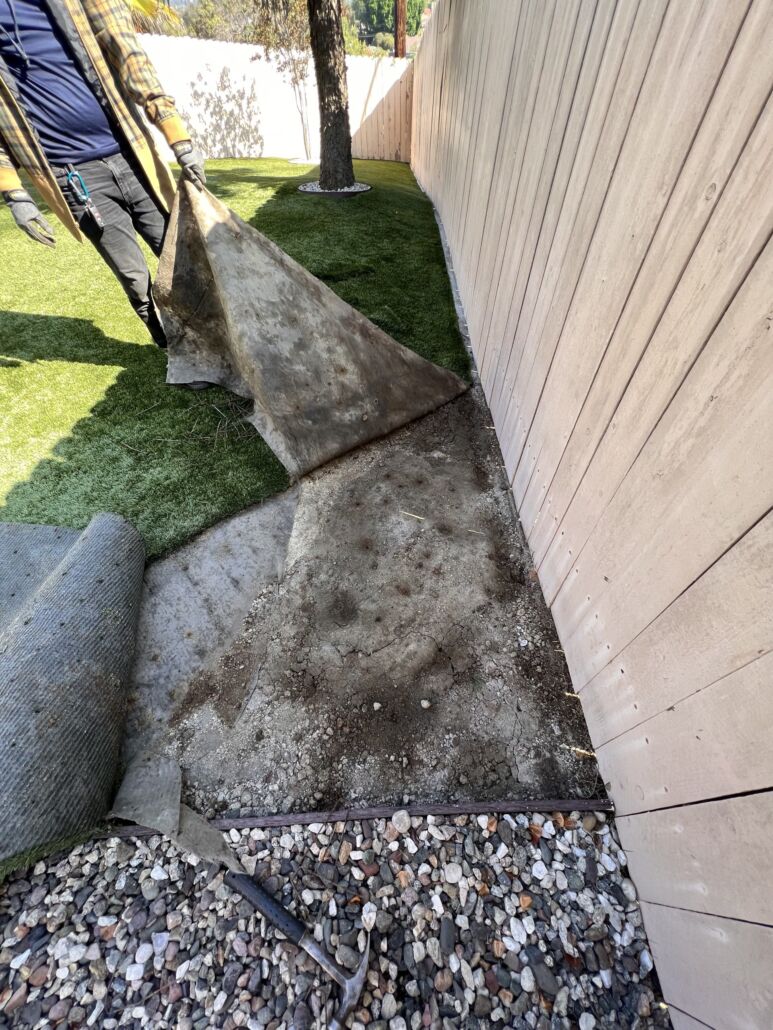
However, flammable and melt-resistant are two different properties. Synthetic turf fibers will soften, melt, and fuse when exposed to sufficient heat, even without a direct flame. The result is permanent: fibers curl, harden, and deform in ways that cannot be reversed by brushing, cleaning, or grooming.
A Class A or Class B fire resistance rating (found on some residential turf products) means the material resists direct ignition from a spark for a defined period. It does not mean the turf can withstand prolonged radiant heat from a nearby grill or fire pit. Fire resistance and melt resistance are entirely separate performance properties.
💡 Key Distinction: Artificial turf will not catch fire and spread across your yard. It will melt in the spot where sustained heat exposure occurs. The damage is permanent and localized rather than spreading, but it is still irreversible.
Does Artificial Turf Actually Burn or Just Melt?
Artificial turf does not sustain an open flame the way organic materials do, but it will melt under sustained heat exposure. Most residential artificial turf is manufactured from polyethylene (PE) or polypropylene (PP), thermoplastic materials that soften and deform when they reach their melt threshold. They do not produce a flame or spread fire the way wood or dry grass would, but the result of heat exposure is still permanent: fibers curl, fuse together, and harden into an irreversible matted structure.
Some turf products carry a Class A or Class B fire resistance rating, meaning they resist ignition from a direct spark for a defined period. However, that rating does not mean the turf is immune to slow, sustained radiant heat from a grill or fire pit sitting a few feet away.
What Temperature Does Artificial Turf Melt At?
Most polyethylene artificial turf fibers begin to soften around 175 to 220°F (79 to 104°C) and fully melt between 220 and 265°F (104 to 130°C). Polypropylene fibers, which are less common in residential lawns but found in some budget products, have a slightly lower threshold, beginning to deform around 130 to 175°F (54 to 79°C).
Polyethylene (PE), most residential turf: Softens at 175 to 220°F; melts at 220 to 265°F
Polypropylene (PP), budget grade: Softens at approximately 130°F; melts at 130 to 175°F
Nylon, specialty and sports installations: Higher threshold around 400°F; rarely found in residential lawns
For context, a summer afternoon in Phoenix or Las Vegas can push ground-level surface temperatures above 140°F on dark surfaces. That alone will not melt standard PE turf, but it does mean turf starts at a significantly elevated baseline temperature before any grill or fire pit even enters the equation.
Can You Put a Fire Pit on Artificial Turf?
Yes, you can have a fire pit near artificial turf, but a fire pit must never sit directly on the turf surface. The correct setup places the fire pit on a non-combustible hard surface (a concrete pad, pavers, or packed gravel) that acts as a permanent heat buffer zone. The pad should extend at least 3 to 5 feet beyond the fire pit perimeter in every direction, with the nearest turf edge at least that far from the pad's edge.
For wood-burning fire pits, use a spark screen at all times. A spark screen reduces ember scatter radius by approximately 60 to 80 percent, which significantly limits the risk of point-source melt spots on nearby turf. Propane and gas fire pits carry lower ember risk but still generate significant radiant heat at the burner base and should follow the same clearance guidelines.
The most permanent and visually clean solution is a built-in patio island: an area of hard landscaping material centered around the fire pit, large enough to hold the fire pit and seating, surrounded by turf. This eliminates clearance uncertainty entirely and adds lasting value to the outdoor space.
💡 Pro Tip: Place fire pits on non-combustible hard surfaces (concrete, pavers, gravel) and maintain at least 5 feet of clearance from any turf edge. Use a spark screen on all wood-burning units.
Which Heat Sources Pose the Biggest Risk to Your Turf?
Not all heat sources carry the same risk level. The danger depends on the temperature output, the distance from the turf, and whether the heat is radiant, convective, or reflective. Here is a breakdown of the most common scenarios.
Grills and Barbecues
Charcoal grills and gas grills both generate enough heat to melt artificial turf if positioned too close. The cooking grate on a charcoal grill can reach 600 to 700°F (315 to 370°C), and gas grills typically operate at 400 to 600°F (205 to 315°C). Even 12 to 18 inches below the grate, radiant heat output can exceed 300°F.
The most common damage scenario is placing a grill directly on turf or on a rubber mat that sits on top of turf. Even if the grill legs do not touch the fibers, downward radiant heat and ash drops are enough to cause localized melting. Grease fires and flare-ups amplify the risk significantly.
💡 Pro Tip: Never place a grill directly on artificial turf, even with a protective mat underneath. Use a concrete, tile, or paver pad as a permanent grill station positioned at least 3 feet from the nearest turf edge.
Fire Pits and Chimineas
Fire pits are the highest-risk heat source for artificial turf. An open wood-burning fire pit can sustain temperatures of 800 to 1,000°F (425 to 540°C) at the flame, with radiant heat extending several feet in every direction. Even a propane-fueled fire pit produces 400 to 600°F at the burner level.
Ember scatter is a separate concern. Live embers landing on turf fibers create point-source burns: small but permanent holes or melted patches that are difficult to repair without professional help. Wind increases this risk substantially.
Raised or elevated fire pits offer some protection compared to ground-level models, but they do not eliminate radiant heat risk. The effective heat radius of an active fire pit is typically 3 to 5 feet, meaning any turf within that zone is vulnerable.
Reflected Sunlight from Low-E Windows
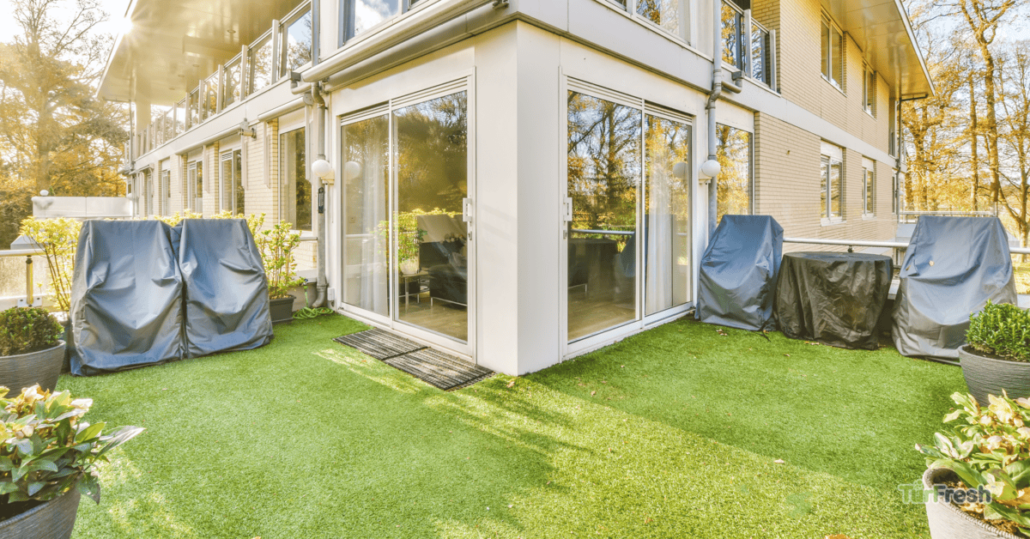
One of the most overlooked causes of artificial turf damage is concentrated sunlight reflected off energy-efficient windows. Low-emissivity (Low-E) double-pane windows, especially those with a slight concave bow, can focus sunlight like a magnifying glass. The reflected beam can generate surface temperatures of 200 to 300°F (93 to 149°C) or higher in a concentrated zone, well above the melt threshold for PE fibers.
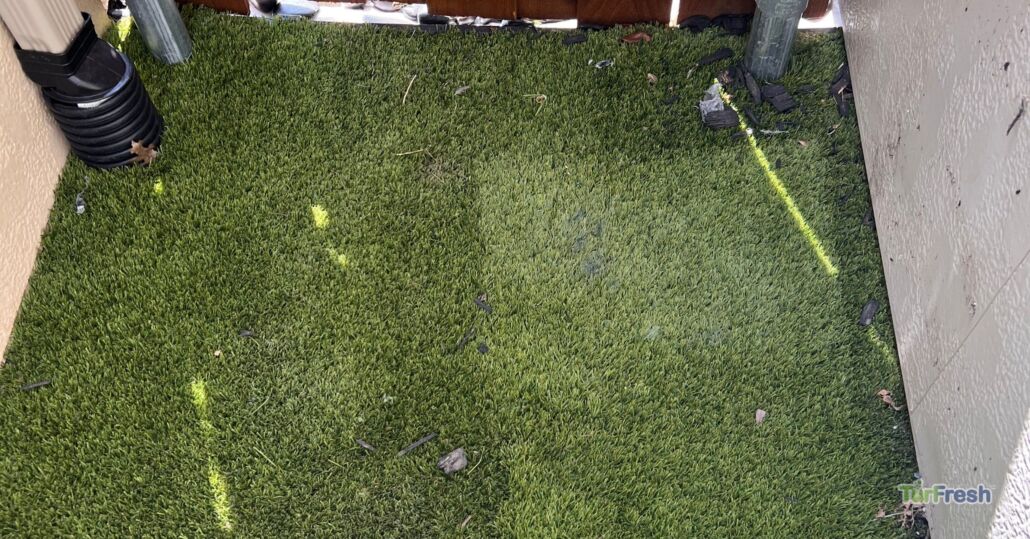
This type of damage appears as a narrow, elongated burn pattern that follows the sun's arc across the lawn throughout the day. It is often misdiagnosed as a chemical burn or equipment damage. The fix involves adding an anti-reflective film to the window or installing a physical barrier between the window and the turf.
Cigarettes, Embers, and Fireworks
Point-source heat from a dropped cigarette, a stray ember, or a low-altitude firework can cause localized turf damage. These burns typically affect only a few square inches, but the melted fibers are permanent. Unlike grass, which can regrow, synthetic turf cannot self-repair.
During firework events, cover any turf areas directly below launch zones with a non-flammable tarp, or move the launch point to a hard surface.
What Does Heat Damage to Artificial Turf Look Like?
Heat-damaged artificial turf fibers melt, curl, and fuse together, creating a hard, matted patch that is noticeably different from the surrounding lawn. In mild cases, fibers may only crimp or flatten. In severe cases, fibers melt completely and bond to the backing material, forming a rigid, glassy surface.
👉 Texture: Fibers feel stiff, brittle, or fused rather than soft and pliable.
👉 Appearance: Discolored patches, often yellow, brown, or translucent where fibers have melted.
👉 Shape: Circular or elliptical damage pattern from point-source heat; elongated strip from window reflection.
👉 Odor: A faint chemical or plastic smell that lingers in the affected area, especially on warm days.
👉 Backing exposure: In severe cases, the black rubber or polyurethane backing becomes visible where fibers have been fully destroyed.
Can Heat-Damaged Artificial Turf Be Repaired or Restored?
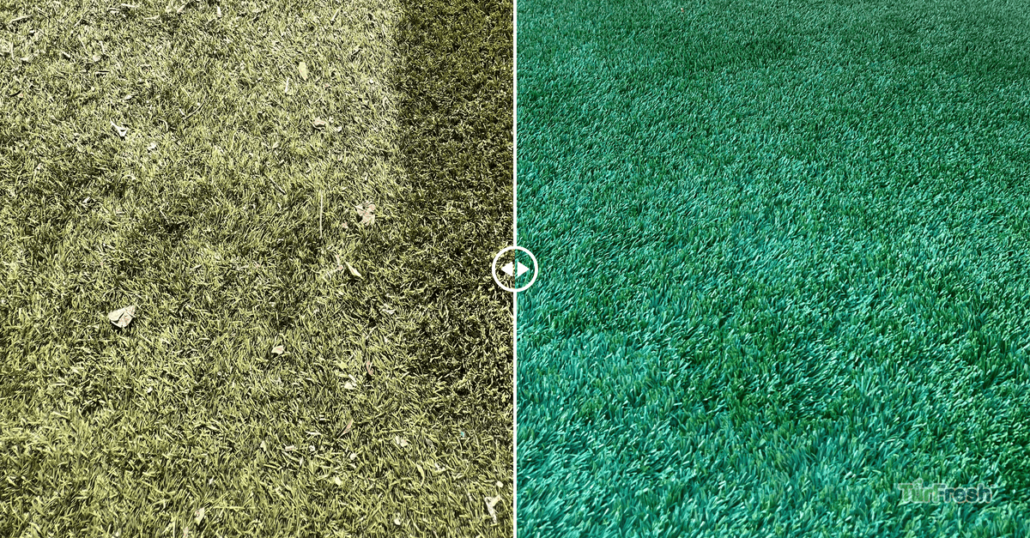
Whether heat-damaged turf can be restored depends on the severity of the damage. Surface scorching, where fibers are stiff, discolored, or matted but the backing is still intact, is often treatable through professional restoration. Full melt-through, where fibers are gone and the backing is compromised, typically requires patch replacement or full section replacement.
TurFresh's TurFix™ service is specifically designed to address compacted, matted, and heat-stressed turf fibers, including those that have experienced mild to moderate heat damage. In many cases, professional restoration can dramatically improve the appearance of heat-damaged turf without the cost of replacement.
If you are unsure which category your damage falls into, a professional assessment from TurFresh can help you make the right call before spending money on full replacement.
How to Protect Your Turf from Heat Sources
Use these practical measures to prevent heat damage before it occurs.
✔ Always place grills and fire pits on hard non-combustible surfaces (concrete, pavers, or stone), never on or directly adjacent to turf without a substantial hard-surface buffer zone.
✔ Install a permanent heat barrier. A 4-foot-wide concrete or paver pad under your grill station eliminates the risk of grease fires or radiant heat reaching the turf surface below.
✔ Use a spark screen on all wood-burning fire pits and chimineas. It reduces ember scatter radius by roughly 60 to 80 percent.
✔ Check your Low-E windows. If you have Low-E double-pane windows facing a turf area, watch for a burn pattern on warm, sunny days. Apply an anti-reflective window film as a permanent fix.
✔ Schedule annual professional TurfClean service. Cleaning removes accumulated oils, grease residue, and infill contamination that can lower effective heat tolerance and accelerate heat-related fiber stress over time.
TurfClean™ removes grease, ash, and debris that lower your turf's heat tolerance.
Accumulated oils and infill contamination reduce effective heat resistance over time. Annual TurfClean service keeps your turf in optimal condition for outdoor entertaining. Backed by a 30-day guarantee.
✔ Pet Safe✔ Kid Safe✔ 150,000+ Services✔ 30-Day Guarantee
Frequently Asked Questions
Can you put a propane fire pit on artificial turf?
You should not place a propane fire pit directly on artificial turf. Propane fire pits generate significant radiant heat at the base and burner level, which is enough to melt turf fibers within 1 to 2 feet. Place any fire pit on a hard non-combustible surface and maintain a minimum 4-foot clearance from the nearest turf edge.
Is artificial turf fire resistant?
Some artificial turf products carry a Class A or Class B fire resistance rating, meaning they resist direct ignition from a spark or flame for a specific duration. However, fire resistant does not mean melt resistant. All polyethylene and polypropylene turf fibers will melt under prolonged heat exposure above their deformation threshold, even if they do not catch fire. Do not rely on a fire rating as protection against a nearby grill or fire pit.
What causes a long, narrow burn pattern on artificial turf with no obvious heat source?
A narrow, elongated burn or melt strip on artificial turf, particularly one that shifts position slightly throughout the day, is almost always caused by Low-E window reflection. Energy-efficient double-pane windows can focus sunlight into a concentrated beam that tracks across the lawn as the sun moves. Applying an anti-reflective film to the window is the standard solution.
How do I know if my turf damage is repairable or needs full replacement?
If the turf fibers are matted, stiff, or discolored but the backing underneath is still flat and intact, professional restoration such as TurFresh TurFix™ is likely to improve the appearance significantly. If the backing is warped, cracked, or separated, or if fibers are fully gone across a large area, section replacement is the more cost-effective long-term solution. A professional assessment before committing to full replacement can save significant cost.
Does artificial turf get hot enough in the sun to melt on its own?
Under normal conditions, artificial turf does not reach its melt threshold from sunlight alone. Standard PE fibers melt above 220°F, and while turf surface temperatures can reach 120 to 180°F on a hot summer day, direct solar exposure alone is rarely sufficient to cause melting. However, it creates a higher baseline temperature that makes turf more vulnerable to heat damage from a nearby grill, fire pit, or reflected light source.
Can cigarette burns on artificial turf be repaired?
Small point-source burns from cigarettes typically affect only a few square inches of fibers. These can often be addressed through a localized patch repair rather than a full section replacement. A professional turf technician can cut out the burned area and replace it with a matching patch. Attempting to trim or hide the damage on your own typically makes the affected area more visible, not less.
Share

John Pla is the owner of TurFresh and an expert with over 20 years of experience in artificial turf cleaning and maintenance. John’s passion for sustainability, community impact, and innovative solutions has made him a trusted figure in the artificial grass industry and beyond.