
Quick Answer
Artificial turf after flooding needs immediate action, but most damage is fully recoverable. Heavy flooding can displace infill granules, mat fibers flat, introduce flood-borne bacteria into the infill layer, and saturate the sub-base. Rinse the surface thoroughly, apply an enzyme-based disinfectant, redistribute displaced infill, and re-groom fibers within 24 to 48 hours. If odor persists after treatment or standing water remains past 24 hours, professional service is needed. For pet households, flood water mixes with existing urine residue in the infill to create compound contamination that a garden hose cannot address.
Flood water and pet bacteria are not the same problem. TurFresh treats both.
When flood water hits a yard where dogs have been, it mixes with existing urine residue in the infill to create compound contamination a garden hose cannot fix. TurfClean with BioS+ removes it in a single professional visit.
✔ Pet Safe✔ Kid Safe✔ 150,000+ Services✔ 30-Day Guarantee
Key Takeaways
🐾 If you have dogs, flooding creates compound contamination. Flood-borne bacteria mixes with existing urine residue already in the infill layer. Rinsing removes surface debris but does not neutralize this combination. Enzyme treatment with proper dwell time is required before pets can safely return to the lawn.
💧 Most flooded turf dries within 12 to 24 hours. If standing water remains after 24 hours, sub-base drainage is compromised. That requires a professional assessment, not more rinsing.
⚠️ Infill displacement is the most visible flood damage. Moving water carries granules toward the turf perimeter, leaving thin or bare patches where fibers lose their support structure. Redistribute displaced material before the surface dries in place.
⏱️ The 24 to 48 hour window is critical. Flood damage treated promptly is almost always fully recoverable. The same damage left untreated for days can become structural, requiring TurFix repair rather than cleaning.
✅ DIY cleanup covers minor flooding. Professional service covers everything else. Call TurFresh when odor persists 48 hours after enzyme treatment, standing water will not drain, large areas show displaced infill, or fibers will not respond to re-grooming.
Does Artificial Turf Handle Flooding Well?
Artificial turf is designed with permeable drainage backing that removes water efficiently, but only up to a point. Most quality turf systems drain at 30 to 50 inches of water per hour, which handles ordinary rain and moderate cloudbursts without issue. Water passes through the backing, moves through the infill, and disperses into the compacted aggregate sub-base below.
Flooding changes that equation. When water volume exceeds the drainage capacity of the sub-base, or when the surrounding ground is already saturated, water has nowhere to go. It pools on the surface, sits in the infill layer, and stays in contact with the fibers far longer than a typical rainstorm allows.

💡 Pro Tip
If your turf system was installed over compacted native soil without an adequate aggregate base layer, it is significantly more vulnerable to drainage failure during heavy rain or flooding. Ask your turf provider about base drainage upgrades.
What Happens to Artificial Turf After Flooding?
Flooding puts four specific stress points on an artificial turf system. Understanding each one helps you assess damage accurately and prioritize your response.
Does Flood Water Displace Turf Infill?
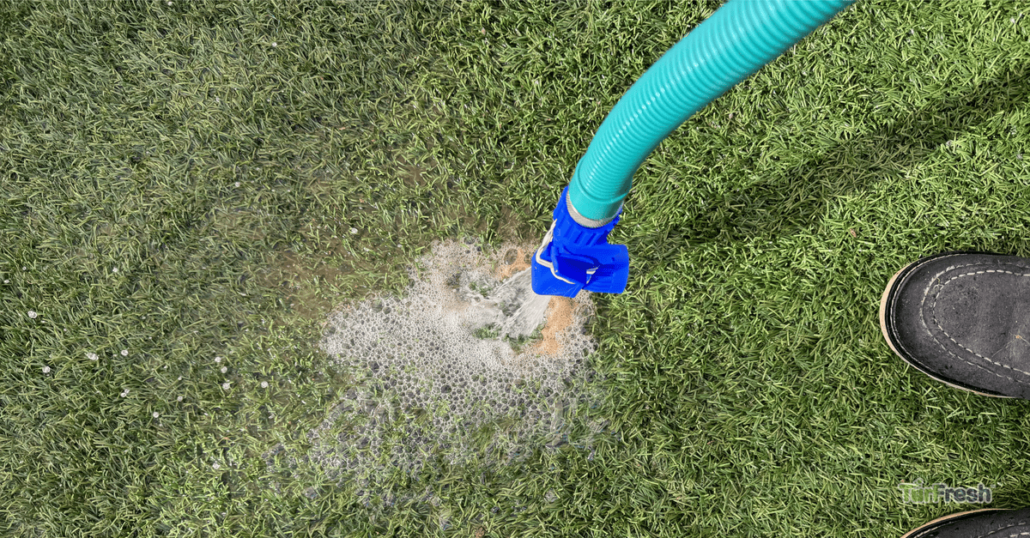
Yes. Flood water is one of the most common causes of infill displacement. As water surges across the surface, it carries crumb rubber or silica sand granules toward the turf perimeter or low-lying areas. The result is uneven surface support, exposed backing sections, and areas where fibers lose their upright position.
📌 In severe floods, infill can migrate several feet from its original location. This shows up as bare or thin patches in the turf surface after water recedes.
Does Flooding Cause Fiber Matting?
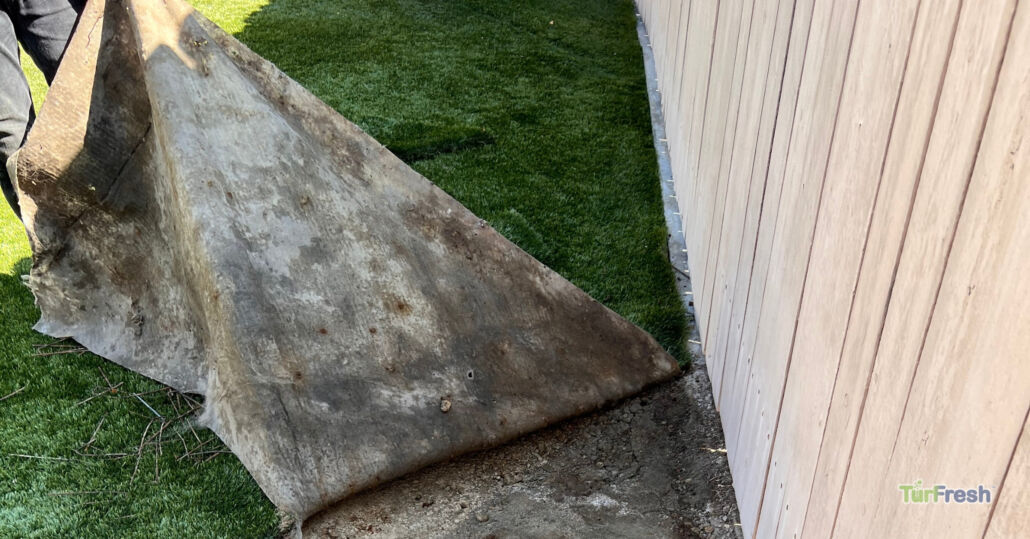
Prolonged water exposure causes artificial turf fibers to flatten and mat in the direction of water flow. Unlike normal foot traffic, which creates compression from a single direction, flooding presses fibers uniformly downward and holds them there as water weight increases. Once dried in that position, fibers can remain flat and lose significant pile height.
Fiber matting reduces the natural look of turf, increases heat retention at the surface, and makes the area feel harder underfoot. Professional power grooming or a TurfBloom™ service can restore fiber direction and pile height in most cases.
🔑 Key Insight
Fiber matting after flooding is not permanent damage. With power grooming and the right restoration treatment, most turf surfaces can fully recover their original pile direction and appearance.
Does Flood Water Leave Bacteria in the Infill?
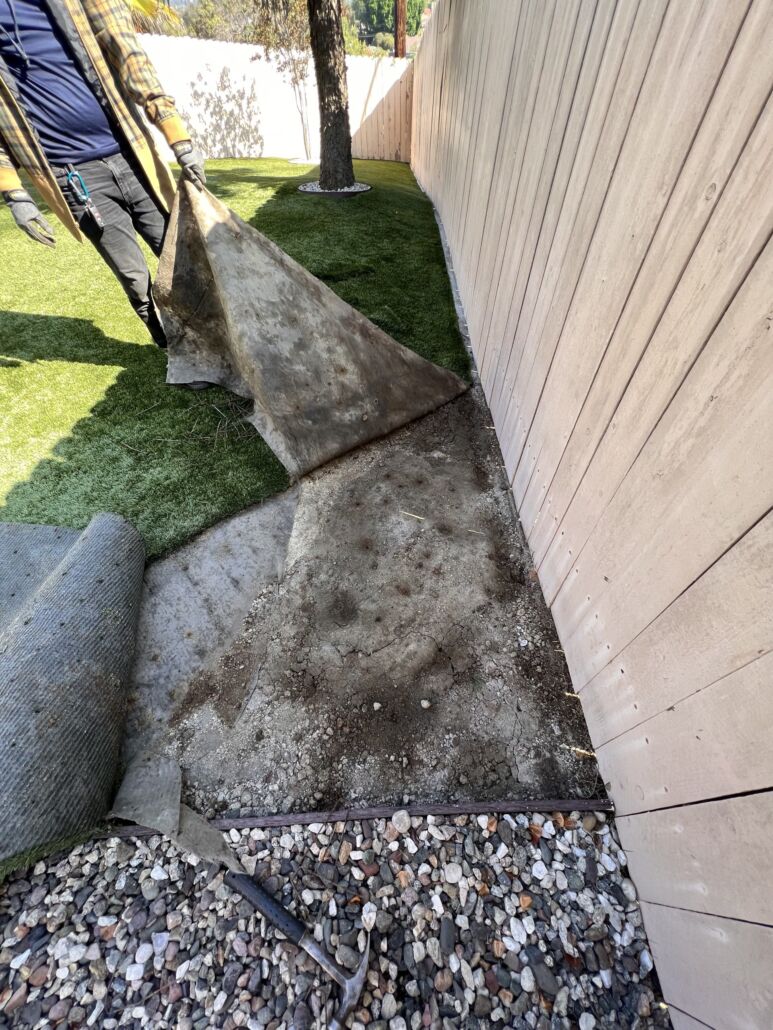
Flood water is not clean water. It carries soil, organic matter, animal waste, and bacteria that become trapped in the infill layer. Once the surface dries, these contaminants remain embedded at the fiber base, creating conditions for persistent odor and bacterial growth.
This is especially serious in yards shared with pets. Existing organic residues from pet waste combine with flood-borne bacteria, accelerating odor development significantly. A standard rinse is not sufficient to neutralize this combination. An enzyme-based treatment like BioS+ is required to break down organic compounds at the source.
Can Flood Water Damage the Sub-Base or Backing?
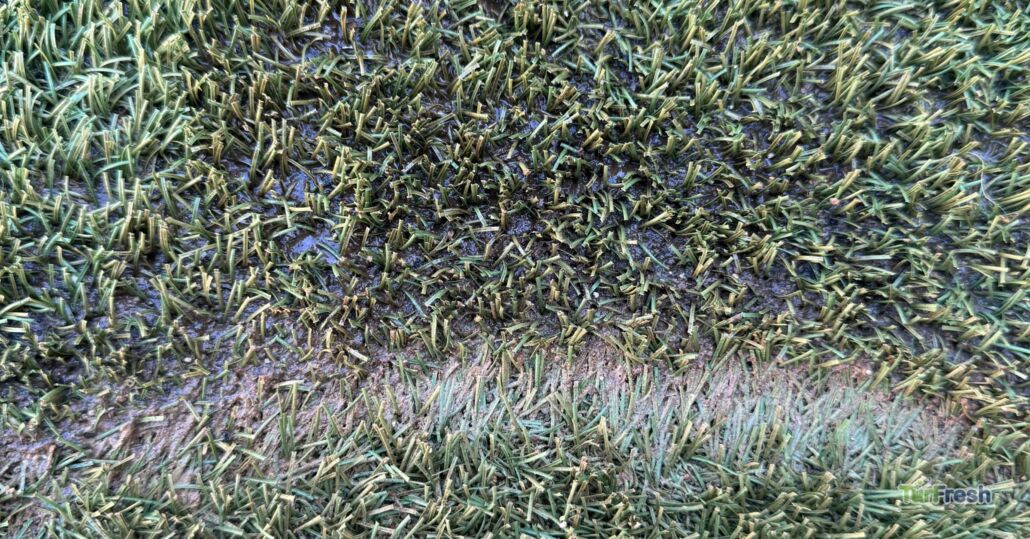
In severe or prolonged flooding, the turf backing and sub-base can sustain structural damage. Backing delamination, where the primary and secondary backing layers begin to separate, occurs when water sits beneath the turf for extended periods. A waterlogged sub-base can also shift, creating low spots, uneven drainage paths, or seam separation.
Structural backing damage is not repairable with standard cleaning. If you notice bubbling, rippling, or seam gaps after a flood, contact TurFresh for a professional assessment and TurFix™ repair service.
How Long Does Artificial Turf Take to Dry After Flooding?
Most artificial turf surfaces dry within 12 to 24 hours after flood water recedes, given adequate drainage and airflow. High-humidity climates such as Florida or the Gulf Coast, and shaded installations, may require 36 to 48 hours. If standing water remains after 24 hours, the sub-base drainage is compromised and needs professional attention.
📌 Factors that affect drying time include infill type (crumb rubber retains moisture longer than silica sand), drainage backing quality, sub-base composition, sun exposure, and ambient temperature.
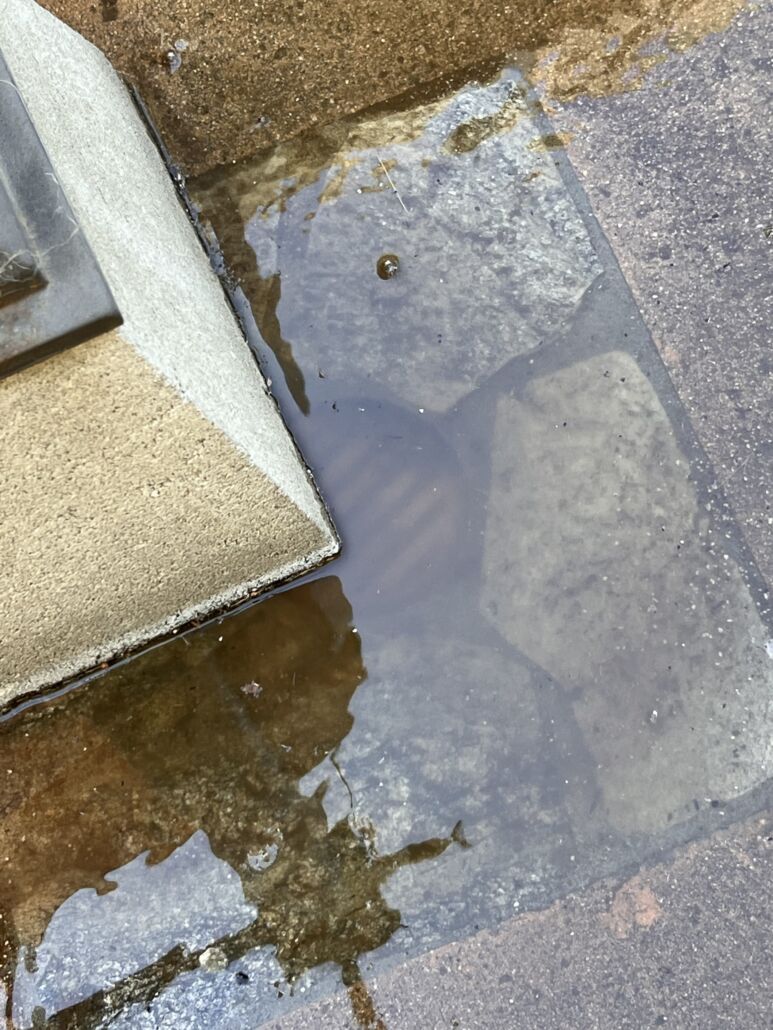
How to Clean Artificial Turf After Flooding: Step by Step
Once flood water has receded and the surface is accessible, follow these six steps to clean and restore your turf safely.
➧ Step 1: Wait for water to fully recede. Do not walk on or clean the turf while standing water is present. Foot traffic on a saturated surface deepens fiber matting and compacts the sub-base.
➧ Step 2: Rinse the entire surface thoroughly. Use a garden hose on a broad spray setting to flush loose debris, sediment, and surface contaminants toward the perimeter drain. Start from the highest point and work downward.
➧ Step 3: Remove visible debris manually. Use a plastic rake, leaf blower, or stiff-bristle broom to clear leaves, organic material, and large sediment deposits left by the flood water. Avoid metal rakes that could snag or damage fibers.
➧ Step 4: Apply an enzyme-based disinfectant. Treat the entire surface with a non-toxic, biodegradable enzyme disinfectant such as BioS+ to neutralize bacteria, pathogens, and organic odors embedded in the infill layer. Allow the product to dwell per label instructions before rinsing.
➧ Step 5: Restore displaced infill. Using a stiff push broom or turf brush, work infill granules back toward bare or thin areas. For significant infill loss, a TurFill service can restore proper surface density and fiber support.
➧ Step 6: Re-groom fibers. Using a turf brush or power broom, brush fibers against the grain to restore pile direction and upright position. Work in overlapping rows across the entire surface.
💡 Pro Tip
Do not use bleach, hydrogen peroxide, or harsh chemical disinfectants on artificial turf. These compounds can degrade synthetic fibers, strip protective coatings, and leave residue harmful to pets and children. Use only non-toxic, turf-safe enzyme treatments like BioS+.
When Should You Call a Professional After Flooded Turf?
DIY cleanup is appropriate for minor flooding events. Call a professional service when you observe any of the following:
👉 Persistent odor 48 or more hours after cleaning and enzyme treatment
👉 Standing water that has not drained within 24 hours of the flood receding
👉 Infill displaced across more than 20 to 25 percent of the turf surface
👉 Visible fiber matting that does not respond to manual re-grooming
👉 Bubbling, rippling, or seam separation anywhere on the turf surface
📌 These are signs that damage extends beyond the surface layer and requires professional equipment, infill restoration, or structural repair.
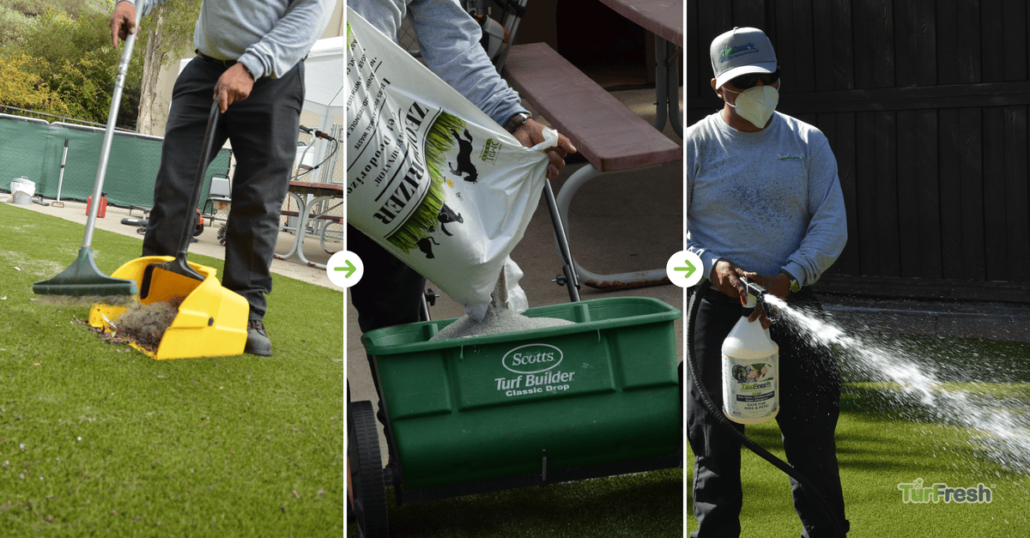
How TurFresh Restores Flood-Damaged Artificial Turf
TurFresh has completed 150,000+ professional turf services nationwide, with teams experienced in post-storm and post-flood restoration for residential and commercial properties.
TurfClean™ is TurFresh's core deep cleaning service. It uses hot-water extraction and powered grooming equipment to remove embedded bacteria, organic debris, and flood-borne contaminants that a garden hose cannot reach. Combined with BioS+, TurFresh's non-toxic enzyme formula, it neutralizes odor at the source rather than masking it.
For turf surfaces where flooding displaced significant infill material, TurFill restores proper surface density and fiber support so the lawn is safe and comfortable underfoot. TurFix™ addresses structural issues including seam separation, backing delamination, and low spots caused by sub-base shifting.
📌 Every TurFresh service includes a ✅ 30-day satisfaction guarantee. If your turf is not performing to your expectations after service, we come back at no additional cost.
TurFresh handles post-flood cleaning, disinfection, and fiber restoration.
From BioS+ enzyme treatment to infill restoration and TurFix structural repair, TurFresh has the full solution for flood-damaged turf. Nationwide service backed by a 30-day satisfaction guarantee.
Get a Free Post-Flood Assessment
✔ Pet Safe✔ Kid Safe✔ 150,000+ Services✔ 30-Day Guarantee
Frequently Asked Questions
Does artificial turf drain water well?
Yes. Quality artificial turf systems drain at 30 to 50 inches per hour through their permeable backing and aggregate sub-base. Standard rainfall drains in minutes. Drainage problems arise when the sub-base is already saturated, improperly installed, or when total water volume exceeds sub-base capacity during a flooding event.
How long does it take for artificial turf to dry after flooding?
Most turf surfaces dry within 12 to 24 hours under normal conditions with adequate drainage and sun exposure. High-humidity regions or shaded installations can take 36 to 48 hours. If standing water persists beyond 24 hours, the sub-base may need professional assessment to restore proper drainage.
Can standing water damage artificial grass?
Yes. Prolonged standing water displaces infill granules, mats fibers in the direction of flow, and saturates the sub-base. Flood water also carries bacteria and organic material that settle into the infill layer, creating persistent odor and hygiene concerns that require disinfection, not just rinsing.
Does flood water leave bacteria in artificial turf?
Flood water carries soil bacteria, pathogens, and organic material that become trapped in the infill layer as water recedes. Standard rinsing removes surface debris but does not neutralize embedded bacteria. An enzyme-based disinfectant like BioS+ is required to break down organic compounds and eliminate odor at the source.
Is it safe to let kids and pets on turf after flooding?
Not immediately. Allow the surface to dry fully and complete disinfection treatment before allowing children or pets back on the turf. Flood water contamination, including bacteria, animal waste residues, and chemical runoff, poses a hygiene risk until the surface has been properly cleaned and treated with a non-toxic enzyme disinfectant.
How do I know if my turf needs professional cleaning after a flood?
Call a professional if odor persists 48 hours after cleaning, standing water remains after 24 hours, large areas show displaced infill, fibers will not respond to re-grooming, or you notice rippling and seam separation. These signs indicate damage beyond what DIY methods can address effectively.
Can flood damage permanently ruin artificial turf?
Rarely, if addressed promptly. Most flood damage, including displaced infill, fiber matting, and odor, is fully recoverable with the right cleaning, enzyme treatment, and surface restoration. Structural damage such as backing delamination or seam failure requires professional repair but does not typically require full turf replacement.
Share

John Pla is the owner of TurFresh and an expert with over 20 years of experience in artificial turf cleaning and maintenance. John’s passion for sustainability, community impact, and innovative solutions has made him a trusted figure in the artificial grass industry and beyond.