
Quick Answer:
Artificial grass fall maintenance involves four core tasks: removing fallen leaves and debris before they trap moisture, rinsing away allergens and dust that built up over summer, addressing tree sap promptly before it hardens and bonds with debris, and reblooming matted fibers that were compressed by heavy summer use. Fall is also the right time to check for early moss or mold growth in shaded areas, inspect for weed seeds that drifted into the infill, and prepare the surface before winter weather arrives. The specific protocol depends on your climate: in dry markets like Phoenix and Las Vegas, fall maintenance focuses on debris and fiber restoration. In coastal markets like Los Angeles and San Diego where fall brings the first rains, drainage and mold prevention become equally important.
Before the first rains arrive, get a professional deep clean that resets your yard.
TurFresh removes the urine smell, bacteria, and compacted debris that built up over summer, so your turf goes into fall and winter clean, fresh, and restored. Over 150,000 services completed. Pet-safe. Backed by our 30-day odor removal guarantee.
✔ Pet-Safe✔ Kid-Safe✔ 150,000+ Services✔ 30-Day Guarantee
Key Takeaways
✅ Fall is the best time to reset your turf after a heavy summer. Months of heat, UV exposure, pet use, and foot traffic compound in the turf system. Fall maintenance addresses all of it before winter conditions lock problems in.
✅ Leaves left on artificial grass do not decompose the way they do on natural lawns. Organic matter sitting on synthetic turf traps moisture, blocks drainage, and creates conditions for mold and mildew. Remove debris frequently rather than waiting for heavy accumulation.
✅ Tree sap has two solutions depending on how long it has been there. Fresh sap responds to isopropyl alcohol applied with a clean cloth. Hardened or heavily bonded sap requires professional refrigerant-based removal to avoid fiber damage.
✅ Fall is when moss and weed seeds become a risk. Cooler, damper conditions in shaded areas create ideal conditions for moss growth. Wind-carried seeds can settle into the infill and germinate. Both are easier to address early than after they establish.
✅ A professional deep clean in fall does what home maintenance cannot. Surface rinsing and brushing address what is visible. Professional cleaning removes the bacteria, urine compounds, and debris that have accumulated in the infill and backing layers over summer.
How Fall Affects Artificial Grass Differently by Climate
Not all fall maintenance looks the same. The protocol depends heavily on where you live.
In dry Sun Belt markets like Phoenix, Las Vegas, and the Inland Empire, fall brings welcome cooling but little rainfall. The primary fall concern is debris from deciduous trees, compacted infill from summer heat, and fiber restoration after months of heavy use. Mold is a lower risk in these climates because the surface dries quickly. The fall window is the best time of year for professional cleaning because temperatures are moderate and the service can be completed without the heat stress of summer.
In coastal Southern California markets like Los Angeles, San Diego, and Orange County, fall marks the transition from the dry season to the first rains of the year. This shift changes the maintenance priority. Debris removal and drainage inspection become critical before the rains arrive, because organic matter sitting on the turf during wet conditions accelerates mold development. A thorough clean before the first significant rainfall is the highest-value maintenance action of the year in these markets.
In Northern California and other markets with cooler, wetter falls, moss and algae become more significant concerns earlier in the season. Shaded areas that remain damp for extended periods are the highest-risk zones and should be inspected and cleaned before conditions deteriorate further.
📌 If you are in Phoenix or Las Vegas, your fall maintenance window is October through November. If you are in Los Angeles or San Diego, act before the first significant rainfall arrives, typically in late October or November.
Why Removing Fallen Leaves Matters More Than You Think
Artificial turf does not break down organic matter the way soil does. On a natural lawn, fallen leaves decompose over time and return nutrients to the ground. On artificial turf, they simply sit on the surface and accumulate.
Leaves left on artificial grass trap moisture against the turf backing, block the drainage holes that allow water to move through the system, and create a damp, shaded environment that encourages mold and mildew growth. In areas where leaves accumulate heavily, they also press fibers flat over time, which affects surface appearance and drainage flow.
For regular leaf fall, a leaf blower on a low setting is the fastest and most effective tool. Work across the surface to dislodge debris before gathering it. A soft-bristle plastic rake or turf comb can follow up in areas where the blower alone is not sufficient.
Pine needles require extra attention. Unlike broad leaves that a blower clears easily, pine needles wedge between fibers and resist being blown out. A turf comb or power broom is more effective for pine needle removal than a leaf blower alone. If your property has pine trees nearby, plan for more frequent maintenance passes throughout fall.
📌 Rake lightly and frequently rather than waiting for heavy accumulation. A five-minute leaf blower pass twice a week is more effective than a major cleanup session once a month.
How Often Should Artificial Grass Be Rinsed in Fall?
Rinse frequency in fall depends on your climate and what is landing on the surface.
In dry climates, a weekly rinse during the fall pollen and dust season keeps the surface fresh and removes particles that settle into the fiber bed. Water alone is sufficient for this routine maintenance.
In coastal markets transitioning into the wet season, the first rains of the year handle surface rinsing naturally. Focus instead on making sure the drainage system is clear before those rains arrive. If debris has accumulated over summer, a thorough rinse and debris removal session before the first rainfall prepares the system to handle increased water volume without pooling.
For pet waste areas, fall rinsing should continue at the same frequency as summer. The lower temperatures of fall can slow bacterial activity but do not eliminate it. Enzyme cleaners remain more effective than water alone for areas with heavy pet use, and the cooler fall temperatures actually improve dwell time effectiveness compared to summer heat.
How to Remove Tree Sap From Artificial Grass
Tree sap is one of the more common fall-specific problems in yards with mature trees, and the solution depends on how long the sap has been on the surface.
For fresh sap that has not yet hardened, isopropyl alcohol applied to a clean cloth and dabbed gently onto the affected area will dissolve the sap without harming the turf fibers or infill. Work in gentle dabbing motions rather than rubbing, which can spread the sap and press it deeper into the fiber bed. Rinse the area thoroughly after the sap is removed.
For sap that has hardened or bonded with debris, DIY removal attempts often cause more damage than they resolve. Hardened sap requires a refrigerant-based technique that freezes the sap, making it brittle enough to remove cleanly without tearing fibers. This is a professional service and is worth scheduling rather than attempting with household tools.
Address sap as soon as you notice it. Fresh sap is a straightforward fix. Sap that has been sitting for weeks attracts debris, becomes progressively harder to remove, and can cause staining if left through the winter.
Complete Guide
📖 Artificial Turf Seasonal Maintenance: The Complete Climate-by-Climate Guide — summer heat, winter rain, monsoon season, and spring prep covered for every TurFresh market.
Why Artificial Grass Flattens in Fall and What to Do About It
Artificial grass that has seen heavy summer use typically enters fall with matted fibers in high-traffic zones. This is normal and not a sign of product failure. It is the result of months of compression from foot traffic, pets, outdoor furniture, and play equipment.
Matted fibers affect surface appearance and, in putting greens, ball roll consistency. Brushing the surface against the natural grain of the fibers lifts them back toward an upright position. Use a soft-bristle synthetic brush and work in multiple directions across the affected area. For moderate matting, one thorough session in early fall is usually sufficient to restore appearance through the end of the year.
For significant matting that does not fully respond to brushing, professional TurfBloom service uses powered grooming equipment that restores fibers more thoroughly than hand tools. Scheduling this in fall, after summer use and before winter reduces the risk of fibers going into the wet season in a compressed position that accelerates further wear.
📌 Fibers standing upright going into winter shed debris and moisture more easily than flattened fibers. Reblooming in fall is one of the most useful maintenance investments of the year.
Watch for Moss, Mold, and Weed Seeds in Fall
Three fall-specific risks that most homeowners do not notice until they have already established.
Moss and mold
Moss and algae thrive in cool, damp, shaded conditions — exactly what parts of many yards experience in fall. Areas under tree canopies, in corners with limited air circulation, and sections that drain slowly are the highest-risk zones. Early signs are dark patches, a slightly slippery surface texture, or a musty smell after rain.
Address moss and mold with a turf-safe enzyme cleaner or a diluted solution of white vinegar in water applied directly to the affected area. Allow full dwell time and then rinse thoroughly. Improve air circulation in the area where possible by trimming overhanging branches. For widespread growth or persistent recurrence, professional cleaning is the most effective resolution.
Weed seeds in the infill
Fall winds carry seeds from surrounding vegetation. Some of these seeds settle into the turf infill and, in the damp conditions of fall and winter, find enough moisture to germinate. This is more common in older turf where the weed barrier beneath the surface has degraded.
Inspect the infill in fall, particularly in areas where the surface stays damp. If weed growth appears, apply a non-toxic, turf-safe herbicide before seeds establish root systems. Established weeds are more difficult to remove without disturbing the infill.
How to Prepare Your Artificial Grass for Winter
A fall maintenance session that addresses the steps above puts your turf in the best possible condition for winter. The final checklist before the cold season:
Clear all debris thoroughly. Leaves, pine needles, and organic matter going into winter under snow or extended rain become significantly harder to remove in spring and create sustained mold risk through the wet months.
Inspect drainage. Walk the surface after a rinse and check that water moves through the drainage layer rather than pooling. Blocked drainage is a maintenance problem in fall and a serious structural problem when winter rain volume increases.
Brush fibers upright. Fibers entering winter in an upright position fare better than flattened ones. A thorough brush session in late fall is more effective than trying to restore compressed fibers in spring.
Check edges and seams. Temperature changes in winter can affect the adhesion of turf edges and seams. A quick inspection in fall catches any lifting before winter conditions make access more difficult.
Schedule professional cleaning. Fall is the highest-value timing for a professional clean because it addresses what summer built up and prepares the system for the wet months ahead. In pet households, this is particularly important because urine compounds that accumulated over a warm summer do not dissipate on their own and become more concentrated as outdoor activity decreases.
Fall is the moment to restore it before winter locks problems in.
TurFresh professional cleaning removes what summer left behind: urine smell, bacteria, compacted debris, and matted fibers. Over 150,000 services completed. 30-day odor removal guarantee. Book your fall cleaning before the first rains arrive.
✔ Pet-Safe✔ Kid-Safe✔ 150,000+ Services✔ 30-Day Guarantee
Frequently Asked Questions
What is the best way to maintain artificial grass in fall?
Artificial grass fall maintenance involves removing leaves and debris frequently, rinsing away allergens and summer residue, treating any tree sap before it hardens, brushing matted fibers against the grain to restore upright position, and inspecting for early moss, mold, or weed growth. Schedule a professional deep clean in fall to remove what home maintenance cannot reach.
How often should I remove leaves from artificial grass in fall?
Remove leaves as frequently as needed to prevent accumulation, ideally twice a week during peak leaf fall. A leaf blower on a low setting is the fastest tool. Do not wait for heavy buildup — organic matter sitting on synthetic turf traps moisture and creates conditions for mold and drainage problems.
Can you rake artificial grass without damaging it?
Yes, with a turf-safe rake that has synthetic bristles. Avoid metal rakes or stiff-bristle tools that can tear fibers or displace infill. For pine needles specifically, a turf comb or power broom is more effective than a leaf blower or rake alone.
What should I do if there is tree sap on my artificial grass?
For fresh sap, apply isopropyl alcohol to a clean cloth and dab gently onto the affected area to dissolve it. Rinse thoroughly after removal. For hardened or bonded sap, professional refrigerant-based removal is the safest approach to avoid fiber damage.
Does artificial grass get moss or mold in fall?
It can, particularly in shaded or poorly drained areas during cool, damp fall conditions. Early signs are dark patches, a slippery texture, or a musty smell. Address with a turf-safe enzyme cleaner or diluted white vinegar solution, improve air circulation where possible, and schedule professional cleaning if the problem persists.
Is artificial grass hard to maintain in fall?
No. Fall maintenance for artificial grass is straightforward and significantly less demanding than natural grass care. Regular light maintenance, leaf removal, and an annual professional cleaning are all that most yards require to go through fall and winter in good condition.
When is the best time to schedule professional artificial grass cleaning?
Fall is one of the best times to schedule professional cleaning. It addresses everything that built up over summer and prepares the turf for winter before wet conditions arrive. In pet households, fall cleaning is particularly valuable because urine compounds that accumulated over the hot months do not dissipate on their own.
Share
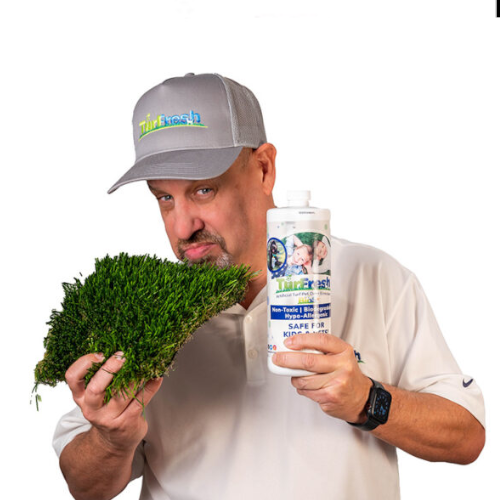

John Pla is the owner of TurFresh and an expert with over 20 years of experience in artificial turf cleaning and maintenance. John’s passion for sustainability, community impact, and innovative solutions has made him a trusted figure in the artificial grass industry and beyond.