
Quick Answer:
How to maintain artificial turf comes down to a two-tier system: routine surface care you handle yourself, and professional deep cleaning once or twice a year that addresses what surface maintenance cannot reach. The DIY tier includes weekly debris removal and pet waste rinsing, brushing every 2 to 4 weeks to keep fibers upright, and seasonal infill checks. The professional tier removes the urine compounds, bacteria, and fine debris that accumulate in the infill layer over months of use. A well-maintained artificial turf installation lasts 15 to 20 years. Neglected turf, particularly in pet households, typically requires replacement in 8 to 10 years due to infill saturation that surface maintenance cannot reverse.
DIY maintenance handles the surface. TurFresh handles what is underneath.
TurFresh professional cleaning removes the urine compounds, bacteria, and compacted debris that accumulate in the infill layer where rinsing and brushing stop. Over 150,000 services completed. Pet-safe same day. Backed by our 30-day odor removal guarantee.
✔ Pet-Safe✔ Kid-Safe✔ 150,000+ Services✔ 30-Day Guarantee
Key Takeaways
✅ Artificial turf maintenance has two tiers, and both matter. DIY surface care prevents debris and bacteria from accumulating on top. Professional deep cleaning removes what has already built up in the infill layer below. Skipping either tier creates different problems over time.
✅ Frequency should match use intensity, not a fixed calendar. A lightly used yard without pets needs professional cleaning once a year. A multi-dog household needs it every 3 to 4 months. Matching the schedule to actual use prevents problems rather than reacting to them.
✅ Brushing against the grain is the most impactful DIY technique. Fibers compressed by foot traffic and pets need to be lifted back to an upright position. Brushing with the grain pushes them further down. Always brush against the natural lean of the fibers using synthetic bristles.
✅ Infill is not maintenance-free. Infill settles and disperses over time, especially in high-traffic zones. Checking and topping up infill seasonally protects the turf backing and maintains surface stability. Depleted infill is one of the primary causes of premature turf wear.
✅ Reblooming is different from brushing. Regular brushing is surface maintenance. TurfBloom reblooming is a professional service using powered grooming equipment that restores fiber position and redistributes compacted infill more thoroughly than any hand tool. It is the professional equivalent of brushing, not a replacement for professional deep cleaning.
How to Maintain Artificial Turf: Schedule by Use Level
The right maintenance schedule depends on how intensively the turf is used, not on a default calendar. These are practical guidelines based on typical accumulation rates under different conditions.
Light use, no pets
Weekly: remove visible debris with a leaf blower or soft rake.
Monthly: full surface rinse, brush fibers against the grain.
Seasonally: check infill levels, inspect edges and seams.
Annually: professional deep cleaning.
Moderate use, one dog
Weekly: remove debris, rinse pet zones, apply enzyme cleaner to potty areas.
Every 2 to 3 weeks: brush all high-traffic and pet zones against the grain.
Monthly: full surface rinse and brush, infill spot check.
Every 6 months: professional deep cleaning.
Heavy use, multiple dogs
2 to 3 times per week: rinse pet zones, remove solid waste immediately.
Weekly: brush high-use zones against the grain, enzyme treatment of potty areas.
Monthly: full surface brush and rinse, infill inspection.
Every 3 to 4 months: professional deep cleaning.
Commercial, kennels, dog runs
Daily: waste removal, end-of-day rinse of all zones.
Weekly: full surface enzyme treatment and brush.
Monthly: professional deep cleaning minimum.
📌 The clearest signal that your schedule needs adjusting: if odors return within 48 to 72 hours of a correct cleaning session, the infill is accumulating faster than your current schedule addresses. Shorten the interval between professional services.
Step 1: Remove Debris Regularly
Debris removal is the foundation of artificial turf maintenance. Leaves, twigs, pine needles, and organic matter that sit on the surface begin to decompose and create conditions for mold, bacteria, and drainage blockage. Because artificial turf does not break down organic matter the way soil does, debris accumulates on the surface and must be actively removed.
Use a leaf blower on a low setting as your first pass. This dislodges debris from the fiber bed without damaging fibers or displacing infill. Follow with a soft plastic rake or turf comb for anything the blower did not clear. Do this before rinsing so debris is not pushed deeper into the fiber bed during the rinse step.
Remove debris before any other maintenance step. Rinsing or brushing a surface covered in leaves and organic matter embeds it further into the system rather than clearing it.
What to avoid: metal rakes and rigid garden tools with metal tines. These tear synthetic fibers and abrade the turf backing. Every contact with a metal tool causes micro-damage that accumulates over time and shortens the surface lifespan.
Step 2: Rinse the Surface
Rinsing removes dust, pollen, and surface residue that accumulates on any outdoor surface. In pet households, rinsing dilutes urine and flushes it through the drainage layer, reducing bacterial load between enzyme treatment sessions.
Use a garden hose with a fan nozzle at standard garden hose pressure. Work from one end of the turf to the other so water moves through the drainage layer consistently rather than pooling. Standard garden hose pressure is sufficient for all routine rinsing. Do not use a pressure washer on a residential turf surface. It displaces infill, can damage the backing in worn areas, and is not necessary for effective cleaning.
In hot climates during summer, rinsing also reduces the surface temperature of turf that has been in direct sun. Surface temperatures on artificial turf in markets like Phoenix and Las Vegas can exceed 150 degrees Fahrenheit in summer. A rinse before children or pets use the surface cools it rapidly.
Do not rinse immediately before brushing. Wet infill clumps under bristle pressure rather than redistributing evenly. Wait for the surface to dry before the brushing step.
Step 3: Brush Fibers Against the Grain
Brushing is the maintenance step that most directly affects how your turf looks and performs over time. Fibers compressed by foot traffic, pets, and play equipment need to be lifted back to an upright position. When this is done consistently, the surface maintains a natural, lush appearance. When it is skipped for months, fibers develop a compression memory that becomes progressively harder to reverse.
How to brush correctly
Identify the natural lean of the fibers by looking across the surface at an angle. Always brush in the opposite direction. Using a stiff synthetic-bristle brush or power broom, work across the surface against the grain in multiple passes. Follow with a second pass at a 90-degree angle to the first. This cross-brushing pattern lifts fibers more uniformly than a single directional pass.
Focus extra time on high-traffic zones: entry points from the house, pet routes, and areas where foot traffic is concentrated. These compress faster than the surrounding surface and need more frequent brushing.
Brushing tools
Hand brush with synthetic bristles: look for nylon or polypropylene bristles approximately 4 to 5 inches in length. Good for small yards and spot maintenance.
Power broom: rotating synthetic-bristle head that covers more ground faster and reaches deeper into the fiber bed. Recommended for yards over 500 square feet and for moderate compaction that hand brushing only partially resolves.
TurFresh TurfComb: purpose-built for artificial grass. Lifts fibers and removes embedded pet hair in the same pass.
What not to use: metal rakes, wire brushes, and rigid plastic tools. These damage fiber tips and the turf backing over time.
Step 4: Manage Pet Waste and Odor
Pet waste is the most common source of persistent artificial turf odor and the primary driver of infill saturation in residential yards. Managing it correctly is the difference between a turf surface that smells clean for years and one that requires professional intervention within 18 months.
Solid waste: remove immediately. Every hour of delay increases bacterial load in the surrounding area. After removal, rinse the zone thoroughly.
Urine: rinse the affected area after each pet use in high-use zones. In low-use yards or during cooler months, weekly rinsing of pet zones is typically sufficient. In multi-dog households during summer, daily rinsing of potty zones prevents uric acid from crystallizing in the infill.
Enzyme treatment: apply TurFresh BioS+ to pet zones with full dwell time at least weekly in moderate-use yards, and after significant waste events. The enzyme formula breaks down uric acid and ammonia compounds at a molecular level rather than masking them. Apply, allow dwell time, then rinse. Rinsing immediately after application stops the enzymatic process before it completes.
Odor signal: if odor is detectable within 48 to 72 hours of a correct enzyme cleaning session, the infill has accumulated beyond what surface treatment can address. Professional extraction is needed.
Step 5: Check and Replenish Infill
Infill is the granular material between the turf fibers that supports blade structure, distributes weight, protects the backing from UV exposure, and manages moisture. In modern residential turf systems, common infill materials include silica sand, coated silica sand, zeolite, and cork.
Infill naturally migrates over time. Foot traffic moves it toward edges and low-traffic areas. Rinsing moves it in the direction of water flow. In pet zones, it compacts under consistent use. The result is uneven infill distribution that creates soft spots, surface instability, and increased fiber stress in areas where the backing is less protected.
Check infill levels seasonally by pressing down on the surface in high-traffic areas. If the surface feels hard or the backing is visible through the fibers, infill has depleted in that zone. Top up with the same material used in the original installation. If you are unsure what infill type was used, your installer will have that information.
TurFresh TurFill is a deodorizing infill option that provides ongoing odor control in addition to the structural functions of standard infill. Useful for pet households where odor management is an ongoing concern.
What Is Turf Reblooming and When Do You Need It?
Reblooming is a professional service that uses powered grooming equipment to restore fiber position and redistribute compacted infill more thoroughly than any hand tool can achieve. It is different from regular brushing in the same way that a professional deep clean of a carpet is different from daily vacuuming: the equipment reaches deeper, applies more consistent pressure, and produces results that surface maintenance cannot replicate.
TurFresh TurfBloom is the professional reblooming service. It involves powered fiber agitation, infill redistribution, and light cleaning in a single session. Most homeowners who schedule TurfBloom report visible improvement in surface appearance the same day, particularly in high-traffic zones where fibers had been compressed for an extended period.
Reblooming is appropriate when: fibers in high-use zones no longer respond to hand brushing, the surface looks flat despite consistent DIY maintenance, or as part of an annual professional maintenance visit.
Reblooming is not a substitute for professional deep cleaning. It addresses fiber position and infill distribution. It does not address the bacteria, urine compounds, and fine organic debris that accumulate in the infill layer over time. Both services address different problems and are often performed together as part of a complete professional visit.
📌 If you have never had professional reblooming done on turf that is more than 2 years old, the difference in appearance after the first session is typically significant. Fibers that looked permanently flat often respond well to powered grooming if the underlying material still has structural resilience.
Signs Your Artificial Turf Needs Professional Attention
Routine home maintenance handles surface debris, rinsing, and fiber grooming. These signs indicate that professional service is the appropriate next step.
Persistent odor within 48 to 72 hours of cleaning. If odor returns this quickly after a correct enzyme treatment session, the source is in the infill layer below the reach of any surface application. Professional extraction is required.
Fibers that no longer respond to brushing. If a specific zone does not lift after two thorough brushing sessions, the fibers have developed compression fatigue or the infill has compacted below the level that hand tools can redistribute. Powered TurfBloom grooming is the appropriate intervention.
Visible matting in traffic lanes that persists. Consistent matting that hand brushing does not resolve within a few days indicates that the zone needs professional attention before permanent fiber fatigue sets in.
Slow drainage after rain or rinsing. If water pools on the surface or drains significantly more slowly than it did when installed, debris or compacted infill is blocking the drainage layer. Professional cleaning clears this.
More than 12 months since the last professional service in a pet household. Even if the surface looks acceptable, infill accumulation is happening below the visible layer. Annual professional cleaning is preventive maintenance, not reactive care.
How Long Does Artificial Turf Last with Proper Maintenance?
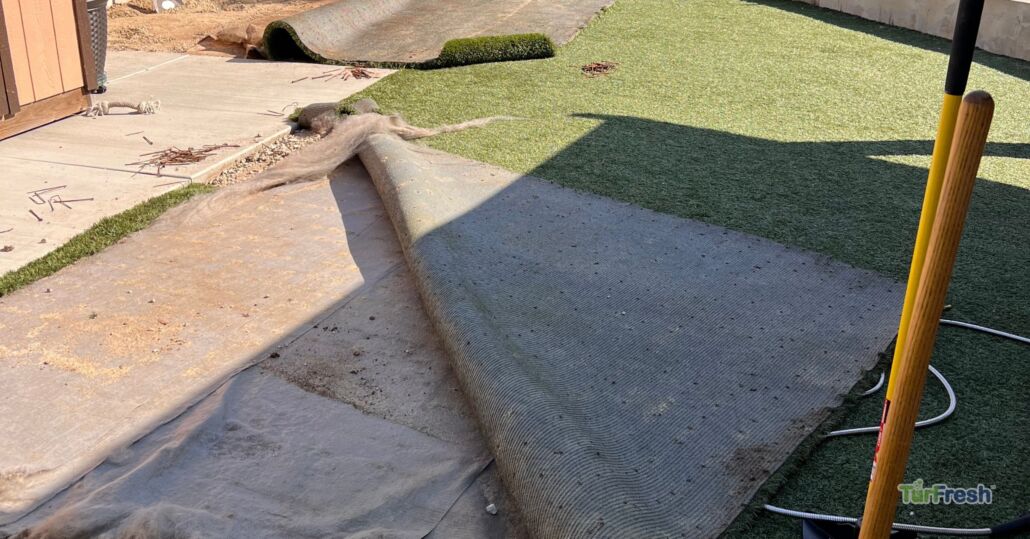
A well-maintained artificial grass installation typically lasts 15 to 20 years. The primary factors that determine lifespan are installation quality, fiber material, UV exposure, use intensity, and whether a consistent maintenance routine including professional cleaning is followed.
In pet households, the single most impactful maintenance decision is the frequency of professional cleaning. Turf that receives professional cleaning on a schedule matched to its use level maintains both performance and appearance significantly longer than turf that receives only surface maintenance. The infill saturation that develops in neglected pet turf is the most common cause of premature replacement.
In arid, high-UV markets like Phoenix, Las Vegas, and inland Southern California, UV degradation becomes a factor after 8 to 10 years. High-quality turf products with UV inhibitors perform significantly better in these markets than entry-level products, and the maintenance routine remains the same regardless of product quality.
📌 According to industry estimates, proactive maintenance that includes regular professional cleaning can extend artificial turf lifespan by 30 to 50 percent compared to surface-only maintenance. For a typical residential installation, this represents thousands of dollars in deferred replacement costs.
If it has been over a year, the infill needs attention.
TurFresh professional cleaning reaches the infill and backing layers that rinsing and brushing cannot access. We remove what has accumulated over months of use and restore your turf to the condition it should be in. Over 150,000 services completed across California, Arizona, Texas, Nevada, and Florida.
✔ Pet-Safe✔ Kid-Safe✔ 150,000+ Services✔ 30-Day Guarantee
Frequently Asked Questions
How do you maintain artificial turf?
Artificial turf maintenance involves two tiers: regular DIY surface care and periodic professional deep cleaning. DIY maintenance includes weekly debris removal, rinsing pet zones, brushing fibers against the grain every 2 to 4 weeks, applying enzyme cleaner to pet areas, and seasonal infill checks. Professional cleaning once or twice a year removes what accumulates in the infill layer that surface maintenance cannot reach.
How often should artificial turf be cleaned?
Frequency depends on use intensity. Light-use yards without pets need professional cleaning once a year. Yards with one dog need it every 6 months. Multi-dog households need it every 3 to 4 months. Commercial facilities and kennels need monthly professional service. DIY surface maintenance should happen weekly for pet areas and monthly for low-use zones regardless of professional service schedule.
How long does artificial turf last with proper maintenance?
A well-maintained artificial grass installation typically lasts 15 to 20 years. Lifespan depends on installation quality, fiber material, UV exposure, use intensity, and whether professional cleaning is performed on a schedule matched to actual use. Neglected pet turf may need replacement in 8 to 10 years due to infill saturation that surface maintenance cannot reverse.
What shortens the lifespan of artificial turf?
The primary causes of shortened lifespan are debris buildup that clogs drainage and compresses fibers, compacted or depleted infill that exposes the backing, untreated pet waste that saturates the infill layer, fiber fatigue from heavy traffic without brushing, and lack of professional maintenance. In arid climates, UV degradation becomes a factor after 8 to 10 years.
What is turf reblooming?
Turf reblooming is a professional service that uses powered grooming equipment to restore fiber position and redistribute compacted infill more thoroughly than hand brushing. TurFresh TurfBloom is the professional reblooming service. It is different from professional deep cleaning, which addresses bacteria, urine compounds, and organic debris in the infill layer. Both services address different problems and are often performed together.
How do you remove pet odors from artificial turf?
Remove solid waste immediately and rinse the area. Apply a turf-safe enzyme cleaner such as TurFresh BioS+ to the affected zone with full dwell time, then rinse again. The enzyme formula breaks down uric acid and ammonia at a molecular level. If odor returns within 48 to 72 hours of a correct enzyme treatment, the source is in the infill layer and professional extraction is needed.
Does artificial turf need professional cleaning?
Yes. Professional cleaning is the maintenance step that home care cannot replicate. Surface rinsing and brushing address what is visible. Uric acid crystals, fine organic debris, and bacteria accumulate in the infill layer over months of use and require commercial-grade extraction equipment to remove. For pet households especially, professional cleaning is not optional maintenance. It is what determines whether the turf lasts 8 years or 20.
Share

John Pla is the owner of TurFresh and an expert with over 20 years of experience in artificial turf cleaning and maintenance. John’s passion for sustainability, community impact, and innovative solutions has made him a trusted figure in the artificial grass industry and beyond.