Artificial Turf Summer Maintenance: Heat, Safety, and Cleaning Guide
Jul 28, 2023 · 11 min read · By John Pla, Founder of TurFresh
Quick Answer: Artificial turf summer maintenance requires weekly debris removal and rinsing, grooming every 2 weeks in high-traffic zones, prompt pet waste treatment with enzyme cleaner, and surface cooling before use on days above 90°F. According to a 2024 study in Frontiers in Sustainable Cities, artificial turf surfaces reach 10 to 60°F above ambient air temperature in summer, making a pre-use rinse the single most effective safety step for families with children and pets.
Heat accelerates what surface cleaning cannot fix.
TurFresh professional cleaning reaches the infill and backing layer where bacteria multiply fastest in summer heat. Safe for pets and kids the same day.
Schedule a Summer Cleaning✔ Pet Safe✔ Eco Friendly✔ 20+ Years Experience✔ 30-Day Guarantee
Key Takeaways
🔑 Artificial turf surfaces reach 10 to 60°F above ambient air temperature in direct summer sun. In Phoenix and Las Vegas, surface temperatures routinely exceed 150°F during peak afternoon hours. Rinse for 15 minutes before use on days above 90°F — the cooling effect lasts 20 to 30 minutes.🔑 Summer heat accelerates bacterial growth in the infill layer. Pet waste that stays manageable in March becomes a hygiene problem by July if not treated more frequently. Switch from monthly to weekly enzyme treatment during June through September.
🔑 Rinse pet zones weekly in summer, not monthly. Warm temperatures activate ammonia compounds that stay dormant in cooler weather. If odor returns hours after rinsing, the source is in the infill — surface rinsing cannot reach it.
🔑 Groom high-traffic zones every 2 weeks in summer. Increased foot traffic combined with heat softens fibers and flatmats them faster than any other season. Move outdoor furniture every 2 to 3 weeks to prevent permanent compression.
🔑 In Phoenix, Las Vegas, and the Inland Empire: avoid use between 11am and 5pm in July and August without a full pre-rinse. Surface temperatures during those hours routinely exceed 150°F and can cause burns to bare feet and pet paws.
How Hot Does Artificial Turf Get in Summer?
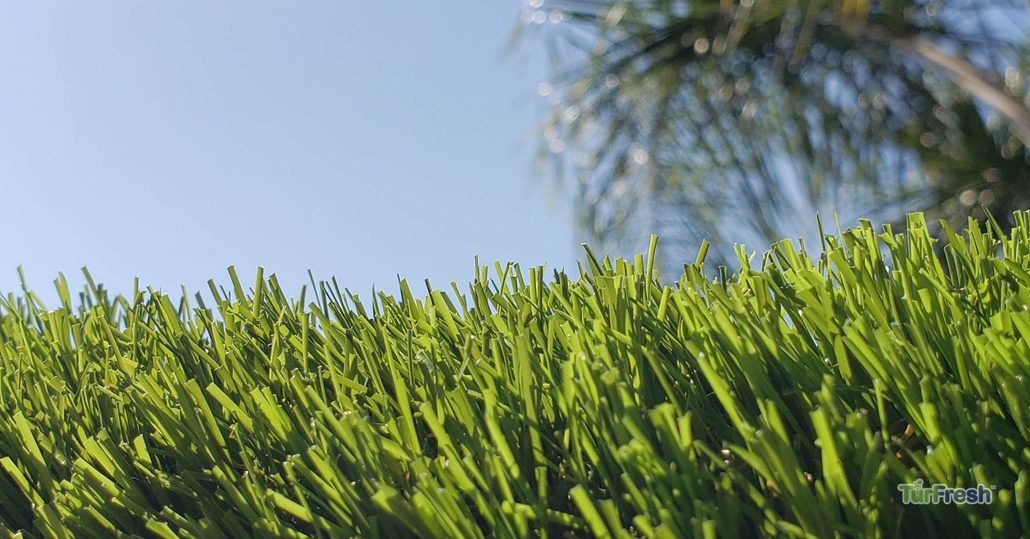
Artificial turf surfaces reach 10 to 60 degrees Fahrenheit above ambient air temperature in direct sunlight, according to turf manufacturers and independent testing. A 2024 study published in Frontiers in Sustainable Cities confirmed that artificial turf reaches very high surface temperatures that create unfavorable conditions and contribute to urban heat island effects. Earlier research from Auburn University recorded artificial turf maximum surface temperatures exceeding 150°F, compared to natural grass at 110°F under the same conditions.
How hot artificial turf gets in real markets:
➧ Phoenix metro (July average high 106°F): Surface temperatures routinely 150 to 165°F during peak afternoon hours
➧ Las Vegas (July average high 108°F): Surface temperatures 155 to 170°F in direct sun
➧ Inland Empire / Riverside (July average high 100°F): Surface temperatures 135 to 150°F in direct sun
➧ Tampa, FL (July average high 91°F): Surface temperatures 120 to 140°F with high humidity slowing cooling after rinse
Natural grass stays cooler because moisture evaporates and cools the surface. Artificial turf has no equivalent cooling mechanism except direct watering. A 15-minute rinse before use reduces surface temperature by 30 to 50°F and the cooling effect lasts approximately 20 to 30 minutes.
How Do You Cool Down Artificial Grass in Summer?
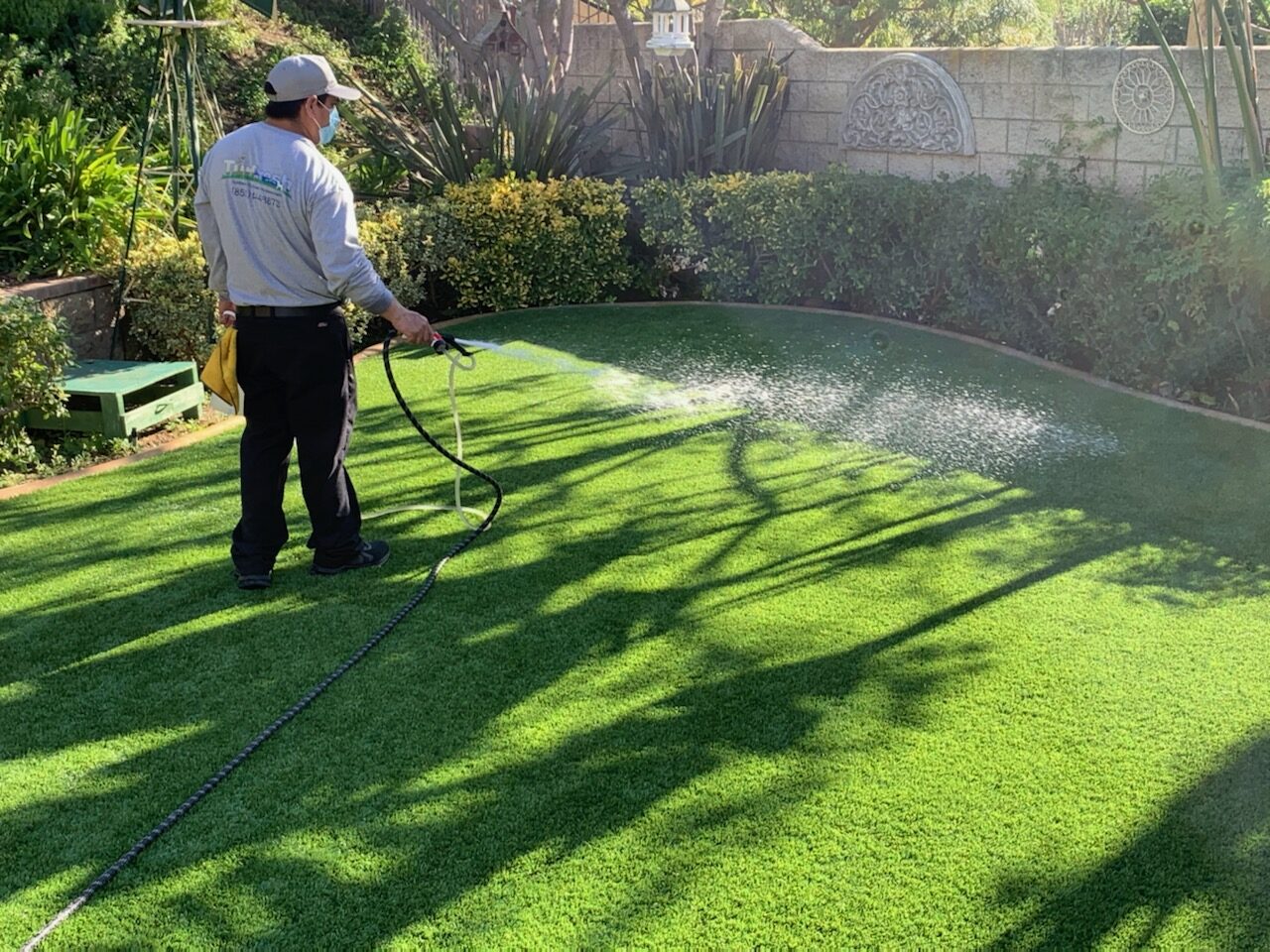
The most effective and lowest-cost way to cool artificial grass in summer is rinsing with a garden hose for 15 minutes before use.Cooling methods ranked by effectiveness and cost
1. Pre-use rinsing (most practical)
Rinse for 15 minutes before children or pets use the turf. This reduces surface temperature by 30 to 50°F. Plan use in the morning before 10am or after 6pm in Phoenix, Las Vegas, and Inland Empire markets during July and August.2. Shade structures
Permanent or temporary shade over high-use areas reduces surface temperature by 20 to 40°F throughout the day. Pergolas, shade sails, and dense perimeter plantings all help. This is the most effective long-term solution for consistent summer comfort.3. Cooling infill
Zeolite-based infills like TurFill retain moisture from rinsing and release it slowly, extending cooling time beyond what standard silica sand provides.4. Morning and evening scheduling
In hot-climate markets, scheduling outdoor use before 10am and after 6pm eliminates the peak temperature window without any additional product or investment.
How Do You Clean Artificial Turf During Summer?
Summer cleaning requires more frequency than the rest of the year because heat accelerates the breakdown of organic material and bacterial growth in the infill.Summer cleaning schedule by zone type
Pet zones (primary bathroom area)
✅ After each use: Rinse with hose to flush urine through backing✅ Weekly: Full enzyme treatment with BioS+ or equivalent — do not skip in summer
✅ Monthly: Professional enzyme treatment for infill layer during June through September
High-traffic family areas
✅ Weekly: Debris removal with leaf blower or plastic rake✅ Weekly: Light rinse to flush dust, pollen, and food particles
✅ After events or gatherings: Full rinse plus enzyme spot treatment
Low-traffic areas
✅ Every 2 weeks: Debris check and rinse✅ Monthly: Full surface inspection for compaction, odor, and buildup
After hosting a summer gathering, schedule a deeper clean within 48 hours. Sunscreen, food spills, and increased foot traffic create a compounding buildup that is significantly easier to address before it dries and sets into the infill.
How Do You Prevent Artificial Turf From Flattening in Summer?
Groom high-traffic areas every two weeks rather than monthly. Summer increases both foot traffic and outdoor furniture use, and heat softens fibers slightly, making them more susceptible to compression.✅ Brush against the grain in peak-traffic zones: entry points, play areas, pet paths
✅ Move outdoor furniture every 2 to 3 weeks to prevent permanent compression
✅ Use furniture cups under narrow legs to distribute weight across a larger contact area
✅ After events or parties, groom the full surface the following morning when turf is cooler
How Do You Remove Pet Odors From Artificial Turf in Summer?
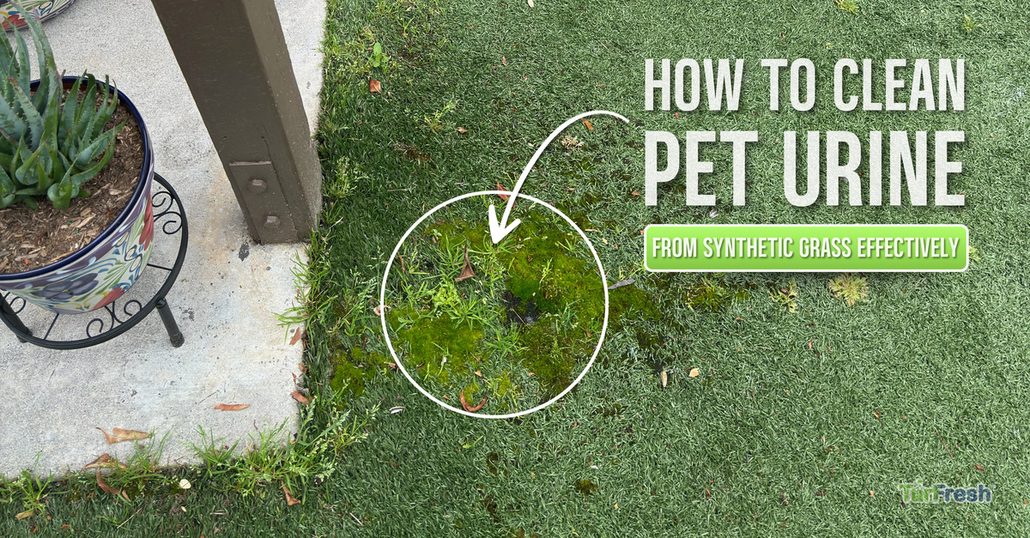
Pet odors intensify in summer because heat activates ammonia compounds that stay dormant in cooler temperatures. A yard that smelled fine in April may develop a noticeable odor by June without any change in pet behavior.
Summer pet odor prevention protocol:
👉 Rinse the pet zone immediately after each use — do not let urine sit and concentrate in heat
👉 Apply enzyme treatment weekly during June through September (increase from monthly)
👉 Apply enzyme treatment in early morning or evening when surface temperatures are lower — heat causes the product to evaporate before enzymes complete their work
👉 Treat a larger area than the visible pet zone, as urine spreads further in warm, dry conditions
TurFresh BioS+ uses enzymatic bacteria to break down ammonia and urine proteins at the molecular level. In summer, apply in the morning when the surface is cooler and allow the full dwell time before rinsing.
If your yard smells fine after rinsing but the odor returns within hours when the surface heats up in the afternoon, the source is in the infill layer. Surface rinsing does not reach infill temperature-activated odor compounds. Professional enzyme treatment that penetrates the infill is the correct next step.
Summer Artificial Turf Maintenance by Market
Phoenix and Las Vegas (extreme heat, arid)
➧ Rinse pet zones daily during July and August➧ Apply enzyme treatment every 7 to 10 days, not monthly
➧ Schedule outdoor use before 10am and after 6pm from June through September
➧ Consider cooling infill replacement at next professional service
Southern California and Inland Empire (hot, moderate humidity)
➧ Rinse pet zones 2 to 3 times per week➧ Monthly enzyme treatment, increase to every 2 weeks for multi-dog households
➧ Address pool overspray zones weekly to prevent hard water scale in summer heat
Florida and Gulf Coast (hot, humid)
➧ Flush then allow the surface to dry before the next pet use — the rinse-and-dry cycle matters more than in arid markets➧ Apply enzyme treatment every 2 weeks June through September
➧ For a complete year-round breakdown by climate and season, see our artificial turf seasonal maintenance guide
How Does Summer Maintenance Extend Artificial Turf Lifespan?
Summer is when most preventable turf damage occurs. Heat plus heavy use plus deferred maintenance creates compounding problems that accelerate aging beyond what any other season produces.Consistent summer care preserves both fiber integrity and infill structure. A professional cleaning once or twice per year with consistent home maintenance in between extends turf lifespan toward the 15 to 20 year upper range of the product warranty. Deferred summer maintenance shortens that range significantly, particularly in hot climates where infill degradation accelerates.
One professional cleaning undoes what summer accumulates.
TurFresh deep cleaning reaches the infill layer where summer heat concentrates bacteria and odor compounds. Schedule before peak season or after it for best results.
Book Your Summer Cleaning✔ Pet Safe✔ Eco Friendly✔ 20+ Years Experience✔ 30-Day Guarantee
Complete Guide
📖 Artificial Turf Seasonal Maintenance: The Complete Climate-by-Climate Guide — summer heat, winter rain, monsoon season, and spring prep covered for every TurFresh market.
Frequently Asked Questions
How do you maintain artificial turf in summer?
Summer artificial turf maintenance requires weekly debris removal and rinsing, grooming every 2 weeks in high-traffic zones, weekly enzyme treatment for pet areas, and surface cooling before use on days above 90°F. Artificial turf surfaces reach significantly higher temperatures than natural grass in summer, making pre-use rinsing essential for safety.How hot does artificial grass get in summer?
Artificial grass surfaces reach 10 to 60 degrees Fahrenheit above ambient air temperature in direct sunlight. In Phoenix and Las Vegas, surface temperatures routinely exceed 150°F during peak afternoon hours. A 15-minute rinse reduces surface temperature by 30 to 50°F and the cooling effect lasts approximately 20 to 30 minutes.Is it safe to let kids and pets use artificial grass in summer heat?
Yes, with precautions. Rinse the surface for at least 15 minutes before use on hot days. In Phoenix, Las Vegas, and similar markets, avoid use between 11am and 5pm during July and August without a full pre-rinse. Surface temperatures above 150°F can cause burns to bare feet and pet paws.How often should you rinse artificial turf in summer?
In pet areas, rinse after each use during summer months. For general family areas, rinse weekly. In extreme heat markets, rinse pet zones daily during July and August. Hot temperatures activate ammonia compounds from pet urine that remain dormant in cooler weather.Why does artificial grass smell worse in summer?
Heat activates volatile ammonia compounds in the infill layer that remain dormant in cooler temperatures. When infill reaches 120°F or above, ammonia from accumulated pet urine evaporates at concentrations that do not occur in cooler weather. If odor returns when the surface heats up after rinsing, the source is in the infill and requires enzyme treatment.How do you cool down artificial grass in summer?
Rinse with a garden hose for 15 minutes before use, which reduces surface temperature by 30 to 50°F. Schedule outdoor use before 10am or after 6pm in hot climates during July and August. Shade structures reduce surface temperature by 20 to 40°F throughout the day.Can you use artificial grass cleaner in hot weather?
Apply enzyme cleaners in the early morning or evening when surface temperatures are lower. Hot surfaces cause cleaning solutions to evaporate before enzymes complete their work. In Phoenix, Las Vegas, and the Inland Empire, avoid applying enzymatic cleaners between 11am and 4pm in summer.Does summer heat damage artificial turf fibers?
Normal summer sun exposure does not damage quality artificial turf fibers. The risk is from concentrated heat sources like grills, fire pits, and reflected heat from windows or walls. Consistent maintenance and avoiding concentrated heat sources are the two most effective protections.