TL;DR
Artificial grass deodorizer helps synthetic turf maintenance by reducing odor at the source. It works by targeting odor-causing bacteria, absorbing moisture, and neutralizing odor compounds that build up from pets, weather, and everyday backyard use. The easiest routine is simple: rinse the turf regularly, remove pet waste quickly, and use the right deodorizer format (powder, spray, or deodorizing infill) based on where the odor is coming from.
Quick Answer: Artificial grass deodorizer helps maintain synthetic turf by controlling bacteria and moisture that cause odors, keeping the lawn fresher with less effort when used as part of a basic rinse-and-clean routine.
Why does artificial turf develop odor in the first place?
Artificial turf develops odor when bacteria grows and spreads in areas where moisture, pet urine, and debris collect. Since synthetic turf is inorganic, it does not break down waste the way natural soil can, so bacteria can build quickly if routine maintenance is skipped.
Odor can happen in any climate or city, including San Diego, Las Vegas, Los Angeles, Santa Ana, and Phoenix, especially during warm weather or in areas where pets use the same spots repeatedly.
What should you do first to prevent turf odor before using deodorizer?
The first step is consistent basic maintenance, because deodorizer works best when the turf is already being cared for. A simple routine keeps odors from becoming a constant problem.
Keep odors to a minimum by:
• Hosing down the yard periodically
• Removing pet waste promptly
• Keeping high-use areas from staying damp or dirty for long periods
When this routine is in place, artificial turf disinfectants and deodorizers become a reliable next step for odor control.
What is an artificial turf disinfectant or deodorizer?
An artificial turf disinfectant or deodorizer is a product used to reduce odor-causing bacteria and help eliminate smells in synthetic turf. These products are designed to support turf maintenance by controlling the moisture and bacteria that allow odors to spread.
They come in multiple formats so you can treat both:
• Broad areas where odor slowly builds up
• Concentrated spots where pets urinate repeatedly
• The infill layer where moisture can linger over time
Which type of artificial turf deodorizer works best for your lawn?
The best turf deodorizer depends on where the odor is coming from and how your lawn is used. Most synthetic turf disinfectants fall into three common formats: powder deodorizers, deodorizing sprays, and deodorizing infill products.
Each one plays a different role in synthetic turf maintenance, and many homeowners get the best results by keeping more than one option on hand.
How do powder deodorizers help deodorize artificial grass?
Powder deodorizers help by absorbing moisture and reducing odor-causing bacteria deep within the turf blades and base. This format can be highly effective, especially when odors are spread across a wider area.
Powder artificial turf disinfectant is applied liberally over the turf. As it settles down into the lawn, it works into the base of the blades to help absorb moisture and eliminate odors.
Because powder is lightweight, wind can blow away some product before it settles. A liberal coating helps ensure enough remains on the turf to do its job.
Best for:
• Whole-yard odor control
• Moisture-related odor buildup
• Routine deodorizing after general cleaning
Practical tip (callout-ready)
Apply powder when wind is low, then brush the turf so the product reaches deeper instead of sitting on top.
How do deodorizing sprays help with pet urine odor on synthetic turf?
Deodorizing sprays help by allowing targeted odor treatment in concentrated areas where pets urinate repeatedly. This format is convenient because you can apply it only where it is needed without overusing product.
If you have pets that frequently urinate in the same spots, a spray form of artificial turf disinfectant is often the best choice. Deodorizing sprays such as TurFresh BioS+ are designed to eliminate pet odors and other sources of odor-causing bacteria.
A spray bottle can also be used beyond turf. It can be applied to walls, hardscaping, and other backyard surfaces that need odor control and disinfecting.
Best for:
• Repeat pet urine zones
• Fast spot treatments
• Hardscape and perimeter odor issues (walls, edging, surrounding areas)
Practical tip (callout-ready)
Treat the same pet spots consistently. Repeated odor usually means repeated use, not a one-time issue.
How do deodorizing infill products help prevent artificial turf odors long-term?
Deodorizing infill helps by supporting ongoing odor control between deeper cleanings, since infill can absorb liquids and neutralize odor compounds in the turf system. This can reduce excess moisture that leads to bacteria growth while also addressing existing odor.
Infill is a necessary component of any artificial grass lawn. It is added between the turf blades during installation and should be topped up periodically during your synthetic turf maintenance routine to maintain the proper level.
Odor-eliminating infill products such as TurFill provide a low-maintenance layer of added protection. TurFill both absorbs liquids and neutralizes compounds, helping prevent excess moisture that leads to bacteria and helping eliminate odors caused by existing bacteria for long-lasting freshness.
Swapping out existing infill for a deodorizing infill can be an efficient and effective way to prevent pet odors during regular maintenance. It is also safe for kids and pets since it is all-natural and non-toxic.
Best for:
• Long-term odor prevention
• Pet yards with frequent use
• Maintenance routines where you want fewer odor flare-ups
Practical tip (callout-ready)
If odor keeps returning after spray or powder treatments, the issue may be sitting deeper in the turf system. Deodorizing infill can help support longer-lasting freshness.
What’s the simplest maintenance routine for keeping synthetic turf fresh?
The simplest routine is consistent rinsing, prompt waste removal, and using the right deodorizer format for the problem area. This approach helps stop odor from becoming a repeating issue.
A basic routine can look like this:
➡️ Rinse the turf periodically with a hose
➡️ Remove pet waste quickly
➡️ Use spray deodorizer for concentrated pet zones
➡️ Use powder deodorizer for wider odor coverage
Maintain infill levels, and consider deodorizing infill for ongoing support
When should you consider professional synthetic turf maintenance?
You should consider professional synthetic turf maintenance when odors keep returning despite regular rinsing and deodorizer use. Persistent odor often suggests the source is deeper than the turf fibers, especially if moisture and bacteria are collecting below the surface.
If you want to apply turf deodorizers yourself or trust experts with a professional synthetic turf maintenance service, TurFresh can help with your synthetic grass maintenance needs.
How can TurFresh help with turf deodorizing and synthetic grass maintenance?
TurFresh can help by providing both at-home turf deodorizers and professional artificial turf maintenance services. You can choose the approach that fits your routine, whether that means handling odor control yourself or getting expert support.
If you would like to learn more about TurFresh’s professional artificial turf maintenance services or book your first appointment, 📞 call (855) 444-8873 or fill out the online contact form. You can also visit the online store to view the full selection of turf deodorizers and at-home synthetic turf maintenance products.
💡 Actionable tips you can pull out as highlights
✔ Treat odor early: Light odor is easier to control than odor that has had time to spread.
✔ Match the format to the problem: Spray for pet spots, powder for broader odor, infill for prevention.
✔ Use enough product: Powder can blow away, so apply generously when needed.
✔ Don’t ignore hardscaping: Odor can cling to nearby walls, edging, and surfaces, not just the turf.
Frequently Asked Questions
What is the difference between artificial grass deodorizer and synthetic turf disinfectant?
• Artificial grass deodorizer is typically used to reduce smells, while synthetic turf disinfectant focuses on reducing odor-causing bacteria. Many turf maintenance products support both goals, depending on how they are formulated and applied.
What is the best turf deodorizer format for dog urine smells?
• Spray deodorizer is usually the best format for dog urine smells when pets use the same spots repeatedly because it lets you treat concentrated areas without wasting product.
How do you deodorize artificial turf without overusing product?
• You deodorize artificial turf efficiently by targeting sprays to hot spots and using powder only when odor is spread across the yard. This keeps product use focused where odor control is actually needed.
Are deodorizing infill products safe for kids and pets?
• Deodorizing infill products can be safe for kids and pets when they are made to be all-natural and non-toxic, such as TurFill.
Why does artificial turf still smell even after rinsing?
• Artificial turf can still smell after rinsing if bacteria and moisture have built up deeper in the turf system or if pets repeatedly use the same areas. In these cases, deodorizer spray, powder deodorizer, or deodorizing infill may be needed as part of the maintenance routine.
Can you apply turf deodorizer to surfaces outside of the turf?
• Yes. Deodorizing sprays can be applied to nearby areas like walls and hardscaping when those surfaces also need odor control and disinfecting.
Ready for an Odor-Free Yard?
📞 Call (855) 444-8873 or 📱 text (714) 709-2551 to get started.
Professional Artificial Grass Cleaning
Turf Cleaning Products | Deep Clean Your Turf and Infill
Give your family and pets the clean, fresh outdoor space they deserve.
👉 New customers receive 10% OFF
Share
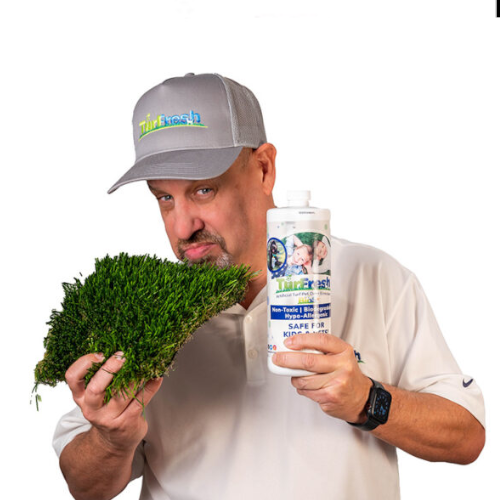

John Pla is the owner of TurFresh and an expert with over 20 years of experience in artificial turf cleaning and maintenance. John’s passion for sustainability, community impact, and innovative solutions has made him a trusted figure in the artificial grass industry and beyond.