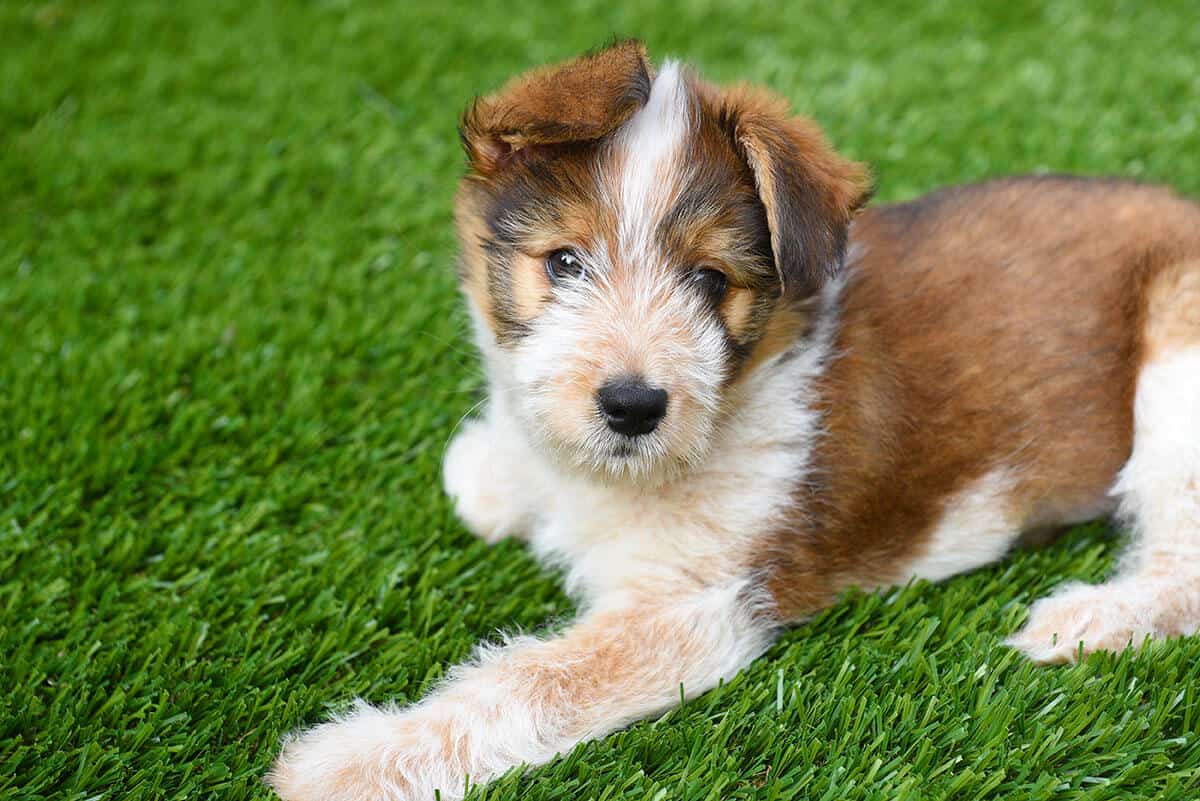
Artificial Grass for Dogs: What Owners Need to Know
Dec 26, 2019 · 24 min read · By John Pla, Founder of TurFresh
Quick Answer: Artificial grass works well for dogs when you remove solid waste daily, rinse high-use spots after each use, apply an enzyme cleaner to pee zones weekly, and schedule a professional deep clean every few months. The infill is where odor lives, not the surface. Rinsing clears the blades; enzyme treatment clears the bacteria below them. TurFresh, a professional artificial turf cleaning company serving more than 130 cities, handles the part home maintenance cannot reach: commercial extraction of the infill layer.
The odor is in the infill, not on the surface.
TurFresh uses commercial-grade equipment to reach the layer where bacteria actually live. Pet safe. Eco friendly. Done right the first time.
Schedule Your Turf Cleaning✔ Pet Safe ✔ Eco Friendly ✔ 20+ Years of Experience ✔ 30-Day Guarantee
Why TurFresh
TurFresh is a professional artificial turf cleaning company with over 20 years in synthetic grass care, serving more than 130 cities across the United States. We do not sell or install turf. We clean it, which means the advice on this page is not written to sell you a lawn.
The TurFresh BioS+ process uses commercial extraction to reach the infill and backing layer where pet odor accumulates. Every treatment is pet safe, allows same-day re-entry, and is backed by a 30-day odor removal guarantee.
In multi-dog homes the interval matters more than the technique, which is why most pet households end up on a recurring TurfCare Plan rather than booking reactively after the smell returns.
Key Takeaways
🔑 Artificial grass is one of the best yard options for dogs: no mud, no dead patches, drains quickly, and handles heavy daily use from multiple dogs without structural damage. 🔑 The infill is where odor originates, not the surface. Rinsing clears the blades. Enzyme treatment clears the bacteria below them. You need both. See our complete guide on how to remove pet waste odor from artificial turf. 🔑 Multi-dog homes need more frequent enzyme treatment, weekly rather than monthly, and professional cleaning every two to three months rather than four. 🔑 If your turf smells despite regular cleaning, the infill is saturated and needs professional treatment or replacement. More rinsing will not solve a saturated infill problem. 🔑 Replacing turf because of smell is almost never necessary. In most cases reviewed by TurFresh technicians, yards that homeowners believe are at end of life are fully restored by professional deep cleaning and infill treatment.Artificial Grass, Fake Grass, Synthetic Turf: Is There a Difference?
No. Artificial grass, fake grass, synthetic grass, synthetic turf, artificial turf, artificial lawn, imitation grass, and AstroTurf all describe the same category of product: a manufactured surface of plastic fibers on a permeable backing, used in place of a natural lawn. The words come from different places. Installers tend to say artificial turf or synthetic turf. Homeowners tend to say fake grass. AstroTurf is a brand name from the 1960s that became a generic term, the way people say Kleenex for tissue. Pet turf and dog turf usually mean the same product specified for pet use: better drainage, shorter pile, and often an antimicrobial infill.What actually varies between products:
➧ Drainage rate, measured in inches per hour. This matters more than any other spec for a dog yard. ➧ Pile height, the length of the fibers. ➧ Infill type, the granular material between the blades. This is where odor lives and where product choices matter most. ➧ Blade material, usually polyethylene or polypropylene, which affects softness underfoot.💡 Tip When comparing quotes, ignore the marketing name of the turf line and ask for four numbers: drainage rate, pile height, face weight, and infill type. Those decide how the yard performs with dogs. The product name does not.
Is Artificial Grass Good for Dogs?
Artificial grass is good for dogs because it handles everything natural grass cannot. It does not go yellow from dog urine, does not turn to mud after rain, does not develop bare patches where dogs run the same path, and does not harbor the fleas and ticks that nest in organic lawn material. For households with two or more dogs, that matters. Natural grass in a multi-dog yard rarely survives the first summer without visible damage. Synthetic turf absorbs the same traffic and looks the same on day one as it does three years later, as long as it is maintained properly.Key advantages for dog owners:
🔑 No mud or brown patches: Urine does not burn synthetic fibers the way it scorches a natural lawn. Dogs can use the yard in any weather without tracking damage indoors. 🔑 Drains quickly: Quality pet turf backing has drainage holes that allow urine and rainwater to pass through into the base layer. The surface dries fast, which reduces the conditions where bacteria thrive. 🔑 Easier daily cleanup: Solid waste rests on top of the blades instead of pressing into soil. Pickup takes seconds, and a quick rinse handles the rest. 🔑 Lower chemical exposure: Artificial lawns require no fertilizers, pesticides, or weed killers, chemicals that dogs track indoors and absorb through their paws on natural grass. 🔑 Fewer fleas and ticks: No organic soil means fewer harborage points for the insects most likely to affect dogs.💡 Tip If your current yard smells, the problem is almost never the turf itself. It is accumulated urine residue in the infill that was never fully treated. That is fixable.
Is Artificial Grass Safe for Dogs?
Quality artificial grass is safe for dogs. Modern pet turf is manufactured without lead, heavy metals, or harmful chemicals, and does not require the fertilizers or pesticides that natural lawns depend on. The main safety consideration is surface temperature. On very hot days in direct sun, synthetic turf can get warmer than natural grass. Providing shade, rinsing the surface with water before outdoor time, and limiting play during peak afternoon heat keeps paws comfortable. Most dogs naturally avoid hot surfaces and self-regulate.What makes a turf setup safe for dogs:
➡️ Pet-safe enzyme cleaners only: Avoid bleach, ammonia, and household disinfectants. These can degrade turf fibers and irritate paws. Enzyme-based cleaners formulated for synthetic turf are the correct choice. ➡️ Proper drainage: Standing water in turf is both an odor problem and a health risk. Water that drains through the backing and base keeps the surface dry and reduces bacterial buildup. ➡️ Regular waste removal: Prompt poop pickup and rinsing reduces bacteria exposure for dogs who nose around the yard. ➡️ Infill choice: Antimicrobial or odor-neutralizing infill options like TurFill actively reduce bacteria between cleanings. For specific concerns about chewing or ingestion, see our tips on is artificial grass safe for dogs.💡 Tip On hot summer days, rinse the turf with a hose before letting your dogs out. It cools the surface in a few minutes and is the easiest heat management habit you can build.
Can Dogs Pee and Poop on Artificial Grass?
Yes, dogs can pee and poop on artificial grass. Urine drains through the backing into the base layer below, and the surface dries quickly when drainage and airflow are working as intended. Solid waste rests on top of the blades, making it easier to remove than on natural grass where waste presses into soil. Dog urine does not damage synthetic fibers. The problem that develops over time is odor, not structural damage. When urine is not rinsed through regularly, uric acid crystals and ammonia compounds accumulate in the infill layer. Heat activates them, which is why yards that smell fine in winter develop strong odor by summer.Common questions this section answers:
Can dogs pee on fake grass? Yes. The backing is perforated to allow liquid to pass through. Can dogs pee on turf? Yes, and the same applies to AstroTurf, artificial lawn, and any other name for the same product. Drainage is a property of the backing, not the label. Does dog urine ruin artificial grass? No. Urine does not damage the fibers. Odor develops when urine residue is not treated with enzyme cleaners, but this is a maintenance issue, not a material failure. Can dogs poop on synthetic turf? Yes. Solid waste sits on top of the blades and is easy to remove. Prompt pickup and a quick rinse prevent odor and bacteria buildup. See our full guide on how to clean dog poop from artificial grass. Does artificial grass smell with dogs? Only when the infill is not maintained. Regular enzyme treatment on high-use areas prevents persistent odor.💡 Tip Most yards have one or two spots where dogs pee consistently. Treat those zones as priority areas. Rinsing and enzyme-treating those spots daily covers most of the odor risk in the whole yard.
Can Dogs Dig Up or Damage Artificial Grass?
Properly installed artificial grass resists digging well, and casual pawing does not cause damage. A dog with a dedicated digging habit in the same spot may eventually work at the edges or seams if those areas are not properly secured. Quality pet turf is fastened with nails, staples, adhesive, or a combination, and the backing is designed to resist tearing. The failure point is almost always the perimeter, not the middle of the lawn.How to reduce digging risk:
➡️ Secure all edges and seams properly during installation. Loose edges are the most common entry point for diggers. ➡️ Use a bender board or solid perimeter edging to eliminate exposed turf borders. ➡️ Redirect digging behavior to a designated sand pit or gravel area if your dog digs out of habit. ➡️ Check seams after the first few months and re-secure any that have shifted.💡 Tip If your dog is digging holes in the same spot repeatedly, look at what is underneath before blaming the behavior. Dogs often dig where they smell something. A saturated pee zone is a common trigger.
The Right Maintenance Routine for Homes with Dogs
The routine that works depends on how many dogs you have and how much of the yard they use. One small dog on a large turf area needs less frequent attention than two large dogs sharing a compact backyard. The framework below scales with that. For a detailed frequency guide, see our post on how often to clean artificial grass with dogs.Daily Maintenance
📌 Two to three minutes a day prevents most odor problems before they start.
➡️ Pick up solid waste immediately. Do not leave it until the next day. Fresh waste is easier to remove, has not yet pressed into the fibers, and has released far less bacteria into the infill. ➡️ Rinse your dog's regular pee spots. A 30-second spray with a garden hose dilutes urine and pushes it through the backing before it has time to dry in the infill. ➡️ Remove debris. Leaves, sticks, and toys trap moisture against the surface and slow drainage. Clear them during the same two-minute routine.💡 Tip With two or more dogs, rinsing after each use is more effective than a single daily rinse. The bacteria load doubles with the second dog, not just the waste volume.
Weekly Maintenance
📌 Weekly care refreshes the full surface and targets the infill layer where odor accumulates.
➡️ Rinse the whole lawn. A full rinse flushes light urine deposits, dust, and loose dirt through the backing. ➡️ Apply enzyme cleaner to high-use zones. This is the step that separates yards that stay fresh from yards where odor returns within days of cleaning. TurFresh BioS+ breaks down uric acid and ammonia at a molecular level rather than masking the smell. Apply to the areas your dogs use most, allow the full dwell time, then rinse. ➡️ Brush the fibers upright. Use a stiff-bristle broom or turf rake to lift fibers that have been matted down in dog traffic lanes. This restores the surface and improves airflow through the turf, which helps dry out moisture pockets.💡 Tip Brushing against the grain of the fibers is more effective than brushing with it. It lifts the blades instead of flattening them further.
Monthly Maintenance
📌 Monthly care addresses the infill layer and prevents long-term saturation.
➡️ Deep enzyme treatment across the full surface. Even areas that look clean may have urine residue building in the infill. A monthly treatment of the entire turf prevents cumulative buildup rather than reacting to it. ➡️ Check and refresh infill. Compacted infill traps urine and slows drainage. If the surface feels harder than it used to or water pools briefly before draining, the infill needs loosening. Products like TurFill can be added to restore odor-neutralizing capacity. ➡️ Inspect edges and seams. Look for any lifted edges or shifting seams and address them before they become larger issues.💡 Tip Treat shaded corners and areas against walls more often. They stay damp longer and accumulate odor faster than open areas with good sun and airflow.
Quarterly Maintenance
📌 Quarterly care resets the turf by removing buildup that regular home cleaning cannot fully reach.
➡️ Full deep clean and heavy enzyme treatment. A thorough rinse and concentrated enzyme application across the whole yard, including areas that are not used as frequently. ➡️ Professional turf cleaning. For homes with two or more dogs, or small yards with heavy daily use, a professional cleaning every three to four months is the most reliable way to reset the infill. TurFresh uses commercial-grade equipment that reaches the backing layer where bacteria concentrate. Home methods manage the surface; professional equipment addresses the root cause. ➡️ Check drainage thoroughly. Water that drains within a few seconds of rinsing indicates healthy drainage. Water that pools for 30 seconds or more suggests blockage in the infill or base layer.💡 Tip If odor returns within a few days after a thorough home cleaning, the infill is saturated and needs professional treatment or replacement. Cleaning the surface when the infill is the source does not solve the problem.
Multi-Dog Homes and High-Use Areas
Multi-dog yards need roughly double the maintenance frequency, because two dogs produce roughly twice the bacteria load in the same space. With three or more dogs, the infill reaches saturation faster, odor compounds faster, and DIY maintenance alone is less likely to keep pace.Best practices for multi-dog yards:
👍 Rinse immediately after each use, not on a once-daily schedule. The bacteria clock starts the moment urine contacts the infill. Every hour of delay increases the load. 👍 Create a designated potty zone. Training dogs to use a defined area of the yard concentrates the maintenance effort and makes enzyme treatment more efficient. A smaller, heavily managed zone is easier to keep fresh than a large yard with unpredictable use. 👍 Apply enzyme cleaner every five to seven days rather than monthly. The infill in a multi-dog yard reaches the point where monthly treatment is reactive rather than preventive. 👍 Schedule professional cleaning every two to three months. Most multi-dog homeowners find that quarterly professional treatment is the threshold between manageable odor and recurring odor. For three or more large dogs, every six to eight weeks is more realistic.💡 Tip The fastest way to tell whether your infill is saturated is to wet the surface and smell it immediately. If the smell intensifies with water, the infill is the source and needs treatment or replacement, not more rinsing.
What to Look for in Artificial Grass for Dogs
The four specifications that matter for a dog yard are drainage rate, pile height, infill type, and blade material. Not all synthetic turf handles pet use equally, and the differences between products are in these numbers rather than in the brand name.Drainage:
The single most important factor. Look for a backing that is fully permeable, with drainage rates measured in inches per hour. Industry-grade pet turf drains at 30 inches per hour or more. Slow drainage means urine sits in the infill instead of passing through, and odor follows.Pile height:
Shorter pile heights, roughly 1.25 to 1.5 inches, are easier to clean and dry faster than tall pile. Taller pile looks lush but traps more debris and takes longer to dry between uses.Infill type:
Standard silica sand infill holds odor over time. Antimicrobial or zeolite-based infill options actively reduce bacteria between cleanings. For multi-dog homes, the infill choice matters as much as the turf itself.Blade material:
Polyethylene blades are softer on paws than polypropylene. For dogs that spend significant time lying on the turf, softer blade material makes a real difference in comfort.Backing durability:
A reinforced two-layer backing resists digging better than a single-layer product. Ask the installer about backing specifications before committing to a product.💡 Tip If your existing turf smells despite regular cleaning, the issue is almost always the infill, not the turf itself. A full infill replacement is significantly cheaper than replacing the turf and often restores the yard completely.
When DIY Maintenance Is Not Enough
Home maintenance stops working when urine salts and bacteria have saturated the infill over months or years. At that point, rinsing and enzyme spraying the surface treats symptoms without reaching the source, and the smell returns because the source sits inches below where the cleaner lands. This is where most homeowners make an expensive mistake: replacing the turf when what they actually needed was a professional deep clean or infill replacement. The turf itself is almost never the problem.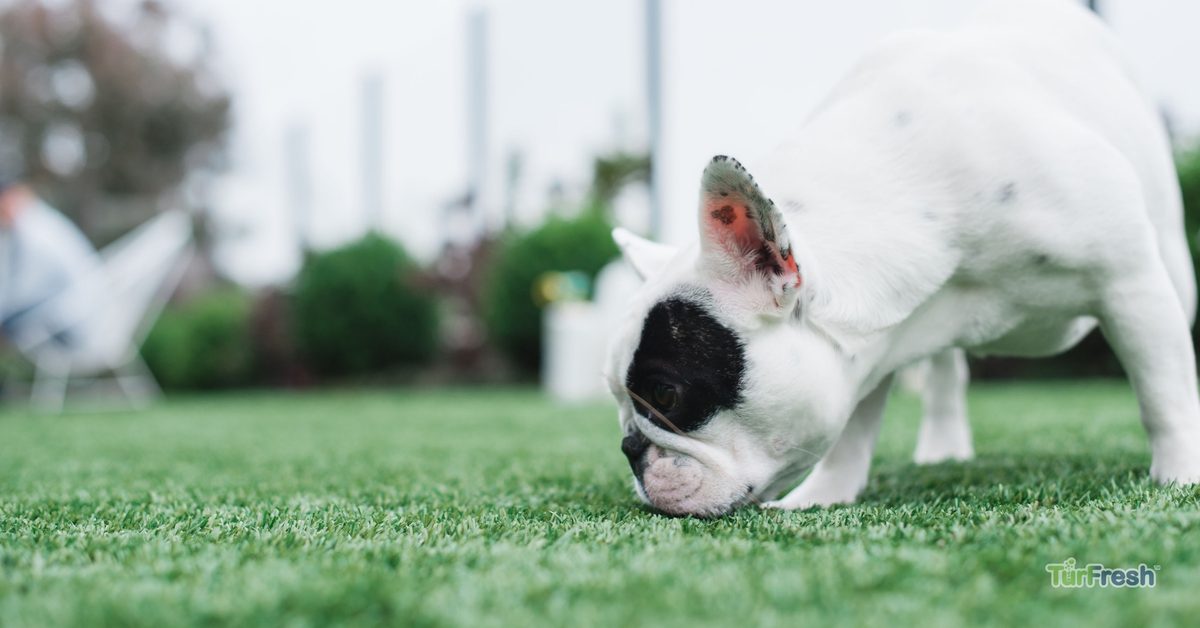
Signs that professional cleaning is the right next step:
👉 Odor returns within two to three days after a thorough home cleaning. This is the clearest indicator that the infill is the source, not the surface. 👉 The yard smells stronger when it rains or when the surface is first wetted. Water activates urine compounds that have dried in the infill. A strong initial smell when you rinse means the infill is saturated. 👉 The turf surface feels hard or compacted in high-use areas. Compacted infill does not drain properly and holds bacteria and urine residue. 👉 You have multiple large dogs and the yard is used heavily every day. DIY maintenance cannot keep pace with the bacterial load at this level of use. 👉 You are considering replacing the turf because of smell. In the majority of cases reviewed by TurFresh technicians, turf that homeowners believe is at end of life can be fully restored by professional deep cleaning and infill treatment. Replacement costs $4,000 to $15,000 depending on yard size. A professional cleaning costs a fraction of that.Most turf that smells can be fully restored. Replacement is rarely the answer.
TurFresh has restored thousands of yards homeowners believed were at end of life. Get an honest assessment before you spend $4,000 to $15,000 on new turf.
Schedule a Free Assessment✔ Pet Safe ✔ Eco Friendly ✔ 20+ Years of Experience ✔ 30-Day Guarantee
Cleaning Products That Work on Artificial Grass with Dogs
The right product depends on what you are trying to accomplish. Daily rinsing with water handles most surface maintenance. Odor control and bacteria elimination require enzyme-based cleaners. For a full comparison, see our guide to the best artificial grass cleaner for dogs.Products by use case:
TurFill: Infill product that actively neutralizes urine odor. Use it when refreshing or replacing compacted infill in high-use zones. All natural, non-toxic, safe for pets and children. TurFresh BioS+: Enzyme-based deodorizer for weekly application to high-use zones and monthly deep treatment across the full surface. Fast-acting, family-safe, designed specifically for synthetic turf. Breaks down the bacteria and uric acid compounds that cause recurring odor.What to avoid:
⚠️ Bleach: Damages turf fibers and backing. Reacts with the ammonia in urine to release chloramine gas. Will not eliminate odor because it does not break down the biological source. ⚠️ Ammonia-based cleaners: Ammonia mimics the smell of urine and actively signals dogs to mark the same spot again. ⚠️ Vinegar alone: Temporarily neutralizes surface odor but does not break down bacteria in the infill. Useful for light odor between proper cleanings, not as a primary treatment. ⚠️ Household disinfectant sprays: Not formulated for synthetic turf. May damage fibers and are not safe for paws at the concentrations needed to kill bacteria effectively. For a full breakdown of mistakes to avoid when cleaning dog urine, see our dedicated guide.💡 Tip Enzyme cleaners need dwell time to work. Applying and immediately rinsing eliminates the benefit. Follow the label instructions, allow the full contact time, then rinse.