
Pets bring joy and laughter to any home; however, they also often bring bad smells and messes. As much as you love your furry friend, there’s no denying that they make it difficult to maintain a fresh, perfectly green lawn year-round. With synthetic turf landscaping and regular artificial turf cleaning services, however, you can keep your backyard smelling great no matter how big your four-legged family is.
TL;DR: Pet odor on artificial grass is controlled through three key elements: efficient drainage, antimicrobial infill that neutralizes odors, and enzymatic turf deodorizers that break down urine at the source.
Quick Answer
Pet odor on artificial grass is controlled by allowing urine to drain quickly through the turf, neutralizing odor-causing bacteria with antimicrobial infill, and using enzymatic cleaners to break down uric acid crystals.
Why Does Artificial Grass Smell Like Pet Urine?
Artificial grass smells when urine is not properly flushed or neutralized.
Pet urine contains uric acid, urea, and proteins. When urine dries, uric acid crystals remain trapped in the turf backing or infill. These crystals reactivate when exposed to moisture or heat, releasing strong ammonia-like odors.
Without proper drainage and cleaning, bacteria can also accumulate, worsening the smell.
📌 The solution is not just masking odor. It requires proper drainage, infill selection, and biological breakdown of urine residue.
How Does Artificial Turf Drain Pet Urine?
Artificial turf controls odor primarily through its drainage system.
Synthetic turf is installed with a permeable backing and a drainage base underneath. Many systems allow more than 30 inches of water per hour per square yard to pass through the surface. This means urine drains through the turf rather than sitting on top like it can with natural grass.
Because of this:
• Urine does not pool on the surface
• The turf dries quickly, often within an hour after rinsing
• Slip risk is minimized
• Surface bacteria buildup is reduced
Regular rinsing helps flush waste through the drainage layer. Professional turf maintenance also improves drainage by removing pet hair and cross-brushing fibers to prevent compaction.
💡 Tip: If your turf smells after rain, it may indicate blocked drainage or compacted infill that needs professional attention.
What Role Does Antimicrobial Infill Play in Odor Control?
Antimicrobial infill helps neutralize pet odor before it reaches the surface.
Infill sits between turf blades and provides structure and support. For pet owners, choosing a pet-friendly antimicrobial infill is critical.
Products like TurFresh’s TurFill work by exchanging ions with odor-causing compounds found in pet waste. This chemical reaction traps odor molecules and prevents them from becoming airborne.
Benefits of antimicrobial infill include:
• Odor neutralization at the chemical level
• Added sanitation support
• Pet- and child-safe formulation
• Cooler surface temperatures compared to some traditional infills
Without antimicrobial infill, odors can become embedded and harder to remove over time.
💡 Tip: If installing new turf and you have pets, choose antimicrobial infill from the start rather than upgrading later.
How Do Enzymatic Turf Deodorizers Eliminate Pet Odor?
Enzymatic turf cleaners break down uric acid crystals instead of masking smells.
Products like TurFresh BioS+ contain naturally occurring microorganisms and enzymes.
These biological agents digest:
➧ Uric acid crystals
➧ Urea
➧ Proteins
By breaking down these compounds at the molecular level, enzymatic cleaners eliminate odor at the source.
This method is more effective than fragrance-based sprays because it removes the cause of the smell rather than temporarily covering it.
📌 Homeowners can purchase enzymatic concentrates for spot treatment, or professional technicians can apply them as part of a comprehensive turf cleaning process.
How Often Should Artificial Grass Be Cleaned If You Have Dogs?
Artificial grass should be rinsed weekly and professionally cleaned at least once or twice per year if you have dogs.
For households with multiple pets, quarterly professional cleaning may be beneficial.
Routine maintenance includes:
✔ Rinsing high-use areas
✔ Removing solid waste immediately
✔ Brushing fibers to prevent matting
✔ Ensuring drainage remains unobstructed
📌 Professional services typically include deep cleaning, deodorizing, infill adjustment, and fiber restoration.
Can Artificial Grass Stay Odor-Free Long Term?
Yes, artificial grass can remain odor-free long term with proper installation and maintenance.
The key factors are:
• High-performance drainage
• Antimicrobial infill
• Enzymatic odor treatment
• Regular maintenance
📌 When these elements work together, synthetic turf can remain fresh even in multi-pet households.
💡 Practical Tips to Prevent Pet Odor on Synthetic Turf
✅ Rinse High-Traffic Areas Regularly
• Flush common urination spots with water to prevent buildup.
✅ Remove Solid Waste Immediately
• This reduces bacteria growth and odor spread.
✅ Brush the Turf Monthly
• Cross-brushing keeps infill loose and prevents compaction that blocks drainage.
✅ Use Enzymatic Cleaners Instead of Fragrance Sprays
• Biological breakdown is more effective than masking odor.
✅ Schedule Periodic Professional Cleaning
• A deep clean restores drainage efficiency and neutralizes embedded odor compounds.
Frequently Asked Questions
Does artificial grass smell worse than natural grass with dogs?
• Artificial grass does not inherently smell worse than natural grass, but without proper drainage and cleaning, urine residue can accumulate and create odor.
What causes ammonia smell on artificial turf?
• Ammonia smell occurs when uric acid crystals from pet urine reactivate due to moisture or heat.
Is antimicrobial infill necessary for pet owners?
• Antimicrobial infill is strongly recommended for pet owners because it helps neutralize odor-causing compounds at the chemical level.
Can I use household cleaners on artificial grass?
• Many household cleaners are not designed to break down uric acid crystals. Enzymatic cleaners specifically formulated for synthetic turf are more effective.
How long does it take for artificial turf to dry after rinsing?
• With proper drainage, artificial turf can dry within an hour after rinsing.
Professional Help for Persistent Turf Odor
Controlling pet odor on artificial grass requires more than occasional rinsing. Proper drainage, odor-neutralizing infill, and enzymatic cleaning are the foundation of a fresh lawn.
For homeowners dealing with persistent smells, professional artificial grass cleaning services can restore sanitation, improve drainage efficiency, and eliminate odor at the source.
To schedule a cleaning or learn more about odor control products.
Ready for an Odor-Free Yard?
📞 Call (855) 444-8873 or 📱 text (714) 709-2551 to get started.
Professional Artificial Grass Cleaning
Turf Cleaning Products | Deep Clean Your Turf and Infill
Give your family and pets the clean, fresh outdoor space they deserve.
👉 New customers receive 10% OFF
Share
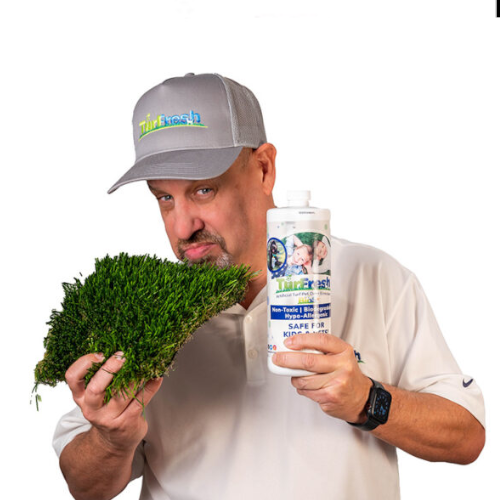

John Pla is the owner of TurFresh and an expert with over 20 years of experience in artificial turf cleaning and maintenance. John’s passion for sustainability, community impact, and innovative solutions has made him a trusted figure in the artificial grass industry and beyond.