
Quick Answer:
Power broom artificial turf by inspecting the surface first, then making slow, even passes against the grain with light pressure. Always broom against the natural direction the blades lean — this lifts fibers rather than pressing them down. Avoid seams, edges, and wet turf. Power brooming every few months, or after heavy use, keeps turf upright, clears trapped debris, and redistributes infill so the surface drains better and lasts longer. When in doubt, a professional service protects warranties and prevents avoidable damage.
TurFresh power brooming restores turf fibers in one professional visit.
Industry-grade equipment, correct technique, and no risk to seams or warranties. Pet safe the same day.
✔ Pet Safe✔ Eco Friendly✔ 20+ Years of Experience✔ 30-Day Guarantee
Key Takeaways
🔑 Power brooming restores turf appearance and function by lifting fibers, clearing trapped debris, and redistributing infill. Even clean turf can look worn if blades are flattened from foot traffic, pets, or furniture. Power brooming addresses appearance and drainage at the same time.
🔑 Inspection comes before the broom touches the surface. Loose seams, lifted edges, worn areas, and exposed backing must be identified first. Running a power broom over unrepaired damage worsens it — sometimes beyond DIY repair.
🔑 Always broom against the grain — the direction opposite to the natural lean of the blades. Brooming with the grain presses fibers further down. Brooming against it separates and lifts them.
🔑 Limit power brooming to every few months or after heavy use. Over-brooming splits or frays blades over time. Spot-treating only the flattened zones — rather than grooming the entire yard every time — extends fiber life significantly.
🔑 Never power broom wet turf. Wet infill clumps during brooming, creating uneven spots and low areas that are difficult to correct without re-grooming once dry.
What is a power broom for artificial grass?
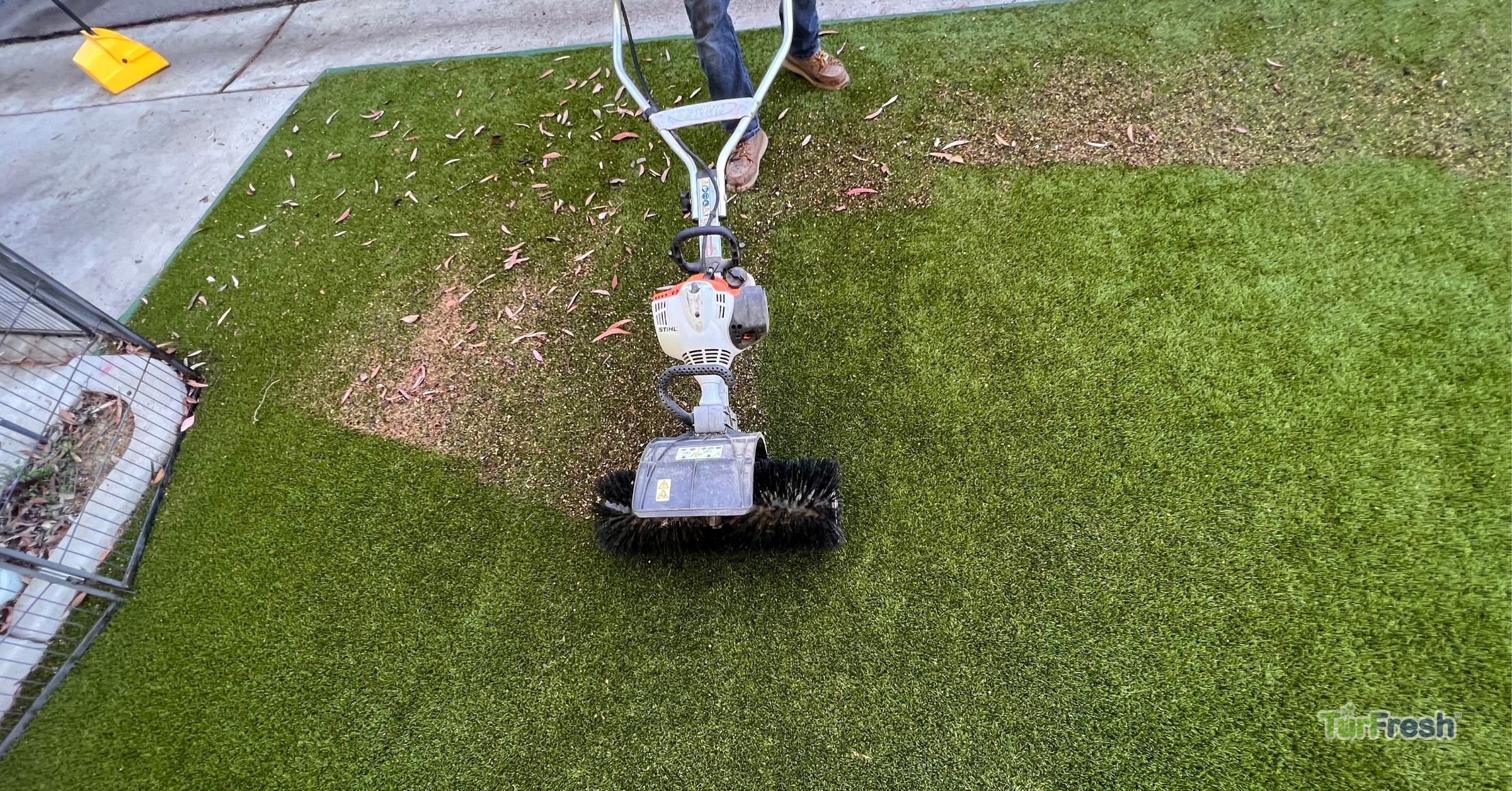
A power broom is a motorized brush designed to lift artificial turf blades and redistribute infill evenly. Unlike a manual broom or rake, it uses rotating bristles to restore the turf's upright look while loosening and removing debris such as pet hair and organic material.
Power brooms are commonly electric, making them quieter and cleaner to operate than gas-powered options. Some home-use models feature wide brush heads to cover more surface area quickly. The TurFresh power broom uses two 6-inch bristle brushes and is designed to be safe for residential turf maintenance.
Why is power brooming important for artificial turf?
Power brooming prevents matting and helps turf look and function like it should. Even with regular cleaning, turf fibers can flatten from foot traffic, pets, furniture, and frequent activity — making the lawn look worn and reducing performance.
Power brooming helps to:
✔ Lift crushed or matted turf blades for a fuller, more natural look
✔ Remove trapped debris that builds up in the turf canopy
✔ Redistribute infill so fibers stay supported and the surface stays even
✔ Improve drainage by reducing buildup that can block water flow
💡 Pro tip: Installers often power broom at the end of an installation, but repeating the process every few months helps keep turf looking newer for longer.
How to safely power broom artificial grass: step by step
Step 1: Inspect the turf first
Inspect the turf to find blade direction, loose seams, lifted edges, and worn areas before the broom touches the surface. This reduces the risk of snagging, wrinkling, or pulling fibers in weak spots.
• Identify the direction the blades naturally lean
• Look for loose seams or edges that could catch on the broom
• Note any damaged or worn blades and treat these areas gently
• Check for melted or hardened fiber clusters — fire pit and grill damage creates fused spots that must never be power broomed
Step 2: Prepare the area
Remove large debris and clear the space for safe operation. Power brooming works best when the turf surface is free of sticks, rocks, toys, and anything that could jam the bristles.
• Remove larger debris by hand
• Keep children and pets away from the area
• Read the power broom instructions if it is your first time using the tool
Step 3: Broom against the grain in slow, even passes
Broom against the grain — the direction opposite to how the blades naturally lean. This lifts and separates fibers instead of pressing them down. Keep the broom moving at all times.
• Always broom against the natural blade direction
• Start at one edge and work across the area in overlapping passes
• Move slowly and consistently so you do not overwork one spot
• Avoid running the broom over loose seams or edges until repaired
Step 4: Establish a brooming frequency
Most turf only needs power brooming every few months or after heavy use. Over-brooming stresses fibers, especially in high-traffic areas.
➡️ Every few months for routine grooming
➡️ After events, heavy foot traffic, or visible matting
➡️ Spot-treat high-traffic zones when needed instead of brooming the entire lawn every time
What happens if you power broom artificial turf too much?
Over-brooming can split or fray blades, increase matting, and potentially void product warranties. The bristles are designed to lift fibers, but excessive frequency or aggressive pressure wears down turf over time.
• Use light pressure and let the machine do the work
• Keep the broom moving and never hover in one spot
• Groom based on turf condition, not a rigid calendar
💡 Tip for high-traffic zones: If one path gets flattened more than the rest, groom only that section instead of the entire yard.
The most common power broom mistakes — and how to avoid them
⚠️ Mistake 1: Skipping inspection. Running the broom over loose seams or damaged areas without checking first snags the backing and worsens existing problems. Always inspect before starting.
⚠️ Mistake 2: Brooming with the grain. This presses fibers down rather than lifting them. Check blade direction first, then broom against it.
⚠️ Mistake 3: Using too much pressure. Excessive pressure pulls fibers, creates visible wear lines, or damages turf in weak zones. Use a light, steady grip and allow the bristles to do the work.
⚠️ Mistake 4: Over-brooming one spot. Staying in one area for too long can overheat or overwork turf fibers. Keep the broom moving in consistent, overlapping passes.
⚠️ Mistake 5: Ignoring manufacturer guidelines. Ignoring care instructions can cause avoidable damage or warranty issues. Follow the turf manufacturer's recommendations for grooming frequency, infill type, and maintenance steps.
⚠️ Mistake 6: Power brooming wet turf. Wet turf leads to clumped infill and uneven results, including ruts or low spots. Wait until the turf is completely dry after rain or cleaning.
⚠️ Mistake 7: Rushing the process. Moving too quickly creates uneven grooming, leaving some areas flattened while others are overworked. Slow passes with slight overlap produce the most consistent finish.
Quick checklist to avoid every mistake:
✅ Inspect before every session and repair damage first
✅ Broom against the grain with light pressure
✅ Groom only as needed based on matting and traffic
✅ Follow manufacturer guidance to protect warranties
✅ Wait until turf is completely dry for clean, even results
DIY power brooming vs. professional service
DIY power brooming can work for routine touch-ups. Professional service is safer for valuable turf, warranty-protected installations, or persistent issues.
DIY benefits:
• Cost savings after rental or equipment purchase
• Immediate access for quick touch-ups
• More control over timing and frequency
DIY risks:
• Damaged fibers from aggressive pressure or repeated passes
• Missed seams, edges, or worn areas that should be addressed first
• A learning curve with heavier equipment and unfamiliar handling
💡 DIY tip: Start on a low setting and test a small corner first before grooming the entire yard.
Professional benefits:
• Trained technicians who identify turf issues before they become expensive repairs
• Correct technique and equipment settings for safe grooming
• Comprehensive care beyond brooming: inspection, seam repair, infill top-up, odor treatment
Professional power brooming protects your turf and your warranty.
TurFresh handles grooming, inspection, infill redistribution, and odor control in one visit. Over 150,000 services completed. Pet safe the same day.
✔ Pet Safe✔ Eco Friendly✔ 20+ Years of Experience✔ 30-Day Guarantee
What is included in a professional power brooming service?
Professional turf maintenance typically combines power brooming with inspection, minor corrections, and deeper cleaning steps.
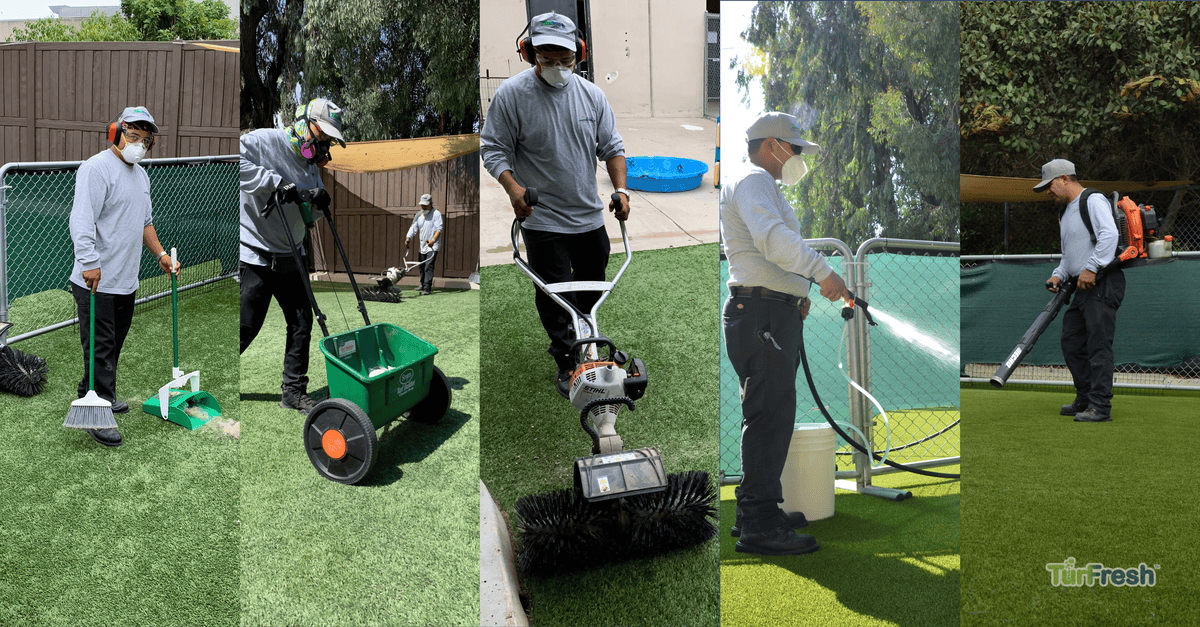
A professional visit typically includes:
➡️ Detailed inspection to identify issues before work begins
➡️ Power brooming with industry-standard equipment
➡️ Tucking loose seams and correcting minor problem areas
➡️ Replenishing infill where needed
➡️ Deep cleaning for odor and stain removal
➡️ Full debris removal and edge detailing
Complete Guide
📖 5 Maintenance Tips to Extend the Life of Your Artificial Turf — the complete care schedule: debris, brushing, pet waste, infill, and professional cleaning frequency.
Frequently Asked Questions
How do I know if my artificial turf needs power brooming?
Your turf likely needs power brooming if the blades look flattened, the surface feels compacted, or debris and pet hair are trapped in the fibers. If high-traffic areas look visibly matted compared to the rest of the lawn, grooming can restore lift and evenness.
Can power brooming improve drainage on artificial grass?
Yes. Power brooming loosens trapped material and keeps the surface clear so water flows through as designed. It also redistributes infill, which supports the turf structure and helps prevent uneven low spots.
Is it safe to power broom artificial turf after installation?
Power brooming is commonly used right after installation to stand fibers up and level infill. If you are unsure about timing or infill type, follow the installer's guidance so the turf is not stressed before it settles.
What direction should you broom artificial turf?
Broom against the grain — meaning against the direction the blades naturally lean. This lifts fibers instead of pressing them down and helps restore the turf's upright appearance.
Can power brooming damage artificial grass?
Yes, if done incorrectly. Using excessive pressure, over-brooming one area, or running the broom over loose seams or edges can cause damage. Using light pressure, keeping the broom moving, and inspecting first significantly reduces risk.
Should you power broom the whole yard or only spot areas?
Spot grooming is often enough for walkways, play zones, and pet paths where turf mats down most. Full-yard brooming every few months can help maintain a uniform look, but it is not always necessary.
What should you do if your turf looks uneven after power brooming?
Let the turf dry fully, then make slow, overlapping passes against the grain to even the surface. Uneven results after grooming are usually caused by wet infill, rushed passes, or inconsistent overlap.
When should you hire a professional for power brooming?
Professional service makes sense when turf has loose seams, visible wear zones, warranty concerns, persistent matting that DIY grooming does not resolve, or when the installation has not been professionally serviced in over 12 months.
Share

John Pla is the owner of TurFresh and an expert with over 20 years of experience in artificial turf cleaning and maintenance. John’s passion for sustainability, community impact, and innovative solutions has made him a trusted figure in the artificial grass industry and beyond.