
Artificial turf cleaning is low maintenance, but it still needs occasional grooming to stay upright, clean, and even. Power brooming is one of the most effective ways to lift matted turf blades, remove debris, and redistribute artificial turf infill so your lawn keeps its natural look and performs well over time.
TL;DR
Power brooming fluffs artificial turf fibers, clears trapped debris, and levels infill so the turf looks fuller, drains better, and lasts longer. Use light pressure, move in slow passes against the grain, and avoid seams or damaged areas. When in doubt, a professional service can protect warranties and prevent avoidable turf damage.
Quick Answer:
Power broom artificial turf by inspecting the surface first, then making slow, even passes against the grain with light pressure, avoiding seams and wet turf so you lift fibers without damaging the backing or blades.
What is a power broom for artificial grass?
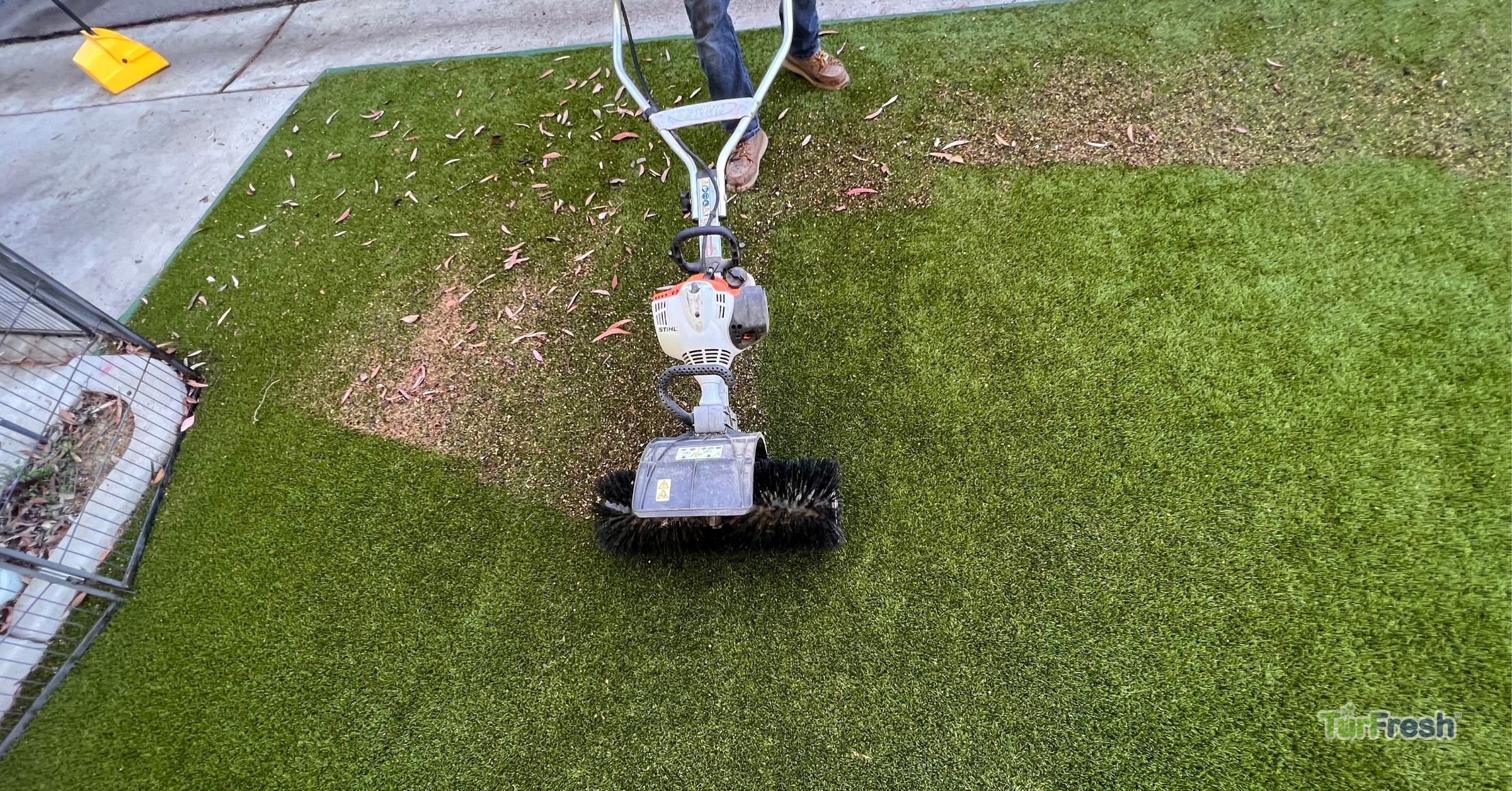
A power broom is a motorized brush designed to lift artificial turf blades and redistribute infill evenly.
Unlike a manual broom or rake, it uses rotating bristles to restore the turf’s upright look while loosening and removing debris such as pet hair and organic material.
Power brooms are commonly electric, which makes them quieter and cleaner to operate than gas-powered options. Some home-use models feature wide brush heads to cover more surface area quickly. For example, the TurFresh power broom uses two 6-inch bristle brushes and is designed to be safe for residential turf maintenance.
Why is power brooming important for artificial turf?
Power brooming is important because it prevents matting and helps turf look and function like it should.
Even with regular cleaning, turf fibers can flatten from foot traffic, pets, furniture, and frequent activity, which can make the lawn look worn and reduce performance.
Power brooming supports turf health and appearance by helping to:
✔ Lift crushed or matted turf blades for a fuller, more natural look
✔ Remove trapped debris that can build up in the turf canopy
✔ Redistribute infill so fibers stay supported and the surface stays even
✔ Improve drainage by reducing buildup that can block water flow
💡 Pro tip: Installers often power broom at the end of an installation, but repeating the process every few months helps keep turf looking newer for longer.
How do you safely power broom artificial grass?
You can safely power broom artificial grass by inspecting first, cleaning the surface, and brooming in controlled passes with light pressure.
The goal is to lift fibers and level infill without stressing seams, edges, or the turf backing.
Step 1: How do you inspect turf before power brooming?
Inspect the turf to find blade direction, loose seams, lifted edges, and worn areas before the broom touches the surface.
This reduces the risk of snagging, wrinkling, or pulling fibers in weak spots.
Before starting:
• Identify the direction the blades naturally lean
• Look for loose seams or edges that could catch on the broom
• Note any damaged or worn blades and treat these areas gently
Step 2: How do you prepare the area before using a power broom?
Prepare the area by removing large debris and clearing the space for safe operation.
Power brooming works best when the turf surface is free of sticks, rocks, toys, and anything that could jam the bristles.
Do this first:
• Remove larger debris by hand
• Keep children and pets away from the area
• Read the power broom instructions if it is your first time using the tool
Step 3: What is the correct power brooming technique?
The correct technique is to broom against the grain in slow, even passes while keeping the broom moving.
Brooming against the grain lifts and separates fibers instead of pressing them down.
For best results:
• Always broom against the natural blade direction
• Start at one edge and work across the area in overlapping passes
• Move slowly and consistently so you do not overwork one spot
• Avoid running the broom over loose seams or edges until repaired
Step 4: How often should you power broom artificial turf?
Most turf only needs power brooming every few months or after heavy use.
Overdoing it can stress the fibers, especially in high-traffic areas.
A practical schedule:
➡️ Every few months for routine grooming
➡️ After events, heavy foot traffic, or visible matting
➡️ Spot-treat high-traffic zones when needed instead of brooming the entire lawn every time
What happens if you power broom artificial turf too much?
Over-brooming can split or fray blades, increase matting, and potentially void product warranties.
The bristles are designed to lift fibers, but excessive frequency or aggressive pressure can wear down turf over time.
Avoid over-brooming by:
• Using light pressure and letting the machine do the work
• Keeping the broom moving and never hovering in one spot
• Grooming based on turf condition instead of a rigid calendar
Tip for high-traffic zones: If one path gets flattened more than the rest, groom only that section instead of the entire yard.
What are the most common power broom mistakes, and how do you avoid them?
The most common mistakes are skipping inspection, brooming with the grain, using too much pressure, and brooming when turf is wet.
Avoiding these issues protects turf fibers, seams, and overall lawn lifespan.
⚠️ Mistake 1: Skipping a full inspection
Skipping inspection increases the risk of snagging seams, tearing backing, or worsening existing damage.
Always check for loose seams, lifted edges, exposed backing, and worn areas before brooming.
⚠️ Mistake 2: Brooming with the grain
Brooming with the grain flattens the fibers further and reduces the lift you are trying to achieve.
Check blade direction first, then broom against it.
⚠️ Mistake 3: Using too much pressure
Too much pressure can pull fibers, create visible wear lines, or damage turf in weak zones.
Use a light, steady grip and allow the bristles to do the work.
⚠️ Mistake 4: Over-brooming one spot
Staying in one place for too long can overheat or overwork the turf fibers in that area.
Keep the broom moving in consistent, overlapping passes.
⚠️ Mistake 5: Ignoring manufacturer guidelines
Ignoring care instructions can cause avoidable damage or warranty issues.
Follow the turf manufacturer’s recommendations for grooming frequency, infill type, and maintenance steps.
⚠️ Mistake 6: Power brooming wet turf
Wet turf can lead to clumped infill and uneven results, including ruts or low spots.
Wait until the turf is dry after rain or cleaning.
⚠️ Mistake 7: Rushing the process
Moving too quickly creates uneven grooming, leaving some areas flattened while others are overworked.
Slow passes with slight overlap produce the most consistent finish.
How can homeowners avoid these mistakes every time?
Homeowners can avoid most power broom problems by using a simple routine: inspect, groom correctly, and adjust frequency based on turf condition.
This approach keeps the turf upright without unnecessary wear.
Use this checklist:
✅ Inspect before every session and repair damage first
✅ Broom against the grain with light pressure
✅ Groom only as needed based on matting and traffic
✅ Follow manufacturer guidance to protect warranties
✅ Wait until turf is dry for clean, even results
Should you power broom artificial turf yourself or hire a professional?
DIY power brooming can work for routine touch-ups, but professional service is often safer for valuable turf, warranty-protected installations, or persistent issues.
The right choice depends on comfort with equipment, the turf’s condition, and how much risk is acceptable.
What are the advantages of DIY power brooming?
DIY power brooming can save money and allows fast maintenance on your own schedule.
For homeowners who enjoy hands-on upkeep, it can be a convenient way to keep turf fibers upright between deeper cleanings.
Common DIY benefits:
• Cost savings after rental or equipment purchase
• Immediate access for quick touch-ups
• More control over timing and frequency
What are the risks of DIY power brooming?
DIY power brooming carries a higher risk of turf damage if technique or settings are wrong.
Common issues include over-brooming, pressing too hard, snagging seams, and missing problems that should be repaired first.
Common DIY risks:
• Damaged fibers from aggressive pressure or repeated passes
• Missed seams, edges, or worn areas that should be addressed first
• A learning curve with heavier equipment and unfamiliar handling
💡 DIY tip: Start on a low setting and test a small corner first before grooming the entire yard.
Why hire a professional for power brooming?
Professional power brooming reduces the chance of damage and often includes broader turf care beyond grooming.
Trained technicians can spot seam problems, worn areas, and infill issues before they become expensive repairs.
Professional benefits often include:
• Trained technicians who can identify turf issues early
• Correct technique and equipment settings for safe grooming
• Comprehensive care beyond brooming, depending on the service
What is included in professional power brooming and turf maintenance?
Professional turf maintenance typically combines power brooming with inspection, minor corrections, and deeper cleaning steps.
A service like TurFresh uses a multi-step process that can include more than grooming alone.
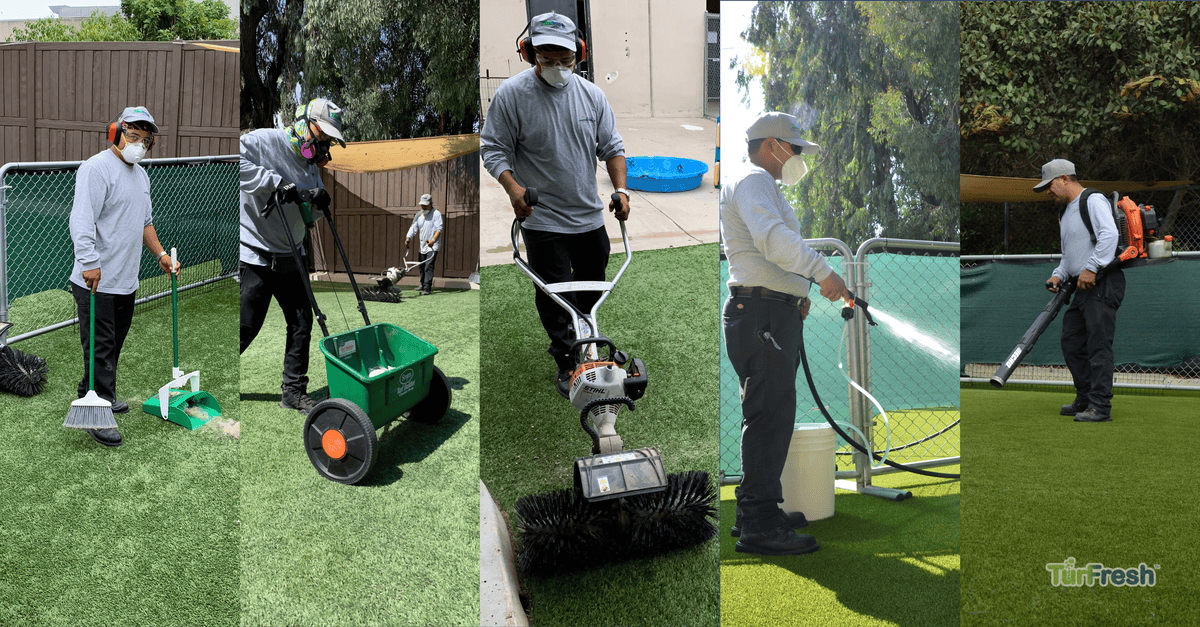
A professional visit often includes:
➡️ Detailed inspection to identify issues before work begins
➡️ Power brooming with industry-standard equipment
➡️ Tucking loose seams and correcting minor problem areas
➡️ Replenishing infill where needed
➡️ Deep cleaning for odor and stain removal
➡️ Full debris removal and edge detailing
Tip for busy households: Professional maintenance can be scheduled seasonally so the turf stays consistent without homeowners needing to handle equipment.
What are the key takeaways for power brooming artificial turf?
Power brooming keeps artificial turf upright, clean, and supported when done with the right technique and frequency.
The safest results come from light pressure, slow passes against the grain, using appropriate artificial turf cleaning products, and avoiding damaged seams or wet conditions.
Key points to keep in mind:
🔑 Power brooming restores turf appearance and function by lifting fibers and removing debris
🔑 Inspection comes first so seams, edges, and worn areas are protected
🔑 Broom against the grain using gentle pressure and steady movement
🔑 Limit brooming to every few months or after heavy use to avoid fiber wear
🔑 Professional services can reduce risk and provide more complete turf care
💡 Tip: If turf looks flat in one walkway, groom only that strip instead of brooming the entire yard.
💡 Practical tips that can be highlighted as callouts
✅ Tip: Avoid grooming right after rain because wet infill can clump and create uneven spots.
✅ Tip: If seams are lifting, fix them before grooming so the broom does not snag and worsen the problem.
✅ Tip: Slow passes with light overlap produce a more uniform finish than quick sweeping.
Frequently Asked Questions
How do I know if my artificial turf needs power brooming?
• Your turf likely needs power brooming if the blades look flattened, the surface feels compacted, or debris and pet hair are trapped in the fibers.
If high-traffic areas look visibly matted compared to the rest of the lawn, grooming can restore lift and evenness.
Can power brooming improve drainage on artificial grass?
• Power brooming can help drainage by loosening trapped material and keeping the surface clear so water flows through as designed.
It also helps redistribute infill, which supports the turf structure and helps prevent uneven low spots.
Is it safe to power broom artificial turf after installation?
• Power brooming is commonly used right after installation to stand fibers up and level infill.
If you are unsure about timing or infill type, follow the installer’s guidance so the turf is not stressed before it settles.
What direction should you broom artificial turf?
• You should broom against the grain, meaning against the direction the blades naturally lean.
This lifts fibers instead of pressing them down and helps restore the turf’s upright appearance.
Can power brooming damage artificial grass?
• Power brooming can damage turf if you use excessive pressure, over-broom one area, or run the broom over loose seams or edges.
Using light pressure, steady movement, and inspecting first significantly reduces risk.
Should you power broom the whole yard or only spot areas?
• Spot grooming is often enough for walkways, play zones, and pet paths where turf mats down most.
Full-yard brooming every few months can help maintain a uniform look, but it is not always necessary.
Uneven turf after grooming is often caused by wet infill, rushed passes, or inconsistent overlap.
What should you do if your turf looks uneven after power brooming?
• Let the turf dry fully, then make slow, overlapping passes against the grain to even the surface.
Ready for an Odor-Free Yard?
📞 Call (855) 444-8873 or 📱 text (714) 709-2551 to get started.
Professional Artificial Grass Cleaning
Turf Cleaning Products | Deep Clean Your Turf and Infill
Give your family and pets the clean, fresh outdoor space they deserve.
👉 New customers receive 10% OFF
Share

John Pla is the owner of TurFresh and an expert with over 20 years of experience in artificial turf cleaning and maintenance. John’s passion for sustainability, community impact, and innovative solutions has made him a trusted figure in the artificial grass industry and beyond.