How to Rake Leaves Off Artificial Grass Without Damage
Jan 19, 2021 · 11 min read · By John Pla, Founder of TurFresh
Quick Answer: The best rake for artificial grass is a plastic, rubber, or turf-specific rake with soft, flexible tines. Metal rakes can snag and damage synthetic fibers. Use light pressure, short strokes, and finish with cross brushing against the grain to lift flattened blades. For pet hair mixed with debris, a turf comb like TurfComb works better than a standard leaf rake.
A rake gets the surface. TurFresh gets the infill.
When seasonal buildup compacts the infill layer, no rake can fix it. TurFresh professional cleaning restores what DIY cannot reach.
Schedule Your Turf Cleaning✔ Pet Safe✔ Eco Friendly✔ 20+ Years Experience✔ 30-Day Guarantee
Can You Rake Artificial Turf Without Damaging It?

Yes, you can rake artificial turf safely when you use the right tool and apply light pressure. Synthetic fibers are durable but not indestructible. The two most common causes of rake-related damage are metal tines that snag fibers and excessive downward pressure that pulls backing away from the infill layer.
A turf-safe rake with a skimming motion removes leaves without either problem. The technique matters as much as the tool.
If leaves fall daily during autumn, do quick light passes every two to three days rather than letting them accumulate and pack down under foot traffic.
Why Should You Remove Large Debris Before Raking?
You should remove large debris first because sticks, twigs, and pinecones can catch on rake tines and tear fibers or pull up infill with each stroke.
Before raking, walk the area and pick up anything larger than a leaf by hand. This takes about 60 seconds on a typical residential yard and makes the raking pass significantly faster and safer. Debris that sits on the turf for days also presses fibers flat, accelerating the matting process in high-traffic areas.
How Do You Rake Leaves Off Artificial Grass the Right Way?
👉 Step 1: Pick up large debris by hand before starting.
👉 Step 2: Start at one end of the yard and work in sections toward a cleared zone.
👉 Step 3: Keep the rake angled so tines skim the surface rather than dig into it.
👉 Step 4: Use short, light strokes rather than long aggressive pulls.
👉 Step 5: Bag or move leaf piles as you go so they do not sit and compress fibers.
👉 Step 6: Finish with cross brushing against the grain to lift any flattened blades.
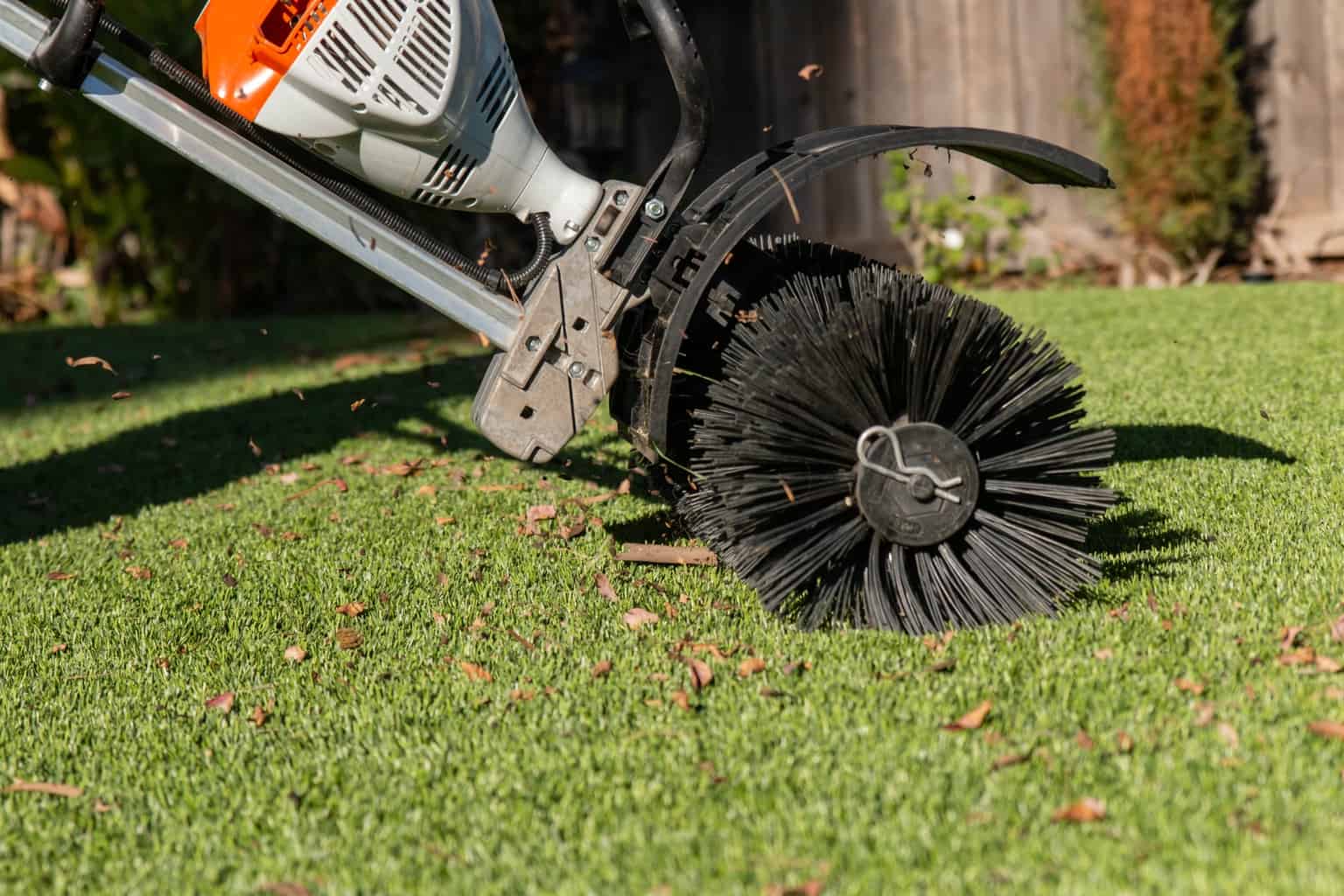
The goal is to lift and gather leaves, not scrub the turf. Think of the motion as sweeping rather than raking.
Work in small sections so you are not dragging heavy leaf piles across already-cleaned areas. Moving debris in stages keeps the process efficient and reduces the number of passes each zone needs.
How Do You Remove Leaves That Are Stuck or Wet on Turf?
Wet leaves cling to fibers and compress into the surface in a way dry leaves do not. For stuck or wet leaves:
✅ Reduce pressure and shorten your stroke length
✅ Break the area into smaller zones and clear one at a time
✅ Switch to a turf comb when leaves are mixed with fine debris or pet hair
✅ Follow every wet-leaf cleanup with cross brushing to restore fiber stand
Do not force a heavy rake through a matted wet area. Light passes combined with brushing will clear it faster and with less wear on the turf than a single aggressive pass.
Why Is Cross Brushing Important After Raking Artificial Turf?
Cross brushing lifts fibers that leaves and foot traffic have pressed flat, restoring the full, upright look that makes artificial grass appear natural. Without it, raking clears debris but leaves the surface looking matted and worn.
How to cross brush correctly
👉 Use a stiff-bristle broom, turf rake, or TurfComb
👉 Brush against the grain of the fibers using firm, steady passes
👉 Focus on areas where leaves piled up and under high-traffic zones like seating areas and pathways
👉 Repeat across the full area until fibers stand upright
Cross brushing is the finishing step that separates a cleaned yard from a restored yard. It takes an extra five to ten minutes and makes a visible difference.
Rubber vs. Plastic vs. Bamboo vs. Power Rake: Which Should You Choose?
Choose a plastic rake if:
➧ You have a small to medium yard with dry leaf coverage ➧ You want an affordable all-purpose option for regular maintenance ➧ Leaves are loose and not mixed with pet hair or fine debrisChoose a rubber rake if:
➧ You are dealing with wet or clinging leaves after rain ➧ You want the softest possible contact with fibers ➧ You have a newer turf installation and want maximum protectionChoose a bamboo rake if:
➧ You have a large area to cover and prefer a lightweight tool ➧ Leaves are dry and coverage is even across the yard ➧ You prefer natural materials over synthetic optionsChoose a turf comb or power groomer if:
➧ Leaves are mixed with pet hair, pine needles, or fine debris ➧ Fibers are matted in multiple zones and need restoration ➧ You want to clean and rebloom the turf in a single session ➧ You manage a larger yard and want to reduce manual effortTurFresh TurfComb and TurfGroomer are designed specifically for synthetic turf and available in the TurFresh online store. Both are built to clean without damaging fibers or disturbing infill.
When Should You Skip DIY and Call a Turf Cleaning Professional?
A rake handles surface debris. It cannot address what accumulates in the infill layer over a full leaf season. When leaves decompose on turf, fine organic particles work their way through the fibers and into the infill, compacting it and creating the conditions for bacteria and odor to develop below the surface.
Signs that professional cleaning is the right next step
⚠️ Fibers stay flat after cross brushing, even in areas with good infill coverage
⚠️ Odor develops or returns quickly after rinsing, particularly in shaded areas where leaves accumulated
⚠️ The yard looked worn or dull even before leaf season started
⚠️ The turf has not had professional service in over 12 months and sees regular foot traffic
⚠️ You have heavy tree coverage that drops leaves through multiple seasons each year
TurFresh TurfClean reaches the infill and backing layer where seasonal organic buildup lives. Professional cleaning resets the surface after heavy leaf fall so routine maintenance stays effective through the rest of the year.
Reset your turf before the buildup becomes a bigger problem.
TurFresh professional cleaning gets to the infill layer where decomposed leaf particles compact and cause odor. One service resets what a full season of raking cannot.
Get a Free Quote✔ Pet Safe✔ Eco Friendly✔ 20+ Years Experience✔ 30-Day Guarantee
Key Takeaways
🔑 Use a plastic, rubber, bamboo, or turf-specific rake. Never use a metal rake with sharp tines
🔑 Skim the surface with light pressure and short strokes rather than aggressive pulling
🔑 Remove large debris by hand before raking to protect fibers from snagging
🔑 Always finish with cross brushing to restore fiber stand after leaf removal
🔑 For pet hair mixed with leaves, a turf comb outperforms any standard leaf rake
🔑 When fibers stay flat and odor develops after leaf season, the issue is in the infill and requires professional cleaning
Frequently Asked Questions
What is the best rake for artificial grass?
The best rake for artificial grass is a plastic, rubber, or turf-specific rake with soft, flexible tines. Plastic rakes work well for everyday dry leaf removal. Rubber rakes are ideal for wet conditions. A turf comb like TurfComb is the best option when leaves are mixed with pet hair or fine debris, as it penetrates the fiber layer without damaging the backing.Can you use a metal rake on artificial grass?
Metal rakes with sharp or rigid tines can snag synthetic fibers and cause damage, particularly on repeated passes. Plastic, rubber, bamboo, or turf-specific rakes are the safer options. If you only have a metal rake, use very light pressure and inspect the surface after each pass for snagging.How do you remove leaves from artificial grass without damaging it?
Use a turf-safe rake with light pressure and short strokes angled to skim the surface. Remove large debris by hand first, work in sections toward a cleared zone, and finish with cross brushing to lift any flattened fibers.What is cross brushing and why does it matter for artificial grass?
Cross brushing means brushing the turf fibers against their natural grain to lift them back to an upright position. Leaves, foot traffic, and seasonal weather press fibers flat over time. Cross brushing after raking restores the full, natural appearance of the turf and is the step most homeowners skip.What is the difference between a turf rake and a regular leaf rake?
A regular leaf rake is designed to move debris across a surface. A turf rake or turf comb is designed to penetrate the fiber layer and pull out fine debris, pet hair, and particles embedded near the infill without disturbing the infill itself or damaging fibers.How do you remove wet or stuck leaves from artificial turf?
For wet or stuck leaves, reduce pressure and shorten your stroke. Work in smaller sections and switch to a turf comb if leaves are matted into the fibers. Follow with cross brushing after clearing each section to restore fiber stand before moving on.Can a leaf blower be used on artificial grass instead of a rake?
Yes, a leaf blower works well for dry leaves on artificial grass and is faster than raking for large areas. Use a low setting to avoid displacing infill. A leaf blower is not effective on wet leaves or debris mixed with pet hair. For those situations, a turf comb or rake is still needed.How often should you rake artificial grass in autumn?
During heavy leaf fall, rake every two to three days rather than letting leaves accumulate. Packed-down leaves under foot traffic accelerate fiber matting and allow fine organic particles to work into the infill. Short frequent sessions are easier on the turf than one heavy cleanup.Why does artificial grass still look matted after raking?
If fibers stay flat after raking, the infill below is likely compacted or depleted. Raking removes surface debris but does not address the infill layer. Cross brushing restores fibers temporarily, but if the matting returns quickly, the infill needs redistribution or professional cleaning to fully reset.When should you call a professional turf cleaner after leaf season?
Call a professional when fibers stay flat after cross brushing, when odor develops in areas where leaves accumulated, when the turf has not had a deep clean in over 12 months, or when you have heavy tree coverage that drops leaves across multiple seasons each year.