
Your turf looked great right after installation because the installers used a power broom to push every blade perfectly upright. Now, a year or two later, high-traffic areas are flat, the lawn has that pressed-down look, and you are wondering if a power broom is what you need or if a regular stiff brush will do the same job. This guide answers that question, covers how to use a power broom correctly on synthetic grass, and tells you what to avoid so you do not damage the turf you just paid to have installed.
TL;DR
A power broom for artificial turf lifts flattened blades, loosens compacted infill, and removes trapped debris that regular raking misses. For small yards or light matting, a stiff-bristle push broom does the job. For larger areas, significant matting, or pet hair buildup, a power broom is faster and more effective. Use light pressure, broom against the grain, and avoid metal bristles, wet turf, and seam areas.
Quick Answer
Use a power broom on artificial turf when fibers look matted, debris is stuck in the blades, or infill feels compacted underfoot. Work in slow, overlapping passes against the grain with light pressure. Avoid over-brooming, which wears fibers faster.
TurFresh TurfBloom restores blades without the risk of DIY damage.
Professional power brooming, infill redistribution, and optional odor treatment in one visit. Most lawns look dramatically better within 24 hours.
Schedule Your TurfBloom Service
✔ Pet Safe✔ Eco Friendly✔ 20+ Years of Experience✔ 30-Day Guarantee
Do you actually need a power broom for artificial turf?
Not always. A stiff-bristle push broom handles light maintenance well for small yards and early-stage matting. Here is how to decide:
A push broom is enough when:
✔ The matted area is small, like one walkway or a single pet zone
✔ Fibers respond after a few passes with a stiff synthetic-bristle broom
✔ You are doing routine weekly upkeep, not correcting months of compaction
✔ Your yard is under 200 square feet
A power broom is worth it when:
✔ Matting is visible across most of the lawn, not just one spot
✔ Infill feels hard or uneven underfoot in multiple areas
✔ Pet hair is stuck in the blades and a hand rake is not clearing it
✔ The lawn is 400+ square feet and manual brooming takes too long
✔ You want results consistent with how the turf looked after installation
What is a power broom used for on artificial turf?
A power broom lifts flattened turf fibers back to an upright position, loosens and redistributes compacted infill, and frees trapped debris that regular raking misses.
Power brooming helps with three things that hand tools cannot match at scale:
• Fiber lift in high-traffic zones where blades have been pressed flat by foot traffic, pets, or furniture
• Infill redistribution so the surface stays consistent and supportive underfoot
• Deep debris removal including pet hair, organic matter, and fine particles that settle between blades
Tip: If the turf looks shiny or slick in walkways and gathering areas, the blades are lying down and grooming is overdue.
How does a power broom work on synthetic grass?
A power broom uses rotating bristles mounted on a drum to agitate the top layer of turf, standing fibers back up while moving infill and debris toward the surface where they can be collected or redistributed.
The TurFresh cordless power broom uses two 6-inch wide bristle brushes and runs on electric power, which makes it quieter and cleaner than gas-powered options. For larger installations, gas-powered units like the Stihl KombiSystem with a turf brush attachment are a popular choice among installers and maintenance professionals. The Stihl setup requires the 24-inch bristle brush attachment and wheel kit for turf use.
Most results come from technique, not force. Light pressure and slow, steady passes typically outperform pressing down and scrubbing.
Tip: Use cross-brushing (two passes in perpendicular directions) when matting is visible across a larger area for a more uniform result.
How to use a power broom on artificial turf correctly
The right approach is to prepare the surface first, then work in controlled passes without dwelling in one spot.
Step-by-step workflow:
👉 1. Remove large debris first. Leaves, sticks, and pet waste should come out before the power broom touches the surface. Brooming over debris grinds it into the turf rather than removing it.
👉 2. Inspect seams and edges. Loose seams can lift if the broom catches an edge. Identify any problem areas before you start so you can broom around them.
👉 3. Adjust brush height. The bristles should contact the fibers, not the backing. If the broom is kicking up infill aggressively, the brush is set too low.
👉 4. Broom against the grain. Work in the opposite direction of the natural blade lean to lift fibers most effectively.
👉 5. Make overlapping passes. Cover each section twice in overlapping rows, then cross-brush if matting is significant.
👉 6. Check infill levels. After brooming, check whether infill looks even. Top up if fibers are sitting too low in any area.
Tip: Always start in a less visible corner to confirm your settings and pressure before moving across the main lawn.
What type of bristles are safe for artificial turf?
Use synthetic or nylon bristles specifically designed for turf. Avoid metal bristles at all costs.
Metal bristles can tear backing, abrade fibers, and cause permanent wear in high-traffic areas. The damage is not always immediately visible but shortens turf lifespan significantly with repeated use.
What to look for:
✔ Synthetic or nylon bristles rated for synthetic turf
✔ Adjustable brush height so you can avoid pressing into the backing
✔ A drum design that distributes bristle contact evenly across the width
What to avoid:
⚠️ Metal bristles or stiff wire brushes of any kind
⚠️ Broom attachments designed for concrete or pavers
⚠️ Any attachment that leaves swirl marks or frayed fibers after one pass
How often should you power broom artificial turf?
Every two to three months is a reasonable baseline for most residential yards, with spot grooming as needed in high-traffic areas between sessions.
Frequency by situation:
• Light use, small yard: 2 to 3 times per year, or when matting is visible
• Active family with kids and pets: every 4 to 8 weeks in high-use zones
• Commercial or sports-style use: interval-based, often tied to hours of surface use rather than calendar time
Over-brooming is a real problem. Using a power broom too frequently or too aggressively wears fibers down faster and can stress the turf backing. If fibers look frayed after a session, reduce pressure and frequency.
Tip: If sand or rubber infill feels hard or uneven underfoot, grooming often helps loosen and level it before it becomes a more significant problem.
Can you power broom wet artificial turf?
No. Brooming wet turf traps debris deeper into the fibers rather than lifting it, and wet infill clumps under bristle pressure instead of redistributing evenly. Always allow the turf to dry before power brooming.
What common mistakes damage artificial turf during power brooming?
The most common mistakes are over-brooming, using the wrong bristles, brooming wet turf, and applying too much pressure in one area.
Mistakes to avoid:
⚠️ Too frequent or aggressive brooming that wears fibers faster than normal use
⚠️ Staying in one spot too long, which creates uneven wear patterns
⚠️ Skipping debris removal first, which grinds grit into the turf surface
⚠️ Using unapproved bristles that abrade or snag fibers
⚠️ Brooming directly over seams or edges where the backing can lift
⚠️ Brooming wet turf after rain or irrigation
Power broom vs. manual brush for artificial turf: which is better?
Neither is universally better. The right tool depends on yard size, severity of matting, and how often you maintain the turf.
| | Manual push broom | Power broom |
|—|—|—|
| Best for | Small yards, routine upkeep, spot treatment | Large areas, significant matting, pet hair removal |
| Cost | Low | $150 to $400+ depending on model |
| Time | More effort per square foot | Faster across large areas |
| Risk of damage | Lower if technique is good | Higher if pressure or bristles are wrong |
| Infill redistribution | Light | More effective |
For most homeowners with yards under 300 square feet and consistent maintenance habits, a quality stiff-bristle push broom is enough. For larger yards or situations where matting has become significant, a power broom pays for itself in time and results.
What is the best power broom for artificial turf?
The best power broom for artificial turf is one designed specifically for synthetic grass with non-metal bristles, adjustable height, and enough power to lift fibers without forcing the brush into the backing.
Options worth considering:
TurFresh cordless power broom — electric, two 6-inch bristle brushes, designed specifically for residential artificial turf maintenance. Quieter and cleaner than gas-powered alternatives.
Stihl KombiSystem with turf brush attachment — the most widely recommended option among installers and professionals. Requires the 24-inch bristle brush attachment and wheel kit for turf use. Higher cost but durable and widely available through Stihl dealers.
Manual alternative — for small yards, a stiff-bristle synthetic broom cross-brushed in two directions achieves similar results to a power broom for light matting at a fraction of the cost.
TurFresh TurfBloom uses professional equipment. No risk to your turf.
Power brooming, infill redistribution, and optional pet odor treatment in one visit. Most yards look dramatically better the same day.
Schedule Your TurfBloom Service
✔ Pet Safe✔ Eco Friendly✔ 20+ Years of Experience✔ 30-Day Guarantee
What does a simple turf maintenance routine look like with power brooming?
A practical cadence that most turf owners can maintain:
Weekly: blow off leaves and debris, spot clean pet zones, remove any solid waste
Monthly (or as needed): rinse and hand-brush high-traffic areas
Every 2 to 3 months: power broom where matting is visible, check infill levels, top up if needed
Once or twice a year: professional deep clean to address infill compaction, odor, and debris below the surface that home maintenance cannot reach
Frequently Asked Questions
Do I need a power broom for artificial turf or will a push broom work?
A push broom with stiff synthetic bristles handles routine upkeep and light matting well for small yards. For larger areas, significant matting across the whole lawn, or heavy pet hair buildup, a power broom is faster and more effective. Most homeowners with yards under 300 square feet and consistent maintenance habits do not need a power broom.
What is the best power broom for artificial turf?
The TurFresh cordless power broom and the Stihl KombiSystem with the 24-inch turf brush attachment are both well-regarded options. The Stihl setup is the most commonly recommended by installation professionals. For small yards, a quality stiff-bristle manual broom is often sufficient.
How often should I power broom artificial grass?
Every two to three months is a reasonable baseline for most residential yards. High-traffic areas with kids and pets may need spot grooming every four to eight weeks. Over-brooming can wear fibers faster, so frequency should be tied to visible matting rather than a fixed schedule.
Can you use a power broom on wet artificial grass?
No. Brooming wet turf traps debris and causes infill to clump rather than redistribute. Always wait for the surface to dry after rain or rinsing before power brooming.
What bristles are safe for artificial turf power brooming?
Synthetic or nylon bristles designed specifically for artificial turf are safe. Metal bristles of any kind can tear the turf backing and abrade fibers permanently.
Can power brooming remove pet hair from artificial grass?
Power brooming loosens pet hair trapped in the fibers effectively, but it works best when paired with debris removal methods like blowing or raking so the loosened material is actually removed from the surface.
Does power brooming redistribute infill evenly?
Yes. Power brooming is one of the most effective ways to loosen and redistribute compacted infill so the surface stays more consistent and fibers stay more upright.
Can you use a power broom on natural grass?
Power brooms designed for synthetic turf use rotating bristles to lift fibers and manage infill, which is a different job than maintaining live grass. Confirm any attachment is rated for synthetic turf use before applying it to artificial grass.
Ready for a Fresh Yard?
📞 Call (855) 444-8873 or 📱 text (714) 709-2551 to get started.
Professional Artificial Grass Cleaning
Turf Cleaning Products | TurfBloom Reblooming Service
Give your family and pets the clean, fresh outdoor space they deserve.
👉 New customers receive 10% OFF
Share
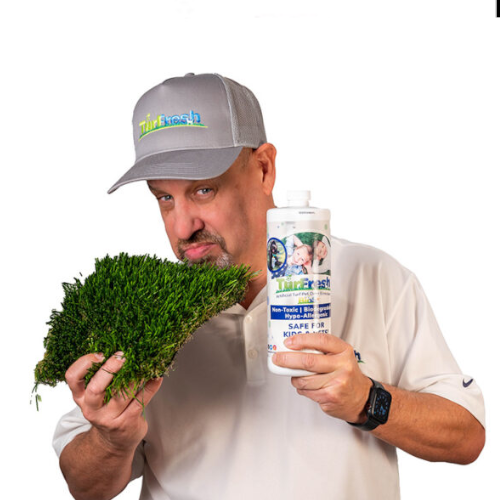

John Pla is the owner of TurFresh and an expert with over 20 years of experience in artificial turf cleaning and maintenance. John’s passion for sustainability, community impact, and innovative solutions has made him a trusted figure in the artificial grass industry and beyond.