
Quick Answer
When to service new artificial turf for the first time: within 60 to 90 days of installation. By then, regular foot traffic has begun compacting the infill and flattening the fibers, both invisible to the naked eye at first. A professional TurfBloom™ service restores upright fiber position, decompacts the infill, and removes early-stage debris before it becomes embedded. Pet owners and high-traffic yards should move that window up to 30 to 45 days. TurfBloom service for a residential lawn typically costs $200 to $600, a small fraction of what deferred maintenance costs later.
Book your first TurfBloom™ service before day 90.
Infill compaction and fiber flattening start within weeks of foot traffic, long before they are visible. A first service at the right time keeps new turf performing like new for years.
✔ Pet Safe✔ Kid Safe✔ 150,000+ Services✔ 30-Day Guarantee
Key Takeaways
📅 Schedule the first professional service at 60 to 90 days, not when something looks wrong. Infill compaction and fiber flattening begin within weeks of regular use, well before either is visible to the naked eye.
🐾 Pet owners should move that window up to 30 to 45 days. Urine compounds bond to infill granules quickly, especially in warm climates, and early service prevents odor from becoming embedded.
💰 A first TurfBloom™ service costs $200 to $600 for most residential lawns. That is a small fraction of the $10,000 to $25,000+ a typical turf installation costs, and considerably less than what deferred maintenance costs later.
🖐️ A simple hand test tells you if service is already overdue. Run your palm against the grain of the fibers. If they do not spring back quickly, infill compaction has already started.
🔤 “First TurfBloom” and “turf reblooming” are not the same thing. First TurfBloom service is preventive care for new turf. Reblooming is restorative work for turf that has already matted or aged. Confusing the two leads to booking the wrong service.

Does New Artificial Turf Actually Need Maintenance?
Yes, even brand-new artificial turf needs maintenance. Most homeowners assume that because turf is synthetic, it takes care of itself. It does not.
Artificial turf is engineered to look and feel like natural grass, but its performance depends on two physical components: the synthetic fibers standing upright, and the infill material distributed evenly between those fibers. Both begin degrading the moment regular use starts.
What Happens to Fibers and Infill Right After Installation?
Within weeks of regular foot traffic, infill granules compact, fibers begin to flatten in high-use zones, and debris starts accumulating at the fiber base, all before any of it becomes visible. During installation the infill, typically crumb rubber, silica sand, or an organic material like cork, is distributed evenly across the turf backing, and the fibers stand fully upright.
Once regular use begins, several things happen simultaneously:
➡️ Infill granules shift and compact under pressure, reducing the cushioning effect and the support that keeps fibers upright.
➡️ Fibers begin to mat and flatten in high-traffic zones such as pathways, play areas, and pet runs.
➡️ Dust, pet dander, airborne pollen, and organic debris accumulate at the fiber base.
➡️ Pet urine, if applicable, begins bonding to infill granules, creating odor compounds that become harder to remove the longer they are left untreated.
📌 None of these issues are visible in the first few weeks. That is exactly why early service matters: it addresses problems before they become visible or permanent.
What Is Turf Infill Decompaction?
Turf infill decompaction is the process of mechanically loosening and redistributing the granular material (sand, crumb rubber, or organic infill) that packs down between turf fibers under foot traffic. Compacted infill loses its cushioning ability and stops supporting fibers in their upright position, which is why decompaction is the core of every TurfBloom™ service.
Decompaction uses specialized power equipment to agitate the infill layer without damaging the fibers or backing above it. It is fundamentally different from surface brushing, which only addresses the fibers you can see and does nothing for the compacted material underneath.
📌 Infill compaction is measurable within the first two to three months of normal residential use, and fiber recovery becomes progressively harder the longer decompaction is delayed.
When Is the Right Time for the First TurfBloom™ Service?
The right time for the first TurfBloom™ service is between 60 and 90 days after installation. This window aligns with the point at which infill compaction and fiber flattening have progressed enough to benefit from professional decompaction, but have not yet caused lasting structural issues.
Why 60 to 90 Days Specifically
The 60 to 90 day benchmark reflects how quickly infill compaction progresses under normal residential use. Infill density increases measurably within the first two to three months, and fiber recovery becomes progressively more difficult the longer decompaction is delayed.
A TurfBloom™ service performed in this window delivers three outcomes:
👉 Infill decompaction: Power brushing redistributes compacted granules, restoring the turf's cushioning and shock absorption.
👉 Fiber revival: Mechanical grooming returns flattened fibers to their original upright position.
👉 Early debris removal: Dust, pet hair, and organic matter are extracted before they bond to fibers or infill.
📌 Think of it as the break-in service for new turf, the equivalent of an early oil change for a new car. You do not wait until there is a problem. You maintain on schedule to prevent one.
Are There Signs Your New Turf Is Ready for Its First Service Earlier?
Yes. Pets, heavy use, and commercial settings accelerate infill compaction and fiber stress, pushing the recommended service window forward to 30 to 45 days. Check for these early indicators:
⚠️ Fibers are visibly flattening or lying sideways in high-traffic areas.
⚠️ The turf feels firmer underfoot than it did when first installed.
⚠️ You have pets that use the lawn daily and you notice odor developing.
⚠️ The installation is in a commercial setting, sports area, or dog run with heavy consistent use.
⚠️ Loose debris is visible at the base of the fibers and cannot be removed by hand.
📌 If your dog has been digging at edges or seams, get that dog digging artificial turf repair completed before the first TurfBloom service, so loose backing is not worsened by grooming equipment.
💡 Pro Tip
Run your hand against the grain of the fibers. If they do not spring back quickly or feel stiff and unresponsive, infill compaction has already begun. Schedule your first TurfBloom™ service within the next two to three weeks.
Is It Normal for New Artificial Turf to Flatten Quickly?
Yes, some fiber flattening in high-traffic areas within the first few weeks is completely normal. Artificial turf fibers respond to repeated compression by bending. Without regular grooming or professional fiber revival, that flattening becomes permanent over time.
A TurfBloom™ service mechanically restores fiber position before the deflection becomes permanent, which is why timing the first service correctly matters more than the flattening itself.
What Does a TurfBloom™ Service Do for Newly Installed Turf?
A TurfBloom™ service is a professional fiber revival and infill decompaction treatment, not a standard rinse or brush-down. It addresses the root causes of turf degradation using equipment designed specifically for synthetic turf surfaces.
Fiber Revival and Infill Decompaction
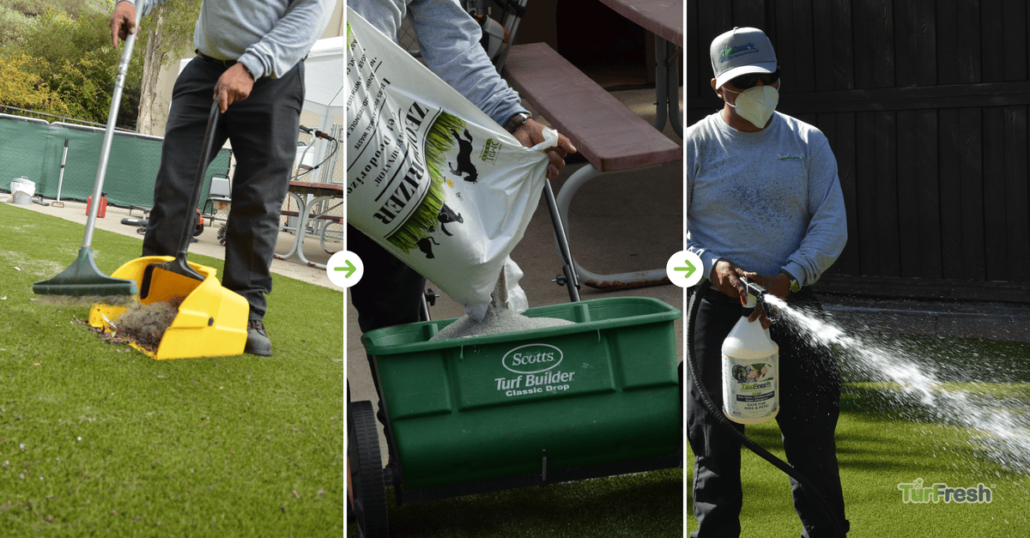
TurFresh technicians use professional-grade power equipment to mechanically lift flattened fibers and redistribute compacted infill. For newly installed turf, this early service establishes a maintenance baseline, clearing early accumulation and resetting the turf's physical condition before deeper compaction layers form.
Odor Prevention Starting From Day One
If pets use your turf, odor management begins before the odor is noticeable, not after. Urine compounds break down into ammonia and hydrogen sulfide as they bond to infill granules. The longer they remain untreated, the deeper they penetrate and the harder they are to eliminate.
A TurfBloom™ service applied within the first 60 to 90 days removes early odor compounds before they become entrenched. TurFresh uses BioS+, a non-toxic, biodegradable organic disinfectant formulated specifically for synthetic turf, to break down odor-causing bacteria at the molecular level rather than mask them with fragrance. For properties with significant pet traffic, pairing TurfBloom™ with a TurfClean™ deep cleaning treatment ensures complete odor elimination from the first service forward.
💡 Pro Tip
Pet owners should schedule their first TurfBloom™ service at 30 to 45 days, not 60 to 90. Urine-to-infill bonding accelerates in warmer climates and high-use areas. Acting earlier dramatically reduces long-term odor buildup.
How Much Does a TurfBloom™ Service Cost?
A TurfBloom™ service for a residential lawn typically costs an estimated $200 to $600, depending on lawn size, condition, and how much decompaction and fiber revival the turf needs. Pet households and larger lawns tend to fall toward the higher end of that range.
That cost is small measured against a typical turf installation, which runs $10,000 to $25,000 or more. A single on-schedule service protects an investment many times its own cost, and it is considerably cheaper than the multi-visit treatment plans required once compaction and odor have set in.
📌 Prices vary by region and lawn condition. Contact TurFresh for an exact quote for your property.
Is “First TurfBloom” the Same as “Turf Reblooming”?
No. First TurfBloom service and turf reblooming both use TurFresh's TurfBloom™ process, but they solve different problems at different points in a lawn's life. First TurfBloom service is preventive care scheduled 60 to 90 days after a new installation. Reblooming is restorative work for turf that has already matted, flattened, or aged, often done years into ownership or before selling a home.
If your turf was installed within the last few months, you want the first-service timing covered in this guide. If your turf is older and looking worn, matted, or tired, see our guide on turf reblooming instead.
What Happens If You Skip or Delay the First TurfBloom™ Service?
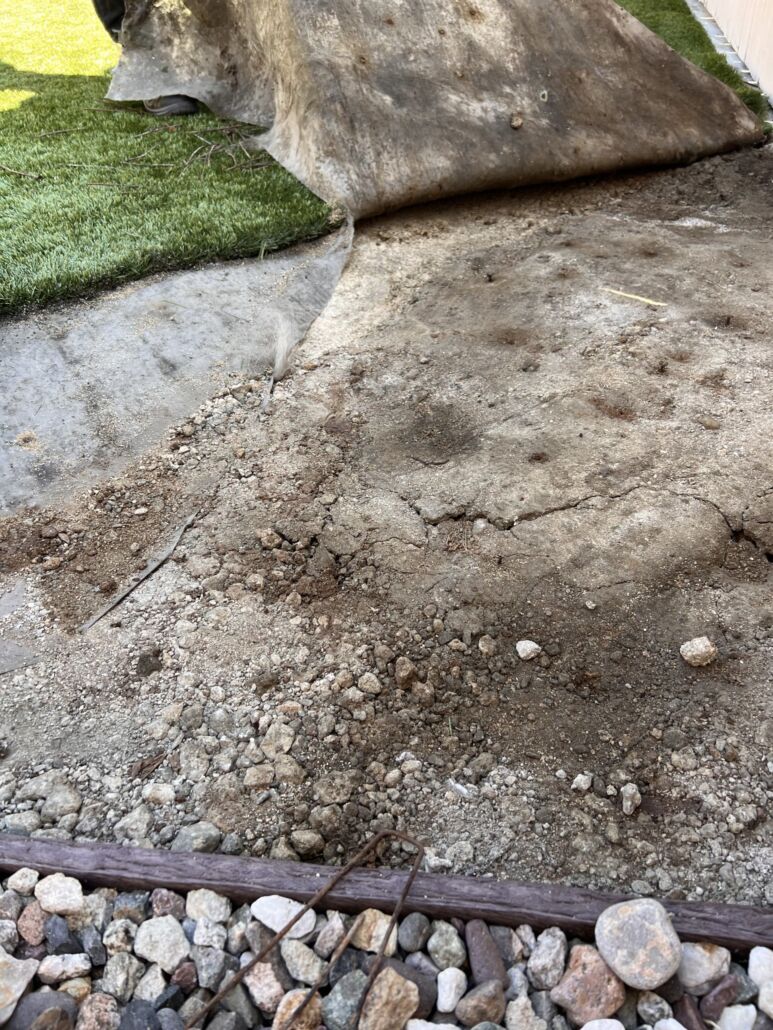
Skipping the first service does not cause immediate visible damage, which is exactly the problem. The consequences develop slowly and become progressively more expensive to reverse the longer they are ignored.
0 to 90 days (on schedule): Infill decompacted before structural compaction sets in. Fibers fully revived. Odors eliminated early.
3 to 6 months delayed: Compaction layers begin forming. Fiber recovery takes more passes and more time.
6 to 12 months delayed: Visible matting in high-traffic zones. Odor compounds deeply embedded in infill. Recovery possible but more intensive.
12+ months delayed: Permanent fiber damage in heavy-use areas. Infill redistribution may require a partial TurFill refill. Odor elimination requires multiple treatments.
Never serviced: Premature turf aging, potential backing stress, and full replacement cost likely years ahead of the turf's expected lifespan.
📌 A single TurfBloom™ service in the first 90 days is one of the most cost-effective maintenance decisions you can make for an installation that typically costs $10,000 to $25,000 or more. Early intervention prevents the compounding cost of deferred maintenance.
How Often Should New Turf Get TurfBloom™ After the First Service?
After the initial service, most residential turf installations benefit from TurfBloom™ treatment one to two times per year. The right frequency depends on your specific usage pattern.
Light residential (occasional foot traffic, no pets): once per year.
Standard residential (regular family use, minimal pets): once per year.
Pet-heavy residential (1 to 3 dogs using turf daily): two to three times per year.
Commercial, sports, or dog run (high daily traffic, multiple users): quarterly or as needed.
📌 For a complete annual schedule by turf type and usage category, see our guide on how often artificial turf should be professionally serviced.
Pro Tips for New Turf Owners
👉 1. Schedule the first TurfBloom™ service at 60 to 90 days. Do not wait until something looks wrong.
👉 2. Pet owners: move that window to 30 to 45 days. Odor compounds bond fast in warm weather.
👉 3. Do the hand test monthly: run your palm against the grain. If fibers do not spring back, it is time.
👉 4. Rinse pet areas with water between professional services. This slows odor compound bonding.
👉 5. Set a calendar reminder at the 60-day mark from your install date so the first service does not slip.
Book your first TurfBloom™ service before the 90-day window closes.
TurFresh has completed 150,000+ turf services across the United States. Our BioS+ and BioX formulas are non-toxic, biodegradable, and safe for kids and pets immediately after application.
✔ Pet Safe✔ Kid Safe✔ 150,000+ Services✔ 30-Day Guarantee
Frequently Asked Questions
How soon after installation should artificial turf be professionally serviced?
Artificial turf should receive its first professional service within 60 to 90 days of installation. This is the window when infill compaction and fiber flattening are advanced enough to respond to decompaction treatment, but not yet severe enough to cause lasting damage. Pet owners and high-traffic installations should act earlier, around 30 to 45 days.
What is infill compaction and why does it matter for new turf?
Infill compaction occurs when the granular material between turf fibers, typically sand or crumb rubber, is forced downward and packed tightly under repeated foot traffic. Compacted infill reduces cushioning, limits drainage, and removes the physical support that keeps fibers upright. For new turf, early decompaction prevents the issue from worsening into a structural problem.
Can I just brush my new turf myself instead of booking a professional service?
Regular brushing with a stiff-bristle broom helps maintain fiber position between professional services, but it cannot match the penetration depth or mechanical force of professional equipment. It does not decompact embedded infill layers, remove bonded odor compounds, or extract debris from the fiber base. A professional TurfBloom™ service is required for full fiber and infill restoration.
Does new artificial turf need to be cleaned if I do not have pets?
Yes. Even without pets, new artificial turf accumulates dust, pollen, mold spores, and organic debris from the environment, and infill compaction occurs regardless of whether pets are present since it results directly from foot traffic. A first service at the 60 to 90-day mark benefits all turf installations, whether or not animals are involved.
Will skipping the first TurfBloom™ service void my turf warranty?
Warranty terms vary by turf manufacturer and installer. Some warranties require documented professional maintenance to remain valid, particularly for fiber performance guarantees. Even where no such requirement exists, lack of maintenance is commonly cited as a reason to deny warranty claims. Review your warranty documentation and contact your installer to confirm maintenance requirements.
Is a first TurfBloom service different from a regular deep cleaning?
Yes. TurfBloom™ focuses on fiber revival and infill decompaction, the physical structure of the turf. A deep cleaning service like TurfClean™ focuses on removing bacteria, odor compounds, and organic debris. New turf often benefits from both together in the first service window, especially in pet households where odor prevention matters from day one.
Share

John Pla is the owner of TurFresh and an expert with over 20 years of experience in artificial turf cleaning and maintenance. John’s passion for sustainability, community impact, and innovative solutions has made him a trusted figure in the artificial grass industry and beyond.