
Quick Answer:
New artificial turf smell is normal for the first 2 to 4 weeks after installation. During that window, the odor comes from the turf fibers, infill materials, and backing off-gassing as they settle and adjust to outdoor conditions. Once that initial off-gassing period ends, any persistent or worsening smell signals bacterial activity or organic debris accumulating in the infill, not the turf materials themselves. Schedule your first professional artificial turf cleaning 30 to 60 days after installation. Homes with pets or young children should book closer to the 30-day mark. High-traffic commercial or sports surfaces may need service within the first 2 to 4 weeks. Annual or bi-annual professional cleanings are recommended thereafter.
The first 30 to 60 days are when bacteria establish. One early professional cleaning prevents the problems that take months to fix later.
TurFresh TurfClean reaches the infill layer where bacteria begin accumulating within the first month of use. Non-toxic formula. Pet-safe same day. Backed by our 30-day odor removal guarantee. Over 150,000 services completed.
✔ Pet-Safe✔ Kid-Safe✔ 150,000+ Services✔ 30-Day Guarantee
Key Takeaways
✅ New artificial turf smell is normal for 2 to 4 weeks. The initial odor comes from turf fiber polymers, infill materials, and backing adhesives adjusting to outdoor conditions. It fades on its own within the first month. Persistent or worsening odor after that window is bacterial activity or organic debris in the infill, which requires treatment rather than patience.
✅ The ideal window for a first professional cleaning is 30 to 60 days after installation. This timing catches early-stage contamination before odor compounds bond permanently to infill particles. Waiting past 90 days allows bacterial colonization to become significantly harder and more expensive to reverse.
✅ Pet households should book at 30 days, not 60. Pet urine bonds to infill granules within 48 to 72 hours of deposit. Within the first month of use in a pet household, odor compounds are already accumulating at a rate that makes the 60-day mark meaningfully later than the 30-day mark from a treatment perspective.
✅ Seasonal timing affects how urgently the first cleaning is needed. Summer installs in hot climates need cleaning at 30 days because heat accelerates bacterial growth. Winter installs can wait until 60 days or until after first heavy use. This is not a fixed calendar recommendation but a use-and-climate adjusted one.
✅ Skipping the first professional cleaning has warranty implications. Some artificial turf manufacturers specify maintenance requirements in their warranty documentation. Skipping professional cleaning in the first year can create grounds for warranty denial on surface degradation claims. Check your installation warranty before deciding to defer the first professional service.
Why Does New Artificial Turf Need Professional Cleaning So Soon?
New artificial turf needs professional cleaning early because the surface begins accumulating bacteria, organic debris, and odor precursors within weeks of first use, and standard rinsing does not penetrate deep enough to stop this process.
Most homeowners assume that freshly installed turf is clean turf. In reality, the installation process itself introduces organic material: soil displacement, rubber or sand infill dust, and airborne debris all settle into the fiber canopy from day one. Add foot traffic, rain, UV exposure, and the natural shedding of skin cells or pet dander, and you have a surface environment where microbial growth begins within days, not months.
What Happens Inside the Turf During the First 30 to 90 Days?
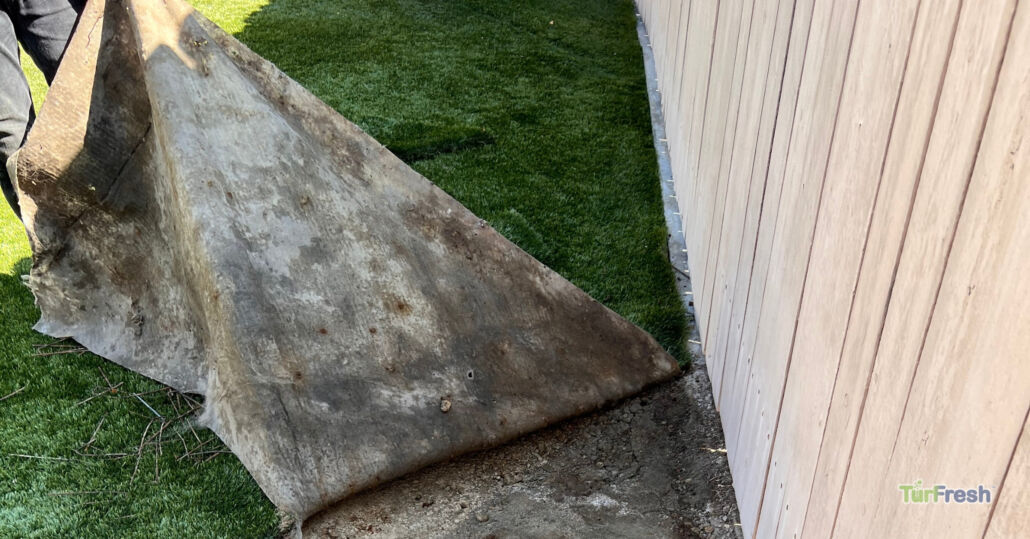
Days 1 to 14: The infill (typically crumb rubber, silica sand, or organic alternatives) begins to compact under foot traffic. Compaction reduces drainage efficiency and traps organic particles close to the turf backing, the warmest and most sheltered part of the surface.
Days 14 to 30: Bacteria counts begin increasing measurably in areas with regular foot traffic, pet use, or standing debris. Well-documented in research on synthetic surface hygiene, common environmental bacteria including Staphylococcus aureus and E. coli can be detected on synthetic surfaces within the first month of regular residential use.
Days 30 to 90: Volatile organic compounds from decomposing organic matter and pet waste begin bonding to infill particles. At this stage, odor becomes detectable, and standard garden hose rinsing moves bacteria down into the drainage layer rather than removing it.
Does New Turf Have a Break-In Period Before Cleaning Is Needed?
There is no meaningful break-in period that delays the need for professional cleaning. The idea that new turf should be left alone for several months is a common misconception. The turf fibers themselves may need 2 to 4 weeks to settle, but that settling process does not pause microbial activity.
📌 Lightly brushing the fiber canopy with a stiff broom in the first two weeks helps distribute infill evenly and exposes compacted areas that need attention at your first professional visit.
When Should You Schedule Your First Professional Artificial Turf Cleaning?
The ideal window for your first professional artificial turf cleaning is 30 to 60 days after installation. This timing catches early-stage contamination before odor compounds bond permanently to infill particles, the point at which surface cleaning alone stops being fully effective.
The 30-to-60-day window is optimal because:
Infill has had time to fully settle, so decompaction during cleaning is more effective.
Bacterial colonization is measurable but not yet deeply embedded in the backing.
Odor compounds are still in early-stage bonding, easier to neutralize with bio-enzymatic treatments.
Fiber compaction can be corrected before it affects playability or appearance.
Does It Matter If You Have Pets or Children?
Yes, significantly. Homes with pets or young children should schedule their first professional cleaning at 30 days or sooner, not 60. Pets urinate directly into the infill layer, and children's close contact with the surface means any bacteria present pose a direct exposure risk.
Pet urine is the single fastest driver of turf odor development. Ammonia from urine bonds to infill granules within 48 to 72 hours of initial deposit. Without a bio-enzymatic treatment that breaks down the urea molecule rather than just masking it, that odor becomes permanently embedded over time.
📌 If you have a dog that uses the turf regularly, treat high-traffic pet zones with TurFresh BioS+ enzyme spray between professional visits. This slows bacterial growth and keeps odor manageable between service appointments.
Does Seasonal Timing or Weather Affect the First Cleaning?
Weather and season affect the urgency of first cleaning without eliminating the need for it. Heat accelerates bacterial growth, so turf installed in summer should be cleaned closer to the 30-day mark. Cool or wet weather slows microbial activity but increases the risk of mold and algae in the infill layer.
Summer installs: first cleaning at 30 days. Heat and UV accelerate odor compound development.
Spring and fall installs: first cleaning at 45 to 60 days is acceptable. Moderate temperatures slow bacteria growth.
Winter installs: first cleaning at 60 days, or immediately following the first heavy use period after spring thaw.
What Does a First Professional Turf Cleaning Actually Include?
A first professional turf cleaning from TurFresh combines deep fiber cleaning, infill treatment, and organic bio-enzymatic disinfection, not just a pressure rinse. Two services are most relevant for new installs: TurfClean and TurfBloom.
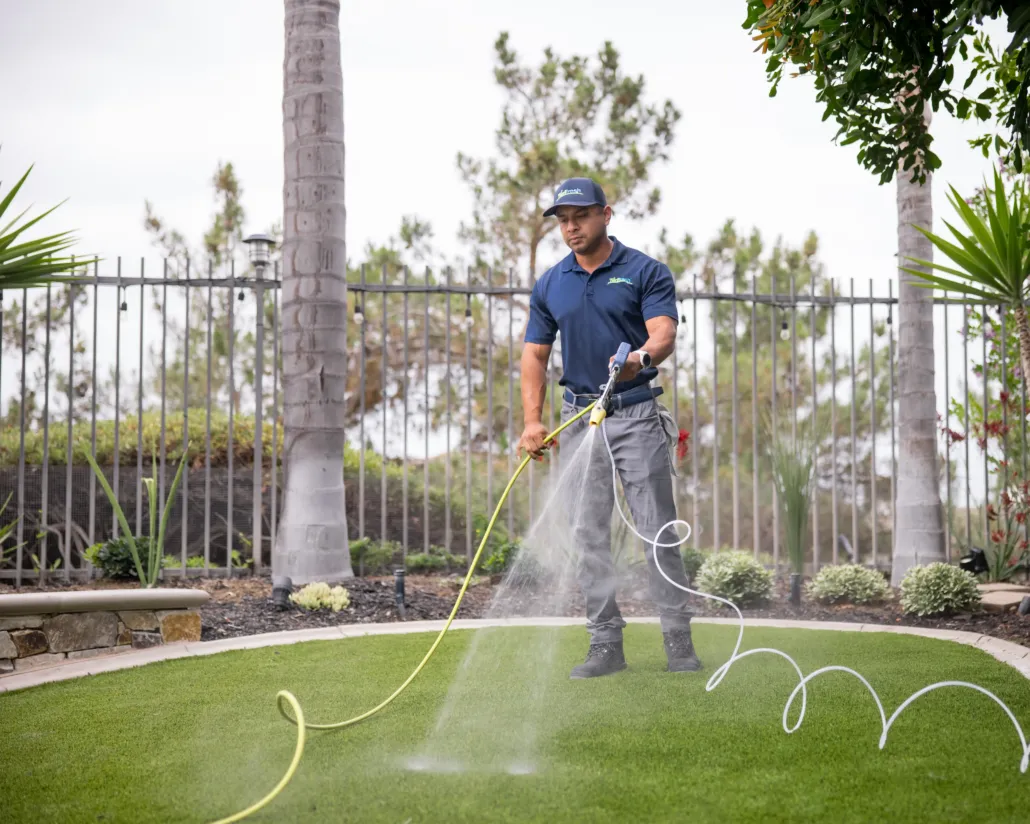
TurfClean is TurFresh's flagship deep-cleaning and pet odor removal service. For a new installation, it addresses bacterial and microbial contamination in the fiber pile and infill layer, organic debris removal from the canopy surface and drainage layer, and bio-enzymatic treatment with BioS+ to break down odor compounds at the molecular level. Post-service application is safe immediately for kids and pets with no toxic residue or harsh peroxides.
TurfBloom is TurFresh's fiber revival and infill decompaction service. For newly installed turf, it is especially valuable if infill compaction is already visible: flat or matted fibers, reduced drainage after rain, or hard surface feel underfoot. TurfBloom uses controlled mechanical agitation to loosen and redistribute compacted infill, restoring the fiber's upright position and drainage efficiency. For most new residential installs with light to moderate use, TurfBloom can be combined with TurfClean at the first professional visit for a comprehensive reset.
What Happens If You Wait Too Long for the First Cleaning?
Waiting more than 90 days for a first professional cleaning allows contamination to reach a threshold where surface treatment alone may no longer be fully effective.
Permanent odor bonding: ammonia and sulfur compounds from organic waste bond chemically to infill particles after approximately 60 to 90 days. At this stage, odor requires deep infill flushing, a more extensive and costly process than early-stage treatment.
Elevated pathogen counts: synthetic turf surfaces that receive no professional cleaning within the first season of use consistently show higher bacterial loads than those maintained on a regular schedule, as documented across research on synthetic surface hygiene in recreational and residential settings.
Infill compaction damage: heavily compacted infill can cause micro-abrasions in the turf backing over time, reducing the structural lifespan of the installation.
Warranty implications: some artificial turf manufacturers specify maintenance requirements in warranty documentation. Skipping professional cleaning in the first year can create grounds for warranty denial on surface degradation claims.
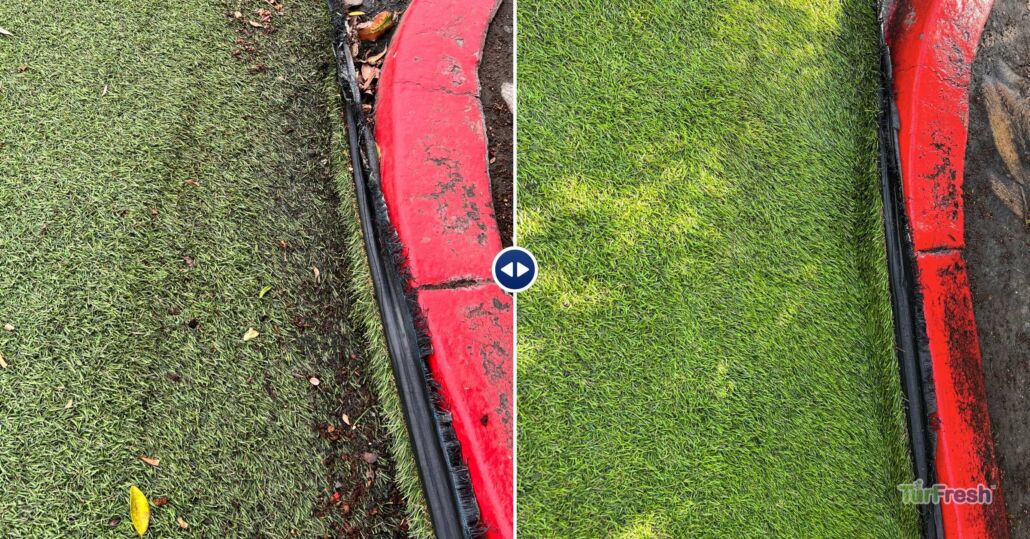
Complete Guide
📖 5 Maintenance Tips to Extend the Life of Your Artificial Turf — the complete care schedule: debris, brushing, pet waste, infill, and professional cleaning frequency.
Practical Tips: How to Care for New Turf Between Professional Visits
Professional cleaning handles what DIY maintenance cannot, but what you do between visits directly affects how quickly problems develop.
Tip 1: Rinse pet areas immediately after use. Do not allow urine to dwell on the surface for more than a few hours in warm weather.
Tip 2: Brush the fiber pile weekly with a stiff-bristle broom in the opposite direction to fiber growth. This prevents matting and keeps infill evenly distributed.
Tip 3: Remove solid debris promptly. Leaves, food scraps, and organic waste accelerate bacterial growth when left to decompose in the infill layer.
Tip 4: Apply TurFresh BioS+ enzyme spray to pet-use zones every 2 to 3 weeks. It is non-toxic, biodegradable, and safe to use immediately around children and pets.
Tip 5: Avoid rubber-soled shoes with deep treads on new turf during the first few weeks. They accelerate infill compaction faster than bare feet or smooth-soled footwear.
Protect your investment before bacteria establish in the infill. One early cleaning costs far less than reversing months of buildup.
TurFresh TurfClean reaches the infill layer where contamination begins within the first month of use. Non-toxic BioS+ formula. Pet-safe same day. Over 150,000 services completed across California, Arizona, Texas, Nevada, and Florida. Backed by our 30-day odor removal guarantee.
✔ Pet-Safe✔ Kid-Safe✔ 150,000+ Services✔ 30-Day Guarantee
Frequently Asked Questions
Is the smell from new artificial turf normal?
A faint new product smell from fresh turf fibers and infill is normal and typically fades within 2 to 4 weeks. Persistent or worsening odor after that point indicates bacterial activity or pet waste accumulation in the infill, not off-gassing from the turf materials themselves. If the smell intensifies or returns after rain or heat exposure, schedule professional cleaning.
When should I schedule my first professional artificial turf cleaning?
The ideal window is 30 to 60 days after installation. Homes with pets or children should book at 30 days. Summer installs in hot climates need service at 30 days due to accelerated bacterial growth. Winter installs can wait until 60 days or after first heavy use following spring thaw.
Can my dog use the turf immediately after installation?
Yes, dogs can use the turf immediately after installation. The surface is safe for pet use from the first day. However, if your dog uses the turf regularly, treat high-use zones with TurFresh BioS+ enzyme spray within the first 2 weeks and schedule a professional cleaning at 30 days rather than 60. Pet urine bonds to infill granules within 48 to 72 hours, making early treatment significantly more effective than delayed treatment.
Can a pressure washer replace professional turf cleaning for a new install?
No. A pressure washer can rinse the surface but cannot deliver bio-enzymatic odor treatment, controlled infill decompaction, or deep-layer disinfection. High-pressure water can also dislodge and displace infill unevenly, creating drainage problems, particularly on new installations where infill is not yet fully settled.
What is the safest cleaner for new artificial turf around children and pets?
The safest cleaners for new artificial turf are bio-enzymatic products that break down odor compounds and pathogens without leaving toxic residue. TurFresh BioX and BioS+ are non-toxic, biodegradable, and safe for immediate re-entry by children and pets with no waiting period required after application.
How often should I professionally clean artificial turf after the first visit?
After your first professional cleaning at 30 to 60 days, most residential turf benefits from professional service once or twice per year. Homes with dogs or high foot traffic should schedule quarterly. Sports or commercial surfaces typically require monthly or bi-monthly professional attention.
Does artificial turf need cleaning if it is not used much?
Yes. Even low-traffic turf accumulates airborne pollen, dust, algae spores, and organic debris that settle into the infill over time. Moisture and sunlight create conditions for mold and algae growth. A once-per-year professional cleaning is recommended for rarely used surfaces.
Share

John Pla is the owner of TurFresh and an expert with over 20 years of experience in artificial turf cleaning and maintenance. John’s passion for sustainability, community impact, and innovative solutions has made him a trusted figure in the artificial grass industry and beyond.