
Quick Answer:
Pet-friendly artificial turf safety during the holidays comes down to four concerns: holiday decor that can damage fibers or harm pets, increased foot traffic that compacts infill faster than usual, food and drink spills that attract bacteria, and winter temperatures that slow evaporation and concentrate pet odors. Artificial turf itself is non-toxic and safe for dogs to walk on and rest on. The risks are environmental, not material. Managing them requires a pre-event prep routine, a few precautions during the gathering, and a post-event cleanup before contamination settles into the infill.
Get your turf fresh, odor-free, and ready before the family shows up.
TurFresh professional cleaning removes pet odors, lifts flattened fibers, and leaves your turf safe for kids and pets the same day. Pet-safe enzyme formula. No waiting period. Over 150,000 services completed. Backed by our 30-day odor removal guarantee.
Book Your Pre-Holiday Cleaning
✔ Pet-Safe✔ Kid-Safe✔ Same-Day Use✔ 30-Day Guarantee
Key Takeaways
✅ Artificial turf is non-toxic and safe for pets during the holidays. Quality artificial turf is manufactured from polyethylene or nylon fibers and does not contain harmful chemicals under normal use. The holiday safety concerns are environmental: heat from lights, pressure from heavy decor, food spills, and concentrated pet activity, not the turf material itself.
✅ Holiday lights and extension cords are the most overlooked turf hazard. Heat-generating bulbs placed directly on synthetic fibers can cause melting or discoloration. Extension cords dragged across turf create tripping hazards for pets and guests. Use cool LED lights only, route cords along hardscape edges rather than across the turf surface, and avoid leaving plug connections directly on the grass.
✅ Winter temperatures make pet odor worse, not better. Cooler temperatures slow the evaporation cycle that normally provides temporary odor relief. Urine stays in the infill longer, bacteria reproduce in the retained moisture, and odors concentrate rather than dissipating. The combination of slower evaporation plus increased holiday pet activity means winter is when proactive enzyme treatment matters most.
✅ Guest dogs visiting your turf will almost certainly mark your pet's territory. When unfamiliar dogs use your turf, they typically mark in multiple spots throughout the yard rather than the designated zones your own dog uses. This distributes urine contamination across a much larger area than normal. A post-event enzyme treatment applied to the full surface, not just the usual pet zone, is the appropriate response after a gathering where guest dogs were present.
✅ The post-event cleanup is more important than the pre-event prep. Pre-event cleaning improves the starting condition. Post-event cleanup prevents food spills, beverage residue, and concentrated pet use from settling into the infill overnight. Doing the cleanup within 12 to 24 hours of the event produces significantly better results than waiting until the next weekend.
Why Pet-Friendly Artificial Turf Is a Good Choice for Holiday Gatherings
Artificial turf holds up to holiday use better than natural grass in nearly every measurable way. It stays green regardless of foot traffic, does not turn muddy when dogs run on it, and provides a consistent surface for kids and pets throughout the gathering.
For Southern California and other mild-climate homeowners who host outdoor holiday events, artificial turf means the yard remains a usable social space throughout the season without the mud, bare patches, and maintenance that natural grass requires after heavy use.
The key is understanding which holiday-specific risks actually apply to synthetic turf, and which ones do not, so you can prepare appropriately rather than over-react or under-prepare.
Holiday Challenges That Affect Pet-Friendly Artificial Turf
Increased foot traffic and guest pets
Holiday gatherings mean more people walking across your turf, kids running, multiple dogs playing, and guests unfamiliar with the yard. This increases the stress on turf fibers and infill, especially in the most used areas. Infill compacts faster under concentrated holiday traffic than it does under normal daily use.
Guest pets create an additional challenge covered in the dedicated section below. The short version: unfamiliar dogs mark throughout the yard rather than in designated zones, distributing contamination more widely than your normal pet routine.
Complete Guide
📖 How to Maintain Artificial Grass When You Have Dogs — the full system for pet households: daily routine, enzyme treatment, multi-dog homes, and when to call a professional.
Holiday lights, extension cords, and inflatables
Holiday setups can create safety issues for pets and turf that most homeowners do not anticipate.
Heat-generating light bulbs placed directly on synthetic fibers can cause melting. Cool LED lights eliminate this risk entirely. Route extension cords along fence lines, paver edges, or hardscape rather than across the turf surface. Keep plug connections on hardscape, not on the grass.
Inflatables and heavy decorative items placed directly on turf flatten fibers and compact infill in that zone. Place them on pavers, a rubber mat, or stepping stones to distribute the load rather than concentrating it on the turf surface. Rotate their position every few days if they stay up for an extended period.
Food and drink spills
Holiday gatherings mean wine, gravy, sauces, soda, oily foods, and pet treats can all reach the turf surface. Left untreated, these create sticky spots that attract bacteria, cause staining, and contribute to odor development.
The response is the same as pet waste: act quickly. Remove solids, rinse gently, apply a mild cleaning solution to sticky residue, and rinse again. Acting within a few hours of the spill prevents it from settling into the infill where it is harder to remove.
Winter odor build-up
This is the holiday challenge most pet owners do not anticipate. Cooler temperatures slow the evaporation that normally provides temporary odor relief throughout the year. Urine stays in the infill longer, bacteria reproduce in the retained moisture, and odors concentrate rather than dispersing.
The result: turf that managed odor adequately through summer and fall may start producing noticeable odors in November and December without any change in cleaning routine. The routine has not changed, but the conditions have.
Apply TurFresh BioS+ enzyme treatment more frequently during winter months, particularly in the weeks surrounding holiday gatherings when pet activity is elevated and temperatures are lowest.
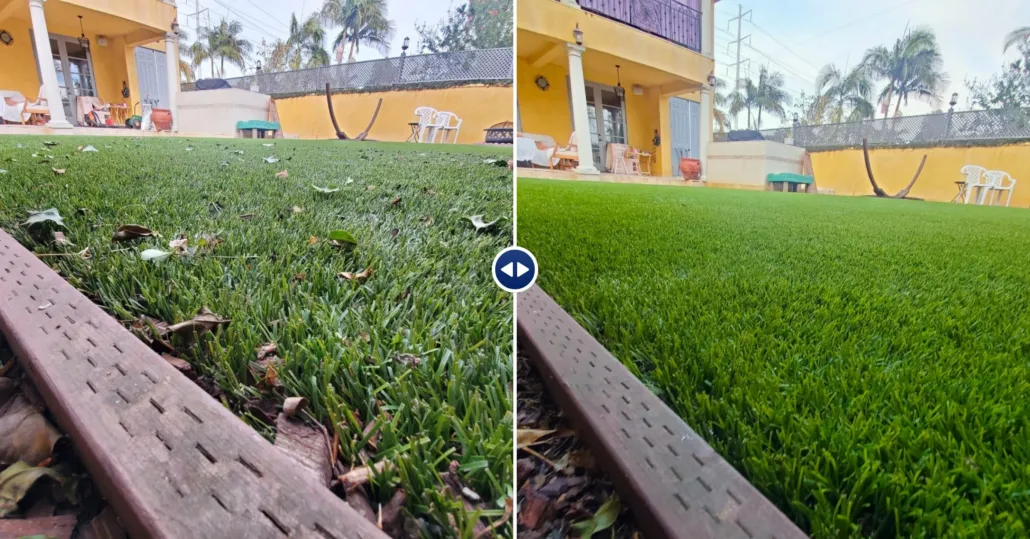
Pet-Friendly Artificial Turf Safety Tips for the Holidays
1. Rinse regularly to prevent odor buildup
A light rinse three to four times a week removes bacteria, residue, pet urine, and sticky spills before they settle into the infill. Use gentle water pressure, not power washing. Focus extra rinsing on pet zones and the areas near outdoor seating where guests spend most of their time.
Apply TurFresh BioS+ enzyme treatment to high-use pet zones after rinsing to neutralize odor-causing compounds at the source. During the holiday period with increased activity, apply BioS+ more frequently than your usual routine.
2. Remove pet waste more frequently during gatherings
With more distractions during holidays, pet waste is easier to miss and longer to sit. Remove solids immediately, rinse the area, apply BioS+ enzyme treatment, and allow it to dry before the next use.
3. Avoid heavy decorations on the same spot
Inflatables, large seating areas, and holiday decor concentrated in one zone flatten fibers and compact infill. Rotate positions every few days. Use pavers, rubber mats, or stepping stones under heavy items to distribute weight rather than concentrating it.
4. Choose pet-safe holiday decor
Avoid decor that pets might chew, ingest, or get tangled in: tinsel, small ornaments, fragile bulbs, and loose electrical cords. Use secured LED lights, plastic ornaments, elevated displays, and stable setups. Keep extension cords on hardscape, not on turf.
5. Create a designated pet zone for guest animals
If friends or family bring their dogs, set up a specific area with toys, a water bowl, and defined boundaries. This reduces overall contamination spread and gives you a contained zone to treat with enzyme cleaner after the event.
6. Clean spills immediately
Holiday food and drinks create stains and odors if left untreated. Remove solids or excess liquid immediately. Rinse gently. Apply BioS+ or a mild turf-safe cleaner to sticky residue. Lightly brush fibers after cleaning.
7. Treat winter odors before guests arrive
Apply BioS+ enzyme treatment to pet zones 24 to 48 hours before a gathering. This allows full dwell time for the enzymes to work before the event begins. Treating early in the day of the event is better than not treating at all, but pre-treating the day before produces better results.
When Guest Dogs Visit Your Turf
This is the situation most holiday pet owners do not plan for. When a guest dog enters your yard, it will almost certainly mark territory throughout the space, not just in the zone your own dog uses. One visiting dog can deposit urine in five to ten different locations in a single visit. Multiple guest dogs across a holiday weekend can distribute contamination across the full turf surface.
The response is different from your normal pet zone routine. After a gathering where guest dogs were present, apply BioS+ enzyme treatment to the full turf surface rather than just the usual designated pet zone. Do this within 12 to 24 hours of the event, before the urine has had time to bond to infill granules.
If the same visiting dogs return for multiple gatherings across the holiday season (common with family events), schedule a professional cleaning before the final gathering of the season to reset the infill before bacterial load accumulates to the point where surface treatment is no longer sufficient.
After the Holiday Party: Post-Event Turf Checklist
The post-event cleanup is more important than most pet owners realize. Food residue, beverage spills, and concentrated pet activity from a single gathering can introduce more contamination than several weeks of normal use. Doing the cleanup within 12 to 24 hours prevents that contamination from settling into the infill.
Within 12 to 24 hours after the event:
Remove all surface debris, food scraps, and decorative items from the turf. Pick up any pet waste missed during the event. Do a complete surface rinse with a garden hose, starting from one end and flushing debris toward the exit point. Apply BioS+ enzyme treatment to all pet zones and any areas where spills occurred. Allow full dwell time before the final rinse.
Within 48 hours:
Brush the full turf surface against the grain to lift fibers flattened by foot traffic and redistribute infill that has migrated under the event load. Inspect edges and seams for any lifting caused by heavy decor or furniture placement. Check infill depth in high-traffic zones.
After the holiday season:
Schedule a professional TurfClean service after the last major gathering of the season. Holiday entertaining concentrates more contamination in a shorter period than normal use patterns. A professional cleaning resets the infill baseline before the new year.
When to Schedule Professional Turf Cleaning for the Holidays
Schedule professional turf cleaning when odors persist despite regular rinsing and enzyme treatment, when the turf looks matted across large areas, or when you want a complete reset before hosting.
Professional TurFresh service includes:
✔ Full turf reblooming and fiber restoration
✔ Deep odor removal using BioS+ and BioX at the infill level
✔ Pet-safe treatment for all urine zones
✔ Infill redistribution and decompaction
✔ Detail brushing for a guest-ready finish
All services are backed by TurFresh's 30-day odor removal guarantee. Pets and children can return to the turf as soon as the surface dries.
One professional cleaning before the holidays is the fastest way to start fresh.
TurFresh reaches the infill layer where pet odors accumulate beyond the reach of any surface routine. Non-toxic BioS+ and BioX formulas. Pets safe the same day. Over 150,000 services completed across California, Arizona, Texas, Nevada, and Florida. Backed by our 30-day odor removal guarantee.
✔ Pet-Safe✔ Kid-Safe✔ 150,000+ Services✔ 30-Day Guarantee
Frequently Asked Questions
Is artificial turf safe for pets during the holidays?
Yes. Quality artificial turf is manufactured from non-toxic polyethylene or nylon fibers and is safe for dogs to walk on, run on, and rest on. The holiday safety concerns are environmental rather than material: heat from certain types of holiday lights, pressure from heavy decorations placed directly on the surface, food and drink spills, and concentrated pet activity during gatherings.
Can Christmas lights damage artificial turf or harm pets?
Heat-generating bulbs placed directly on synthetic fibers can cause melting or discoloration over time. Cool LED lights eliminate this risk. Route extension cords along hardscape edges rather than across the turf surface, and keep plug connections on pavers or concrete rather than on the grass. LEDs are also safer for pets than traditional incandescent bulbs.
Why does my turf smell worse during the holidays and winter months?
Cooler temperatures slow the evaporation that normally provides temporary odor relief. Urine stays in the infill longer, bacteria reproduce in the retained moisture, and odors concentrate rather than dispersing. Combined with increased pet activity during holiday gatherings, winter is the season when proactive enzyme treatment with BioS+ matters most.
What should I do when guest dogs use my artificial turf?
Apply TurFresh BioS+ enzyme treatment to the full turf surface within 12 to 24 hours after any gathering where guest dogs were present. Visiting dogs mark throughout the yard rather than in the zones your own dog uses, distributing contamination more widely than your normal cleaning routine covers. Treat the full surface, not just the usual pet zone.
How do I clean a wine or food spill on artificial turf during a holiday party?
Act within a few hours for best results. Remove solids or blot excess liquid immediately. Rinse the area gently with a garden hose. Apply a mild cleaning solution or BioS+ to sticky residue, allow brief dwell time, then rinse thoroughly. Lightly brush the fibers after the area dries. Delaying treatment allows sticky residue to penetrate the fiber bed and attract bacteria.
When should I schedule professional turf cleaning for the holiday season?
Two timing strategies work best. A pre-holiday professional cleaning in the week before your first major gathering resets the infill baseline and starts the season clean. A post-season cleaning after the last holiday gathering removes the accumulated contamination from a full season of elevated use before it bonds permanently to the infill. If you can only do one, the post-season cleaning prevents the contamination from concentrating over the quieter months of January and February.
Share

John Pla is the owner of TurFresh and an expert with over 20 years of experience in artificial turf cleaning and maintenance. John’s passion for sustainability, community impact, and innovative solutions has made him a trusted figure in the artificial grass industry and beyond.