
Quick Answer:
Can you mow artificial grass? No. Artificial turf is manufactured at a fixed blade height and does not grow, so mowing is never part of its maintenance. Using a lawn mower on artificial grass damages the synthetic fibers and shortens the lifespan of the surface. What replaces mowing is a simple routine: occasional rinsing to remove dust and allergens, light brushing to keep fibers upright in high-traffic areas, enzyme cleaner application for pet waste zones, and professional deep cleaning once or twice a year to address what surface rinsing cannot reach. The total time commitment is a fraction of what a natural lawn requires.
Skip the mower. Schedule the one service your turf actually needs.
TurFresh professional cleaning is the only maintenance step artificial grass needs that you cannot do yourself. No mowing, no watering, no fertilizing. Just one professional clean a year keeps your turf looking like the day it was installed. Over 150,000 services completed. Backed by our 30-day guarantee.
✔ Pet-Safe✔ Kid-Safe✔ 150,000+ Services✔ 30-Day Guarantee
Key Takeaways
✅ Artificial grass cannot be mowed and should not be. The blades are synthetic and manufactured at a fixed height. They do not grow. A lawn mower applied to artificial turf tears fibers, disrupts infill, and causes damage that shortens the lifespan of the surface.
✅ No mowing does not mean no maintenance. Artificial grass eliminates the hardest and most time-consuming lawn care tasks. It does not eliminate all care. What remains is simple, infrequent, and takes a fraction of the time that natural lawn maintenance requires.
✅ Rinsing and brushing replace most of what mowing used to accomplish. A weekly rinse in high-use areas removes dust, pollen, and surface residue. Brushing every few weeks keeps fibers upright and prevents matting. Neither takes more than 10 to 15 minutes.
✅ Professional cleaning once or twice a year is the one thing you cannot do yourself. Surface rinsing does not reach the infill layer where bacteria, urine compounds, and fine debris accumulate over time. Professional equipment reaches the infill and addresses what home maintenance leaves behind.
✅ Flat fibers are not growth, they are compression. If your turf looks flat in high-traffic areas, the cause is not the grass getting too long. It is fiber compression from foot traffic. Brushing against the grain restores fiber position. No mowing required or helpful.
Can You Mow Artificial Grass?
No. Artificial grass does not grow and should never be mowed.
Natural grass is a living plant that continuously regenerates. Mowing manages that growth and keeps the surface at a usable height. Artificial turf is a manufactured surface with synthetic fibers set at a fixed height during production. Nothing grows. Nothing needs to be cut back.
Attempting to mow artificial grass causes direct damage. Mower blades are designed to cut organic material cleanly. When applied to synthetic fibers, they tear, fray, and abrade the material in ways that are not immediately obvious but accumulate over time and reduce both the appearance and the lifespan of the surface. The infill layer below the fibers can also be displaced by mower wheel pressure.
The one exception worth knowing: hybrid turf systems designed with a perforated backing can allow natural grass to grow through the surface. In that specific product type, mowing the natural grass that grows through is part of normal maintenance. Standard residential artificial turf is not this type of product. If you are unsure what type of turf you have, your installer will have that information.
📌 If your turf looks flat or worn in specific areas, that is not growth that needs cutting. It is fiber compression from traffic. The solution is brushing against the grain, not mowing.
What Replaces Lawn Mowing with Artificial Grass?
When you remove mowing from your lawn care routine, you also remove the largest and most time-consuming maintenance obligation. What remains is simpler than most new artificial grass owners expect.
Rinsing
A light rinse with a garden hose every one to two weeks removes dust, pollen, and surface debris that accumulates on any outdoor surface. In pet households, rinse high-use zones after pet activity. In dry climates like Phoenix and Las Vegas, rinsing also cools the surface temperature, which can rise significantly in direct summer sun.
No schedule is required. Rinse when the surface looks dusty or after heavy pollen days. The drainage layer in a properly installed turf system handles the water quickly and the surface is dry within minutes.
Brushing
Every two to four weeks, brush the surface against the natural lean of the fibers using a stiff synthetic-bristle brush. This lifts fibers that have been compressed by foot traffic and redistributes infill evenly across the surface. Focus on high-use areas such as pathways, play zones, and pet areas.
For households without pets and with light traffic, monthly brushing across the full surface is sufficient. For multi-dog households or heavy use, brush the highest-traffic zones weekly and the full surface monthly.
Pet waste and stain management
Remove solid waste promptly and rinse the area. For stains and odors, apply a turf-safe enzyme cleaner to the affected zone, allow full dwell time, and rinse thoroughly. This handles the hygiene needs that surface rinsing alone does not fully address.
Professional cleaning once or twice a year
This is the one maintenance step that home care cannot replicate. Over time, urine compounds, fine debris, and bacteria accumulate in the infill layer below the fiber bed where surface rinsing does not reach. Professional cleaning equipment addresses this layer, removes compacted material, and restores the full hygiene and performance of the turf system.
For households without pets: once a year is sufficient. For households with one dog: twice a year. For multi-dog households: every three to four months.
Is Artificial Grass Truly Zero Maintenance?
No, and it is worth being clear about this because the expectation of zero maintenance leads to neglect that shortens turf lifespan significantly.
Artificial grass eliminates the most burdensome lawn care tasks: mowing, watering for growth, fertilizing, reseeding, aerating, and chemical treatments. These account for the vast majority of time and cost in natural lawn maintenance. Removing them is a genuine and substantial reduction in ongoing work.
What artificial grass does not eliminate is the need for basic hygiene upkeep. It is an outdoor surface exposed to weather, organic debris, pet activity, and foot traffic. Left completely unattended for years, the infill becomes saturated and the surface develops persistent odors and hygiene issues that are significantly more expensive to resolve than the routine maintenance that would have prevented them.
📌 Most homeowners who switch from natural grass to artificial turf find that their outdoor maintenance time drops by 80 to 90 percent. The work that remains takes minutes per week, not hours.
What Are the Main Benefits of Removing Lawn Mowing?
No lawn equipment costs. A quality gas-powered lawn mower costs several hundred to over a thousand dollars, requires annual servicing, gas, oil, blade sharpening, and eventual replacement. A leaf blower and a synthetic-bristle brush handle all routine artificial turf maintenance for a fraction of that cost.
No watering for growth. Natural grass in arid markets like Los Angeles, Phoenix, and Las Vegas requires irrigation to survive, which adds substantially to monthly water bills. Artificial grass needs only occasional rinsing for cleanliness, not sustained irrigation for growth.
No fertilizers, pesticides, or chemical treatments. Natural lawns require seasonal fertilization, weed control, and often pesticide application. The outdoor space that children and pets use daily is free from the chemical residue that natural lawn treatments leave behind.
Consistent appearance regardless of season. Natural grass browns in drought, becomes muddy in rain, and develops bare patches under heavy use. Artificial grass maintains consistent appearance year-round.
No noise or scheduling constraints. Weekend mornings previously committed to mowing are simply available for other use.
Common Misconceptions About Artificial Grass Maintenance
Flat areas mean the grass is getting too long. Flat or matted areas are caused by fiber compression from foot traffic, not by growth that needs cutting. The fibers have been pressed down by repeated use and need to be lifted through brushing, not trimmed.
You never need to do anything to it. Leaving artificial grass completely unattended leads to infill contamination, odor development, and fiber matting. Simple routine maintenance prevents these issues.
Weeds growing through the turf mean the grass is growing. Weeds that appear in or around artificial grass are wind-carried seeds that have germinated in the infill or along the edges. The turf itself has not grown and does not need to be cut.
You can use any cleaner on artificial grass. Standard household cleaners including bleach and ammonia damage synthetic fibers and degrade infill. Use only products specifically formulated for artificial turf.
Is Artificial Grass Safe for Kids and Pets?
Yes, when properly maintained.
Artificial grass is manufactured from inert synthetic materials that do not contain the biological allergens found in natural grass. It does not require pesticides, fertilizers, or chemical treatments. For pets, urine drains through the backing when the drainage system is correctly installed, and solid waste is removed in the same way as on natural grass. Regular enzyme cleaning keeps the surface hygienic and odor-controlled.
The one environmental consideration worth noting: surface temperature on artificial turf can rise significantly in direct sun in hot climates. A rinse with water before children or pets use the surface in summer cools it rapidly.
That is the maintenance routine your artificial grass actually needs.
TurFresh professional cleaning reaches the infill layer where surface rinsing stops, removes what builds up over months of use, and restores your turf to the condition it was in when installed. Over 150,000 services completed across California, Arizona, Texas, Nevada, and Florida.
✔ Pet-Safe✔ Kid-Safe✔ 150,000+ Services✔ 30-Day Guarantee
Complete Guide
📖 5 Maintenance Tips to Extend the Life of Your Artificial Turf — the complete care schedule: debris, brushing, pet waste, infill, and professional cleaning frequency.
Frequently Asked Questions
Can you mow artificial grass?
No. Artificial grass does not grow and should never be mowed. The synthetic fibers are manufactured at a fixed height. Applying a lawn mower to artificial turf tears fibers, disrupts infill, and causes damage that shortens the lifespan of the surface.
Do you have to mow artificial turf?
No. Mowing is never part of artificial grass maintenance. The only exception is hybrid turf systems designed to allow natural grass to grow through a perforated backing. Standard residential artificial grass is not this type of product.
What maintenance does artificial grass actually need?
Rinsing every one to two weeks to remove dust and surface debris, brushing every two to four weeks to keep fibers upright and redistribute infill, prompt removal of pet waste with enzyme cleaner treatment for odor control, and professional deep cleaning once or twice a year to address infill accumulation that surface maintenance cannot reach.
Why is my artificial grass flat in some areas?
Flat areas in artificial grass are caused by fiber compression from foot traffic, not by growth. The fibers have been pressed down by consistent use in the same area. Brushing against the natural grain of the fibers lifts them back to an upright position. No mowing is needed or helpful.
Are there weeds growing in my artificial grass?
The artificial grass itself is not growing. Weeds that appear in or near artificial turf are wind-carried seeds that have germinated in the infill layer or along the edges where the turf meets soil. A non-toxic, turf-safe herbicide applied at the affected areas addresses this without harming the turf.
Is artificial grass actually low maintenance?
Yes, significantly lower than natural grass. Mowing, irrigation for growth, fertilizing, reseeding, and chemical treatments are all eliminated. What remains is simple rinsing, occasional brushing, pet waste management, and an annual professional cleaning. Most homeowners find outdoor maintenance time drops by 80 to 90 percent after switching to artificial grass.
How long does artificial grass last without mowing?
A well-maintained artificial grass installation typically lasts 15 to 20 years. Lifespan is determined by installation quality, fiber material, UV exposure, use intensity, and whether routine maintenance including professional cleaning is performed consistently.
Share
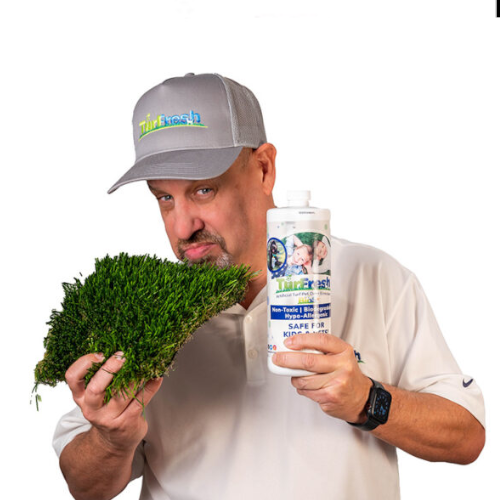

John Pla is the owner of TurFresh and an expert with over 20 years of experience in artificial turf cleaning and maintenance. John’s passion for sustainability, community impact, and innovative solutions has made him a trusted figure in the artificial grass industry and beyond.