
Quick Answer: Reblooming artificial turf before selling your home restores flat fibers and compacted infill to near-new condition in a single professional visit. According to the American Society of Landscape Architects, professional landscaping adds 15 to 20 percent to a home's resale value. A TurfBloom service costs $200 to $600 for a residential lawn. Full turf replacement costs $8,000 to $25,000. If reblooming prevents even a $2,000 buyer concession, the return on investment is immediate.
Don't let worn turf become a buyer's bargaining chip.
TurFresh TurfBloom restores flat fibers and compacted infill in a single visit. Safe for pets, ready for listing photos within days.
✔ Pet Safe✔ 150,000+ Services✔ 20+ Years Experience✔ 30-Day Guarantee
Key Takeaways
🔑 The American Society of Landscape Architects reports professional landscaping adds 15 to 20 percent to home resale value. Worn turf undercuts this advantage before buyers even walk through the door.
🔑 Reblooming costs $200 to $600. Full replacement costs $8,000 to $25,000. If it prevents a $2,000 buyer concession, the ROI is immediate.
🔑 Buyers cannot tell the difference between turf that needs a rebloom and turf that needs full replacement. Reblooming before listing removes that ambiguity before it becomes a negotiating tool.
🔑 Schedule TurfBloom 3 to 4 weeks before your listing date, not the week before. Fibers need time to settle, and you want room for a follow-up TurfClean if needed.
🔑 A professional service record signals to buyers that the turf has been maintained. This supports your asking price and reduces pre-sale objections during the offer process.
What Is Turf Reblooming and Why Does It Matter Before a Home Sale?
Turf reblooming is a professional service that restores the physical structure of artificial turf by lifting compressed fibers back to an upright position and de-compacting hardened infill material. Over time, synthetic turf fibers flatten under foot traffic, pet use, and heat. The infill layer compacts into a hard, uneven surface that looks and feels nothing like the turf did at installation.
A reblooming treatment uses specialized counter-rotating grooming equipment to lift fibers, loosen infill, remove embedded debris, and treat the surface for odor and hygiene. The result closely resembles how the turf looked when first installed.
For home sellers, the relevance is direct: buyers form their first impression within seconds of approaching a property. Flat, matted turf photographs as gray or brown rather than green, signals neglect in listing photos, and raises the question every seller fears — what is this going to cost me to fix?
Realtors consistently note that homes with well-maintained artificial turf not only look better in listing photos but also sell faster and closer to asking price than comparable homes with worn or patchy lawns. Turf condition is a visible, immediate signal of overall property upkeep.
Does Worn Turf Affect Home Sale Price?
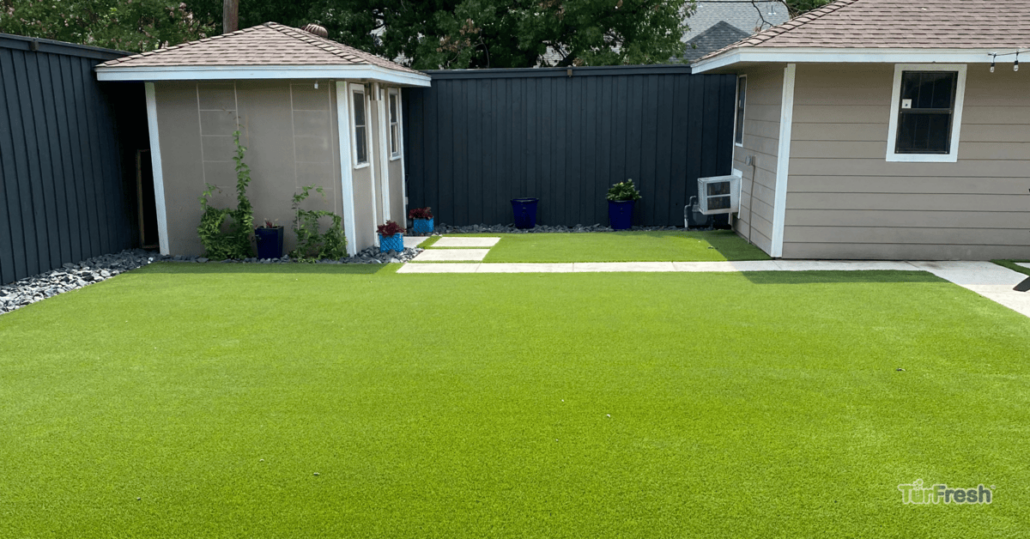
Yes. Worn turf can directly reduce sale price through two mechanisms: reduced perceived value in listing photos and active buyer negotiation during the offer process.
Flat, matted turf is visually indistinguishable from turf that requires full replacement to an untrained eye. Buyers cannot assess whether the turf needs a $400 service or a $15,000 replacement. That uncertainty creates negotiating leverage for the buyer that the seller could have eliminated before listing.
Replacing a mid-size residential turf installation of 1,000 to 3,000 square feet typically costs $8,000 to $25,000. Buyers aware of this number may request a credit, a price reduction, or both. A professional rebloom at $200 to $600 eliminates the ambiguity that creates that opportunity.
Premium artificial turf installed correctly can raise resale prices by 3 to 10 percent in markets where water conservation and low maintenance are valued selling points. In drought-affected markets like the Southwest and California where synthetic turf is a premium feature, worn turf can reduce perceived value below homes with well-maintained natural grass alternatives.
What Does TurfBloom Include?
TurfBloom is TurFresh's professional fiber revival and infill decompaction service. A single TurfBloom visit includes:
👍 Power grooming: Specialized counter-rotating brushes lift compressed fibers back to vertical position
👍 Infill decompaction: Loosens hardened infill, restoring cushion, drainage performance, and even surface distribution
👍 Surface debris removal: Clears embedded organic matter, pet hair, and debris from the turf pile
👍 BioS+ treatment: Application of TurFresh's non-toxic, biodegradable disinfectant and odor eliminator
👍 Post-service inspection: Technician review of fiber condition and infill distribution across the full surface
TurfBloom is safe for children and pets immediately after service. Most residential appointments complete in 1 to 3 hours depending on area size and compaction level.
Complete Guide
📖 Backyard Putting Green Maintenance: The Complete Guide — brushing, infill, cleaning frequency, and keeping your green fast and true year-round.
How Much Does Turf Reblooming Cost Compared to Replacement?
A professional turf reblooming service typically costs $200 to $600 for a residential lawn. Full turf replacement for a 1,000 to 3,000 square foot installation costs $8,000 to $25,000 or more, including removal and disposal.
ROI calculation for sellers:
➧ TurfBloom service cost: $200 to $600
➧ Typical buyer concession for visibly worn turf: $1,500 to $5,000
➧ Break-even: the service pays for itself if it prevents any price reduction above $600
➧ Additional benefit: faster sale timeline from stronger first impressions in listing photos
When Should You Schedule Turf Reblooming Before Listing?
Schedule TurfBloom 3 to 4 weeks before your planned listing date. This allows fibers to fully settle and ensures the turf is at peak appearance for professional listing photography.
Recommended pre-listing turf timeline
👉 4 weeks before listing: Book TurfBloom fiber revival and infill decompaction service
👉 3 weeks before listing: Allow fibers to settle. Inspect for any remaining spots or odor in pet zones
👉 2 weeks before listing: Schedule TurfClean deep cleaning if needed for surface-level maintenance or pet odor
👉 1 week before listing: Professional listing photography — turf should be at peak appearance
👉 Day of listing: Quick brush-down with a stiff-bristle broom to fluff fibers before showings
Does Artificial Turf Condition Appear in Listing Photos?
Yes, and it is one of the most visible elements of exterior listing photography. Flat, matted turf photographs as gray or brownish rather than green. In digital listings where buyers scroll through dozens of homes, turf condition affects click-through rate before a buyer ever schedules a showing.
Rebloomed turf with upright fibers reflects light more evenly and appears fuller and greener in photography than flat or compacted turf. For sellers in markets where artificial turf is standard — Arizona, Nevada, and Southern California — the condition of the turf in listing photos directly compares against neighboring listings.
What Else Should Sellers Do to Prepare Turf Before Listing?
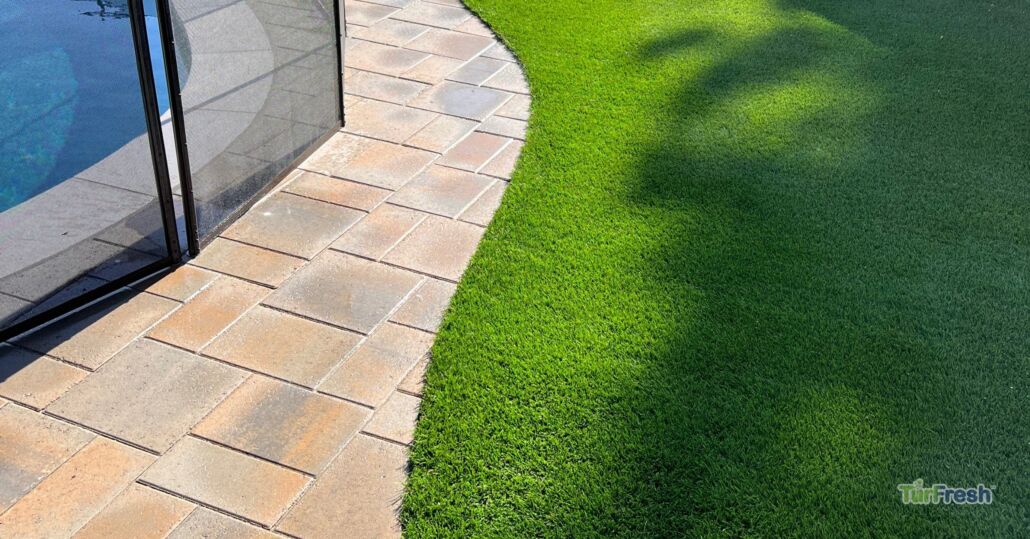
✅ Clear all debris: Remove leaves, twigs, and organic buildup from the turf surface before photography and showings.
✅ Trim turf edges: Tidy the perimeter where turf meets hardscape, edging, or fencing. Ragged edges are visible in wide-angle listing photos.
✅ Address pet odors: Apply a BioS+ treatment to eliminate any residual pet odors before showings. Odor is one of the most common reasons buyers form negative impressions during walkthroughs.
✅ Document the service: Have your TurFresh service record ready. A professional maintenance history signals to buyers that the turf has been properly cared for and supports your asking price in negotiations.
How to Use Turf Condition as a Selling Point
➧ In your listing description: Use language like “professionally maintained synthetic lawn” and “recently serviced artificial turf” to set buyer expectations positively.
➧ In buyer conversations: Reference the 15 to 20 year lifespan of quality artificial turf installations to position the existing turf as years of value already delivered.
➧ With your agent: Ask TurFresh for a written condition assessment. A professional evaluation you can share with buyers removes objections before they arise.
➧ In markets with water restrictions: Position the turf as an ongoing cost savings for the buyer. Arizona and California buyers familiar with water bills understand the value immediately.
One TurfBloom service. Maximum first impression.
TurFresh has completed 150,000+ services nationwide. Book your TurfBloom before your listing date and back it with our 30-day satisfaction guarantee.
✔ Pet Safe✔ Same-Day Safe for Kids✔ 30-Day Guarantee✔ 150,000+ Services
Complete Guide
📖 What Is Artificial Turf Reblooming? — what the service includes, when it makes sense, and how reblooming restores fiber height, infill, and appearance without full replacement.
Frequently Asked Questions
What is turf reblooming?
Turf reblooming is a professional service that lifts flattened synthetic grass fibers back to an upright position and de-compacts hardened infill material. A reblooming treatment uses specialized power grooming equipment to restore both the appearance and physical structure of the turf to near-installation condition.
Should I rebloom my artificial turf before selling my home?
Yes. Worn turf that needs reblooming is visually indistinguishable from turf that needs full replacement to most buyers. At $200 to $600, a professional rebloom service eliminates buyer uncertainty and prevents concession requests that typically range from $1,500 to $5,000 for visible turf wear.
How long does a TurfBloom service take?
Most residential TurfBloom appointments complete in 1 to 3 hours. A standard backyard of 500 to 1,500 square feet typically takes under two hours. The turf is safe for children and pets immediately after service with no waiting period.
How far in advance should I schedule turf reblooming before listing?
Schedule TurfBloom 3 to 4 weeks before your listing date. This allows fibers to fully settle, creates room for a follow-up TurfClean if needed, and ensures the turf is at peak appearance for professional listing photography.
How is turf reblooming different from turf cleaning?
Turf cleaning removes surface dirt, bacteria, pet waste, and odors. Turf reblooming addresses the physical structure: lifting flat fibers and de-compacting infill. The two services solve different problems. For maximum curb appeal before a sale, combining TurfBloom and TurfClean delivers the best result.
Does rebloomed turf show up differently in listing photos?
Yes. Flat, compacted turf photographs as gray or brownish rather than green. Rebloomed turf with upright fibers reflects light more evenly, appears fuller, and photographs significantly greener. In digital listings where buyers scroll through multiple properties, turf condition affects click-through rate before a showing is ever scheduled.
Can I rebloom turf myself before selling?
DIY grooming tools can lift surface fibers slightly but cannot decompact infill or reach the depth of professional power grooming equipment. For a home sale where first impressions are directly tied to sale price, professional service delivers results a homeowner cannot replicate with available tools.
Does artificial turf increase home value?
Premium artificial turf installed correctly can raise resale prices by 3 to 10 percent in markets where water conservation and low maintenance are valued. The American Society of Landscape Architects reports that professional landscaping adds 15 to 20 percent to home resale value overall.
Share

John Pla is the owner of TurFresh and an expert with over 20 years of experience in artificial turf cleaning and maintenance. John’s passion for sustainability, community impact, and innovative solutions has made him a trusted figure in the artificial grass industry and beyond.