Dog Poop on Artificial Grass: Health Risks, How to Clean It, and What Diarrhea Changes
Jul 25, 2023 · 12 min read · By John Pla, Founder of TurFresh
Dog poop on artificial grass is not just an unpleasant cleanup. Pet waste that sits on synthetic turf stays biologically active in ways that natural soil manages on its own. Artificial grass does not break down organic waste. It holds it. One gram of dog feces can contain up to 23 million fecal coliform bacteria, and those bacteria remain active on turf surfaces for days to weeks depending on conditions. For families with children who play directly on the turf, that gap between cleanup and contamination matters.
TL;DR Dog poop on artificial grass creates a breeding ground for bacteria, parasites, and viruses that do not break down naturally on synthetic surfaces. Prompt removal and enzyme-based cleaning are essential. Diarrhea requires a different, more thorough approach than solid waste. For households where buildup has accumulated over time, professional deep cleaning is the only way to fully sanitize the surface and infill.
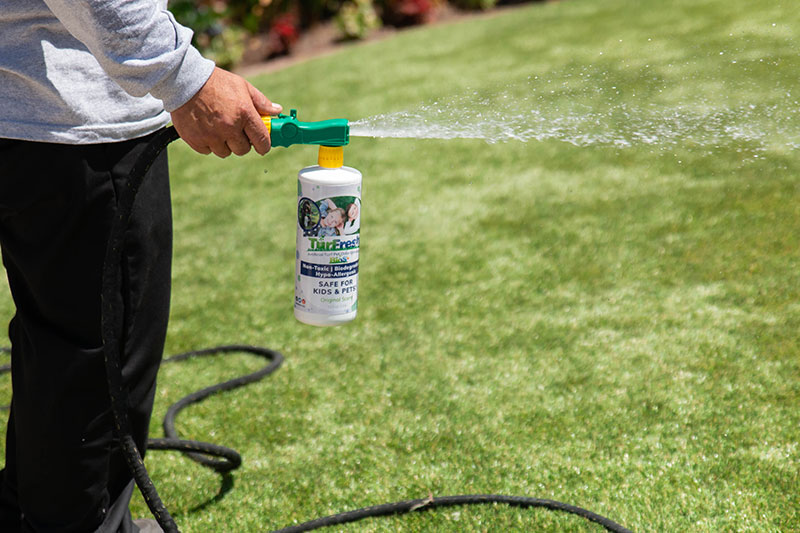
Quick Answer Remove solid waste immediately, rinse the area with a hose, and apply a turf-safe enzyme cleaner with full dwell time. For diarrhea, act faster and use more thorough treatment. Avoid bleach and ammonia. If the turf has not been professionally cleaned in over a year and you have pets, the infill likely contains pathogen buildup that surface cleaning cannot reach.
Surface cleaning doesn't reach what's in the infill.
TurFresh sanitizes down to the infill and backing where bacteria, parasites, and viral residue accumulate. Pet safe and kid safe immediately after service.
Schedule Your Turf Cleaning✔ Pet Safe✔ Kid Safe✔ 20+ Years of Experience✔ 30-Day Guarantee
Why pet waste on artificial grass is different from natural grass
Natural soil contains microorganisms that break down organic waste over time. Artificial turf does not. When dog poop sits on synthetic grass, the bacteria, parasites, and viruses it contains remain active on the surface and in the infill with no natural decomposition process to reduce them. Rain makes it worse in one specific way: moisture spreads contamination from the waste site into surrounding turf and infill, expanding the affected area beyond where the waste was deposited. Children are at higher risk because they spend more time in direct ground contact than adults, are more likely to touch the turf and then their faces or mouths, and have developing immune systems that are less equipped to handle pathogen exposure.What pathogens does dog poop carry on artificial turf?
Dog feces can contain a range of bacteria, parasites, and viruses. On artificial turf, these remain active on the surface and in the infill until removed or neutralized.Bacteria:
E. coli, can live for weeks on turf surfaces. Spreads through paw contact, foot traffic, and children touching the turf. Causes severe gastrointestinal illness including cramping, diarrhea, vomiting, and in extreme cases kidney failure. Salmonella, present in fecal residue. Survives for days in damp or shaded turf areas. Causes fever, nausea, and abdominal pain. Campylobacter, a leading cause of bacterial gastroenteritis in children. Found in dog feces and spread by contact with contaminated surfaces.Parasites:
Roundworms (Toxocara), eggs survive in the environment for months. If ingested, larvae can migrate to organs, eyes, or the central nervous system. Children are at significantly higher risk through hand-to-mouth contact. Hookworms, can penetrate skin on contact. Cause itching, rashes, and gastrointestinal symptoms. Giardia, a protozoan parasite that causes diarrhea and dehydration. Spreads easily through contaminated surfaces.Viruses:
Parvovirus (Parvo), deadly for unvaccinated puppies and can remain infectious in turf surfaces for months. One infected dog's waste can contaminate an entire yard. Even vaccinated dogs can track it home on their paws.Key fact: One gram of dog feces can contain up to 23 million fecal coliform bacteria. These are not numbers that require visible waste to be present, microscopic residue left after cleanup can still carry active pathogens.
How to clean dog poop from artificial grass
For solid waste:
👉 1. Let waste dry slightly if fresh, dried waste lifts cleanly without spreading residue into turf fibers. If it is very fresh, use a bag or scooper anyway. 👉 2. Remove all solid material, use a scooper or bag and dispose properly. Wear disposable gloves. 👉 3. Rinse the area thoroughly, use a garden hose to flush remaining residue through the turf backing and away from the surface. 👉 4. Apply an enzyme-based turf cleaner, enzyme cleaners break down organic waste, bacteria, and odor compounds at a molecular level. Apply to the affected area and extend slightly beyond the visible waste zone. 👉 5. Allow full dwell time, do not skip this. The enzymes need time to work. Follow product instructions exactly. 👉 6. Rinse again if required by the product label.Dog diarrhea on artificial grass: why it requires extra steps
Diarrhea is significantly more difficult to clean from artificial turf than solid waste. The liquid consistency means it spreads into turf fibers and infill immediately rather than sitting on the surface. It also typically carries a higher bacterial load and spreads pathogens across a wider area than solid waste.How to clean dog diarrhea from artificial grass:
👉 1. Act immediately, diarrhea penetrates the infill faster than solid waste. Every minute increases the area of contamination. 👉 2. Remove as much as possible, use paper towels, a scooper, or a bag. Work from the outside of the affected area inward to avoid spreading it further. 👉 3. Rinse heavily, flush the area thoroughly with a hose to push residue through the turf backing. Use more water than you would for solid waste cleanup. 👉 4. Apply enzyme cleaner at double the standard coverage area, diarrhea spreads beyond what is visible. Treat the visible area plus a margin around it. 👉 5. Allow extended dwell time. 👉 6. Rinse again and allow to dry fully before children or pets return. 👉 7. Consider a professional cleaning, if your dog has recurring digestive issues or diarrhea episodes are frequent, regular professional deep cleaning removes pathogen buildup from the infill that home cleaning cannot fully address.Important: If your dog had diarrhea due to illness, treat the entire area as potentially contaminated, not just the visible waste zone. Pathogens spread through paw contact and foot traffic before and after the event.
What cleaners are safe for artificial turf with kids and pets?
The right cleaner neutralizes pathogens without damaging turf fibers or leaving harmful residue. Use: ✔ Enzyme-based turf cleaners, break down organic waste and bacteria at a molecular level. Safe for kids and pets when used as directed. TurFresh BioS+ is formulated specifically for synthetic turf. ✔ Oxygenated turf cleaners, for persistent bacterial contamination or situations where enzyme cleaners have not fully resolved the issue. TurFresh BioX neutralizes odor compounds and bacteria more consistently in outdoor conditions. Avoid: ⚠️ Bleach, reacts with ammonia in urine to create toxic fumes. Damages turf fibers and backing. Does not eliminate all pathogens effectively on porous surfaces. ⚠️ Ammonia-based cleaners, signal dogs to return to the same spot. Can worsen contamination over time. ⚠️ Generic outdoor cleaners not rated for synthetic turf, can leave residue that attracts bacteria or degrades infill.How long can pathogens survive on artificial turf?
Survival times vary by pathogen and conditions, but the general picture is: • E. coli: days to weeks, longer in damp or shaded areas • Salmonella: days to weeks on hard surfaces • Roundworm eggs: months to years in favorable conditions • Parvovirus: months on turf and surrounding surfaces • Giardia cysts: weeks in cool, moist environments Heat reduces survival times. Cold and moisture extend them. Turf that drains poorly and stays damp is a higher-risk environment than well-drained, sun-exposed turf.Is artificial turf safe for kids and pets?
Yes, when properly maintained. The safety risk is not from the turf itself but from accumulated pet waste residue that has not been fully treated. A turf surface that is cleaned consistently with enzyme-based products and receives professional deep cleaning annually poses minimal risk. The risk increases when: • Waste is not removed promptly • Cleaning is infrequent relative to pet use • The infill has accumulated months or years of untreated residue • A diarrhea episode was not treated thoroughlyPathogen buildup in the infill is not visible. It just accumulates.
TurFresh's proven process sanitizes down to the infill and backing layer. One service removes what months of surface cleaning leaves behind. Kid safe and pet safe the same day.
Schedule Your Turf Cleaning✔ Pet Safe✔ Kid Safe✔ 20+ Years of Experience✔ 30-Day Guarantee
Can pet waste damage artificial turf over time?
Yes. Repeated exposure to untreated pet waste can: • Break down turf fibers through the acids and enzymes in organic waste • Compact and degrade infill reducing drainage and blade support • Block drainage as organic residue accumulates in the base layer • Create persistent odor that home cleaning cannot fully remove once deeply embedded Regular cleaning protects both the hygiene and the lifespan of the turf.Practical pet waste maintenance checklist for artificial turf
✅ Daily: Remove solid waste immediately. Rinse the area. ✅ Weekly: Full rinse of pet zones. Spot check for residue. ✅ Monthly: Enzyme treatment of all pet areas with full dwell time. ✅ After diarrhea episodes: Immediate, thorough treatment as described above. Do not wait. ✅ Annually: Professional deep cleaning to remove pathogen and odor buildup from infill and backing.Frequently Asked Questions
Is dog poop harmful on artificial grass?
Yes. Dog feces can carry E. coli, Salmonella, Giardia, roundworms, hookworms, and Parvovirus. These pathogens remain active on synthetic turf surfaces for days to months because artificial grass does not break down organic waste naturally. One gram of dog feces can contain up to 23 million fecal coliform bacteria.How do you clean dog diarrhea from artificial grass?
Act immediately. Remove as much as possible working from the outside inward. Rinse heavily to flush residue through the backing. Apply enzyme cleaner across the visible area plus a margin around it. Allow full dwell time. Rinse again and keep kids and pets off until fully dry. For recurring diarrhea issues, schedule professional cleaning to address infill contamination.How long does bacteria from dog poop survive on artificial turf?
E. coli and Salmonella can survive days to weeks on turf surfaces. Roundworm eggs can persist for months to years. Parvovirus can remain infectious for months. Damp, shaded turf extends survival times significantly.Can I use bleach to clean dog poop off artificial grass?
No. Bleach reacts with ammonia in urine to create toxic fumes, damages turf fibers and backing, and does not effectively eliminate all pathogens on porous surfaces. Use enzyme-based or oxygenated turf cleaners instead.Is artificial turf safe for kids if you have dogs?
Yes, when properly maintained. The risk comes from accumulated pet waste residue, not the turf itself. Prompt removal, regular enzyme treatment, and annual professional cleaning keep the surface safe for children.Does artificial grass smell with pets?
It can if not properly maintained. Odor from pet waste is a signal that bacteria and uric acid have built up in the infill. Regular cleaning and enzyme treatment prevent odor buildup. If odor returns quickly after cleaning, the infill needs deeper treatment or professional cleaning.Will cats poop on artificial grass?
Cats may use artificial turf as a litter alternative, especially if pet odors are already present. Keeping the turf clean and odor-free discourages this behavior. The same cleaning approach applies: prompt removal, rinsing, and enzyme treatment.When should I schedule professional turf cleaning for pet waste?
When the turf has not been professionally cleaned in over a year, when odors return quickly after surface cleaning, when you have experienced multiple diarrhea episodes without thorough treatment, or when multiple pets have been using the turf consistently. Professional cleaning reaches the infill layer where pathogen and odor buildup accumulates beyond what home maintenance can address.Related reading
- Is Artificial Grass Safe for Dogs? How to Stop Chewing and Keep Turf Clean
- Beware the Hidden Dangers: Why Hypochlorite Spells Disaster for Your Turf and Pets
- How to Clean Dog Poop Off Artificial Grass
Ready for a Safe, Clean Yard? 📞 Call (855) 444-8873 or 📱 text (714) 709-2551 to get started. Professional Artificial Grass Cleaning Turf Cleaning Products | Deep Clean Your Turf and Infill Give your family and pets the clean, fresh outdoor space they deserve. 👉 New customers receive 10% OFF