What Is Turf Infill? Types, Amounts, and How to Choose the Right One
Dec 22, 2023 · 14 min read · By John Pla, Founder of TurFresh
Quick Answer: Turf infill is the granular material installed between artificial grass fibers to keep blades upright, add ballast, cushion the surface, and support drainage. According to turf manufacturers, most residential installations require 1 to 2 pounds of infill per square foot. The right infill type depends on whether the area gets pet use, what climate it is in, and what performance goal matters most.
Infill issues are part of what TurFresh fixes at the source.
TurFresh de-compacts, redistributes, and tops up infill as part of its professional turf cleaning process. Shop TurFill or schedule a service visit.
Schedule Infill Service✔ Pet Safe✔ Eco Friendly✔ 20+ Years Experience✔ 30-Day Guarantee
Key Takeaways
🔑 Turf infill is a structural component, not an optional add-on. Most residential installations need 1 to 2 lbs per square foot 🔑 Silica sand is the most affordable option for general use. Zeolite or zeolite-blend infill is the right choice for pet areas 🔑 Infill depletes slowly and silently. By the time fibers are visibly flat, levels have been low for months 🔑 For pets, choose an infill that breaks down ammonia at the source. Fragrance-based products mask odor temporarily 🔑 Top-up frequency depends on use level, not calendar dates. Check high-traffic zones seasonally
What Is Turf Infill and What Does It Do?
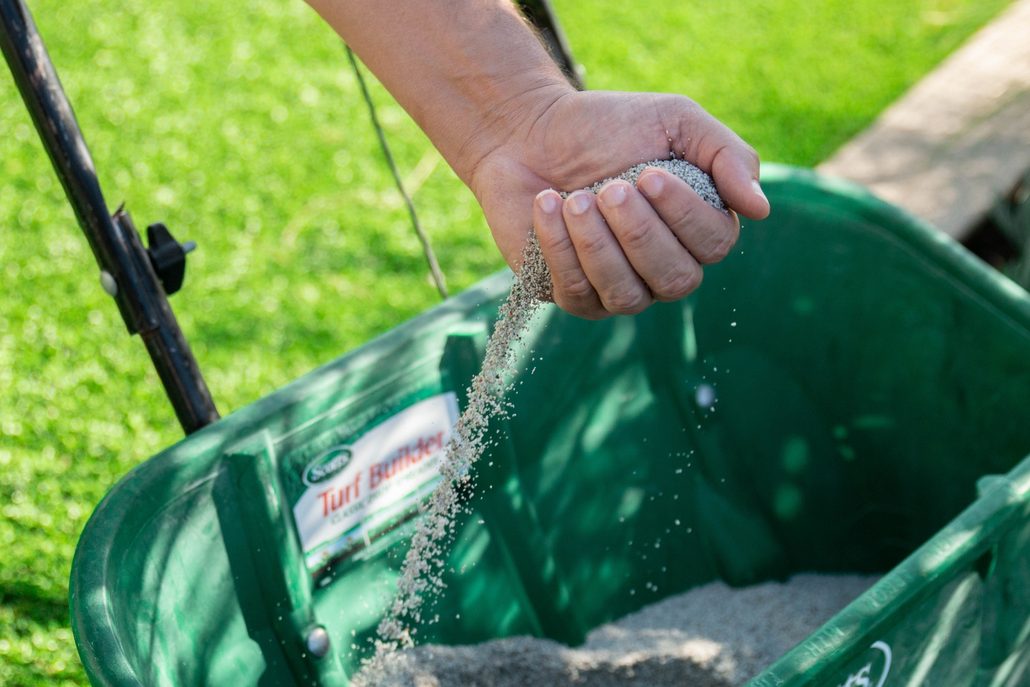
Turf infill is the granular material installed between the blades of synthetic grass after the turf is laid. It serves four core functions that directly affect how turf looks, feels, and performs over its lifespan.
➧ Fiber support: Infill surrounds each blade at the base and holds it upright. Without infill, fibers flatten under load and do not recover. With proper infill depth, blades bounce back after foot traffic and maintain a full, natural appearance.
➧ Ballast and stability: Infill adds weight to the turf system, preventing lifting, wrinkling, and shifting in wind, heat, or heavy use. It keeps seams flat and edges anchored.
➧ Cushioning: The infill layer absorbs impact between the turf surface and the hard sub-base beneath. This is what creates the soft, grass-like feel underfoot. Low infill means harder surface feel.
➧ Drainage support: Properly distributed infill maintains open pathways between fibers for water and urine to pass through to the backing. Compacted infill closes those pathways and slows drainage.
Infill is not an optional upgrade. It is a structural component of most artificial turf systems. A turf installation without infill, or with significantly depleted infill, is not performing as designed.
What Are the Different Types of Turf Infill?
According to turf manufacturers and independent testing, the five most common infill types each serve a different primary purpose. Choosing the right one depends on climate, use case, and budget.
Silica Sand
Silica sand is the most widely used infill material. It provides reliable ballast and drainage at the lowest cost per pound. Best for general residential installations, front yards, and decorative areas without heavy pet use. Not ideal for pet zones because it does not address ammonia odor.Cost: approximately $0.50 to $1.50 per pound
Zeolite
Zeolite is a natural mineral that absorbs ammonia from pet urine, which is the primary source of odor in pet turf. It is the most widely recommended upgrade from silica sand for households with dogs. Zeolite stays 20 to 30 percent cooler than standard infill in direct sun, according to independent heat testing.Cost: approximately $1.50 to $3.00 per pound
Crumb Rubber
Crumb rubber, typically recycled from tires, provides excellent shock absorption and is widely used in sports fields. It retains significantly more heat than sand or zeolite in warm climates. Many municipalities and school districts have moved away from crumb rubber in response to ongoing health and environmental reviews, particularly for children's play areas.Cost: approximately $0.80 to $2.00 per pound
TPE (Thermoplastic Elastomer)
TPE is a synthetic rubber alternative to crumb rubber that provides similar cushioning without the health concerns associated with recycled tire material. It inhibits bacterial growth, resists static buildup, and has a service life of over 10 years. Common in schools, parks, and professional sports fields.Cost: approximately $2.00 to $4.00 per pound
Organic Infill (Cork, Coconut Fiber, Walnut Shell)
Organic infills are biodegradable, non-toxic, and generally cooler than synthetic options. They are the choice for installations where environmental impact and child safety are the primary concerns. Performance varies by product and climate.Cost: approximately $2.50 to $5.00 per pound
For most residential pet owners in warm climates, zeolite or a zeolite-blend infill like TurFill provides the best balance of odor control, heat management, and drainage support at a reasonable cost per square foot.
What Is the Best Infill for Artificial Grass With Pets?
The best infill for pet areas is one that neutralizes ammonia from urine at the source rather than masking odor with fragrance. Pet urine odor is driven primarily by ammonia and uric acid compounds that accumulate in the infill layer. An infill that absorbs or breaks down ammonia directly prevents the odor cycle that builds up in pet zones over time.
TurFresh TurFill is designed specifically for this application. TurFill is an all-natural, biodegradable infill that neutralizes pet odor by breaking down ammonia and urine proteins at the molecular level, rather than relying on fragrance to cover the smell. It is non-toxic and safe for children and pets.
What separates TurFill from standard zeolite:
➧ Targets ammonia breakdown, not just absorption ➧ Biodegradable and non-toxic formulation ➧ Works between professional cleaning visits to reduce odor accumulation ➧ Can be applied as a top-up without removing existing infill
If pets use the same paths or potty spots daily, choosing an infill designed for urine and ammonia management makes routine maintenance significantly more effective. Standard sand holds odor. TurFill breaks it down.
Complete Guide
📖 Artificial Turf Problems: 9 Most Common Issues, causes, fixes, and when to call a professional for weeds, mold, pests, drainage, infill, and more.
How Much Infill Do You Need for Artificial Grass?
Most residential artificial turf installations require 1 to 2 pounds of infill per square foot for initial application, according to turf manufacturer guidelines. The exact amount depends on pile height, fiber density, and use intensity.
Simple calculation
Multiply your total square footage by the pounds per square foot you plan to apply:
➡️ 200 sq ft yard at 1 lb/sq ft = approximately 200 lbs total ➡️ 500 sq ft yard at 1.5 lbs/sq ft = approximately 750 lbs total
A 50-pound bucket of infill covers approximately 50 square feet at 1 pound per square foot for an initial application. For top-ups on existing turf, the amount needed is usually much less because existing infill is still partially present.
Factors that increase the amount needed
👉 Taller pile height (over 1.5 inches) requires more infill to reach the fiber base 👉 High foot traffic zones displace infill faster and need more frequent top-ups 👉 Pet areas with daily use compact and displace infill at a higher rate 👉 High-wind locations lose more infill to displacement over time
How Does Infill Change Over Time?
Infill levels drop gradually because granules shift, compact, and leave the turf surface through normal use. Wind, pets, foot traffic, and maintenance all move infill out of high-use zones.
The process is slow enough that most turf owners do not notice the change until comfort, appearance, and drainage performance have already declined. By the time fibers are visibly flat and the surface feels noticeably harder, infill levels have often been low for months.
What causes infill to deplete fastest:
➧ Pets running the same path repeatedly displace infill to the sides ➧ High-pressure rinsing pushes granules toward turf edges ➧ Wind consistently blows lighter infill material out of the surface ➧ Heavy foot traffic compacts infill downward, reducing its effective support height
Infill does not fail overnight. It drifts slowly, which is why seasonal checks in high-use zones are more effective than waiting for visible signs of wear to appear.
How Do You Know When Turf Infill Is Too Low?
Low infill shows up in five consistent patterns, all of which are recognizable before the turf reaches a point of damage.
⚠️ Blades stay flat after brushing: fibers are unsupported at the base ⚠️ Surface feels harder or less cushioned than it used to ⚠️ Visible backing showing through in high-traffic lanes ⚠️ Uneven feel across the lawn, especially between high-use and low-use zones ⚠️ Odor in pet areas becoming harder to control despite regular rinsing
A practical diagnostic: brush the turf in a high-traffic zone and observe whether the blades return to an upright position. If they stay flat after brushing, the infill supporting them at the base is insufficient.
How Often Should You Add or Top Up Infill?
According to TurFresh's maintenance guidelines, infill top-up frequency depends on use level and climate rather than a fixed calendar interval.
➧ Light residential use, no pets: inspect annually, top up if needed ➧ Moderate foot traffic, occasional pets: inspect twice per year, top up in high-traffic zones ➧ Heavy daily pet use: inspect seasonally, top up as needed, consider professional infill service annually ➧ Commercial or multi-family use: professional infill assessment every 6 to 12 months
The most reliable indicator is not time but condition. Check the same two or three spots each time: the dog's regular path and the main entry point. Compare the feel and fiber stand to what they were when infill was fresh.
How Do You Add or Redistribute Infill on Artificial Grass?
Adding infill to artificial grass is a straightforward process when done correctly. Incorrect application, particularly applying too much at once or not brushing it in properly, leaves granules sitting on top of the fibers rather than settling at the base where they provide support.
👉 Step 1: Brush the turf against the grain to lift fibers and expose the base layer 👉 Step 2: Apply infill in light, even passes using a drop spreader or by hand for small areas 👉 Step 3: Brush the infill in using a stiff-bristle broom or turf rake so granules settle between fibers 👉 Step 4: Repeat the brushing pass in multiple directions to ensure even distribution 👉 Step 5: Rinse lightly to help granules settle and check that no excess remains on the surface
For large yards, heavy infill depletion, or pet areas with significant compaction, professional application ensures even coverage and correct depth without over- or under-application.
TurFill is TurFresh's all-natural pet-safe infill designed for odor control at the source.
Order TurFill online for DIY application, or schedule a professional infill service for large areas and heavy pet use.
Shop TurFill or Book a Service✔ Pet Safe✔ Non-Toxic✔ Biodegradable✔ 20+ Years Experience
Frequently Asked Questions
What is turf infill?
Turf infill is the granular material spread between artificial grass blades to keep fibers upright, add ballast, cushion the surface, and support drainage. Most residential installations use 1 to 2 pounds per square foot. Common materials include silica sand, zeolite, crumb rubber, TPE, and organic options like cork.Do you need infill for artificial grass?
Yes, for most artificial turf systems. Infill supports fiber stand, adds stability, cushions the surface, and maintains drainage pathways. Turf installed without infill, or with significantly depleted infill, flattens faster, feels harder underfoot, and wears out sooner than designed.What is the best infill for artificial grass with dogs?
For pet areas, a zeolite-based or ammonia-neutralizing infill provides the best results. Standard silica sand drains well but does not address pet odor. Zeolite absorbs ammonia from urine. TurFresh TurFill goes further by breaking down ammonia and urine proteins at the molecular level rather than just absorbing them.How much infill do I need per square foot of artificial grass?
Most residential installations require 1 to 2 pounds of infill per square foot for initial application. A 200 square foot yard at 1 pound per square foot needs approximately 200 pounds total. A 50-pound bucket covers about 50 square feet at 1 pound per square foot. Top-up applications require significantly less than initial installs.What is the difference between silica sand and zeolite infill?
Silica sand provides ballast and drainage at the lowest cost per pound. It is the standard choice for areas without pet use. Zeolite is a natural mineral that absorbs ammonia from pet urine, making it significantly more effective at odor control in pet zones. Zeolite also stays 20 to 30 percent cooler in direct sun compared to standard infill options.How do you know when turf infill is too low?
Signs of low infill include fibers that stay flat after brushing, a harder or less cushioned feel underfoot, visible backing showing through in high-use areas, and odor in pet zones that becomes harder to control. Brush the turf in a high-traffic zone and check whether blades return upright. If they stay flat, infill is insufficient.How often should you add infill to artificial grass?
Frequency depends on use level. Light residential use without pets may only need an annual check. Heavy daily pet use warrants a seasonal inspection with top-ups as needed. A professional infill service annually is recommended for yards with multiple dogs or heavy foot traffic. The most reliable indicator is condition, not a fixed schedule.What is TurFill and how is it different from regular zeolite?
TurFill is TurFresh's all-natural, biodegradable infill designed specifically for pet areas. Standard zeolite absorbs ammonia. TurFill is formulated to break down ammonia and urine proteins at the molecular level, which eliminates odor at the source rather than absorbing and holding it. TurFill is non-toxic and safe for children and pets.Can compacted infill cause drainage problems?
Yes. Infill compaction reduces the open space between fibers that water and urine need to pass through to reach the backing. Dense, hard-packed infill slows or blocks drainage, which contributes to odor and pooling. De-compacting and redistributing infill is one of the steps TurFresh performs in its 10-point turf cleaning process.What is the cheapest infill for artificial grass?
Silica sand is the most affordable option at approximately $0.50 to $1.50 per pound. It provides good ballast and drainage for general residential use. For areas with pet use, the lower upfront cost of sand typically results in higher ongoing odor control costs, making zeolite or a specialty infill more cost-effective over time.