
Artificial grass is a popular landscaping solution in extreme climates because synthetic polyethylene fibers help it stay vibrantly green year-round. Even so, it is still an investment, and routine care protects its look, performance, and long-term value.
TL;DR:
Artificial grass stays green with less work than natural grass, but regular cleanup, quick spot cleaning, and occasional deeper maintenance are what keep it looking fresh, draining well, and lasting longer.
Quick Answer:
Maintain artificial grass by removing debris often, cleaning pet waste quickly, spot-cleaning spills as they happen, and scheduling periodic deeper cleaning to prevent odors, matting, and premature wear.
Why does artificial grass need regular maintenance if it is “low maintenance”?
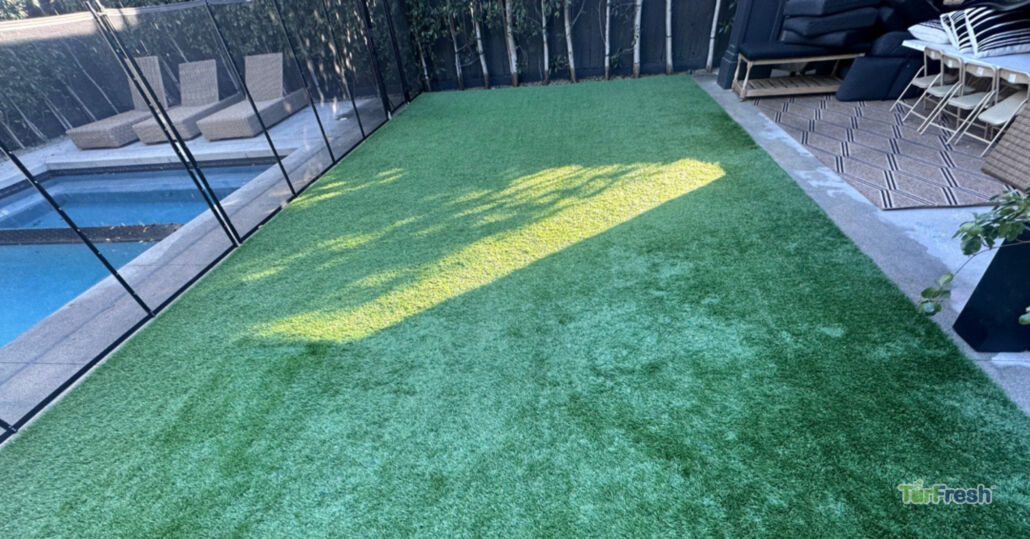
Artificial grass is low maintenance, not maintenance-free. Routine upkeep helps prevent long-term damage from debris, spills, and pet waste that can degrade turf blades and affect the turf system over time.
Regular maintenance supports:
• A consistently clean, natural-looking appearance
• Less odor buildup, especially in pet areas
• Fewer drainage issues caused by residue and buildup
• Lower risk of costly repair or early replacement
Even light, simple maintenance helps your turf stay beautiful and functional for as many years as possible.
💡 Tip Highlight: If your turf looks “fine” but starts holding smells or looking matted in walk paths, it usually needs maintenance below the surface, not just a quick rinse.
What routine synthetic grass maintenance tasks matter most?
The most important turf maintenance tasks are the ones that prevent buildup and handle messes before they set. That means removing debris, cleaning pet waste quickly, and treating spills right away.
A practical routine focuses on:
➧ Keeping organic debris from collecting
➧ Preventing bacteria buildup in pet zones
➧ Avoiding stains and discoloration from spills
➧ Reducing the wear that can shorten turf lifespan
💡 Tip Highlight: Cleanups done fast are easier, take less product, and reduce the chance of long-term discoloration and odor.
How do you remove pet waste and bacteria from artificial grass?
Remove solid pet waste as soon as possible to prevent matting and reduce bacteria buildup. Artificial grass drains well, which makes cleanup easier, but it still benefits from quick, consistent maintenance.
After removing solid waste:
• Hose the area thoroughly to flush away residue and encourage complete drainage.
• If residue remains, spot-clean with a mild soap and warm water solution.
• Use a synthetic bristle brush and scrub in circles to lift and remove the residue.
• Rinse the area thoroughly to remove the soap solution.
• Allow the turf to dry completely.
If odors linger, or if you want your lawn smelling fresh, apply a synthetic turf deodorizer such as TurFresh BioS+. Turf deodorizers can be applied as needed to synthetic grass and other outdoor surfaces to help neutralize pet odors and further sanitize turf landscaping.
💡 Tip Highlight: Focus deodorizer applications on the most-used pet zones, not the entire lawn, unless odor is widespread.
How do you manage spills, stains, and burns on synthetic turf?
Clean spills as soon as you notice them to reduce odors and prevent discoloration that can shorten turf life. Turf can handle everyday life, including parties and BBQs, but fast cleanup is what keeps it looking its best.
For spills and messes:
👉 Blot liquids or pick up large solid pieces right away to remove as much of the source as possible.
👉 Clean the area using a mild detergent and warm water solution.
👉 Rinse thoroughly.
For tougher stains:
👍 Use a white vinegar and water mixture, or a commercial artificial grass cleaner designed to remove stubborn messes without damaging turf fibers.
For burns and BBQ mishaps:
👍 Address them quickly. Burns can permanently affect turf fibers, so preventing repeat heat exposure and cleaning surrounding residue helps keep the area from looking worse over time.
💡 Tip Highlight: If you host BBQs often, place a heat-safe mat under the grill to reduce the risk of turf damage.
When should you choose professional artificial grass maintenance instead of doing it yourself?
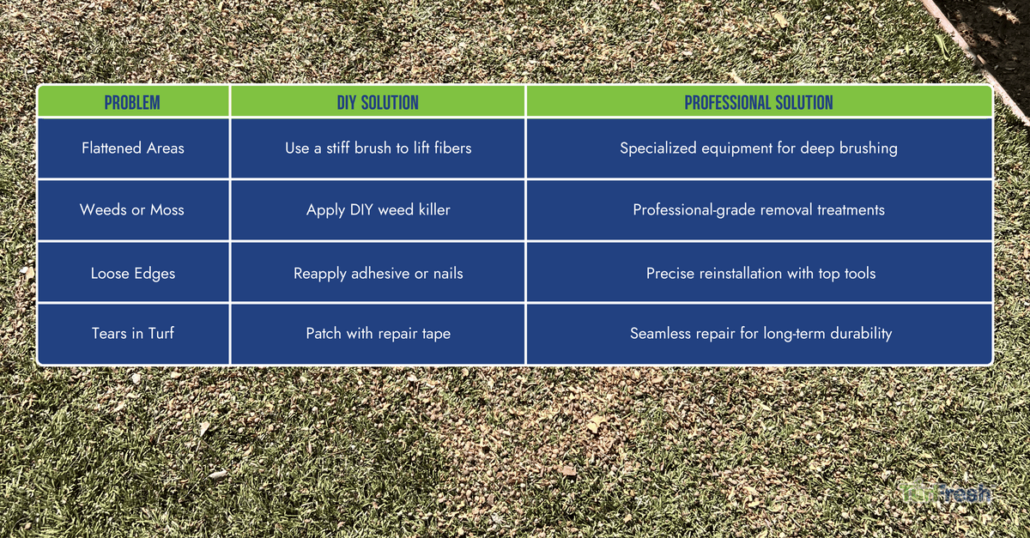
Choose professional artificial grass maintenance when you want a deeper clean than routine DIY care can deliver, or when your weekends are too valuable to spend on turf upkeep. DIY care works well for basic cleanup, but professional service helps restore appearance and address buildup more thoroughly.
If you prefer professional support, TurFresh’s artificial grass maintenance service includes a comprehensive 10-point cleaning process designed to rejuvenate your lawn and help keep it lush and green for years. The
TurfClean service includes:
👉 Reblooming synthetic turf blades
👉 Topping up infill
👉 Cleaning stains
👉 Removing pet odors
👉 Treating weeds
👉 And more
To get started, call 📞 855-444-8873, fill out the online contact form to book your first appointment, or visit the online store for products that help keep artificial grass clean and pristine.
💡 Tip Highlight: If odors return quickly after rinsing, a deeper professional clean is often more effective than repeating surface sprays.
💡 Practical maintenance tips that are easy to follow
Use these quick tips as simple callouts readers can screenshot or save:
✅ Do not wait on messes. Fast cleanup helps prevent stains and odors.
✅ Rinse pet zones regularly. Even if the turf drains well, rinsing reduces residue over time.
✅ Use the right brush. Synthetic bristle brushes help clean without harming turf fibers.
✅ Spot-treat, then rinse. Any cleaning solution should be fully rinsed away afterward.
✅ Deodorize as needed. Apply turf deodorizer when odors linger or after heavy pet use.
Frequently Asked Questions
What is the difference between artificial grass maintenance and artificial turf maintenance?
• Artificial grass and artificial turf maintenance both refer to routine care that keeps synthetic fibers clean, upright, and odor-free, with the same goal of extending lifespan and protecting appearance.
What tools should you use for synthetic grass maintenance at home?
• A hose for rinsing, a mild soap and warm water solution for spot cleaning, and a synthetic bristle brush for scrubbing are a practical starting kit for most homeowners.
Is white vinegar safe to use on artificial grass for tough stains?
• A diluted white vinegar and water mixture can help with tougher stains, as long as it is used carefully and rinsed thoroughly afterward to avoid residue.
What should you do if pet odors keep coming back even after rinsing?
• If odors linger after rinsing and spot cleaning, apply a synthetic turf deodorizer as needed to neutralize odors and help sanitize the area, especially in high-use pet zones.
What is the best way to prevent discoloration from spills on artificial turf?
• Blot spills immediately, remove solids fast, then clean with mild detergent and warm water before rinsing thoroughly to reduce the chance of stains setting.
How can you refresh a turf lawn that looks worn down over time?
• A deeper service that includes reblooming blades, topping up infill, stain cleaning, and pet odor removal can help restore appearance and keep the turf looking greener longer.
When is it time to book an artificial grass maintenance service?
• When you want a deeper clean, want to avoid spending weekends on upkeep, or are dealing with recurring odors, stains, or a lawn that looks less vibrant, professional maintenance is a practical next step.
Ready for an Odor-Free Yard?
📞 Call (855) 444-8873 or 📱 text (714) 709-2551 to get started.
Professional Artificial Grass Cleaning
Turf Cleaning Products | Deep Clean Your Turf and Infill
Give your family and pets the clean, fresh outdoor space they deserve.
👉 New customers receive 10% OFF
Share

John Pla is the owner of TurFresh and an expert with over 20 years of experience in artificial turf cleaning and maintenance. John’s passion for sustainability, community impact, and innovative solutions has made him a trusted figure in the artificial grass industry and beyond.