What Causes Artificial Turf Damage and How to Prevent It
Aug 30, 2021 · 14 min read · By John Pla, Founder of TurFresh
Quick Answer: The most common causes of artificial turf damage are heat (melting or singeing from grills, fire pits, or reflected sunlight), harsh chemicals (oil, gasoline, paint, pesticides), sharp tools (metal rakes, edging blades), and sustained weight from furniture or vehicles. According to turf installers, localized patch repair costs $150 to $500. Full turf replacement costs $6 to $20 per square foot. Most visible damage does not require full replacement.
Most damage doesn't need full replacement.
TurFresh TurFix repairs localized damage (melted patches, tears, seam separation) without replacing the whole lawn. Get a free assessment before committing to a full install.
Book a Damage Assessment✔ Free Assessment✔ Repair Before Replace✔ 20+ Years Experience✔ 30-Day Guarantee
Key Takeaways
🔑 Heat from grills, fire pits, and reflected sunlight is the most common cause of irreversible artificial turf damage. Turf surface temperatures can reach 178°F in direct sun in hot climates 🔑 Harsh chemicals (oil, gasoline, paint, pesticides, antifreeze) damage fibers and backing faster than any other category. Cover turf before any nearby chemical work 🔑 Metal-tined rakes and sharp edging tools cut fibers and puncture backing with repeated use. Synthetic bristle tools only 🔑 Localized patch repair costs $150 to $500. Full replacement costs $6 to $20 per square foot. Most damage is repairable without replacing the whole lawn 🔑 Matting from furniture or vehicles is reversible early and permanent if left too long. Move heavy items regularly and cross-brush affected zones
What Are the Most Common Causes of Artificial Turf Damage?
The four most common causes of artificial turf damage are heat, chemicals, sharp objects, and sustained heavy weight. Each damages a different component of the turf system and requires a different prevention and repair approach.
Artificial grass is significantly more durable than natural sod under normal conditions. It handles everyday foot traffic, pets, and weather without damage. The vulnerabilities are specific and predictable, which means most damage is preventable with a few simple habits.
Treat synthetic turf like an outdoor surface that needs awareness, not a "set it and forget it" product. Most of the damage homeowners experience comes from a handful of avoidable mistakes.
How Does Heat Damage Artificial Turf?
Heat damages artificial turf by melting or deforming the polyethylene fiber blades, which are designed to handle normal sun exposure but not concentrated or reflected heat. Once fibers melt or fuse together, the damage is permanent and requires patch repair.
Heat from grills and fire pits
Grills and fire pits are the most common source of heat damage on residential turf. Hot coals, embers, and radiant heat from a grill positioned directly on turf can melt fibers in minutes. Even a grill positioned "off" the turf surface can cause damage through radiant heat if it is too close.
Prevention: ➧ Place grills and fire pits on a non-combustible pad or hardscape perimeter, not on turf ➧ Use spark guards to contain embers ➧ Maintain at least 3 feet of clearance between any heat source and turf edge ➧ Never dump hot ash near turf
Heat from the sun in hot climates
Direct sunlight does not damage most quality artificial turf. The risk comes from reflected or concentrated heat. According to the Virginia Department of Health, artificial turf surfaces can reach temperatures 50 to 60 degrees Fahrenheit above ambient air temperature in direct sun. In markets like Phoenix, Las Vegas, and the Inland Empire, homeowners have recorded surface temperatures above 170°F during summer afternoons.
At those temperatures, prolonged direct contact can cause burns to bare feet and pet paws. The turf fiber itself typically withstands these temperatures without structural damage, but the risk to people and animals using the surface is real.
Heat safety protocol for hot-climate markets: ➧ Rinse the surface with cool water 30 to 60 minutes before outdoor use during peak summer hours ➧ Schedule outdoor time before 10 AM or after 6 PM during July and August in Phoenix, Las Vegas, and similar markets ➧ Check surface temperature before letting children or pets use the turf on days above 100°F ambient ➧ Consider shade structures over high-use areas if heat is a recurring issue
What to do if you see melted or singed patches
👉 Remove the heat source immediately and prevent repeat exposure 👉 Do not pull or stretch the affected area. This worsens the damage 👉 Assess whether the backing is affected or only the surface fibers 👉 Localized melted patches are usually repairable without full replacement. See the repair vs. replace section below
Small melted areas often look worse than they are. A 2-foot melted patch from a grill spark does not require replacing a 1,000 square foot lawn. Localized repair restores both appearance and performance.
How Do Chemicals Damage Artificial Turf?
Harsh chemicals damage artificial turf by weakening fiber structure, fading color, and staining or discoloring the backing. Damage from chemicals is often permanent because the chemical reaction alters the molecular structure of the synthetic fiber.
Most damaging chemicals for artificial turf
⚠️ Oil, gasoline, and petroleum products: Dissolve the polymer matrix in turf fibers. Even small spills cause visible discoloration and fiber degradation.
⚠️ Pesticides and herbicides: Designed to kill plant material. Many formulations attack polymer surfaces as well. Apply only with turf covered.
⚠️ Paint, solvents, and adhesives: Bond to fiber surfaces and are extremely difficult to remove without damaging the fiber.
⚠️ Antifreeze and automotive fluids: Common in driveways adjacent to turf. Runoff reaches turf edges and infill.
⚠️ Bleach and strong oxidizers: Fade color permanently and degrade fiber backing. Never use bleach for cleaning or disinfecting artificial turf.
Prevention
✅ Cover the turf with a tarp or plastic sheet before any nearby chemical work, spraying, or painting ✅ Store fuel cans, paint, and chemicals away from the turf area ✅ Use only turf-safe cleaning products for routine maintenanceWhat to do after a chemical spill
👉 1. Blot up as much as possible immediately. Do not spread it 👉 2. Rinse the area thoroughly with water 👉 3. Clean with mild detergent and water, then rinse again 👉 4. If discoloration persists, consult a professional before applying additional productsAvoid "strong degreasers" unless your turf manufacturer explicitly recommends them for that specific product. Start with mild detergent and water and escalate only if needed. The wrong cleaner causes more damage than the original spill.
How Do Sharp Objects Damage Artificial Turf?
Sharp objects damage artificial turf by slicing fiber blades, puncturing the backing membrane, or tearing seams. Backing damage is the most serious because it affects the structural integrity of the entire installation.
Common causes of sharp-object damage
➧ Metal-tined rakes used for leaf removal ➧ Metal-bristle brushes or brooms used for cleaning ➧ Shovels and trowels during garden edging work ➧ Edging tools and cutting blades used near turf borders ➧ Careless trimming during lawn work adjacent to turf seams
Safer alternatives
✅ Use a broom or rake with synthetic bristles only ✅ Use plastic tools when working directly on or near turf ✅ When edging near turf borders, use a straight edge guide to avoid cutting into the turf surface ✅ For cross-brushing to lift blades, use a soft-bristle turf groomer and work in slow, controlled passes
The most common sharp-object damage is from well-meaning homeowners using a metal leaf rake during autumn cleanup. One season of metal raking in the same zones creates visible fiber damage that accumulates over years.
Why Does Artificial Turf Flatten Under Furniture and Heavy Weight?
Artificial turf flattens under sustained weight because the infill that supports fibers in an upright position gets compressed and displaced. In the early stages, this is reversible with brushing. Left long enough, fiber compression becomes permanent and the area requires professional restoration.
Common weight damage sources
➧ Patio furniture with narrow legs that concentrate load on small areas ➧ Playground equipment left in one position for months or seasons ➧ Barbecues stored on turf between uses ➧ Vehicles parked on turf, even briefly and repeatedly
Can you park a vehicle on artificial grass?
Vehicles should not be parked on residential artificial turf. A standard passenger car weighs 3,000 to 4,500 lbs concentrated on four small contact points. This crushes infill and compresses fibers at a rate that brushing cannot reverse. Repeated parking in the same spot typically causes permanent ruts within one season.
If vehicle access across turf is unavoidable, install a hardscape pathway or pavers through the turf area to distribute weight.
Prevention
✅ Move furniture every 2 to 4 weeks to prevent permanent compression in one spot ✅ Use furniture cups or load-spreading pads under narrow legs to distribute weight ✅ Do not park vehicles on turf, even temporarily on a recurring basis ✅ Store barbecues and heavy equipment on hardscape, not turfWhat to do if turf is already matted
👉 Cross-brush the area firmly against the grain with a stiff-bristle turf groomer 👉 If infill has displaced into surrounding areas, redistribute it evenly 👉 If fibers stay flat after brushing, the compression is deep. Professional service can restore infill distribution and fiber stand
What Basic Maintenance Prevents Most Artificial Turf Damage?
According to turf maintenance professionals, a simple four-frequency routine prevents the majority of damage that homeowners encounter.
✅ Weekly: Remove leaves and debris with a leaf blower or plastic rake. Rinse pet areas.
✅ Monthly: Cross-brush high-traffic zones against the grain to lift fibers and redistribute infill.
✅ After spills or incidents: Clean immediately with mild detergent and water. Do not let chemical spills sit.
✅ Seasonally: Professional deep clean to remove buildup, decompact infill, and inspect seams and edges for early-stage damage.
The earlier you catch and correct matting, chemical spills, and sharp-object damage, the lower the repair cost and the better the outcome. Most damage that requires full panel replacement started as a minor problem that was left unaddressed for a full season.
Repair vs. Replace: What Does Artificial Turf Damage Actually Cost?
Most homeowners overestimate how much damage requires full replacement. According to turf repair professionals, the breakdown is:
➧ Localized patch repair (melted area, tear, seam separation): $150 to $500 depending on size and access
➧ Infill restoration and deep grooming (compaction, matting): $200 to $600 for a standard residential yard
➧ Full turf replacement: $6 to $20 per square foot installed, depending on product and market
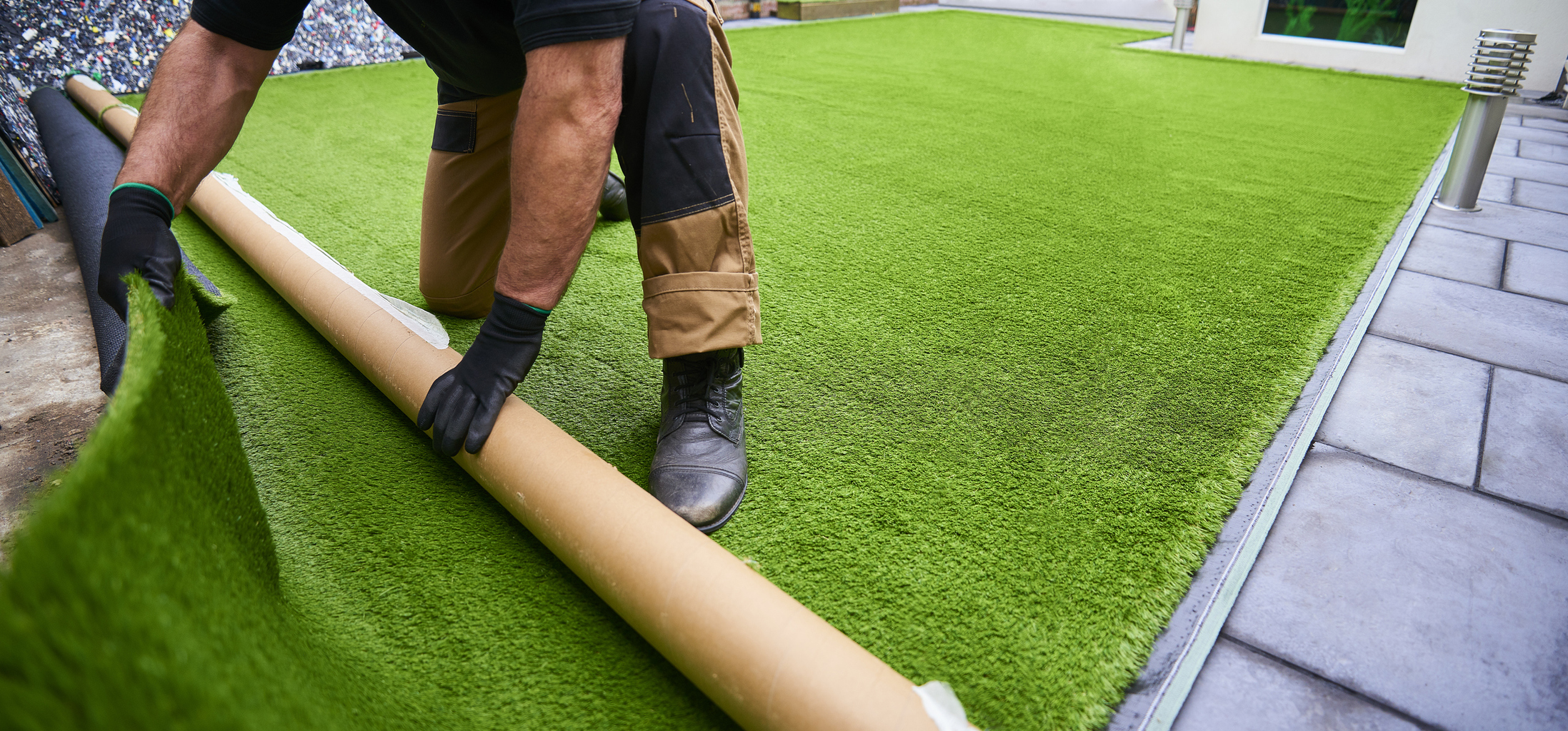
The decision between repair and replacement depends on one question: is the backing structurally sound? If the backing is intact and seams are holding, restoration or localized repair almost always makes more financial sense than replacement before the turf's expected 15 to 20 year lifespan.
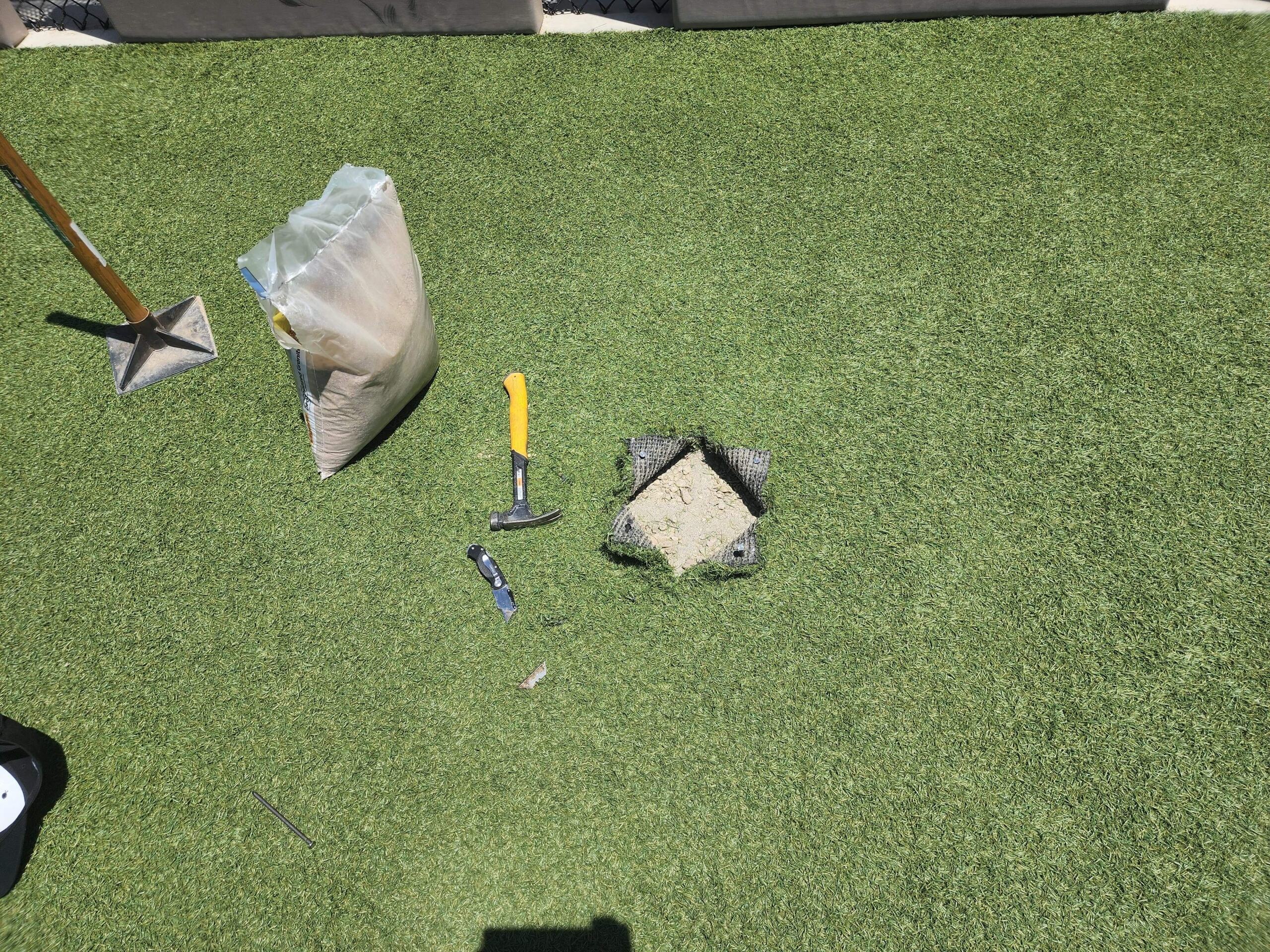
TurFresh TurFix handles localized repair work, including replacing damaged panels with client-supplied turf to avoid a full re-installation. This approach restores both appearance and structural performance at a fraction of full replacement cost.
Get a professional damage assessment first.
TurFresh TurFix repairs melted patches, tears, seam separation, and compaction damage without full replacement. Most visible damage is fixable for $150 to $500.
Get a Free Damage Assessment✔ Repair Before Replace✔ Free Assessment✔ 20+ Years Experience✔ 30-Day Guarantee
Frequently Asked Questions
What causes artificial turf damage?
The four most common causes are heat (grills, fire pits, reflected sunlight), harsh chemicals (oil, gasoline, paint, pesticides), sharp tools (metal rakes, edging blades), and sustained weight from furniture or vehicles. Heat and chemical damage are typically permanent. Weight and matting damage is reversible if caught early.Can heat from the sun damage artificial turf?
Direct sunlight does not typically damage the turf fiber itself. The risk is from reflected or concentrated heat sources like grills and fire pits. However, surface temperatures in hot climates can reach 50 to 60 degrees above ambient air temperature according to the Virginia Department of Health, posing burn risks to bare feet and pet paws. In Phoenix and Las Vegas, recorded turf surface temperatures have exceeded 170°F during summer afternoons.Can artificial grass melt from a grill or fire pit?
Yes. Concentrated heat and embers from grills and fire pits can melt or fuse polyethylene turf fibers, leaving warped or discolored patches. Even a grill positioned near the turf edge without direct contact can cause heat damage through radiant heat. Place all heat sources on non-combustible hardscape with at least 3 feet clearance from turf.What temperature does artificial turf melt?
Polyethylene turf fibers begin to deform at approximately 200 to 250°F depending on the specific product. Standard outdoor sun exposure typically stays below this threshold. However, heat concentrated from grills, fire pits, reflected glass windows, or magnifying effects from certain landscaping elements can exceed this range locally and cause melting.Can you put patio furniture on artificial grass?
Yes, but move it regularly. Heavy furniture left in one position for extended periods compresses turf fibers and displaces infill, creating permanent matting. Use furniture cups or load-spreading pads under narrow legs to distribute weight. Move furniture every 2 to 4 weeks to prevent permanent compression in high-pressure zones.Can you park a car on artificial grass?
No, not on a recurring basis. A standard passenger vehicle weighs 3,000 to 4,500 lbs concentrated on four small contact points, which crushes infill and compresses fibers at a rate that brushing cannot reverse. Repeated parking in the same spot typically causes permanent ruts within one season. Install hardscape pavers for any required vehicle access routes across turf areas.What should I use to clean a chemical spill on artificial turf?
Act immediately. Blot up as much as possible without spreading the spill. Rinse with water, then clean with mild detergent and water. Rinse thoroughly and repeat if needed. Avoid harsh cleaners or strong degreasers unless the turf manufacturer specifically recommends them. Bleach and strong oxidizers cause permanent fiber and color damage.What kind of brush is safe for artificial grass?
Use a brush or rake with soft synthetic bristles only. Metal-tined rakes and wire brushes cut synthetic fiber blades and puncture backing with repeated use. A turf-specific comb like TurfComb is the most effective option for grooming because it penetrates to the infill level without damaging fibers.How much does artificial turf repair cost vs. replacement?
Localized patch repair typically costs $150 to $500 depending on size and access. Full turf replacement costs $6 to $20 per square foot installed. If the backing is structurally intact and seams are holding, localized repair or professional restoration almost always makes more financial sense than replacement before the expected 15 to 20 year turf lifespan.When should artificial turf be repaired instead of cleaned?
Repair is the right call when turf is visibly melted, torn, or the backing has structural damage. When seams have separated or backing is compromised, cleaning cannot restore structural integrity. Cleaning addresses surface buildup, odor, and mild matting. Repair addresses physical damage to fibers, backing, and seams.