How to Disinfect Artificial Grass: Safe Methods for Pet Owners
Mar 30, 2022 · 13 min read · By John Pla, Founder of TurFresh
Quick Answer: How to disinfect artificial grass for pets: remove all solid waste first, rinse the area thoroughly, apply a pet-safe enzyme disinfectant or diluted white vinegar solution, allow 5 to 10 minutes of dwell time for the product to work, then rinse completely. Artificial turf is non-porous, which means bacteria sit on the surface and in the upper infill layer rather than penetrating deep into the ground. This makes disinfection more effective than on natural grass, but only when dwell time is respected and the right products are used. Bleach, ammonia, and quaternary ammonium compounds should never be used on artificial turf. For serious pathogens or persistent odor that returns within 72 hours of treatment, professional deep cleaning is the only reliable solution.
Stop managing the urine smell. Start protecting your investment with a professional deep clean.
TurFresh professional cleaning removes the bacteria, urine compounds, and pathogens that accumulate in the infill layer where surface disinfection stops. Over 150,000 services completed. Pet-safe same day. Backed by our 30-day odor removal guarantee.
Schedule a Deep Clean✔ Pet-Safe✔ Kid-Safe✔ 150,000+ Services✔ 30-Day Guarantee
Key Takeaways
✅ Disinfecting artificial grass is not the same as cleaning it. Cleaning removes visible waste and debris. Disinfecting kills the bacteria, pathogens, and odor-causing microorganisms that remain after cleaning. Both steps are necessary, and they must be done in the right order.
✅ Dwell time is the step most pet owners skip. A disinfectant that is rinsed off immediately after application has not had time to kill bacteria. Most pet-safe disinfectants require 5 to 10 minutes of contact time to complete the antimicrobial process. Rinsing too soon makes the application ineffective.
✅ Bleach and ammonia must never be used on artificial turf. Beyond the fiber damage these chemicals cause, ammonia mimics the smell of dog urine and can encourage pets to urinate in the same location again. Bleach degrades the latex backing over time. Neither product is safe or effective for this use.
✅ Artificial turf is easier to disinfect than natural grass. Because the surface is non-porous, bacteria sit on the surface and upper infill rather than penetrating deep into soil. This makes effective disinfection more achievable, but only with the right products and proper technique.
✅ Surface disinfection cannot reach deep infill contamination. Urine compounds and bacteria that have accumulated in the lower infill layer over months of heavy pet use require professional extraction equipment to address. If odor returns within 72 hours of correct surface disinfection, the infill is the source.
Why Disinfecting Artificial Grass Is Different From Cleaning It
Most pet owners rinse or scrub their artificial grass and consider it clean. Cleaning and disinfecting are two separate processes, and both are necessary for a genuinely hygienic pet turf surface.
Cleaning removes physical waste: solid matter, urine residue, debris, and organic material from the surface. It is an essential first step, but it does not kill bacteria. A surface can look clean and still carry significant bacterial load, particularly in the infill layer where moisture and organic material provide ideal conditions for bacterial growth.
Disinfecting kills the microorganisms that remain after cleaning. Applied to a surface that has already been cleaned and rinsed, a pet-safe disinfectant with proper dwell time reduces bacterial population on the surface and in the upper infill layer.
The correct sequence is always: remove waste, clean, then disinfect. Applying a disinfectant to a surface still covered in organic material significantly reduces its effectiveness because the product reacts with the organic matter before it can reach the target bacteria.
📌 Artificial turf is non-porous, which means bacteria sit on the surface and in the upper infill rather than penetrating deep into the ground the way they do in natural soil. This is an advantage for disinfection, but only when the right products and technique are used.
What Disinfectants Are Safe for Artificial Grass?
Not all disinfectants are safe for synthetic turf. The goal is to kill bacteria without degrading the fiber structure, backing material, or infill.
Enzyme-based cleaners and disinfectants
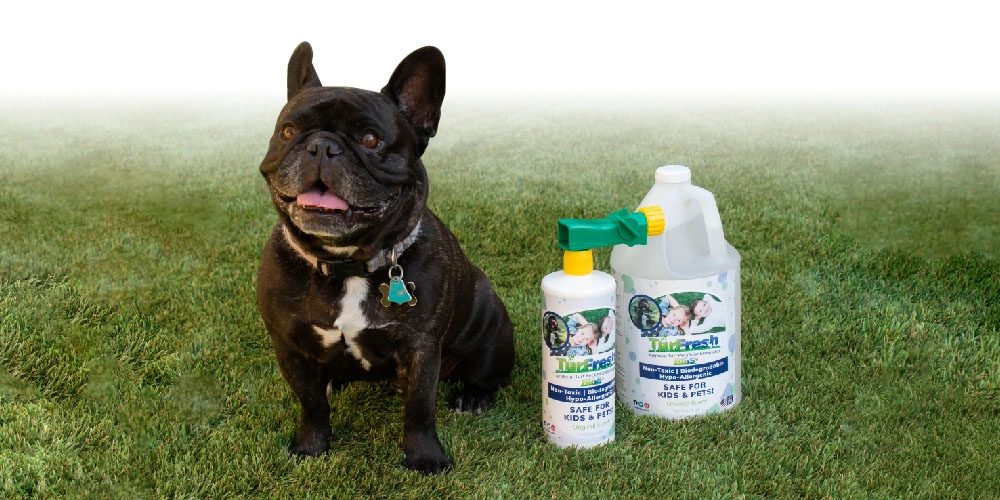
Enzyme cleaners such as TurFresh BioS+ use beneficial bacteria and enzymes to break down urine proteins, ammonia, and odor-causing compounds at a molecular level. They are the most effective option for pet households because they address the source of the odor rather than masking it, and they continue working after initial application as the enzymatic process completes. Apply, allow full dwell time as directed on the product, then rinse completely.
White vinegar solution
A 1:1 mixture of white vinegar and water provides mild antibacterial action suitable for light disinfection and odor control. Apply to the affected area, allow 5 to 10 minutes of dwell time, and rinse thoroughly. Vinegar is effective for routine maintenance between deeper treatments but is not sufficient for heavy bacterial load or serious pathogens.
Pet-safe antibacterial turf products
Purpose-formulated pet-safe artificial grass disinfectants are designed to be non-corrosive to synthetic fibers and backing materials while providing effective antibacterial action. Always confirm the product is specifically labeled as safe for synthetic turf before use.
TurFresh TurFill
TurFresh TurFill Granular Pet Waste Odor Eliminator is a deodorizing infill product that works continuously between cleaning sessions. It breaks down ammonia and protein compounds from pet waste at the infill level, providing ongoing odor control that surface disinfection alone cannot deliver.
What Products to Avoid and Why
Several common household cleaning products cause significant damage to artificial turf and should never be used.
Bleach: degrades the latex backing of artificial turf over time, causes permanent fiber discoloration, and can void installer warranties. It is not recommended even diluted.
Ammonia-based cleaners: ammonia chemically resembles dog urine and can encourage pets to urinate in the same location again after treatment, compounding the problem rather than solving it.
Quaternary ammonium compounds (quats): commonly found in household disinfectant sprays. These can break down synthetic fiber structure and backing adhesives with repeated use.
Strong acids: rust removers, drain openers, and similar acidic cleaners chemically degrade both the fiber material and backing.
Oil-based cleaners: leave residue that attracts more debris, reduces drainage efficiency, and can cause permanent fiber discoloration.
The rule of thumb: if a product is not specifically formulated for synthetic turf or confirmed safe by the manufacturer, do not use it. Water, white vinegar solution, and enzyme-based turf cleaners cover virtually all routine disinfection needs safely.
How to Disinfect Artificial Grass: Step by Step
Step 1: Remove all solid waste
Remove all solid pet waste from the surface before any cleaning or disinfection. Applying disinfectant over organic material significantly reduces its effectiveness. Use gloves and dispose of waste properly.
Step 2: Rinse the area thoroughly
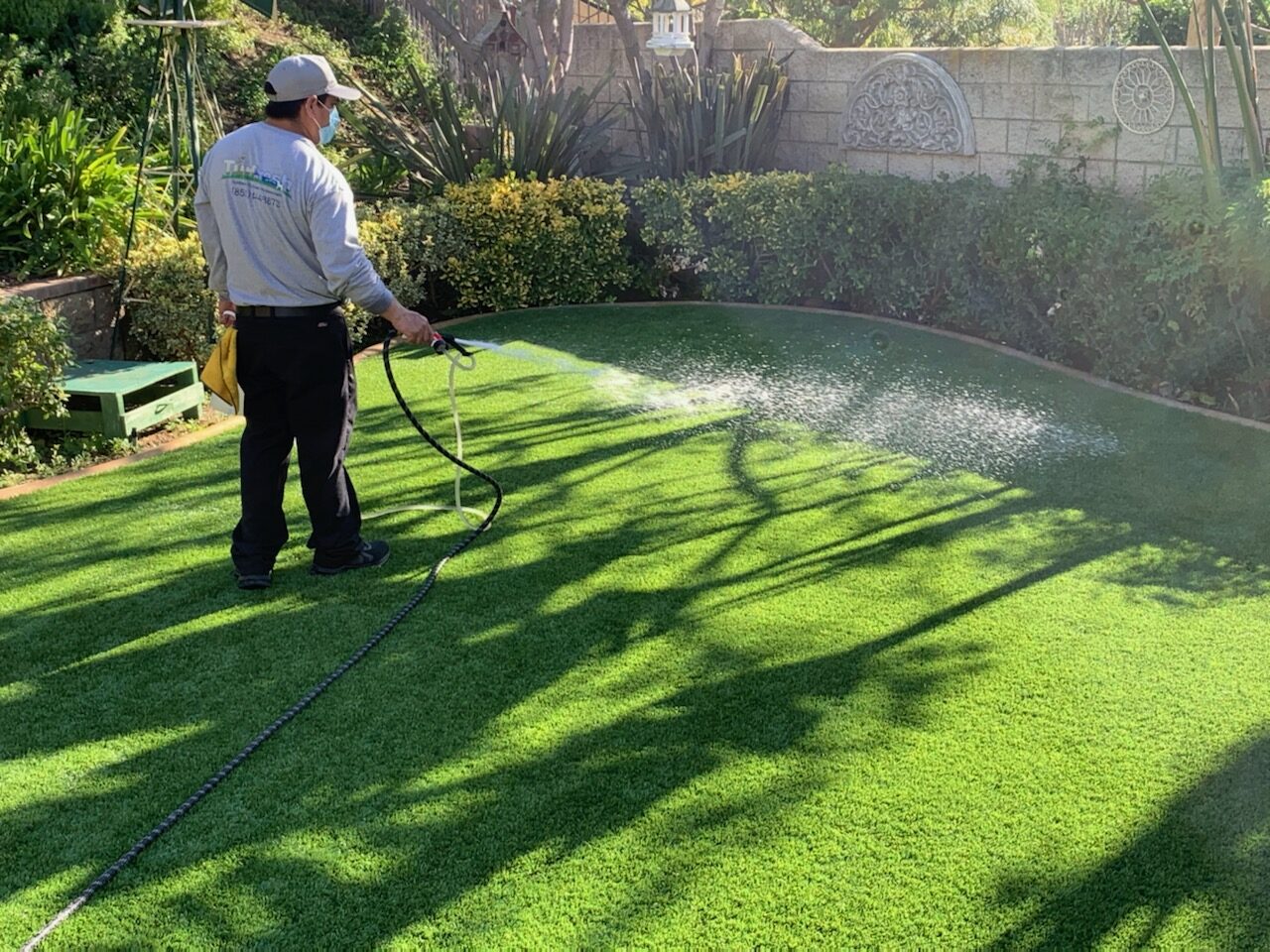
Use a garden hose with a fan nozzle to rinse the affected area from one end to the other. This dilutes and flushes urine residue through the drainage layer and removes the organic matter that would reduce disinfectant effectiveness. Allow the area to drain before the next step.
Step 3: Apply your disinfectant
Apply the disinfectant evenly across the affected area. For enzyme cleaners like TurFresh BioS+, use a standard spray bottle for spot treatment or a hose-end sprayer for larger areas. For vinegar solution, a spray bottle works for spot treatment.
Step 4: Respect the dwell time
This is the step most pet owners skip, and it is the most important. Allow the disinfectant to remain on the surface for the full contact time — a minimum of 5 to 10 minutes for most products. Rinsing immediately after application stops the antimicrobial process before it can effectively reduce bacterial population. Set a timer.
Step 5: Rinse completely
After full dwell time, rinse the entire treated area thoroughly. This flushes broken-down waste and disinfectant residue through the drainage layer. For enzyme cleaners, residual enzymatic activity continues working even after rinsing.
Step 6: Allow to dry
Artificial turf drains quickly. In most installations, the surface is ready for pet use within 30 to 60 minutes after rinsing. Do not apply additional product before the surface is dry.
How Often Should Artificial Grass Be Disinfected for Pets?
Disinfection frequency should match use intensity, not a fixed calendar.
One dog, light use: rinse after each use, enzyme treatment of potty zones weekly, full disinfection session monthly.
One to two dogs, regular use: rinse after each use, enzyme treatment 2 to 3 times per week, full disinfection every 2 weeks.
Multiple dogs or heavy use: rinse daily in high-use zones, enzyme treatment daily in potty areas, full disinfection weekly.
Commercial facilities, kennels, dog daycares: daily rinse and enzyme treatment of all zones, professional deep cleaning monthly minimum.
The signal that frequency needs to increase: if urine smell is detectable within 24 hours of a correct disinfection session, the interval is too long for the use level.
What About Serious Pathogens Like Parvo?
This is the question that most disinfection guides do not address, and it matters for multi-dog households and anyone whose dog has been in contact with other dogs in public spaces.
Canine parvovirus is extremely hardy. According to veterinary guidance, parvovirus can survive on outdoor surfaces — including artificial turf — for 6 months to a year without treatment. It is transmitted through contact with infected feces and can be present on any outdoor surface a dog has used. Standard enzyme cleaners and vinegar solutions are not rated to eliminate parvovirus.
If your dog has been diagnosed with parvo or has had contact with a dog later confirmed to have parvo, surface-level disinfection with vinegar or standard enzyme cleaners is not sufficient.
Accelerated hydrogen peroxide disinfectants are among the most effective options for parvo on hard surfaces including artificial turf. These products, when applied at the appropriate concentration with full dwell time, provide a significant reduction in viral load. Bleach, while effective against parvo on smooth surfaces, is not recommended on artificial turf due to the fiber and backing damage it causes.
For a confirmed parvo exposure, professional cleaning is the most reliable approach. TurFresh uses commercial-grade treatments and extraction equipment that reach the infill layer where viral particles can accumulate with contaminated waste, providing a level of decontamination that surface treatment alone cannot guarantee.
📌 If you suspect parvo exposure on your artificial turf, contact your veterinarian first for guidance on your pet's health, then contact a professional turf cleaning service for the surface treatment protocol appropriate to the situation.
When Professional Cleaning Is the Right Call
Surface disinfection handles routine pet hygiene effectively. There are specific situations where professional deep cleaning is the appropriate next step.
Odor returns within 72 hours of correct disinfection: the bacterial source is in the infill layer below the surface, beyond the reach of any topical application. Professional extraction addresses the infill directly.
Confirmed or suspected parvo exposure: professional-grade treatment protocols reach the infill layer where viral particles can accumulate with contaminated waste.
More than 6 months since the last professional service in a multi-dog household: infill contamination accumulates progressively. Preventive professional cleaning at the right interval is significantly less expensive than reactive remediation after saturation.
Odor persists despite consistent routine maintenance: when DIY has been applied correctly and consistently and the problem continues, the infill has been saturated beyond what surface maintenance can reverse.
The problem is in the infill. Professional cleaning is the fix.
TurFresh professional deep cleaning removes what surface disinfection cannot reach: the urine compounds and bacteria embedded in the infill layer after months of pet use. Over 150,000 services completed across California, Arizona, Texas, Nevada, and Florida. Backed by our 30-day odor removal guarantee.
Book Your Deep Clean✔ Pet-Safe✔ Kid-Safe✔ 150,000+ Services✔ 30-Day Guarantee
Complete Guide
📖 How to Maintain Artificial Grass When You Have Dogs — the full system for pet households: daily routine, enzyme treatment, multi-dog homes, and when to call a professional.
Frequently Asked Questions
How do you disinfect artificial grass for pets?
Remove all solid waste first, then rinse the area thoroughly. Apply a pet-safe enzyme disinfectant or diluted white vinegar solution, allow 5 to 10 minutes of dwell time, and rinse completely. The dwell time step is critical: rinsing immediately after application stops the antimicrobial process before it can effectively reduce bacterial population.Can you use disinfectant on artificial grass?
Yes, but only disinfectants formulated as safe for synthetic turf. Enzyme-based products like TurFresh BioS+ and diluted white vinegar are effective and safe. Bleach, ammonia, and quaternary ammonium compounds should never be used. They degrade synthetic fibers and backing, and ammonia can encourage pets to re-urinate in the same area.How often should artificial grass be disinfected with dogs?
For one dog with regular use: enzyme treatment of potty zones 2 to 3 times per week and full disinfection every 2 weeks. For multiple dogs: enzyme treatment daily in high-use zones and full disinfection weekly. The signal that frequency needs increasing is odor returning within 24 hours of a correct treatment session.Can you disinfect artificial grass if a dog had parvo?
For confirmed parvo exposure, standard enzyme cleaners and vinegar are not sufficient — parvovirus can survive on outdoor surfaces for 6 months to a year without treatment. Accelerated hydrogen peroxide disinfectants at appropriate concentrations are among the most effective options. Professional cleaning is the most reliable approach, as commercial equipment reaches the infill layer where viral particles can accumulate.What is the dwell time for disinfecting artificial grass?
A minimum of 5 to 10 minutes is required for most pet-safe disinfectants to complete the antimicrobial process. Rinsing immediately after application makes the treatment ineffective. Check the specific product instructions as dwell time varies by formulation.Is artificial grass easier to disinfect than natural grass?
Yes. Artificial turf is non-porous, meaning bacteria sit on the surface and upper infill rather than penetrating deep into soil. This makes effective disinfection more achievable on synthetic turf than on natural grass, provided the right products are used with proper dwell time and the surface has been cleaned of organic matter before disinfectant application.When should I use a professional cleaning service instead of DIY disinfection?
Use professional cleaning when odor returns within 72 hours of correct disinfection, when there has been a confirmed pathogen exposure such as parvo, when more than 6 months have passed since the last professional service in a multi-dog household, or when DIY maintenance has been consistent but the problem persists. These signals indicate infill contamination beyond what surface disinfection can address.