
Quick Answer:
To remove skunk smell from artificial grass, act immediately. Rinse the affected area thoroughly with water to dilute and flush the spray before it settles into the infill. Then apply a neutralizing solution: the Humane Society's mix of 1 quart 3% hydrogen peroxide, 1 teaspoon dish soap, and 1/4 cup baking soda works for surface exposure. For deeper penetration into the infill, a turf-safe enzyme deodorizer like TurFresh BioS+ addresses odor compounds that the peroxide mix cannot reach. Rinse thoroughly after any treatment. Do not let peroxide sit on the turf. Extended contact can bleach synthetic fibers. If odor persists after two treatment attempts, the skunk spray has penetrated the infill layer and professional cleaning is needed.
When DIY is not enough, professional cleaning reaches what rinsing cannot.
TurFresh professional cleaning removes skunk odor compounds that have penetrated the infill layer, where no surface treatment can fully reach. Pet-safe same day. Over 150,000 services completed. Backed by our 30-day odor removal guarantee.
✔ Pet-Safe✔ Kid-Safe✔ 150,000+ Services✔ 30-Day Guarantee
Key Takeaways
✅ Speed is the most important factor. The faster you rinse after a skunk spray, the less the odor compounds penetrate the infill layer. Acting within minutes produces significantly better results than waiting an hour.
✅ Two DIY solutions work for surface exposure. Tomato juice neutralizes light spray on small areas. The hydrogen peroxide, baking soda, and dish soap mix is more effective for heavier exposure. Both require thorough rinsing immediately after application.
✅ Do not let peroxide sit on the turf. The hydrogen peroxide mix is effective but must be rinsed off quickly. Extended contact bleaches synthetic fibers. Apply, agitate gently, and rinse within a few minutes.
✅ Enzyme cleaners address what peroxide misses. The DIY peroxide mix neutralizes odor on the surface and upper fiber level. Turf-safe enzyme deodorizers like TurFresh BioS+ break down the sulfur compounds at a deeper level and continue working after application.
✅ If odor persists after two treatments, the infill is the source. Skunk spray that has penetrated the infill layer cannot be neutralized from the surface. Professional cleaning with extraction equipment is the reliable solution.
Why Skunk Spray Smells So Strong on Artificial Turf
Skunk spray contains sulfur-based compounds called thiols that bond aggressively to surfaces. On natural grass and soil, these compounds partially absorb into the ground and break down through biological activity over time. On artificial turf, the synthetic fibers and infill do not absorb or biologically process organic compounds the same way.
This means skunk spray sits on the surface and in the infill rather than dissipating naturally. In warm climates where artificial turf surfaces reach high temperatures in direct sun, the heat intensifies the odor and accelerates how deeply the compounds penetrate into the infill layer.
The good news is that artificial turf is also easier to treat than natural grass because the surface can be thoroughly rinsed and the treatment can be applied directly to a contained area. Speed and the right solution are what determine the outcome.
Step-by-Step: How to Remove Skunk Smell from Artificial Grass
Step 1: Rinse immediately
As soon as you discover the skunk spray, rinse the affected area thoroughly with a garden hose. Use a strong flow to push the spray compounds toward the drainage layer and out through the backing. Rinse for several minutes, working from the edges of the affected area inward to avoid spreading the spray to clean sections.
This step alone will not eliminate the odor, but it significantly reduces how deeply the compounds penetrate the infill. Every minute of delay makes the subsequent treatment less effective.
Step 2: Choose your treatment
Two DIY treatments are proven to neutralize skunk odor compounds on artificial turf surfaces.
Option A — Tomato juice (light exposure, small area): Apply tomato juice directly to the affected blades, allow it to soak for 10 to 20 minutes, then rinse thoroughly. The acids in tomato juice help neutralize the alkaline thiol compounds in skunk spray. This works best for small areas with relatively light exposure.
Option B — Humane Society peroxide mix (heavier exposure): Mix 1 quart of 3% hydrogen peroxide, 1 teaspoon of liquid dish soap, and 1/4 cup of baking soda. Wearing gloves, apply the solution to the affected area and gently agitate. Rinse thoroughly with fresh water immediately after agitation. Do not allow the peroxide solution to sit on the turf for more than a few minutes. Extended contact can bleach synthetic fibers and cause discoloration that cannot be reversed.
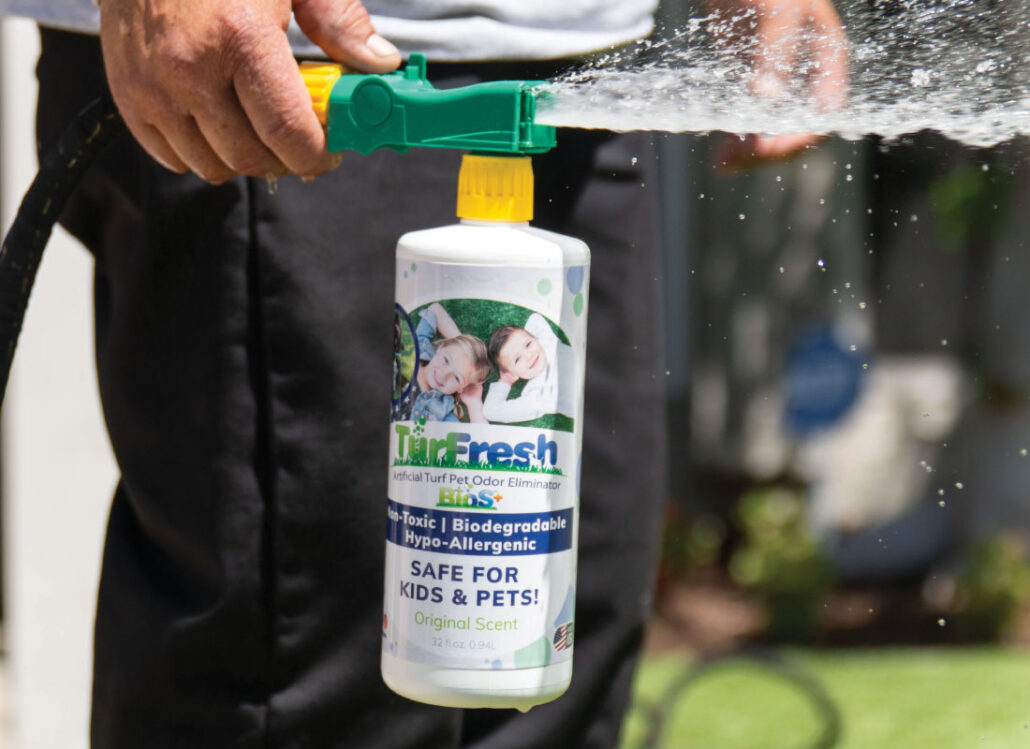
Option C — Turf-safe enzyme deodorizer (deeper treatment or follow-up): Apply TurFresh BioS+ to the affected area using the BioSiphon sprayer. Allow full dwell time as directed. The enzyme formula breaks down sulfur compounds at a molecular level rather than masking them and continues working after the initial application. This is more effective than the peroxide mix for odor that has reached the upper infill layer, and it is safe for extended contact with the turf surface.
Step 3: Final rinse
After any treatment, rinse the full affected area thoroughly from one end to the other. The drainage layer in a properly installed turf system handles this volume quickly. Confirm water is flowing through the turf and not pooling, which would indicate a drainage issue unrelated to the skunk spray.
Step 4: Assess the result
Wait 24 hours and check the surface. A light residual smell on the first day after treatment is normal as the area finishes drying and the enzyme treatment continues working. If strong odor remains after 24 to 48 hours, repeat the enzyme treatment once more.
If strong odor persists after two full treatment cycles with enzyme deodorizer, the skunk spray has penetrated into the infill layer below the reach of any surface treatment. Professional cleaning is the appropriate next step.
Does Pet Turf Handle Skunk Smell Differently?
Yes. Pet turf systems are engineered with enhanced drainage that flushes liquids through the backing more efficiently than standard residential turf. This means skunk spray that lands on pet turf exits the fiber bed more quickly when rinsed, reducing how deeply it settles into the infill.
If you have pet-specific turf installed, the same treatment protocol applies, but you are likely to see better results from the initial rinse step compared to standard residential turf, particularly if you act quickly.
Can Deodorizing Infill Help Prevent Lingering Odors?
Yes. TurFresh TurFill is a deodorizing infill designed to break down odor-causing compounds including the sulfur-based thiols in skunk spray. Installed between the turf blades, it provides ongoing odor control rather than just treating individual events.
For households in areas with regular wildlife activity or for yards where pet use already creates an odor management challenge, deodorizing infill adds a passive layer of protection that reduces how quickly any organic odor accumulates in the system.
📌 If the skunk smell keeps returning after rain or watering in the days following treatment, the odor source is in the infill layer. Deodorizing infill and professional extraction are both more effective than repeated surface treatments at that point.
When to Call a Professional for Skunk Odor on Turf
Professional cleaning is the right call when odor persists after two full treatment cycles with a turf-safe enzyme deodorizer. At that point, the sulfur compounds have penetrated below the reach of any topical application and are embedded in the infill layer.
Professional extraction equipment reaches the infill and backing layers, removes the odor source rather than masking it, and restores the surface to a clean baseline in a single visit. The surface is pet-safe the same day.
Attempting additional rounds of DIY treatment at this stage is not ineffective, but it addresses symptoms rather than the source. Each additional treatment cycle that fails to resolve the odor makes the eventual professional service more intensive.
Practical Tips for Removing Skunk Smell from Artificial Grass
✅ Act within minutes, not hours. The faster the initial rinse, the less the odor compounds settle into the infill.
✅ Flush thoroughly from the start. Water flow should penetrate through the turf backing and drainage layer, not just wet the surface.
✅ Rinse peroxide off quickly. Extended peroxide contact bleaches turf fibers. Apply, agitate gently, and rinse within a few minutes.
✅ Use enzyme cleaner as the follow-up step. The peroxide mix addresses the surface. Enzyme deodorizer addresses what is in the fiber bed. Use both for complete coverage on heavier exposure.
✅ Work from the edges inward. Treating the strongest-smelling area first risks spreading spray compounds to clean sections. Start at the perimeter and work toward the center.
The source is in the infill. Professional extraction is the fix.
TurFresh professional cleaning removes odor compounds embedded in the infill layer where surface treatments stop. Over 150,000 services completed across California, Arizona, Texas, Nevada, and Florida. Backed by our 30-day odor removal guarantee.
✔ Pet-Safe✔ Kid-Safe✔ 150,000+ Services✔ 30-Day Guarantee
Frequently Asked Questions
How do you remove skunk smell from artificial grass?
Rinse the area immediately with a garden hose, then apply either the hydrogen peroxide and baking soda mix for surface exposure or a turf-safe enzyme deodorizer for deeper treatment. Rinse thoroughly after any application. If odor persists after two treatment cycles, the spray has reached the infill layer and professional cleaning is needed.
How long does skunk smell last on artificial turf?
Without treatment, skunk odor on artificial turf can last days to weeks, especially in warm climates where heat intensifies the smell. With immediate rinsing and proper treatment, most surface exposure is resolved within 24 to 48 hours. Odor that has penetrated the infill layer requires professional extraction to fully resolve.
Can you use hydrogen peroxide on artificial grass?
Yes, but with caution. The standard skunk odor mix of 1 quart 3% hydrogen peroxide, 1 teaspoon dish soap, and 1/4 cup baking soda is effective on surface exposure. It must be rinsed off quickly after application. Allowing peroxide to sit on artificial turf for extended periods can bleach the synthetic fibers and cause permanent discoloration.
Does tomato juice work on artificial turf skunk smell?
Tomato juice can neutralize light skunk spray on small areas. It is less effective than the peroxide mix for heavy exposure and works primarily on the surface level. Apply, allow 10 to 20 minutes of contact, and rinse thoroughly. For significant exposure, use the hydrogen peroxide mix or an enzyme deodorizer instead.
Will rain wash away skunk smell from artificial grass?
Rain dilutes surface odor but does not neutralize the sulfur compounds that cause skunk smell. If the spray has reached the infill layer, rain can temporarily reduce the smell while the compounds remain embedded. Active treatment with a neutralizing solution is more effective than waiting for rain.
When should I call a professional for skunk odor on turf?
Call a professional if strong odor persists after two full treatment cycles with a turf-safe enzyme deodorizer. At that point, the odor source is in the infill layer below the reach of any surface treatment. Professional extraction equipment addresses the infill directly and resolves the problem in a single service visit.
Can skunk spray permanently damage artificial grass?
Skunk spray does not typically cause permanent structural damage to artificial turf. The main risk is from the treatment rather than the spray itself: peroxide solutions left on the surface too long can bleach and discolor synthetic fibers permanently. Follow the application protocol carefully to avoid this.
Share

John Pla is the owner of TurFresh and an expert with over 20 years of experience in artificial turf cleaning and maintenance. John’s passion for sustainability, community impact, and innovative solutions has made him a trusted figure in the artificial grass industry and beyond.