
Quick Answer:
How to protect artificial turf from damage starts with knowing what actually causes it. Artificial turf cannot burn in the traditional sense, but it melts at temperatures as low as 175 to 200 degrees Fahrenheit. The most common damage sources are fire pits and grills, reflective Low-E windows that concentrate sunlight into hot spots, sharp garden tools, and chemical spills from oil, paint, or caustic cleaners. Most damage is permanent once it occurs because synthetic fibers cannot regenerate like natural grass. Prevention is always less expensive than repair or replacement.
Some damage can be restored. Find out what is still recoverable.
TurFresh professional cleaning and TurfBloom restoration address compacted infill, fiber matting, and surface wear that routine care cannot reverse. Over 150,000 services completed. Pet-safe. Backed by our 30-day guarantee.
✔ Pet-Safe✔ Kid-Safe✔ 150,000+ Services✔ 30-Day Guarantee
Key Takeaways
✅ Artificial turf melts, it does not burn. Synthetic fibers cannot catch fire like organic material, but they melt when exposed to concentrated heat above 175 to 200 degrees Fahrenheit. The result is permanent fusing of fibers that cannot be repaired, only replaced.
✅ Low-E windows are one of the most overlooked damage sources. Energy-efficient Low-E glass reflects and concentrates sunlight into focused hot spots. When that concentrated beam hits artificial turf, surface temperatures can exceed 200 degrees Fahrenheit, causing the same type of melting damage as direct contact with a heat source. Many homeowners discover melted patches with no obvious heat source nearby.
✅ Chemical spills cause permanent staining if not treated immediately. Oil, petroleum products, paint, and caustic cleaners chemically degrade synthetic fibers. Unlike natural grass, discolored turf cannot grow out or regenerate. Some chemical damage is permanent even with immediate treatment.
✅ Sharp objects puncture the backing, not just the fibers. A puncture in the turf backing compromises the structural integrity of the entire section. Small punctures can expand over time with foot traffic and environmental stress. Repair is possible but difficult and visible.
✅ Minor wear is recoverable. Melted fibers and backing punctures are not. Compacted infill, matted fibers, and surface debris are maintenance issues that professional cleaning resolves. Melted, scorched, or chemically damaged sections require targeted repair or section replacement.
What Can Damage Artificial Grass?
The most common sources of permanent artificial grass damage are heat, reflective sunlight, sharp objects, chemical spills, and improper cleaning tools. Unlike natural grass, artificial turf cannot regenerate once fibers are damaged. Understanding each risk is the first step in protecting the investment.
Can Fire Pits or Barbecues Damage Artificial Grass?
Yes, and the damage is typically permanent.
Artificial turf fibers are made from synthetic polymers that do not catch fire under normal conditions, but they melt when exposed to sustained heat above 175 to 200 degrees Fahrenheit. A fire pit or barbecue in operation generates temperatures far exceeding this threshold. Flying embers, hot ash, and cigarette butts can melt individual fibers on contact, fusing them together and creating a permanent scorch mark.
Even indirect heat from a nearby grill can cause damage over time if the grill is positioned close to the turf surface. The melting that results is localized to the heat source, but the fused fibers cannot be reshaped or repaired. They can only be replaced.
How to prevent fire and heat damage:
• Place grills and fire pits on a permanent base of concrete, stone, or pavers with adequate clearance from the turf edge
• For temporary setups, use a fire-resistant mat or heat shield under the equipment
• Keep a clearance of at least 3 feet between any open heat source and the turf surface
• Avoid smoking over the turf and use designated ashtrays away from the lawn
📌 If ash or debris from a grill spills onto artificial grass, rinse promptly to prevent buildup that can trap heat and interfere with drainage.
Can Reflective Windows Damage Artificial Turf?
Yes, and this is the damage source that surprises homeowners most often.
Modern energy-efficient windows, particularly Low-E (low-emissivity) double-paned glass, are designed to reflect solar energy. Under the right conditions, this reflected light concentrates into a focused beam that acts like a magnifying glass. When that beam hits artificial turf, surface temperatures can exceed 200 degrees Fahrenheit in the affected zone, causing the same melting and fusing damage as direct contact with an ember or hot object.
The effect is more pronounced when windows are slightly concave due to the pressure difference between double-paned glass and the exterior air. This natural warping intensifies the reflection and narrows the hot spot.
Homeowners who notice melted or shiny patches in their artificial grass with no obvious heat source nearby should inspect nearby windows, mirrors, metal surfaces, and glass railings for reflective angles that could be directing concentrated sunlight onto the affected area.
How to prevent reflective window damage:
• Install window films that diffuse reflected light without significantly affecting window performance
• Add awnings, shade sails, or pergolas that interrupt the reflection path
• Plant trees or shrubs that block the angle
• Identify reflective surfaces during the sunniest part of the day and adjust or cover them during peak reflection hours
📌 Replacing damaged turf without addressing the reflective source will result in the new turf being damaged in the same location. The cause must be resolved before any repair is worthwhile.
What Sharp Objects Can Damage Synthetic Turf?
Sharp objects that puncture or cut artificial turf backing cause damage that is difficult and costly to repair.
Common causes include garden tools such as trowels, shears, and edgers; tent stakes and holiday decoration anchors; kitchen knives dropped during outdoor cooking; and power tools used near the turf edge. Even a small puncture can compromise the backing structure and expand under foot traffic and environmental stress over time.
The fibers themselves can be cut by sharp blades during lawn work on adjacent natural grass areas. A lawnmower blade overlapping onto artificial turf, or a string trimmer working along the border, can slice through fibers cleanly. Unlike natural grass, cut synthetic fibers do not regrow.
How to prevent sharp object damage:
• Store garden tools away from turf areas when not in use
• Use weighted bases, concrete blocks, or sandbags to anchor items on the turf rather than stakes
• Work carefully with any cutting tool near the turf border
• Position outdoor decorations on a hard surface bordering the turf rather than on the turf itself
Can You Paint Artificial Grass?
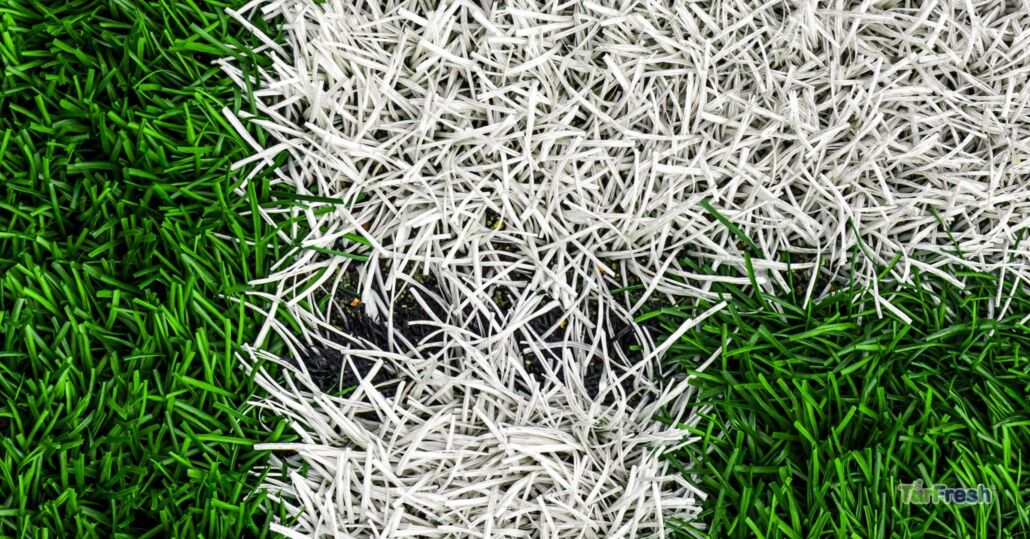
Yes, with the right products only.
Water-based field marking paints and chalk products formulated specifically for synthetic turf are safe and rinse away with water. These are the products used on sports fields for line marking and are widely available.
House paint, spray paint, oil-based paint, and craft paints should never be used on artificial grass. These products bond permanently to synthetic fibers and cause staining that does not fade or grow out. Unlike natural grass where color can eventually be mowed away or grown out, synthetic turf retains any permanent stain indefinitely.
Adhesives present a similar risk. Gum can sometimes be removed by freezing it and breaking it off before it softens. Industrial adhesives or glues may require professional assessment and potentially section replacement.
When working with paint near turf: lay protective tarps or sheeting over the entire turf surface before starting any painting project. Mix and pour paint well away from turf edges. Address any spills immediately with water while the product is still wet.
What Chemicals Can Damage Artificial Grass?
Several common household and garden chemicals cause permanent or very difficult-to-remove damage to synthetic turf.
Petroleum-based products: motor oil, gasoline, kerosene, and tiki torch oil can be absorbed by polyethylene fibers, causing permanent discoloration that even professional cleaning may not fully remove. These products also pose a fire risk if turf is exposed to a heat source after contact.
Caustic cleaners: mildew removers, rust removers, drain openers, and grill cleaners contain highly alkaline or acidic compounds that chemically degrade synthetic fiber structure over time. Bleach and ammonia-based cleaners fall into this category.
Pesticides and herbicides: strong chemical pesticides can break down fiber structure with repeated exposure. If treating natural lawn areas adjacent to artificial turf, apply carefully and rinse any overspray from the synthetic surface promptly.
Oil-based sunscreen: a less obvious risk in backyard settings, particularly with children. Oil residue from sunscreen transfers to turf fibers and can cause discoloration over time.
Safe alternatives: water for routine rinsing, mild pH-neutral soap for spot cleaning, and enzyme-based cleaners specifically formulated for synthetic turf are safe for all residential artificial grass surfaces.
How Do You Prevent Everyday Wear and Tear?
Everyday use from foot traffic, pets, and play equipment causes gradual compression rather than acute damage. This type of wear is manageable with consistent maintenance and does not cause the same permanent damage as heat, chemicals, or sharp objects.
Rotating furniture and play equipment placement every few weeks prevents concentrated compression in the same areas. Brushing fibers against the grain monthly maintains upright position and prevents the fiber memory that develops from sustained compression. Removing debris regularly prevents organic matter from compressing fibers and blocking drainage over time.
For high-traffic zones like pathways and entry points, stepping stones distribute foot pressure off the turf fibers entirely and significantly reduce the rate of compression in those areas.
What to Do If Your Artificial Grass Is Already Damaged
The appropriate response depends on the type of damage.
Compacted infill, matted fibers, surface odors, and drainage slowdown are maintenance issues, not permanent damage. Professional cleaning with TurfClean service and TurfBloom fiber restoration can address all of these and restore surface appearance and performance without replacement.
Small heat marks, minor scorching, or localized chemical staining may benefit from professional assessment. Some surface-level damage responds to professional cleaning and restoration. Larger affected areas typically require targeted section repair.
Melted fibers, backing punctures, and widespread chemical damage require section replacement. Melted synthetic material cannot be reshaped. Punctured backing cannot be patched invisibly. Professional repair involves cutting out the damaged section and splicing in new material, matched as closely as possible to the existing turf.
📌 If you are unsure whether damage is recoverable or requires replacement, TurFresh can assess the condition of your turf before recommending a service. This prevents paying for cleaning on a section that needs replacement, or replacing a section that cleaning would have resolved.
Get a professional assessment before deciding on repair or replacement.
TurFresh can assess your turf condition and recommend the right service: cleaning, restoration, or targeted repair. Over 150,000 services completed across California, Arizona, Texas, Nevada, and Florida. No commitment required.
✔ Pet-Safe✔ Kid-Safe✔ 150,000+ Services✔ 30-Day Guarantee
Complete Guide
📖 5 Maintenance Tips to Extend the Life of Your Artificial Turf — the complete care schedule: debris, brushing, pet waste, infill, and professional cleaning frequency.
Frequently Asked Questions
What is the most common cause of artificial grass damage?
Heat exposure is the most common cause of permanent artificial grass damage. This includes direct heat from fire pits and grills, flying embers, dropped cigarettes, and reflected sunlight from Low-E windows or other reflective surfaces. Synthetic turf fibers melt at temperatures as low as 175 to 200 degrees Fahrenheit, and the resulting damage is permanent.
Can reflective windows damage artificial turf?
Yes. Low-E energy-efficient windows can reflect and concentrate sunlight into focused hot spots that exceed 200 degrees Fahrenheit on the turf surface. Homeowners who discover melted patches with no obvious heat source should inspect nearby windows, mirrors, and metal surfaces for reflective angles. Replacing damaged turf without addressing the reflection source will result in new damage in the same location.
Can fireworks damage artificial grass?
Yes. Sparks and burning debris from fireworks can melt or scorch synthetic turf fibers on contact. Keep fireworks away from artificial grass surfaces and rinse any ash or debris from the surface promptly after use.
How do you fix melted artificial grass?
Melted synthetic fibers cannot be reshaped or repaired. Small affected areas require targeted section replacement, which involves cutting out the damaged material and splicing in new turf matched to the existing surface. The sooner the heat source is identified and addressed, the smaller the replacement area required.
What chemicals should you avoid on artificial grass?
Avoid petroleum-based products including motor oil, gasoline, and tiki torch oil. Avoid caustic household cleaners including bleach, ammonia, rust removers, drain openers, and grill cleaners. Avoid oil-based paints and industrial adhesives. Use water, mild pH-neutral soap, and enzyme-based turf-safe cleaners for all routine cleaning needs.
Can you have a fire pit on artificial grass?
Yes, but only with a proper non-combustible base such as concrete, stone, or pavers with adequate clearance from the turf edge. Never place a fire pit or grill directly on artificial turf. Use a fire-resistant mat or heat shield as an additional barrier. Maintain at least 3 feet of clearance between any open heat source and the turf surface.
How long does synthetic grass last if you avoid these damage sources?
A well-maintained artificial grass installation that avoids heat, chemical, and sharp object damage typically lasts 15 to 20 years. Consistent maintenance including professional cleaning extends lifespan significantly compared to surface-only care.
Share

John Pla is the owner of TurFresh and an expert with over 20 years of experience in artificial turf cleaning and maintenance. John’s passion for sustainability, community impact, and innovative solutions has made him a trusted figure in the artificial grass industry and beyond.