
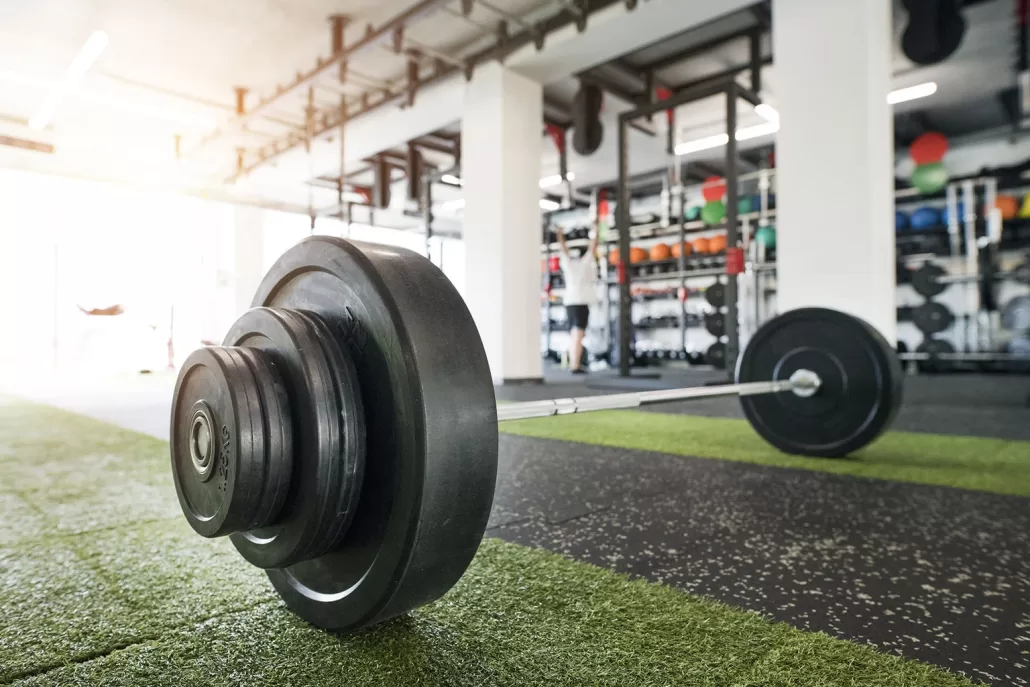
When summer descends on desert cities like Phoenix and Las Vegas, gyms and indoor sports facilities become a must for beating the heat while working out. Many of them feature artificial grass areas that give you the same workout as an outdoor field, but with the luxury of shade and air conditioning. However, indoor athletic facilities can quickly become grimy from sweat, wear, and dirt tracked in from the outdoors. If you manage a artificial grass in gym or athletic facility that has installed, follow these easy steps for proper artificial turf maintenance that will extend the lifespan of your Artificial sports turf.
TL;DR: Indoor gym turf stays comfortable and high-performing when it gets a quick daily refresh, plus a scheduled deep clean to remove sweat, grime, and odor buildup. Daily brushing and debris removal help prevent matting, while periodic professional service restores turf blades, infill performance, seams, and freshness.
Quick Answer:
Clean indoor turf daily by removing debris, brushing the blades against the grain, and using a turf deodorizer to control odors, then schedule periodic deep cleanings (monthly to twice a year) based on foot traffic and use.
Why does indoor gym turf still need regular cleaning?
Indoor turf still gets dirty because sweat, wear, and dirt tracked in from outside build up fast in athletic facilities. Indoor spaces may avoid rain and mud, but high-use training zones can become grimy and odorous without a simple routine.
When summer hits desert cities like Phoenix and Las Vegas, indoor gyms and sports facilities often rely on turf training areas for sled work, agility drills, and conditioning with the comfort of shade and air conditioning. Those same areas also collect daily debris and sweat, which makes consistent upkeep important.
✅ Tip: Treat the turf like a training surface, not just a floor. Daily upkeep protects the investment and helps extend turf lifespan.
What is the best daily routine for cleaning synthetic turf in a gym?
The best daily routine is a quick debris removal, followed by brushing the blades against the grain, then finishing with odor control. This takes only a few minutes but helps protect turf appearance and performance.
Step 1: What should be removed during daily turf cleaning?
Remove any visible debris first, including items tracked in from outdoors (twigs, leaves) and anything left on the turf (training tools or equipment). Clearing debris prevents it from working down into the blades and infill.
✅ Tip: Do a quick walk-through before opening or after closing so debris does not get ground in during peak hours.
Step 2: How should indoor turf blades be brushed?
Brush the turf blades against the grain using a synthetic bristle comb or broom to prevent matting and keep the turf looking lush. Brushing against the grain lifts the blades and helps maintain a consistent look across training lanes.
TurFresh recommends investing in a specialized turf comb so tools do not damage the blades.
✅ Tip: Focus brushing on high-traffic lanes first (sled lanes, agility zones, entry paths) since those areas flatten faster.
Step 3: What should be used to control odors and sanitize the turf daily?
Apply a deodorizing product after brushing to disinfect and help prevent odors from building up. TurFresh BioS+ is commonly used for indoor sports facilities because BioS+ enzyme technology chemically neutralizes odors at their source, which helps deliver longer-lasting freshness compared to many deodorizing products.
Tip: Apply deodorizer after the turf is brushed so product can reach deeper into the blades where odor-causing buildup can sit.
How often should indoor artificial turf be deep cleaned?
Indoor turf should be deep cleaned anywhere from once a month to twice a year, depending on the turf product and how much foot traffic it gets. High-use facilities may need deeper service more often than low-traffic spaces.
A practical way to decide frequency is to look for turf that stays flat after brushing, odors that return quickly, or visible grime that daily cleaning does not resolve.
Tip: If the turf looks “tired” soon after brushing, it is often a sign infill is compacted and needs a deeper service.
What happens during a professional deep cleaning for gym turf?
A professional deep cleaning restores the turf surface beyond what daily brushing can achieve. It typically includes blade reblooming, infill de-compaction, seam checks, and detail work that improves function and cleanliness.
TurFresh offers a comprehensive 10-step artificial grass maintenance program designed to handle deep maintenance tasks such as:
✅ Reblooming turf blades
✅ De-compacting infill
✅ Re-tucking seams
✅ Removing hair
✅ Improving drainage
✅ Re-attaching raised seams
TurFresh completes commercial artificial turf cleaning services with an application of TurFresh BioS+ deodorizing spray, leaving turf fresh, clean, and odor-free for the next wave of gym-goers.
✅ Tip: Deep cleaning is often best left to professionals because it involves more than surface cleaning, including infill performance and seam integrity.
What are the most common mistakes when cleaning indoor gym turf?
The most common mistakes are skipping brushing, using tools that can damage blades, and relying on deep cleaning without daily upkeep. Daily maintenance is what prevents matting and constant odor issues.
Other avoidable issues include letting debris sit too long, cleaning inconsistently, or using the wrong tools for turf fibers.
✅ Tip: If a broom is too stiff or abrasive, switch to a turf-specific comb or a synthetic bristle tool designed for turf.
What can gyms do to keep turf cleaner between deep cleanings?
Gyms can keep turf cleaner between deep cleanings by building turf upkeep into the normal cleaning and sanitizing routine, then staying consistent with brushing and odor control. The goal is to reduce buildup before it becomes a larger maintenance problem.
TurFresh supports this approach by offering commercial cleaning services on a scheduled basis, along with industry-leading products in the online store that help make daily maintenance easier.
✅ Tip: Assign turf care to a checklist, not a “when there’s time” task. Consistency is what keeps turf looking and smelling fresh.
When should a gym schedule professional turf service?
A gym should schedule professional turf service when daily upkeep is no longer enough to maintain appearance, performance, or freshness. Common signs include turf that stays matted, seams that lift, infill that feels overly hard, drainage issues, or odors that return quickly after treatment.
TurFresh can service a wide range of turf areas and turf types, and offers both scheduled programs and one-time service options.
✅ Tip: If seams are raised or edges are lifting, address it early. Small seam issues can turn into larger repairs with heavy training traffic.
How can a gym book commercial artificial turf cleaning with TurFresh?
A gym can book service by calling TurFresh at (855) 444-8873 or 📱 text (714) 709-2551 to get schedule in artificial turf maintenance service. TurFresh also offers artificial turf cleaning products options online for facilities that want support with daily cleaning and odor control.
💡 Practical Tips That Can Be Highlighted
✅ Brush against the grain daily to prevent matting and keep turf looking full.
✅ Use synthetic bristles or a turf comb so cleaning tools do not damage blades.
✅ Deodorize after brushing so odor control reaches deeper into the turf.
✅ Deep clean based on traffic (monthly to twice a year) instead of guessing.
✅ Watch the seams and handle lifting edges early to avoid bigger repairs.
Frequently Asked Questions
How do you clean indoor turf in a gym?
• Clean indoor turf by removing visible debris, brushing blades against the grain with a synthetic bristle broom or turf comb, and applying a deodorizing product to disinfect and reduce odors.
What is the best way to clean synthetic turf without damaging it?
• The safest approach is daily debris removal plus brushing with synthetic bristles, then using turf-safe odor control products instead of harsh tools that can damage turf blades.
How often should gyms deep clean artificial turf?
• Deep cleaning is recommended anywhere from once a month to twice a year, depending on the turf product and how much foot traffic the area gets.
What helps with sweat and odor buildup in indoor gym turf?
• Odor control products designed for turf help reduce odors by targeting the source of the smell, especially when applied after brushing and as part of a consistent routine.
Should a gym handle deep cleaning in-house or hire professionals?
• Deep cleaning is usually best handled by professionals because it can involve blade reblooming, infill de-compaction, seam work, drainage improvements, and detailed removal of embedded debris.
What are signs gym turf needs professional cleaning or repair?
• Turf may need professional service if it stays matted after brushing, smells quickly return, seams lift, hair buildup is visible, or drainage and performance feel off during training.
👉 Schedule a professional turf cleaning with TurFresh today
✅ Pet-safe ✅ Kid-safe ✅ Trusted by homeowners across Colorado
Ready for an Odor-Free Yard?
📞 Call (855) 444-8873 or 📱 text (714) 709-2551 to get started.
Professional Artificial Grass Cleaning
Turf Cleaning Products | Deep Clean Your Turf and Infill
Give your family and pets the clean, fresh outdoor space they deserve.
👉 New customers receive 10% OFF
Share
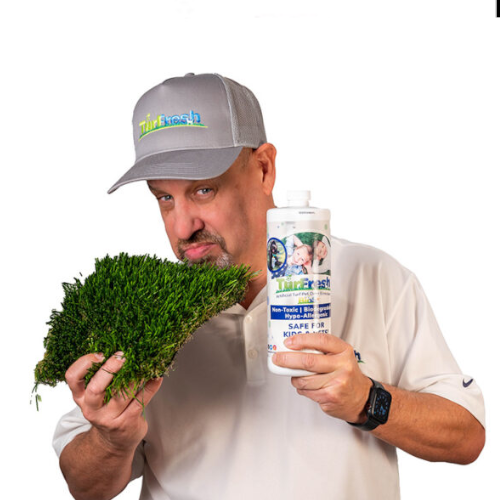

John Pla is the owner of TurFresh and an expert with over 20 years of experience in artificial turf cleaning and maintenance. John’s passion for sustainability, community impact, and innovative solutions has made him a trusted figure in the artificial grass industry and beyond.