How to Remove Moss from Artificial Grass Fast and Keep It Away
May 11, 2026 · 9 min read · By John Pla, Founder of TurFresh
Quick Answer: How to remove moss from artificial grass: clear debris first, apply a turf-safe moss killer or a 1:1 vinegar and water solution, scrub gently, and rinse thoroughly. Moss grows when moisture gets trapped at the surface, usually because of blocked drainage or organic buildup. Fix the drainage and maintain the turf consistently and moss will not come back.
The problem is in the drainage, not the surface.
TurFresh clears blocked drainage, removes buildup, and restores the conditions that keep moss away for good.
Schedule Your Turf Service✔ Pet Safe✔ Eco Friendly✔ 20+ Years of Experience✔ 30-Day Guarantee
Key Takeaways
🔑 Moss grows on artificial grass because of trapped moisture, not because of the turf itself. Blocked drainage, organic buildup, and shaded areas that stay damp are always the root cause. The moss is the symptom, the moisture is the problem.
🔑 Fixing drainage is the only reliable way to stop moss from returning after treatment. Removing moss without addressing the drainage issue that caused it will not keep moss from coming back. The fix starts with the moisture source.
🔑 Vinegar works for light surface moss. A turf-safe moss killer is more effective for established growth. A 1:1 white vinegar and water solution kills early-stage moss without chemicals. For moss that has been growing for weeks or months, a purpose-made product produces more reliable results.
🔑 Treat moss early, it is significantly easier to remove before it spreads. Early moss appears as a light green film and lifts with minimal effort. Moss that has established for weeks flattens fibers and blocks drainage, making removal harder and the turf more prone to recurring growth.
🔑 When moss keeps returning despite DIY treatment, professional maintenance addresses the drainage issue at the source. One professional visit typically resolves what repeated surface treatments cannot by clearing the infill and drainage layer where moisture actually accumulates.
Why Does Moss Grow on Artificial Grass?
Moss grows on artificial grass when moisture becomes trapped at the surface or base of the turf. Unlike natural grass, artificial turf does not absorb water. When drainage holes are blocked or organic debris builds up, water pools and creates a damp environment where moss, mold, and algae can establish.
Shaded areas and low spots increase the risk significantly. The moss itself is not the root problem. The moisture that allows it to grow is.
Common causes:
⚠️ Blocked or poor drainage
⚠️ Leaves, dirt, and pet hair holding moisture against the surface
⚠️ Shaded areas that stay damp longer than open zones
⚠️ Low points where water collects after rain
How to Remove Moss from Artificial Grass: Step by Step
👉 Step 1: Clear Debris and Prepare the Surface
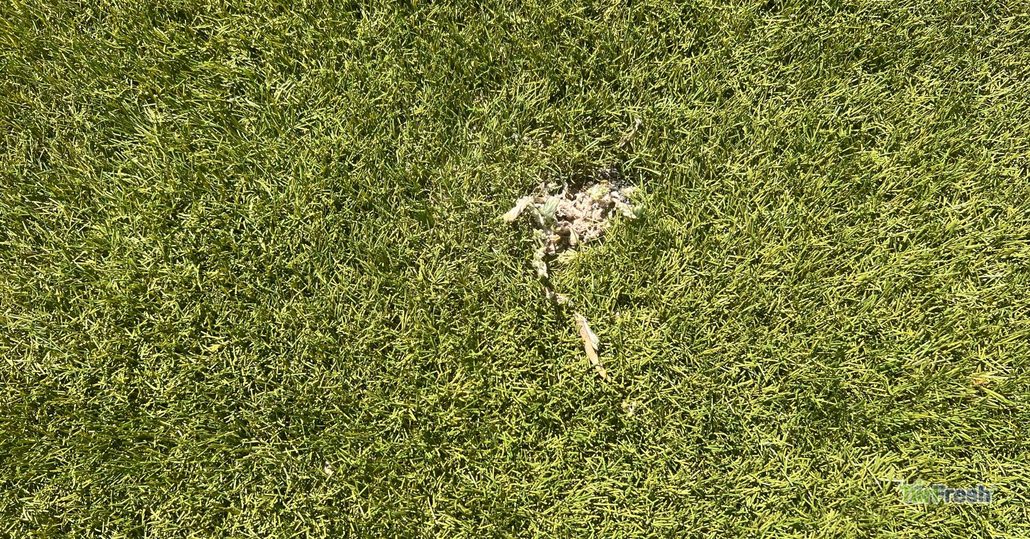
Before applying any treatment, remove everything sitting on the turf. Leaves, sticks, pet hair, and fine organic matter all hold moisture and give moss something to feed on. Clearing them first makes the treatment significantly more effective.
➧ Remove leaves, sticks, and surface debris
➧ Clear pet hair and fine organic matter from the pile
➧ Check seams, edges, and low spots for buildup
➧ Confirm drainage holes are not blocked
Use a synthetic-bristle rake or turf brush. Metal rakes damage turf fibers and shorten the lifespan of the surface.
👉 Step 2: Apply a Moss Killer or Vinegar Solution
The right treatment depends on how established the moss is.
Option 1: Turf-Safe Moss Killer
For larger or recurring moss problems, a commercial moss killer labeled safe for artificial grass is the most reliable option. These products are formulated to kill moss without damaging turf fibers or backing material. Apply on a dry, sunny day and follow label instructions carefully.
Option 2: Vinegar Solution
White vinegar kills moss on artificial turf when used correctly. It works best on light or early-stage growth before the moss has fully established.
➡️ Mix equal parts distilled white vinegar and water (1:1 ratio)
➡️ Spray directly onto the moss, covering it fully
➡️ Allow it to sit for several minutes
➡️ Spot test a small hidden area first to confirm the turf responds well
Vinegar is effective for surface moss but less reliable for moss that has been growing for weeks or months. For established growth, a purpose-made moss killer will produce better results.
👉 Step 3: Scrub Gently
After the solution has soaked in, scrub the area to loosen and lift the moss. Use light pressure only.
➡️ Use a sponge or soft brush to loosen the moss
➡️ Lift larger clumps with a plastic tool if needed
➡️ Avoid sharp or abrasive tools that can catch and pull turf fibers
Light pressure is enough once the treatment has done its work. Scrubbing too hard before the solution has soaked in is less effective and risks damaging the pile.
👉 Step 4: Rinse Thoroughly
Rinsing removes dead moss, cleaning residue, and any remaining spores from the surface.
➡️ Allow the solution to sit for a total of about 10 minutes before rinsing
➡️ Rinse the area thoroughly with clean water
➡️ Brush the turf again once it begins to dry to reset fibers upright
➡️ Repeat spot treatment if any moss remains after the first round
How to Prevent Moss from Coming Back on Artificial Grass
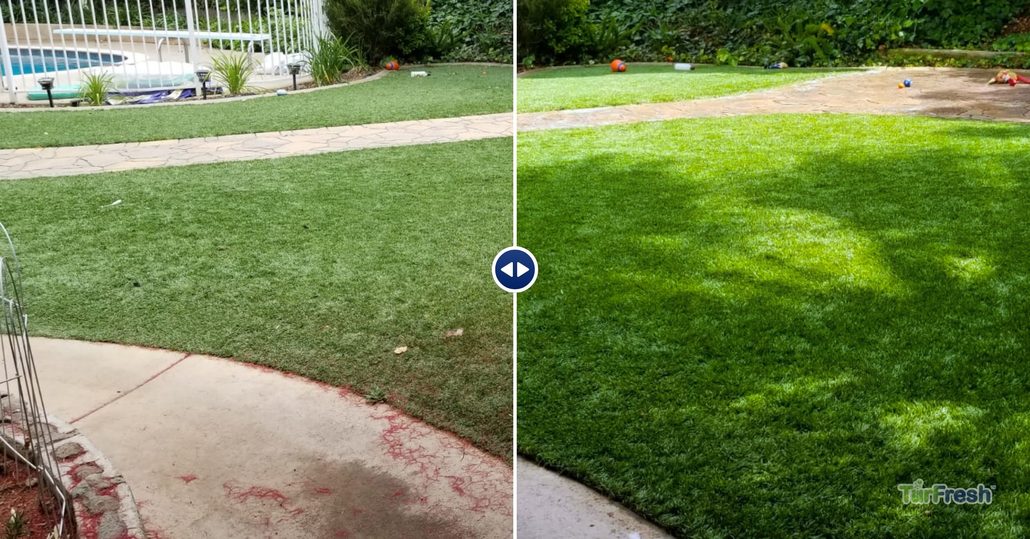
Moss returns when the conditions that caused it in the first place are not addressed. Removing moss without fixing the drainage is a temporary solution.
Standing water is the biggest contributor to moss growth. If the turf stays damp for hours after rain, drainage is the issue that needs solving first.
Prevention checklist:
✅ Remove debris weekly during wet and leaf-fall seasons
✅ Inspect seams, edges, and low spots after heavy rain
✅ Clear blocked drainage perforations regularly
✅ Brush turf fibers upright to prevent matting and improve airflow
✅ Trim nearby trees or shrubs to reduce shade and leaf drop
✅ Treat green patches early before moss spreads across a larger area
How Often Should Artificial Grass Be Maintained to Prevent Moss?
Consistent maintenance is the most reliable way to prevent moss from establishing. A simple routine is enough for most yards.
👍 Debris removal once or twice per week during wet seasons
👍 Brush fibers upright regularly, especially in high-traffic and shaded areas
👍 Rinse occasionally to remove surface residue and loose organic matter
👍 Apply spot treatment as soon as green patches appear rather than waiting
The key is catching moisture buildup and organic debris early. Both are easy to manage when addressed consistently and significantly harder once moss has established.
When to Call a Professional Turf Service for Moss
DIY methods work well for surface moss caught early. When moss keeps returning despite treatment, the underlying drainage or compaction issue needs professional attention.
Professional maintenance is the right call when:
➡️ Moss reappears quickly after DIY treatment
➡️ The turf has persistent wet or shaded zones that stay damp after rain
➡️ Mold, algae, or odors are present alongside the moss
➡️ The turf has not had a professional clean in 12 months or more
TurFresh's TurfClean service clears blocked drainage, removes embedded debris and organic buildup, and restores the surface conditions that make moss growth significantly less likely. One professional visit typically resolves what repeated DIY treatments cannot.
The drainage needs professional attention.
TurFresh clears blocked drainage, removes buildup, and restores the conditions that keep moss away for good. Over 150,000 services completed. Pet safe the same day.
Schedule Your Turf Service✔ Pet Safe✔ Eco Friendly✔ 20+ Years of Experience✔ 30-Day Guarantee
Complete Guide
📖 Artificial Turf Problems: 9 Most Common Issues, causes, fixes, and when to call a professional for weeds, mold, pests, drainage, infill, and more.
Frequently Asked Questions
What is the safest way to remove moss from artificial grass?
The safest way is to use a turf-safe cleaner or a mild vinegar solution combined with gentle brushing and thorough rinsing. This removes moss without damaging turf fibers or backing material.Will vinegar kill moss on artificial grass?
Yes. A 1:1 solution of white vinegar and water kills surface moss on artificial turf. It works best on light or early-stage growth. For established moss that has been growing for weeks, a purpose-made turf-safe moss killer is more effective.Does moss damage artificial turf if left untreated?
Moss does not usually damage artificial turf immediately, but long-term growth flattens fibers and blocks drainage. Over time this keeps the turf damp longer, increasing the chance of mold, odors, and recurring moss growth.Can moss grow through artificial grass backing?
Moss does not grow through artificial grass backing. It spreads across the surface when moisture and debris are present. Moss growth is almost always a surface-level issue caused by trapped moisture rather than a failure of the turf structure.Is moss on artificial grass a sign of poor installation?
Not always. Moss on artificial grass usually points to a drainage or maintenance issue rather than poor installation. Even well-installed turf can develop moss if debris buildup or shading prevents the surface from drying properly.How can you tell if drainage is causing moss on artificial turf?
Drainage is likely the issue if water pools on the turf after rain or if moss appears repeatedly in the same low-lying areas. Consistent damp spots are a reliable indicator that drainage needs to be cleared or the base needs attention.Should moss be removed before it turns dark or thick?
Yes. Moss is significantly easier to remove when it first appears as a light green film. Early removal reduces the need for stronger treatments and lowers the risk of it spreading across larger sections of the turf.