
Proper artificial grass maintenance is key to extending the useful life of your outdoor areas. If you’re looking for turf cleaning in Orange County, one of the most common terms you’ll see with turf maintenance services is infill.
These days, there are several different kinds of artificial turf infill. If you’re unsure which is suitable for your home or business’s synthetic grass, read below to learn what sets them apart.
Different Types of Artificial Grass Infill?
Proper artificial grass maintenance helps extend the usable life of outdoor spaces. If you are researching turf cleaning in Orange County, one term that comes up often with artificial grass care is infill.
Artificial turf infill is the material placed between synthetic grass blades to support the turf system. There are several infill types, and each one performs a little differently depending on use, comfort needs, and how the turf is maintained.
TLDR
Artificial grass infill helps support turf blades and affects how turf feels, performs, and stays clean. The most common infill types include polymer-coated sand, organic infill materials, and disinfectant infill used for odor and bacteria control.
Quick Answer
The different types of artificial grass infill covered here are polymer-coated sand infill, organic infill materials, and disinfectant infill, each chosen based on durability, feel, maintenance needs, and odor control.
What is infill in artificial grass?
Infill is the granular material installed between artificial turf blades to help the turf perform as intended.
It is commonly discussed during turf maintenance because the infill layer can influence comfort, cleanliness, and how well turf holds up over time.
What is polymer-coated sand infill?
Polymer-coated sand infill is a popular turf infill made from sand granules coated with a polymer.
This infill uses polymer-coated, round sand granules that can help synthetic grass resist compacting and bacteria growth.
Coated sand works well across many applications, but it is also known as one of the more abrasive infill options. That abrasion is one reason some installers choose other infill materials depending on how the turf will be used.
Tip for homeowners and property managers
If turf feels harder than expected or looks matted in high-traffic spots, ask whether the infill has compacted and whether the turf needs grooming or redistribution.
What are organic infill materials for artificial turf?
Organic artificial turf infills are made from cork, walnut shells, or coconut shells.
These options became popular because they are all-natural, compostable, and free of toxic chemicals.
Organic infill is often used on sports fields because it can create a more natural-feeling surface and offer strong energy absorption.
Organic infill also has drawbacks that matter for many residential installs. It can require more maintenance, may be harder to find, and often can only be ordered in large quantities. For smaller residential turf installations, those limitations can make organic infill less practical.
Practical tip
If organic infill is on your shortlist, confirm availability and minimum order quantities before committing to it for a smaller yard.
What is disinfectant infill for artificial grass?
Disinfectant infill is an infill option used to support turf cleanliness and odor control.
This type of infill is often discussed when turf maintenance is focused on keeping turf surfaces clean for families, pets, and high-use outdoor areas.
At TurFresh, an antibacterial infill called TurFill is used in TurfClean services.
What is TurFill and how does it work?
TurFill is an antibacterial infill designed to target odor-causing bacteria in artificial turf.
TurFill is described as an all-natural, science-backed odor solution, using a patented formula that breaks down odor-causing bacteria at the chemical level to support thorough disinfection.
TurFill is also described as all-natural and non-toxic, making it suitable for lawns used by children or pets.
Tip for pet families
If odor is the main issue, focus on the source, not the smell. Targeting odor-causing bacteria is usually more effective than masking odors.
Where can you get TurFresh artificial grass cleaning products for at-home use?
TurFresh products, including TurFill infill, are available through the TurFresh online store.
Keeping disinfecting products on hand can help address common turf messes as they happen, not only right before a scheduled maintenance service.
For more information about TurFresh artificial grass cleaning products and services, call (855) 444-8873 or contact TurFresh online to connect with a Turf Tech.
What should you consider when choosing an artificial turf infill option?
The best infill choice depends on how the turf is used and what problems you are trying to solve.
Some infills focus on stability and long-term performance, while others prioritize natural materials or odor control.
Here are practical factors to compare:
- Feel underfoot: Some infills are softer, while others can feel more abrasive.
- Maintenance expectations: Some options may require more frequent upkeep.
- Availability and ordering: Certain infills may be harder to source or only sold in large quantities.
- Cleanliness goals: If odor and bacteria are top concerns, disinfectant-focused options may be a better fit.
Highlight
If you are maintaining turf used by kids or pets, prioritize infill and maintenance choices that support a clean, safe surface.
Practical maintenance tips that support healthier infill performance
Good turf results come from pairing the right infill with consistent upkeep.
These tips help the infill layer perform more consistently over time.
- Redistribute infill in high-traffic areas so turf does not wear unevenly.
- Groom the turf blades to reduce matting and help the turf look more natural.
- Treat odor at the source by targeting odor-causing bacteria rather than relying on fragrance-based solutions.
- Watch for compaction in walk paths and play areas, since compacted infill can change how turf feels.
Frequently Asked Questions
Is artificial grass infill necessary?
Infill is commonly used to support the turf system by filling space between blades and helping turf perform consistently.
Some turf systems may be installed differently, but infill is a standard topic in turf maintenance because it affects feel and long-term performance.
Which infill type is most likely to feel abrasive?
Polymer-coated sand can be one of the more abrasive infill options.
This is why some installers choose alternative infills depending on how the turf will be used.
Why do sports fields use organic infill?
Organic infill is often used on sports fields because it can create a more natural-feeling surface and support energy absorption.
This makes it appealing for play environments where comfort and performance matter.
What makes organic infill less ideal for smaller residential installs?
Organic infill can require more maintenance, may be harder to find, and is sometimes only available in large quantities.
Those factors can make it less practical for a smaller yard.
How does disinfectant infill help with turf odor?
Disinfectant infill is used to target odor-causing bacteria that can build up in turf.
TurFresh describes TurFill as an antibacterial infill that breaks down odor-causing bacteria at the chemical level.
Is TurFill safe for lawns used by kids and pets?
TurFresh describes TurFill as all-natural and non-toxic, and safe for lawns used by children or pets.
This is positioned as a way to support a clean outdoor space for families.
Share
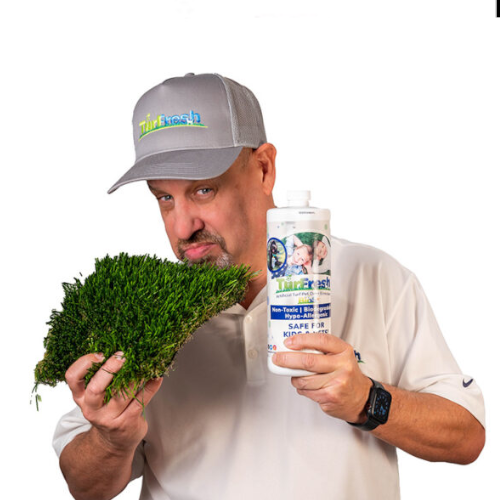

John Pla is the owner of TurFresh and an expert with over 20 years of experience in artificial turf cleaning and maintenance. John’s passion for sustainability, community impact, and innovative solutions has made him a trusted figure in the artificial grass industry and beyond.