
TL;DR
If your artificial grass looks matted after summer, the fastest path to a “like-new” lawn is to rebloom the turf blades, check and top up infill if needed, and treat lingering odors with an enzyme-based turf deodorizer. If the lawn still feels compacted, drains poorly, or smells keep coming back, a professional deep clean and infill refresh is often the most reliable reset.
Quick Answer:
To restore artificial turf after summer, brush the fibers against the grain to rebloom matted blades, top up infill if the turf feels hard or looks flat, and use an enzyme-based deodorizer to neutralize odors that rinsing won’t remove.
Why does artificial turf look worn out after summer?
Heavy summer use can flatten turf fibers and compress infill, which makes the lawn look less full and feel less springy. High foot traffic can cause visible matting, and heavy items like pop-up pools, grills, and picnic tables can leave dents after sitting in place for weeks or months.
You might also notice a new odor coming from beneath the turf that a quick rinse does not solve. Odors tend to linger when organic residue builds up below the surface, especially in high-use areas.
What is artificial grass reblooming?
Artificial grass reblooming is lifting and separating flattened turf fibers so the blades stand upright again and the lawn looks fuller. It is one of the simplest ways to improve appearance after high traffic and outdoor furniture pressure.
How do you rebloom artificial turf blades after matting?
To rebloom artificial turf, cross-brush the turf and brush against the grain to lift matted blades.
Excessive use can matt blades over time. Heavy lawn furniture like pop-up pools, grills, and picnic tables can also leave dents after sitting outside all summer. Once those items are put away for the season, reblooming helps the lawn regain its original, upright look.
What tools work best for turf reblooming?
A turf groomer or synthetic bristle brush works best for lifting turf fibers. Avoid metal rakes or metal bristles, which can damage turf fibers.
How should you brush artificial grass for the fullest look?
Brush in multiple directions first, then brush against the grain to improve lift and reduce the look of matting.
💡 Tip highlight: Focus reblooming on high-traffic zones first (paths, play areas, pet runs). These areas show matting sooner and respond quickly to cross-brushing.
When does artificial turf need an infill top-up?
Artificial turf may need an infill top-up when blades stay flat even after reblooming, the surface feels less cushioned, or drainage seems slower. Infill helps turf blades stay upright and gives the lawn a springy feel that is more comfortable for walking and play.
Infill compaction can contribute to bigger issues over time, including drainage problems, debris clutter, and bacterial buildup.
TurFresh offers scheduled artificial grass maintenance services and turf cleaning products that can be tailored to your schedule. Service can be scheduled as often as every month or as little as once a year. TurFresh technicians provide a detailed deep clean that can include an infill top-up so the lawn feels and looks refreshed.
💡 Tip highlight: If you notice water pooling or slower drainage than usual, treat it as a sign to check infill levels and overall turf condition. Drainage performance problems can show up when systems clog or compact over time.
Why does artificial turf smell after summer even if you rinse it?
Odors can linger because a quick rinse may not reach odor sources below the surface, especially when residue builds up in high-use areas. An enzyme-based deodorizer is often more effective because it targets odor sources rather than covering smells.
How do you eliminate lingering artificial turf odors?
To eliminate lingering odors, use an enzyme-based turf deodorizer designed to neutralize odor sources.
TurFresh’s BioS+ turf deodorizer uses natural enzymes produced by ammonia-eating bacteria to capture and neutralize odors. It is formulated to target strong odors while remaining safe for friends, family, and pets, so the lawn can be used again right away.
💡 Tip highlight: For recurring pet odors, enzyme-based turf cleaners are commonly recommended because they help break down urine residue and odor sources instead of masking the smell.
When should you schedule professional turf maintenance services?
Schedule professional turf maintenance when you want a full reset after summer wear, or when DIY brushing and rinsing are not enough. A professional service can restore appearance, improve comfort, and address issues that build up below the surface.
TurFresh’s turf cleaning experts provide synthetic grass maintenance services designed to restore turf after seasonal wear and everyday use.
Services can include:
👉 Reblooming turf blades
👉 Topping up infill
👉 Eliminating odors
👉 Tucking loose seams
TurFresh will match a plan to your lawn and schedule. To learn more or to schedule an appointment, 📞 call 855-444-8873 or use the online contact form.
💡 Practical Turf Restoration Tips (easy callouts)
✅ Rebloom first, then assess infill. If the turf still looks flat after cross-brushing, infill may need attention.
✅ Use synthetic bristles, not metal. Metal rakes and metal bristles can damage turf fibers.
✅ Treat odors at the source. Enzyme-based deodorizing is often recommended for stubborn pet and organic odors.
✅ Don’t ignore drainage changes. Pooling, slow draining, or persistent smells can point to compaction or buildup that needs deeper cleaning.
Frequently Asked Questions
How do you revive artificial grass after summer?
• Revive artificial grass by reblooming the turf blades (brush against the grain), checking infill for compaction, and treating odors with an enzyme-based deodorizer.
What is the difference between turf reblooming and turf restoration?
• Reblooming focuses on lifting flattened turf fibers to improve appearance, while restoration typically means a broader reset that can include deep cleaning, infill adjustment, odor treatment, and fixing wear areas.
What is a synthetic turf groomer and when should you use one?
• A synthetic turf groomer is a turf-safe grooming tool used to lift matted fibers and help redistribute the surface. Use one when brushing by hand is not giving enough lift in high-traffic areas.
Why does artificial turf feel harder after summer?
• Artificial turf can feel harder when infill compacts under repeated foot traffic and heavy items. A top-up or refresh can help restore a more cushioned feel.
How can you prevent artificial grass from matting again?
• Prevent matting by reblooming high-traffic areas on a routine schedule, rotating heavy furniture when possible, and scheduling periodic maintenance if your yard sees constant use.
Is enzyme deodorizer safe to use around pets and kids on synthetic grass?
• Enzyme-based turf deodorizers are commonly used for odor control in pet areas, and TurFresh BioS+ is formulated to target odors while remaining safe for friends, family, and pets when used as directed.
Ready for an Odor-Free Yard?
📞 Call (855) 444-8873 or 📱 text (714) 709-2551 to get started.
Professional Artificial Grass Cleaning
Turf Cleaning Products | Deep Clean Your Turf and Infill
Give your family and pets the clean, fresh outdoor space they deserve.
👉 New customers receive 10% OFF
Share
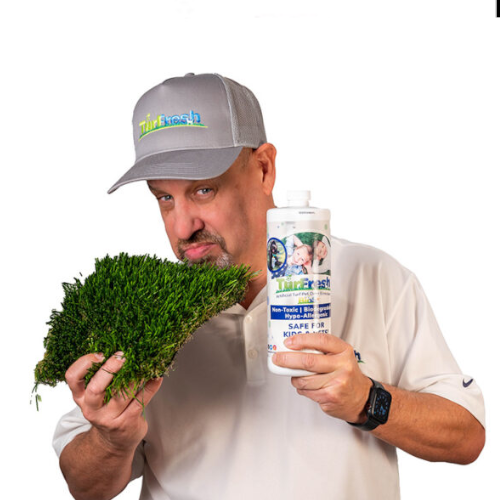

John Pla is the owner of TurFresh and an expert with over 20 years of experience in artificial turf cleaning and maintenance. John’s passion for sustainability, community impact, and innovative solutions has made him a trusted figure in the artificial grass industry and beyond.