
Quick Answer
Artificial grass cleaning for heavy traffic areas requires a tiered schedule: weekly debris removal, monthly fiber brushing, quarterly deep cleaning, and increased frequency during peak seasons. High foot traffic compacts fibers, traps debris in the infill, and accelerates wear faster than in residential settings, so commercial spaces like hotels, retail centers, offices, and entertainment venues need more frequent professional service than a typical backyard lawn.
Protect your commercial turf investment with a maintenance schedule built for heavy foot traffic.
TurFresh provides specialized cleaning solutions for hospitality, retail, office, and entertainment properties, using commercial-grade equipment that reaches deeper than standard methods.
Request a Commercial Assessment
✔ Non-Toxic✔ 150,000+ Services✔ 30-Day Guarantee
Key Takeaways
📅 Commercial turf needs a tiered maintenance schedule, not a single cleaning cadence. Weekly debris removal, monthly brushing, and quarterly deep cleaning each address a different layer of wear, and skipping a tier lets damage compound at the next one.
⚠️ Poorly maintained turf is a liability issue, not just an appearance issue. Compacted fibers, loose seams, and contaminated surfaces reduce traction and create slip and trip hazards, particularly in high-traffic zones where people move quickly.
🏢 Clean turf directly affects how a commercial property is perceived. In hotels, retail centers, and offices, flattened or stained turf signals neglect even when the rest of the facility is spotless.
🧴 Surface cleaning cannot remove embedded contamination. Dirt, oils, and bacteria pushed deep into the infill by foot traffic require professional deep cleaning equipment, not routine brushing or rinsing.
📈 Peak seasons and events require a temporary increase in frequency. Cleaning cadence should scale with actual usage, not stay fixed year-round, particularly for venues with seasonal traffic spikes.
Why Does High Foot Traffic Damage Commercial Artificial Turf?
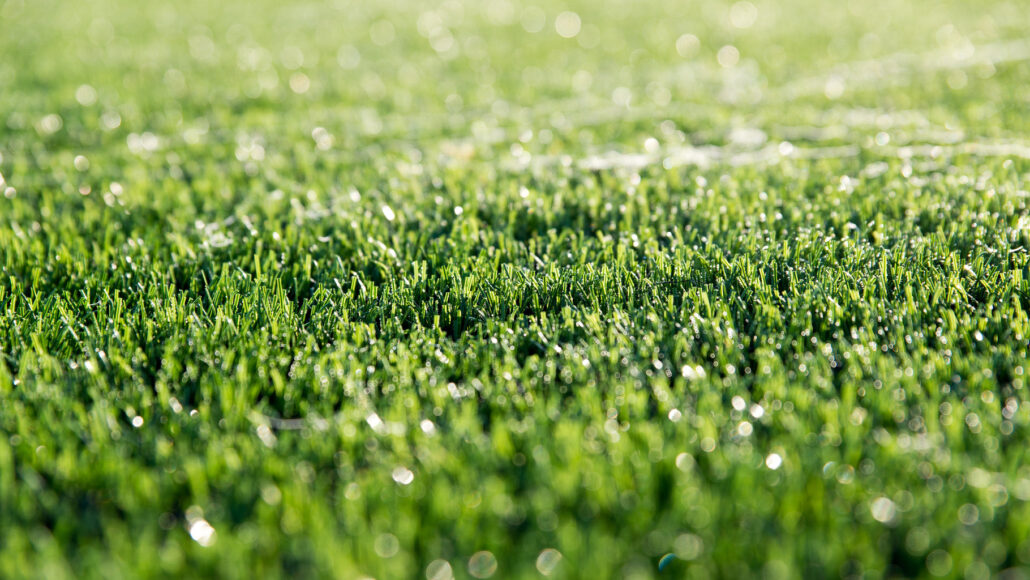
High foot traffic damages artificial turf by compacting fibers, trapping debris, and accelerating surface wear. Repeated walking compresses turf fibers, making surfaces feel harder and uneven. Dirt, food residue, and moisture get pushed deep into the turf system, reducing drainage and increasing odor and bacteria risks. Over time, heavily used areas such as walkways, entrances, and gathering zones show visible wear patterns that shorten turf lifespan if not properly maintained.
How Does Dirt and Debris Build Up in High-Traffic Turf Areas?
Dirt and debris build up when foot traffic carries contaminants into the turf fibers and infill. Dust, sand, leaves, food particles, and oils settle into the turf backing, especially in commercial spaces connected to parking areas or indoor-outdoor transitions. If debris is not removed consistently, it restricts drainage, traps moisture, and creates conditions that allow odors and bacteria to develop.
Why Does Clean Turf Matter for Commercial Appearance?
Clean artificial turf directly affects how professional and well-maintained a commercial space appears. Flattened fibers, stains, discoloration, and uneven surfaces can make a property look neglected even if the rest of the facility is spotless. In high-visibility areas such as hotels, shopping centers, offices, and entertainment venues, clean turf reinforces brand image, visitor confidence, and overall presentation.
Are Poorly Maintained Turf Areas a Safety Risk?
Yes, poorly maintained artificial turf can create slip and trip hazards in commercial environments. Compacted fibers, loose seams, and contaminated surfaces can reduce traction and create uneven walking areas. Spills, grease, or organic residue increase slip risks, especially in high-traffic zones where people move quickly. Maintaining clean, even turf surfaces helps reduce accidents and liability concerns.
What Is the Best Way to Clean Artificial Grass for Heavy Traffic Areas?
The best way to clean artificial grass for heavy traffic areas is through a combination of routine cleaning, scheduled deep cleaning, and fiber restoration. Regular debris removal prevents buildup, while deep cleaning removes embedded contaminants that surface cleaning cannot reach. Brushing restores fiber structure and keeps turf looking natural and comfortable underfoot. Together, these steps preserve both appearance and performance.
How Often Should Commercial Artificial Turf Be Cleaned?
Cleaning frequency depends on usage, but high-traffic commercial turf requires consistent care across four tiers.
Weekly Maintenance
👉 Remove loose debris using a blower, vacuum, or soft broom. Spot clean spills and stains as soon as they occur using turf-safe cleaning products.
Monthly Maintenance
👉 Brush turf fibers to lift matting and maintain a uniform appearance. Inspect high-use areas for thinning fibers, seam separation, or uneven surfaces.
Quarterly Maintenance
👉 Perform deep cleaning to remove embedded dirt, oils, bacteria, and odor-causing contaminants. Rinse turf using pressure settings appropriate for artificial turf systems.
Seasonal Maintenance
👉 Increase cleaning frequency during peak traffic periods or event seasons. Address drainage, odor, or staining issues early before they worsen.
How Do You Prevent Artificial Turf Fibers From Flattening?
Artificial turf fibers stay upright longer when they are brushed and deep cleaned regularly. Foot traffic naturally pushes fibers down. Brushing redistributes fibers, improves softness, and restores visual consistency. Deep cleaning removes compacted debris that contributes to fiber matting, extending the turf's usable life.
Can Stains and Odors Be Removed From Commercial Artificial Turf?
Yes, stains and odors can be removed with proper turf-safe cleaning methods. Food spills, oils, and organic residue respond well to non-toxic degreasers and professional deep cleaning systems designed for artificial turf. Odors caused by trapped bacteria and moisture are best eliminated through deep sanitation rather than surface rinsing alone.
When Should You Hire a Professional Turf Cleaning Service?
Professional turf cleaning is recommended when routine maintenance no longer restores appearance, cleanliness, or odor control. High-traffic commercial spaces benefit from professional cleaning because specialized equipment reaches deeper into the turf system without damaging fibers or backing. Professional service improves hygiene, restores fiber structure, and helps avoid costly turf replacement.
How Does Professional Commercial Turf Cleaning Help?
Professional turf cleaning removes embedded contaminants, restores fiber resilience, and improves surface safety. Commercial-grade tools and non-toxic cleaning solutions clean deeper than standard methods. This results in better drainage, fewer odors, improved traction, and longer turf lifespan. Professional service is especially valuable in hospitality, retail, office, and entertainment environments.
Why Choose TurFresh for Commercial Turf Cleaning?
TurFresh provides specialized artificial turf cleaning solutions designed for high-traffic commercial spaces. Using advanced equipment and non-toxic cleaning products, TurFresh restores turf fibers, removes contaminants, and improves safety and appearance. Decades of experience delivering artificial grass cleaning for heavy traffic areas allow TurFresh to provide consistent, reliable results while helping businesses protect their investment.
📌 To schedule commercial turf cleaning, contact TurFresh at (855) 444-8873.
Practical Tips for Maintaining High-Traffic Commercial Turf
✅ Clean debris before it becomes embedded in the turf
✅ Address spills immediately to prevent staining
✅ Brush fibers regularly to maintain appearance and comfort
✅ Schedule professional deep cleaning before odors develop
✅ Focus extra attention on entrances, walkways, and gathering areas
Schedule commercial turf cleaning built for heavy foot traffic.
TurFresh has completed 150,000+ professional services with equipment designed to reach the infill layer standard cleaning cannot. Every service is backed by a 30-day satisfaction guarantee.
✔ Non-Toxic✔ 150,000+ Services✔ 30-Day Guarantee
Frequently Asked Questions
How long does it take to clean artificial turf in a commercial space?
Most commercial turf cleaning services can be completed in a few hours, depending on area size and condition. Larger properties or those requiring deep decompaction may take longer, and TurFresh can provide a time estimate during the initial assessment.
Is artificial turf suitable for heavy foot traffic?
Yes. Commercial-grade artificial turf is designed for heavy use when properly cleaned and maintained. Without a consistent maintenance schedule, however, even durable turf compacts and flattens faster under sustained commercial traffic than it would in a residential setting.
What cleaning products are safe for artificial turf?
Non-toxic, biodegradable products formulated specifically for artificial turf are safe and effective. Harsh solvents, bleach, and peroxide-based cleaners can degrade fibers and backing over time and should be avoided in favor of turf-specific formulas.
Can professional cleaning extend the life of artificial turf?
Yes. Regular professional cleaning reduces fiber breakdown, improves drainage, and delays turf replacement. Commercial properties that maintain a consistent professional schedule typically get significantly more usable life out of their turf investment than those relying on surface cleaning alone.
How do you protect turf during high-traffic seasons?
Increase cleaning frequency, brush fibers more often, and address stains or odors immediately during peak usage periods. Properties with predictable seasonal spikes, such as event venues or hospitality properties during holiday periods, benefit from scheduling additional service in advance rather than reacting after wear becomes visible.
What is the difference between routine cleaning and deep cleaning for commercial turf?
Routine cleaning handles surface debris, spot stains, and fiber brushing on a weekly or monthly basis. Deep cleaning uses professional-grade equipment to remove embedded dirt, oils, and bacteria from the infill layer, typically performed quarterly or more often in the highest-traffic zones.
Share

John Pla is the owner of TurFresh and an expert with over 20 years of experience in artificial turf cleaning and maintenance. John’s passion for sustainability, community impact, and innovative solutions has made him a trusted figure in the artificial grass industry and beyond.