Top Tips for Effective Synthetic Turf Cleaning
Jul 24, 2024 · 5 min read · By John Pla, Founder of TurFresh
How to Clean Artificial Grass the Right Way
Synthetic grass is designed to look great with minimal effort, but it still needs regular cleaning to stay fresh, safe, and long-lasting. Dirt, debris, spills, and pet waste can build up over time, affecting both appearance and hygiene. This guide explains how to clean artificial grass properly, how often to do it, and when professional cleaning makes sense. The steps below apply to residential lawns, pet turf, playgrounds, and commercial installations.
Quick Answer: How Do You Clean Artificial Grass? The best way to clean artificial grass is to remove debris weekly, rinse with water, treat spills immediately, and deep clean monthly using gentle cleaning methods or professional turf cleaning services.
Why Is Synthetic Turf Cleaning Important?
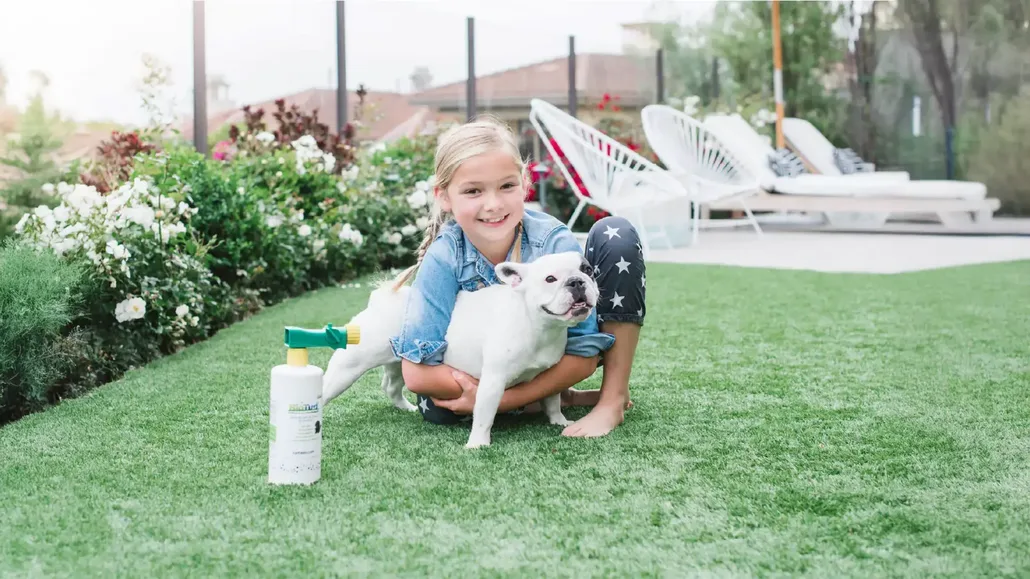
Regular cleaning helps artificial grass:
👉 Maintain its natural appearance👉 Prevent odors and bacteria buildup
👉 Extend its lifespan
👉 Improve drainage and performance
👉 Stay safe for pets and children
📌 Without routine maintenance, dirt and organic matter can settle into the turf base, leading to compaction, odors, and reduced drainage.
How Often Should Artificial Grass Be Cleaned?
Artificial grass should be lightly cleaned weekly and deep cleaned about once per month.High-traffic areas or pet zones may require more frequent cleaning.
Recommended Cleaning Schedule
➡️ Weekly: Remove debris and rinse with water ➡️ Monthly: Deeper clean with brushing and deodorizing ➡️ Quarterly: Professional cleaning for odor control and turf restoration
How Do You Clean Artificial Grass Regularly?
Routine cleaning keeps synthetic turf looking fresh and prevents buildup.Start with a simple weekly maintenance routine:
👉 Remove leaves, twigs, and debris👉 Use a soft synthetic bristle broom or rake
👉 Rinse the surface with a garden hose
👉 Check for compacted areas
📌 This quick process prevents debris from settling into the turf backing and keeps fibers upright.
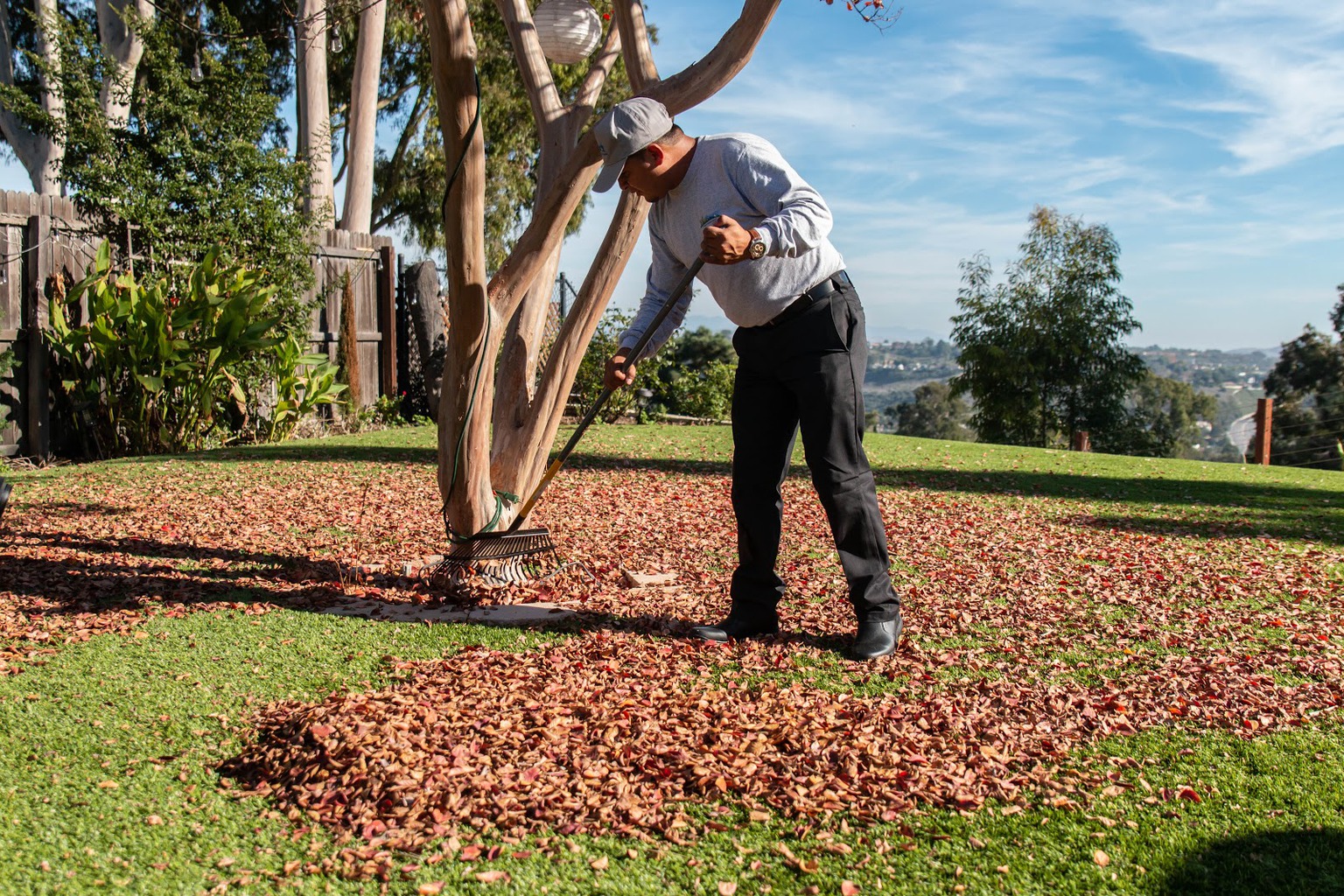
How Do You Remove Dirt and Debris From Synthetic Turf?
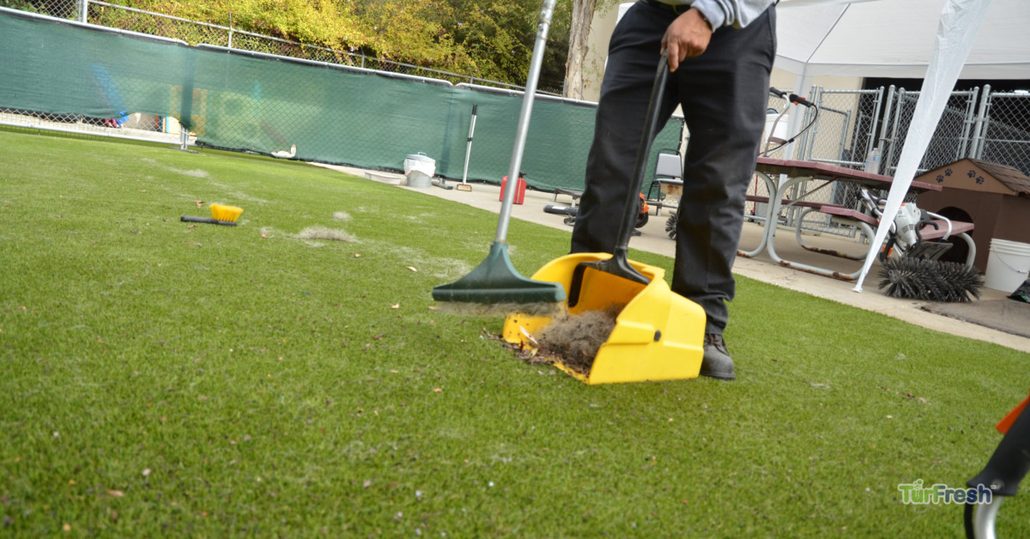
Loose debris should be removed before it becomes embedded in the turf.
Steps to follow:
👉 Pick up large debris by hand👉 Use a broom or turf rake to loosen dirt
👉 Rinse with water to flush out fine particles
👉 Allow turf to air dry
📌 Avoid metal rakes or high-powered blowers, which can damage turf fibers.
How Do You Clean Spills on Artificial Grass?
Spills should be cleaned as soon as possible to prevent staining.For food or drink spills:
👉 Blot the area with a clean towel👉 Mix mild detergent with water
👉 Gently scrub using a soft brush
👉 Rinse thoroughly with clean water
👉 Allow to air dry
📌 This method is safe for most synthetic turf types and prevents residue buildup.
How Do You Remove Stubborn Stains From Artificial Turf?
Stubborn stains require deeper cleaning but should still be handled gently.For tougher stains:
👉 Rinse the area with water👉 Apply a diluted ammonia and water solution
👉 Lightly scrub using a synthetic bristle brush
👉 Rinse thoroughly to remove residue
👉 Apply a turf deodorizer if odors remain
📌 Avoid harsh chemicals or bleach, as they can damage turf fibers and backing.
How Do You Keep Artificial Grass Smelling Fresh?
Odor control requires consistent cleaning and proper drainage.To prevent smells:
👉 Rinse pet areas weekly👉 Remove organic debris quickly
👉 Use turf-safe deodorizing products
👉 Avoid standing water
👉 Schedule periodic deep cleaning
📌 Professional turf cleaning services are especially effective for pet areas and high-traffic zones.
Can You Pressure Wash Artificial Grass?
Yes, but only with low pressure and proper technique.Use a fan spray setting and keep the nozzle at least 12 inches away from the turf.
High pressure can:
👉 Displace infill👉 Damage turf fibers
👉 Loosen seams
📌 For deep cleaning, professional turf equipment is safer and more effective.
When Should You Hire a Professional Turf Cleaning Service?
Professional cleaning is recommended when:
👍 Odors persist after regular cleaning👍 Turf looks flat or compacted
👍 Drainage is reduced
👍 You manage commercial or pet-heavy areas
Professional services use specialized equipment to:
👍 Remove embedded debris👍 Sanitize turf
👍 Restore fiber lift
👍 Neutralize odors
Professional Synthetic Turf Cleaning by TurFresh
When routine cleaning isn’t enough, TurFresh provides professional artificial turf cleaning designed to restore performance and appearance.TurFresh’s TurfClean service includes:
✅ Deep debris removal
✅ Odor and bacteria treatment
✅ Turf fiber rejuvenation
✅ Safe, non-toxic cleaning solutions
Whether you have a backyard lawn, pet area, playground, or commercial turf installation, TurFresh delivers a thorough clean that extends the life of your turf.
Related reading
- Putting Green Cleaning: How to Keep Ball Roll Consistent
- How Synthetic Turf Maintenance Can Make Your Turf Last Longer
- Why Do Doggy Daycare Owners Love TurFill for Their Synthetic Turf Maintenance?
📞 Call 855-444-8873 or use the online contact form to schedule service.
Frequently Asked Questions
How do you clean artificial grass naturally?
• Use water, mild soap, and a soft brush. Avoid harsh chemicals and rinse thoroughly.What is the best way to clean synthetic turf?
• Regular debris removal, light rinsing, and monthly deep cleaning provide the best results.Can artificial grass get mold or bacteria?
• Yes, if debris and moisture build up. Routine cleaning and proper drainage prevent this.How long does artificial grass last with proper cleaning?
• With proper care, synthetic turf can last 10 to 15 years or longer.Is professional turf cleaning worth it?
• Yes, especially for pet areas, high-traffic zones, or turf with odors and buildup.
💡 Helpful Turf Cleaning Tips
✔ Clean spills immediately to avoid staining ✔ Brush against the grain to lift turf fibers ✔ Rinse regularly during hot months ✔ Avoid metal tools or harsh chemicals ✔ Schedule professional cleaning at least once per year