
One of the many benefits of synthetic grass is that there isn’t much needed in terms of artificial grass maintenance. Unlike natural grass, cleaning artificial grass is simple. There’s no need to water, add fertilizer, or mow it. However, there are still some services and upkeep needed to keep your artificial grass in great shape. At TurFresh, we are a full-spectrum artificial grass cleaning service that serves Los Angeles and the rest of Southern California, as well as Arizona and Nevada, and many locations across the United States. We offer a range of service plans to keep your artificial turf looking beautiful and in top-notch shape for years to come.
TL;DR
Artificial grass requires far less upkeep than natural grass, but commercial properties still need routine cleaning, reblooming, and odor control to keep turf looking professional, safe, and long-lasting. Scheduled maintenance prevents matting, eliminates bacteria and odors, and protects your investment.
Quick Answer:
Commercial artificial grass should be professionally cleaned and rebloomed on a recurring schedule based on foot traffic, pet use, and environment to maintain appearance, hygiene, and performance.
Why Does Artificial Grass Still Need Maintenance on Commercial Properties?
Artificial grass needs maintenance because high foot traffic, pets, and environmental debris cause turf blades to flatten, odors to develop, and bacteria to build up over time.
While synthetic turf does not require watering, mowing, or fertilizing, commercial environments place constant stress on the surface. Without routine care, turf can look worn, smell unpleasant, and lose its structural integrity.
Regular maintenance restores blade structure, removes contaminants, and keeps turf safe and visually appealing for customers, tenants, and visitors.
How Does Foot Traffic Affect Artificial Grass Maintenance Needs?
Higher foot traffic increases the need for more frequent artificial grass cleaning and reblooming.
Commercial spaces such as dog kennels, playgrounds, schools, retail centers, and multi-family housing experience repeated compression of turf fibers. Over time, this causes matting, uneven infill distribution, and trapped debris.
Maintenance frequency should scale with use:
➡️ High-traffic areas require monthly or bi-monthly service
➡️ Moderate-traffic areas benefit from quarterly care
➡️ Low-traffic aesthetic installations still need periodic deep cleaning
What Maintenance Plans Are Best for High-Traffic Commercial Turf?
High-traffic commercial turf performs best with monthly or bi-monthly maintenance plans.
These service plans focus on restoring turf performance while addressing hygiene concerns common in busy environments. Professional technicians rebloom turf fibers so blades stand upright, remove pet hair and debris, and neutralize odors caused by pet waste and bacteria.
This level of care is ideal for:
➡️ Dog daycares and kennels
➡️ Schools and playgrounds
➡️ Athletic and recreation spaces
➡️ Retail and hospitality properties
What Maintenance Is Recommended for Low-Traffic Commercial Artificial Grass?
Low-traffic commercial artificial grass still requires routine cleaning to stay fresh and sanitary.
Properties such as apartment complexes, office courtyards, and decorative landscapes may not experience heavy use, but dust, pollen, spills, and bacteria still accumulate. Periodic professional cleaning prevents discoloration, odors, and surface breakdown.
Quarterly or bi-annual maintenance plans provide deep cleaning, odor treatment, and debris removal without unnecessary service frequency.
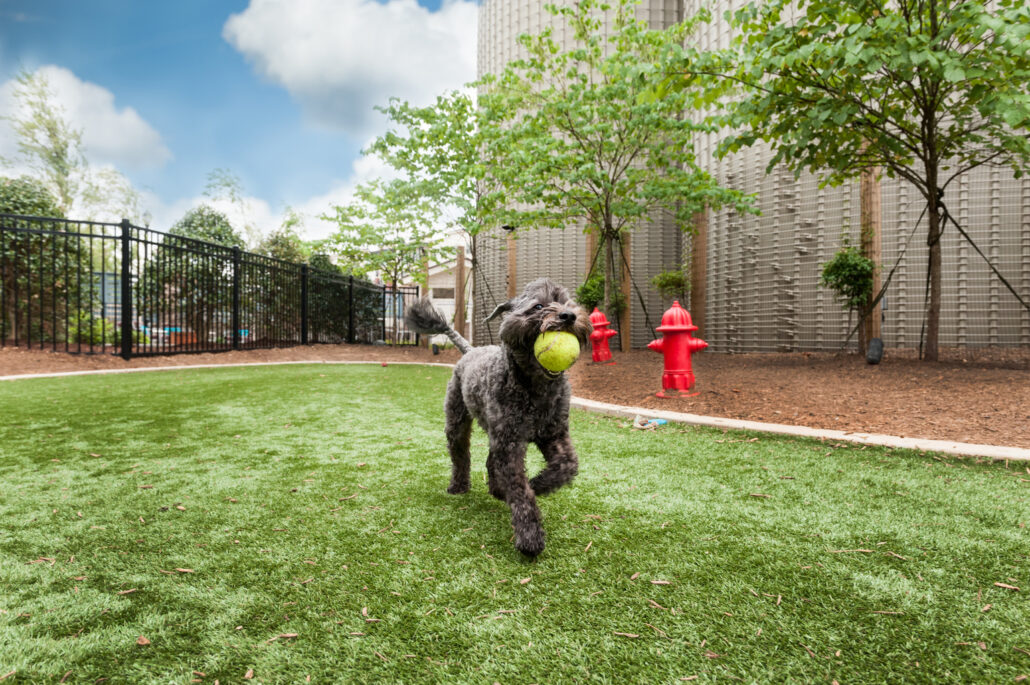
What Is Synthetic Turf Reblooming and Why Is It Important?
Synthetic turf reblooming restores flattened grass blades so the turf looks full and natural again.
Over time, foot traffic and furniture compress turf fibers, causing the surface to appear worn. Reblooming uses specialized equipment to lift and separate blades while redistributing infill evenly.
Reblooming:
👍 Improves appearance and curb appeal
👍 Enhances drainage and surface performance
👍 Extends the lifespan of commercial turf installations
What Does Professional Commercial Artificial Grass Cleaning Include?
Professional artificial grass maintenance includes far more than surface cleaning.
A comprehensive service typically covers:
👉 Turf reblooming and infill de-compaction
👉 Removal of debris, pet hair, and organic matter
👉 Odor neutralization and bacteria elimination
👉 Stain treatment and surface sanitation
👉 Minor turf repairs and edge inspection
This deep-clean approach restores turf to a like-new condition while protecting the backing and infill system.
How Do Maintenance Subscriptions Benefit Commercial Properties?
Maintenance subscriptions provide consistent care that prevents costly turf replacement.
Scheduled service plans ensure turf is cleaned before problems become visible or permanent. Subscription-based maintenance also helps property managers budget predictably while maintaining consistent appearance standards across large estates or multiple locations.
This approach is especially beneficial for:
👍 Large commercial campuses
👍 Schools and municipal properties
👍 Multi-location businesses
👍 Pet-heavy environments
How Does Artificial Turf Help Commercial Properties Reduce Maintenance Costs?
Artificial turf reduces long-term maintenance expenses by eliminating watering, mowing, fertilizing, and irrigation repairs.
While natural grass requires constant upkeep, synthetic turf lowers labor, water, and equipment costs. Routine professional cleaning is significantly more cost-effective than ongoing landscaping services and helps avoid premature turf replacement.
Practical Maintenance Tips for Commercial Artificial Grass
💡 Tip 1: Address odors early
Routine odor treatment prevents bacteria buildup and lingering smells, especially in pet areas.
💡 Tip 2: Rebloom before turf looks worn
Preventative reblooming keeps fibers upright and extends turf lifespan.
💡 Tip 3: Match service frequency to use
Over-servicing wastes budget, while under-servicing shortens turf life.
💡 Tip 4: Use non-toxic, pet-safe cleaning solutions
This protects guests, pets, and surrounding landscaping.
Frequently Asked Questions About Commercial Artificial Grass Maintenance
What maintenance is required for artificial grass on commercial properties?
• Commercial artificial grass requires periodic cleaning, reblooming, debris removal, odor control, and infill maintenance based on usage levels.
How often should commercial artificial turf be cleaned?
• High-traffic areas benefit from monthly or bi-monthly cleaning, while lower-traffic installations typically need quarterly or bi-annual service.
Is artificial turf reblooming necessary?
• Yes. Reblooming prevents matting, restores appearance, and improves turf performance in commercial environments.
Can artificial grass develop odors?
• Yes. Pet waste, spills, and bacteria can cause odors without proper cleaning and deodorization.
Are maintenance plans better than one-time cleanings?
• Maintenance plans provide better long-term results by preventing damage rather than reacting to visible problems.
Is professional cleaning safe for pets and children?
• When non-toxic, eco-friendly products are used, professional turf cleaning is safe for pets, children, and the environment.
Schedule Professional Artificial Grass Maintenance
Artificial grass delivers maximum value when properly maintained. With professional cleaning, reblooming, and odor control, commercial turf stays attractive, hygienic, and durable year after year.
TurFresh provides full-spectrum artificial grass maintenance services for commercial properties across Southern California, Arizona, Nevada, and many locations nationwide. Service plans are customized based on traffic levels, property type, and turf condition.
Ready for an Odor-Free Yard?
📞 Call TurFresh today: (855) 444-8873
Professional Artificial Turf Cleaning
Turf Cleaning Products | Deep Clean Your Turf and Infill
👉 Give your family and pets the clean, fresh outdoor space they deserve.
Share

John Pla is the owner of TurFresh and an expert with over 20 years of experience in artificial turf cleaning and maintenance. John’s passion for sustainability, community impact, and innovative solutions has made him a trusted figure in the artificial grass industry and beyond.