How Much Commercial Synthetic Grass Maintenance Does Your Business Need?
Jun 24, 2022 · 9 min read · By John Pla, Founder of TurFresh
Quick Answer How much commercial synthetic grass maintenance does your business need? A practical starting point is TurfClean™ twice per year for low foot traffic, and quarterly to monthly, or every two weeks for heavy use, for high-traffic commercial turf, especially schools, daycare centers, fitness facilities, and pet areas. Most commercial synthetic grass needs professional cleaning on a set schedule rather than reactive, as-needed bookings, since debris, bacteria, and odor accumulate below the surface long before they become visible.
Get a maintenance plan built around your actual traffic level.
TurFresh's 10-point TurfClean™ process reaches the infill layer where odor and bacteria actually live, with plans ranging from twice-yearly to bi-weekly service.
Request a Custom Service Plan✔ Non-Toxic✔ 150,000+ Services✔ Trained Technicians✔ 30-Day Guarantee
Key Takeaways
📅 Frequency should match traffic level, not a fixed calendar. Twice a year works for genuinely low-use turf. Schools, daycares, fitness facilities, and pet areas need quarterly, monthly, or even bi-weekly service to stay sanitized.
🧼 "Looks clean" is not the same as "is sanitized." Odor and bacteria accumulate in the infill layer below what a visual inspection or surface rinse can catch.
🧲 The TurfClean™ proven process covers what surface cleaning misses. Infill care, decompaction, and a magnet sweep for hidden metal are part of every visit, not add-ons.
🐾 Pet-heavy properties need the tightest cycle. Daily-use pet turf areas, like dog daycares, benefit from service closer to every two weeks rather than waiting for odor to become noticeable.
📋 Custom plans outperform fixed schedules. The right frequency is based on real usage patterns for your specific property, not a one-size-fits-all interval. For the broader business case for ongoing maintenance, including ROI and provider evaluation, see our guide on how commercial synthetic grass maintenance services benefit your business.
Most commercial synthetic grass needs professional cleaning on a set schedule. Low-traffic areas usually do well with service twice a year. High-traffic areas, especially spaces used by kids or pets, often need quarterly, monthly, or every two weeks to stay clean, odor-free, and safe.
What Makes Commercial Synthetic Grass Maintenance Necessary Even Though Turf Is Low Upkeep?
Commercial artificial grass still needs routine professional maintenance because debris, bacteria, and odors build up in the blades and infill over time. Synthetic grass saves business owners time and money compared to natural grass, but it still needs scheduled cleaning to stay fresh, sanitized, and presentable.
💡 Tip for facility planning: Treat turf like any other high-touch surface outdoors. If people, kids, or pets use it regularly, plan for routine professional service instead of one-off cleanings.
How Often Should Low-Foot-Traffic Commercial Synthetic Grass Be Professionally Maintained?
Low-traffic commercial turf typically needs professional maintenance at least twice a year. Light-use patios and outdoor business areas can look fine for a while, but dust, pet hair, and bacteria from spills or pet waste gradually collect and can lead to odors and mold growth if left untreated.
TurFresh recommends scheduling a TurfClean™ service at least twice a year for low-traffic areas to keep artificial grass clean, safe, and ready for customers.
💡 Practical tip: If your turf sits in shade or stays damp longer, treat it like a higher-risk area and increase service frequency.
What Builds Up on Commercial Turf Over Time in Low-Use Areas?
Even low-use turf collects dust, debris, pet hair, and bacteria from everyday exposure. Outdoor surfaces also pick up residue from spills and pet waste, which settles into the turf and infill and becomes harder to remove later without professional maintenance.
✅ Highlight: "Looks clean" is not the same as "is sanitized." Odor and bacteria often start below the surface, especially in the infill.
What Does a TurfClean Service Include for Commercial Synthetic Grass?
Each TurfClean™ appointment includes a 10-point artificial turf cleaning process designed to sanitize and refresh commercial turf. The service covers infill care, decompacting, and a magnet sweep to remove metal that may be hidden between the blades.
💡 Tip for property managers: Ask for a service plan that addresses both the turf surface and the infill. That is where odor and buildup can linger.
How Often Should High-Traffic Commercial Artificial Grass Be Maintained?
High-traffic commercial turf usually needs quarterly, monthly, or bi-monthly service to stay clean, safe, and odor-free. Heavy foot traffic pushes debris and residue deeper into the turf, and frequent use flattens blades and compacts infill faster.
TurFresh offers monthly, bi-monthly, and quarterly service plans for businesses that need consistent results.
💡 Tip for scheduling: If your space hosts events, classes, or peak seasons, schedule service right after the busiest period to reset the turf quickly.
Why Do Schools and Daycare Centers Need a Stricter Synthetic Turf Maintenance Program?
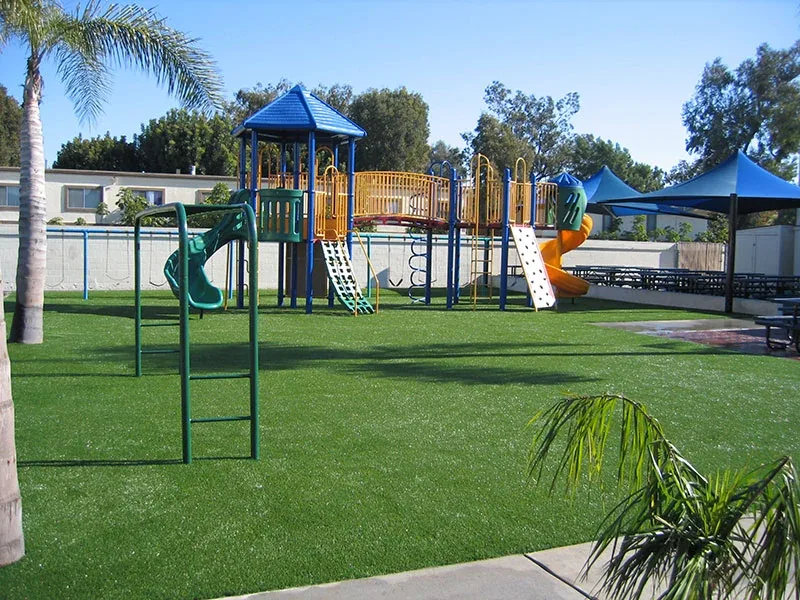
Schools and daycare centers often need more frequent maintenance because turf must stay properly sanitized for children's daily use. Many cleaning products and services only mask odors instead of removing the underlying cause, which is a real problem in child-focused environments where hygiene matters.
TurFresh uses non-toxic, child-safe artificial grass disinfectants that break down odor-causing bacteria at the chemical level to thoroughly sanitize outdoor surfaces.
💡 Callout tip for administrators: If odor returns quickly after rinsing, it usually means bacteria is still present below the surface and a deeper service schedule is needed.
Why Do Pet-Friendly Businesses Need More Frequent Synthetic Grass Maintenance?
Pet turf areas need more frequent maintenance because regular use leaves waste residue that creates odor and bacteria buildup. Without consistent service, places like doggy daycares can become breeding grounds for bacteria, and odor settles into the turf system over time.
TurFresh emphasizes regular synthetic grass maintenance for animal-focused businesses to remove pet waste effectively and keep the area healthier for pets and people.
💡 Tip for pet turf managers: If the area is used daily, plan for a schedule closer to every two weeks rather than waiting for odor to appear.
How Do Custom Commercial Turf Maintenance Plans Work for Different Businesses?
Custom maintenance plans match service frequency and service type to your turf use, so businesses can keep turf clean without overpaying or under-maintaining. Answering how much commercial synthetic grass maintenance does your business need starts with an honest look at foot traffic, not a generic calendar. TurFresh supports everything from a simple TurfBloom™ every six months to a comprehensive TurfClean™ every two weeks, depending on foot traffic, pets, and cleanliness expectations.
TurFresh's goal for commercial clients is to help business owners stay focused on operations while turf maintenance stays handled through a consistent plan.
✅ Highlight: A maintenance subscription or program works best when it is based on real usage patterns, not a fixed one-size schedule.
How Fast Can Commercial Synthetic Grass Be Refreshed, and When Can Customers Use It Again?
TurFresh can transform turf in just a few hours, and customers can typically enjoy the refreshed surface immediately after service. If your turf shows significant wear rather than routine buildup, see our breakdown of TurfBloom restoration vs. full replacement to determine the most cost-effective path for your facility.
This fast turnaround is supported by non-toxic and biodegradable products designed for commercial environments where downtime needs to be minimal.
💡 Tip for busy locations: Schedule service during off-hours or lower-traffic windows, then reopen the area right after the maintenance visit.
Practical Tips for Commercial Turf Maintenance Scheduling
💡 If your commercial turf serves kids or pets, choose a plan that targets odor-causing bacteria, not just fragrance cover-ups.
💡 Low-traffic turf still needs maintenance because debris and bacteria build up slowly and become harder to remove later.
💡 If your turf is shaded or stays damp, increase maintenance frequency to reduce odor and mold risk.
💡 A consistent maintenance program helps turf look better, smell better, and stay safer for daily use.
Twice-yearly to bi-weekly, TurFresh scales to your actual traffic.
Over 150,000 services completed nationwide. Non-toxic, biodegradable products safe for immediate re-entry after service. Backed by a 30-day satisfaction guarantee.
Get Your Custom Schedule✔ Non-Toxic✔ 150,000+ Services✔ Trained Technicians✔ 30-Day Guarantee
Frequently Asked Questions
What is the best artificial grass maintenance subscription for commercial properties?
The best subscription matches your traffic level, pet use, and sanitation needs, such as twice yearly for low-traffic areas or monthly to every two weeks for high-use spaces.How do I choose a maintenance program for commercial synthetic turf in schools?
Choose a plan that supports frequent sanitizing and odor control, since many basic cleanings only cover smells instead of addressing bacteria, and kids use turf closely and often.Is commercial artificial turf cleaning different from residential cleaning?
Yes. Commercial turf typically needs more frequent service because foot traffic, spills, and continuous use create faster buildup and higher hygiene expectations than a typical residential yard.What type of professional service helps with odor on commercial synthetic grass?
A professional service that breaks down odor-causing bacteria rather than masking smells is more effective for long-term freshness, especially in schools, daycare centers, and pet areas.How often should pet turf areas be maintained for a dog daycare or pet run?
Pet turf areas often need maintenance on a tighter cycle, commonly monthly or every two weeks, because waste residue builds up quickly and increases bacteria and odor risk.How do I get a custom artificial grass maintenance plan for my business?
Request a custom plan based on your turf size, foot traffic, and use case, ranging from TurfBloom every six months to TurfClean every two weeks.