
Quick Answer
Turf field maintenance keeps athletes safe and the playing surface consistent through four recurring tasks: debris removal after every event, brushing to lift flattened fibers and redistribute infill, prompt stain and odor treatment with turf-safe products, and scheduled inspections for drainage, seams, and wear zones. High-traffic areas like midfield, goal mouths, and sidelines need more frequent attention than the rest of the field. Skipping inspections is the most common failure point, because small surface issues become safety and repair problems if they go unnoticed between seasons.
Professional turf field maintenance protects athlete safety and field lifespan.
TurFresh services athletic fields, school grounds, and recreational facilities with commercial-grade equipment and non-toxic, turf-safe products. Over 150,000 services completed nationwide.
✔ Non-Toxic✔ 150,000+ Services✔ Trained Technicians✔ 30-Day Guarantee
Key Takeaways
🏃 Field consistency directly affects how athletes move. Debris, uneven infill, and flattened fibers change traction unpredictably, which affects acceleration, cutting, and stopping. Athletes adjust to surfaces they do not trust, and that adjustment is where injuries start.
🧹 Post-event debris removal is the highest-value recurring task. Organic material and trash pressed into the surface by foot traffic is far harder to remove later than it is immediately after an event.
⚠️ Skipping inspections is the most common maintenance failure. A monthly walk-through catching a lifted seam or a drainage issue costs minutes. Finding the same problem after it has expanded costs a repair.
🧴 Product choice matters more on athletic fields than on residential turf. Bleach and harsh disinfectants degrade fibers and create irritation risk for athletes making skin contact with the surface at speed.
📍 High-traffic zones need their own schedule. Midfield, goal mouths, sidelines, and entry points wear and soil faster than the rest of the field and should be maintained on a shorter cycle.
Athletes play better when the field feels safe, predictable, and comfortable underfoot. Proper sports field maintenance supports traction, reduces slip risks, helps control odors and bacteria, and keeps the playing surface consistent so players can focus on the game, not the ground.
What Does Turf Field Maintenance Actually Involve?
Turf field maintenance involves four recurring categories of work: debris removal, surface grooming, stain and odor control, and scheduled inspection. Artificial turf does not need mowing or watering for growth, but it still requires consistent attention to stay safe and game-ready.
Each category addresses a different failure mode. Debris removal prevents buildup that affects traction and drainage. Grooming keeps fibers upright and infill evenly distributed. Stain and odor control manages hygiene and surface condition. Inspection catches the structural issues that the other three do not touch.
How Does Clean Sports Turf Improve Athlete Performance?
Clean sports turf improves athlete performance by supporting reliable traction, smoother movement, and fewer distractions from uneven or unsafe areas.
A well-maintained surface impacts how athletes accelerate, cut, stop, and change direction. When dirt, leaves, and loose debris build up, the surface can feel slick or inconsistent, which affects speed, control, and confidence.
How Does Field Maintenance Improve Traction and Comfort?
Field maintenance improves traction and comfort by reducing slip hazards and creating a more predictable surface for quick movement.
Removing debris like leaves, dirt, and loose rubber crumbs helps athletes plant their feet more securely. A cleaner surface also reduces irritation risks caused by gritty buildup and uneven texture.
💡 Tip: Focus debris removal on high-traffic zones first, like midfield, goal mouths, sidelines, and entry points.
How Does Field Condition Support Agility, Control, and Confidence?
Field condition supports agility, control, and confidence by reducing unexpected slips, uneven spots, and hazards that interrupt movement.
When athletes trust the surface, they commit to sharper cuts and faster transitions. A consistently maintained field helps athletes move naturally during sprinting, jumping, and direction changes.
💡 Tip: If players report “slippery” or “hard” spots, treat it as a maintenance signal, not just wear and tear.
What Maintenance Practices Keep Artificial Sports Fields in Top Condition?
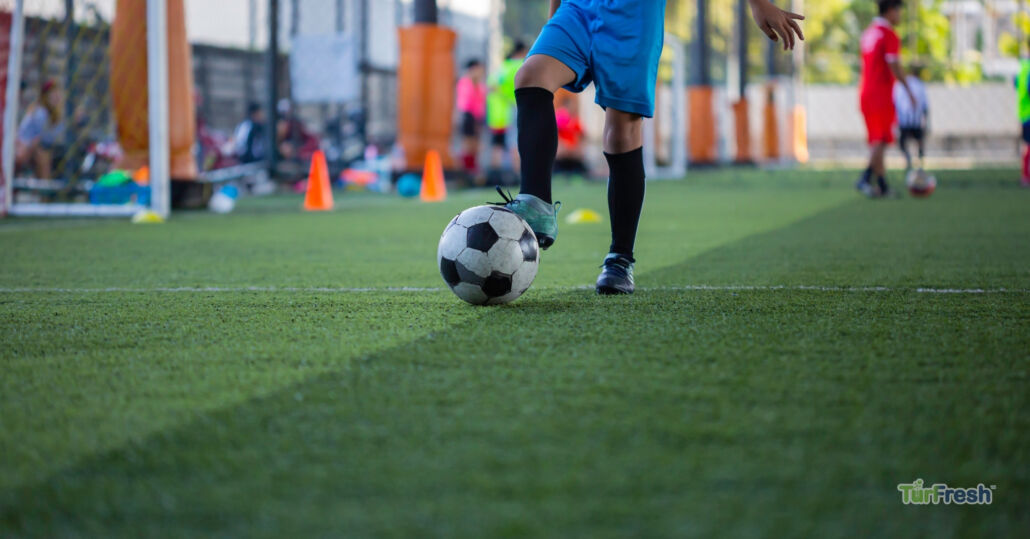
Artificial sports fields stay in top condition through consistent surface cleaning, fiber lifting, infill care, and regular sanitation. Artificial turf does not need mowing like natural grass, but it still requires routine maintenance to stay safe and game-ready.
How Do Brushing and Sweeping Help Artificial Turf Fields?
Brushing and sweeping help artificial turf fields by removing debris and keeping the infill from becoming uneven or compacted.
Sweeping keeps the field looking fresh and reduces buildup that can affect drainage. Brushing helps turf fibers stay upright, which supports surface consistency and play comfort.
💡 Tip: Brush against the lay of the fibers in high-use areas to help lift flattened turf.
How Should Stains and Odors Be Handled on a Turf Field?
Stains and odors should be handled quickly using turf-safe cleaners and regular sanitation to reduce buildup and maintain a fresh surface.
High-use areas can collect stains from spills and heavy activity. Using non-toxic, eco-friendly cleaning products helps protect athletes and the turf system. Regular disinfection also helps reduce bacterial buildup, which supports a healthier environment for play.
💡 Tip: Treat spills as soon as possible so residue does not sink into the turf and become harder to remove later.
How Do You Clean a Soccer Ball or Equipment After Playing on Turf?
Clean a soccer ball after turf play by wiping it down with a damp cloth and mild soap, then drying it thoroughly before storage. Infill granules, dust, and organic residue transfer from the field surface to balls, cleats, and training equipment during every session, and that residue carries the same bacteria present on the field.
For cleats, knock loose infill off outside before bringing them indoors, then brush the outsole to clear granules trapped in the studs. For balls and hard equipment, a damp wipe after each session prevents residue from building into a film that becomes harder to remove.
💡 Tip: Equipment that leaves the field carrying infill and bacteria is one of the ways field hygiene problems reach locker rooms and equipment storage. A brief post-session wipe-down is worth building into the routine.
What Does Infill Care Mean for Artificial Field Maintenance?
For artificial fields, infill care means maintaining proper infill depth and distribution to keep fibers upright and the surface consistent, rather than feeding growth the way fertilization works on natural grass.
While artificial turf does not grow, field operators still use maintenance steps that function as support care for surface integrity: checking infill distribution, adding infill where levels have dropped, and preventing matting in high-traffic zones.
💡 Tip: If the field looks flat or feels inconsistent underfoot, check infill depth and fiber condition in those specific areas before assuming general wear.
Why Does Trimming Matter Around Artificial Turf Fields?
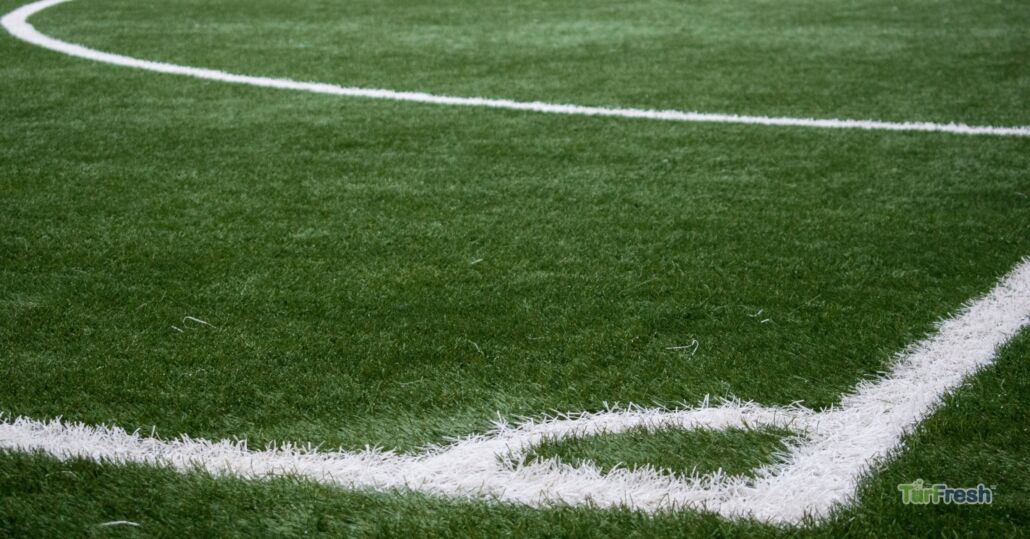
Trimming matters around artificial turf fields because it helps keep surrounding grass and vegetation from creeping onto the playing surface and creating debris buildup.
Keeping edges clean improves field appearance, keeps boundary lines clearer, and reduces the chance of organic debris collecting along the perimeter.
💡 Tip: Make edge cleanup part of weekly checks so debris does not migrate onto the turf surface.
What Is the Best Way to Remove Dirt and Debris From a Turf Field?
The best way to remove dirt and debris from a turf field is to sweep or brush the surface regularly, with extra attention after games and windy weather.
This reduces buildup in the infill and helps prevent uneven spots. It also supports drainage by keeping surface pathways clearer.
💡 Tip: Schedule a quick debris pass after events to prevent trash and organic matter from getting ground into the surface.
How Can Sports Turf Be Sanitized Without Damaging It?
Sports turf can be sanitized without damaging it by using turf-safe, non-toxic products and avoiding harsh chemicals that degrade fibers.
Regular sanitizing helps reduce bacterial buildup, which supports athlete health and reduces odor issues. The key is choosing products designed for turf surfaces and following label directions.
💡 Tip: Prioritize sanitation in areas where players spend the most time, such as team warmup areas, benches, and goal mouths.
How Does Field Maintenance Help Prevent Injuries?
Field maintenance helps prevent injuries by maintaining a stable, even surface and reducing bacteria buildup that can irritate skin.
A consistent surface lowers the risk of sprained ankles, twisted knees, cuts, and slips. Cleaner turf also reduces the chance of infections or irritations that can worsen from abrasions.
💡 Tip: Add a monthly walk-through inspection to spot uneven spots, loose seams, or debris pockets before they cause problems.
What Are the Most Common Turf Field Maintenance Mistakes?
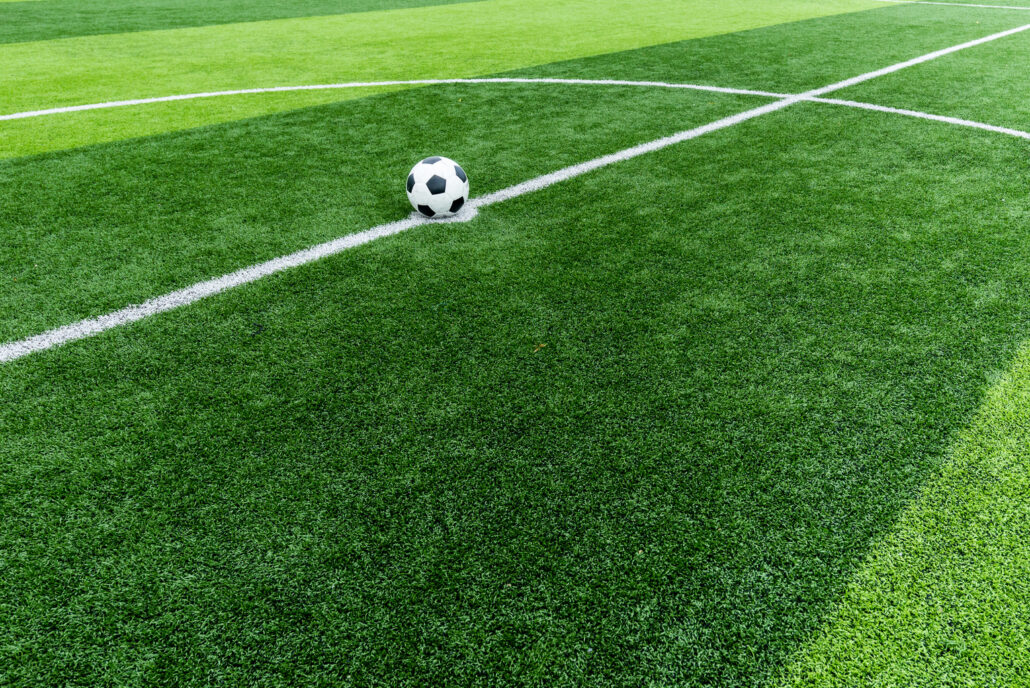
The most common turf field maintenance mistakes are poor drainage management, using harsh chemicals, and skipping inspections. These issues reduce performance, shorten field lifespan, and increase safety risks.
Improper drainage management
Standing water and poor drainage damage field quality and create slippery, unsafe conditions. Artificial turf does not require watering for growth, but it still needs proper drainage to prevent pooling. If water pools after rain, treat it as a system issue that needs attention rather than something to wait out.
Using harsh chemicals
Strong disinfectants like bleach degrade turf materials and increase irritation risk for athletes. Turf-specific, non-toxic cleaning solutions protect both the surface and the people using it. If a product is not labeled for turf use, do not assume it is safe.
Skipping regular inspections
Inspections catch wear, debris buildup, and surface issues early, before they affect safety and performance. Neglecting them allows small problems to become major repairs. Inspect for debris pockets, damage, seams, drainage concerns, and uneven spots, with extra attention after heavy use, storms, and tournaments.
Practical Tips and Highlights
✅ Clean after events. Post-game debris removal prevents buildup from getting pressed into the surface.
✅ Treat stains fast. Fresh stains lift easier and reduce long-term odor issues.
✅ Prioritize high-traffic zones. Midfield, goal mouths, sidelines, and entry points wear and dirty faster.
✅ Sanitize on a schedule. Regular disinfection supports a healthier surface for athletes.
✅ Inspect monthly. A simple walk-through catches problems early and protects performance.
How Can TurFresh Support Turf Field Maintenance?
TurFresh supports turf field maintenance with professional cleaning, grooming, and sanitation services for athletic fields, school grounds, and recreational facilities. When ongoing odors, heavy buildup, or performance issues exceed what in-house maintenance can address, professional equipment reaches the infill and backing layers that routine surface work cannot.
Maintaining a clean, consistent field supports athlete performance, reduces injury risk, and protects the long-term value of the installation.
Professional service reaches what in-house field maintenance cannot.
TurFresh provides commercial-grade cleaning, sanitation, and fiber restoration for athletic facilities. Non-toxic products safe for athletes. Every service backed by a 30-day satisfaction guarantee.
Contact TurFresh for Facility Service
✔ Non-Toxic✔ 150,000+ Services✔ Trained Technicians✔ 30-Day Guarantee
Frequently Asked Questions
How often should a turf field be maintained for safe play?
Turf fields should have debris removed after every game or event, with routine brushing and cleaning on a weekly schedule based on use level. High-traffic fields and facilities hosting frequent tournaments need more frequent attention than fields used a few times per week.
What is the best way to clean a turf field after a game?
Remove debris first, then sweep or brush the surface to prevent buildup and keep the field even and safe. Doing this immediately after an event is significantly more effective than waiting, because foot traffic presses organic material into the surface over time.
How do professionals maintain turf fields?
Professionals remove debris, groom the surface, address infill distribution, treat stains and odors, and sanitize to reduce bacteria buildup. Commercial equipment reaches the infill and backing layers that surface-level maintenance cannot access.
What is a safe cleaner to use on sports turf?
A turf-specific cleaner that is non-toxic and designed to lift stains and control odors without degrading turf materials. Avoid bleach, ammonia, and general-purpose disinfectants, which damage fibers and create irritation risk for athletes.
How do you remove stains from sports turf without damaging it?
Use a turf-safe cleaner and scrub gently, then rinse thoroughly so residue does not attract more dirt. Treating stains while fresh is substantially easier than removing set-in residue later.
Why does a turf field start to smell over time?
Odor builds up from heavy use, spills, and organic debris settling into the infill layer. Regular cleaning and sanitation reduce odor at the source. Persistent odor that returns quickly after cleaning usually indicates buildup below the surface that requires professional extraction.
How does field maintenance reduce turf burns and irritation?
Consistent maintenance minimizes gritty buildup and maintains a smoother surface, which lowers friction and skin irritation during play. Sanitation also reduces the bacteria that can turn a minor abrasion into an infection risk.
How often should a sports field be inspected?
At least once a month, plus after heavy use or severe weather. Inspections should look for debris buildup, damage, drainage issues, seam separation, and uneven areas.
What should you do if certain areas of a field wear faster than others?
Increase cleaning and inspection frequency in those zones and address the underlying surface consistency issues, such as debris buildup or infill displacement. Uneven wear is expected in high-traffic areas, but accelerating wear signals a maintenance gap.
How can a turf field withstand heavy foot traffic over a full season?
Through consistent maintenance: regular cleaning, sanitation, surface grooming, and monitoring the conditions that affect safety and performance, particularly drainage and high-wear zones. Fields maintained proactively hold up substantially better than fields maintained reactively.
Share
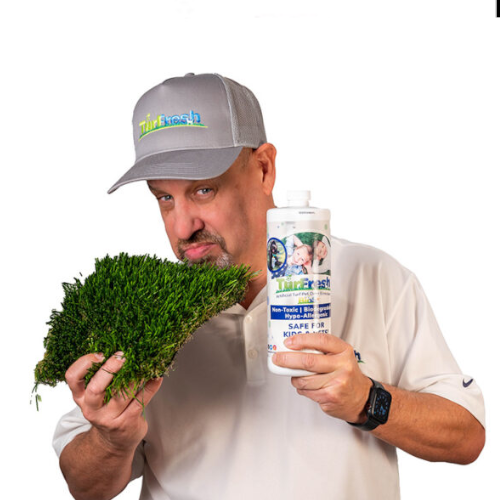

John Pla is the owner of TurFresh and an expert with over 20 years of experience in artificial turf cleaning and maintenance. John’s passion for sustainability, community impact, and innovative solutions has made him a trusted figure in the artificial grass industry and beyond.